Diese Seite ist noch nicht ins Deutsche übersetzt; der englische Originaltext wird angezeigt.
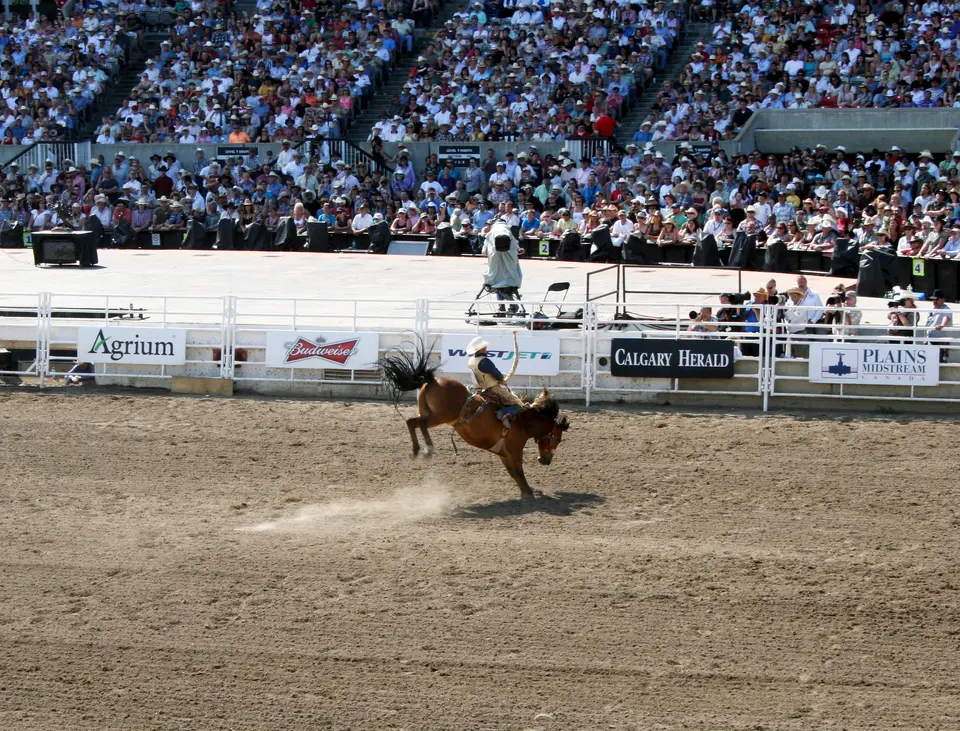
Calgary Stampede
Foto: Gnosis, CC BY-SA 4.0, über Wikimedia Commons
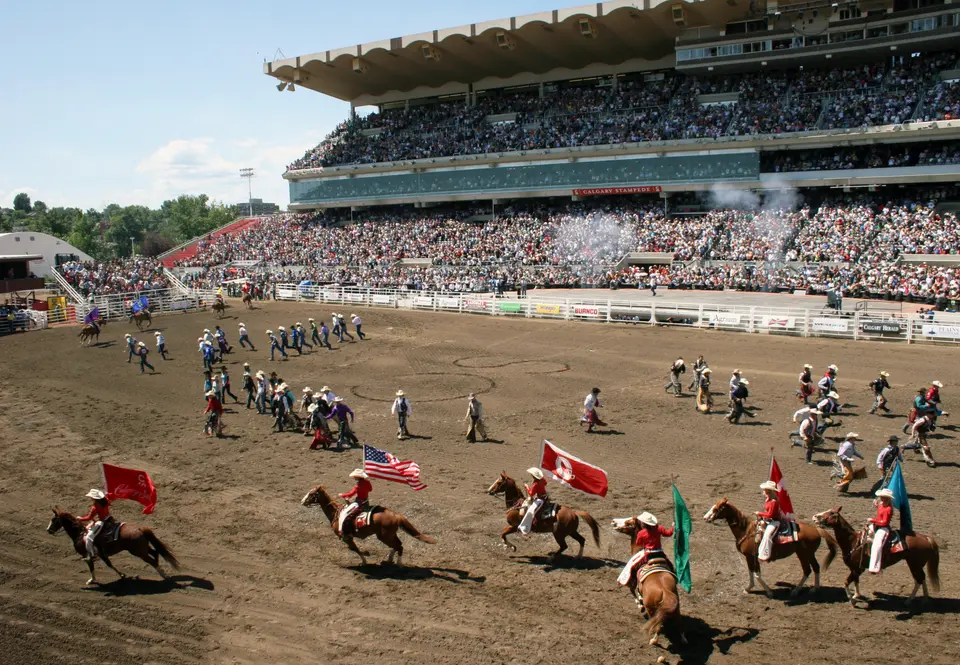
Every July, Calgary dresses in western wear for “The Greatest Outdoor Show on Earth” — ten days of rodeo and chuckwagon racing, a parade, midway rides and pancake breakfasts, with more than a million visitors.
Ten days in Cowtown
The Stampede bills itself as “The Greatest Outdoor Show on Earth”. Its ten days bring one of the world’s largest rodeos, chuckwagon racing, a midway, stage shows, concerts and agricultural competitions, and more than a million visitors a year. The whole city takes part: office buildings and shopfronts are painted with cowboy themes, residents wear western clothes, and hundreds of pancake breakfasts and barbecues are held across town. More than 3,000 volunteers help run it.
The Stampede Parade has been the official kick-off since 1912, with floats, horses and marching bands through downtown on the opening Friday morning. At Elbow River Camp, the Kainai, Piikani, Siksika, Tsuut’ina and Stoney Nakoda First Nations of Treaty 7 welcome visitors to 26 tipis, with Indigenous artisans, traditional dancing and treats such as bannock with saskatoon berry jam.
Rodeo and chuckwagon racing are also the focus of growing criticism from animal welfare groups and some politicians.
From fair to Stampede
The Stampede’s roots go back to 1886, when the Calgary and District Agricultural Society held its first fair. In 1912 the American trick roper Guy Weadick, backed by four local businessmen known as the Big Four, staged his first Stampede, a six-day rodeo watched by more than 100,000 people. He returned in 1919 for a Victory Stampede honouring soldiers back from the First World War, and in 1923 his show merged with the Calgary Industrial Exhibition. That year Weadick encouraged residents to dress in western clothes and decorate their businesses, and chuckwagon racing was introduced and proved immediately popular. The combined event has been held every year since.
Wann es stattfindet
The Stampede lasts ten days in July and begins with the parade on the opening Friday. The 2027 Stampede runs from 9 to 18 July.
- 9.–18. Juli 2027Offiziell bekannt gegeben
Quellen
Dieser Eintrag beruht auf den folgenden Quellen.
- The Calgary StampedeCalgary Stampede · abgerufen am 17. September 2026
- About UsCalgary Stampede · abgerufen am 17. September 2026
- Stampede ParadeCalgary Stampede · abgerufen am 17. September 2026
- Elbow River CampCalgary Stampede · abgerufen am 17. September 2026
- Calgary StampedeWikipedia · abgerufen am 17. September 2026
- Canada travel advice: safety and securityUK Foreign, Commonwealth & Development Office · abgerufen am 17. September 2026
Verwandte Feste
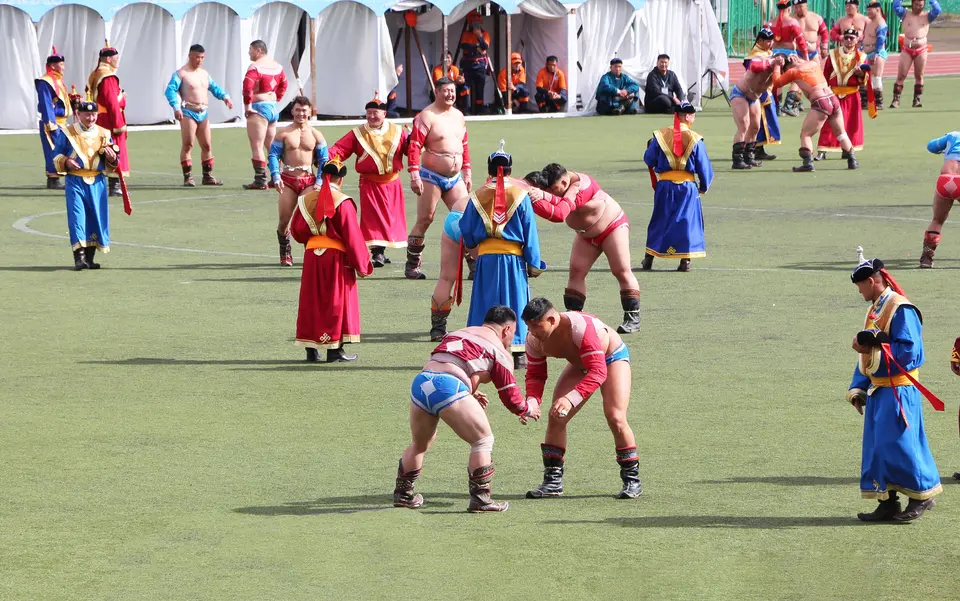
Naadam
Наадам
Every July Mongolia stops for the “three games of men” — wrestling, cross-country horse racing ridden by children, and archery — opened in Ulaanbaatar’s stadium with parades of riders, dancers and the nine horse-tail banners of Genghis Khan.
11.–13. Juli 2027Berechnet
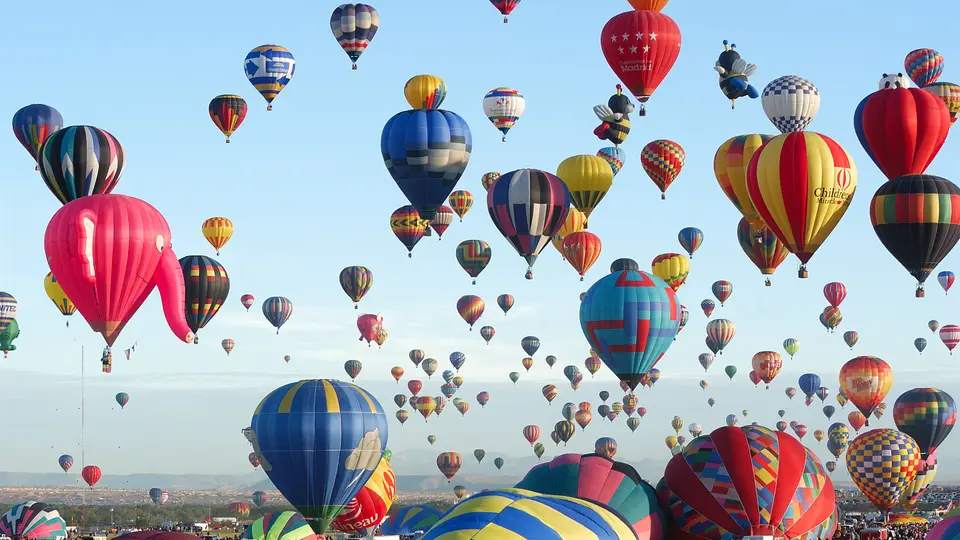
Albuquerque International Balloon Fiesta
For nine days every October, more than 500 hot-air balloons lift off from a park on the edge of Albuquerque, New Mexico, in waves at sunrise — the largest ballooning event on Earth, where visitors can walk among the balloons as they inflate.
3.–11. Oktober 2026Berechnet
Carnaval de Québec
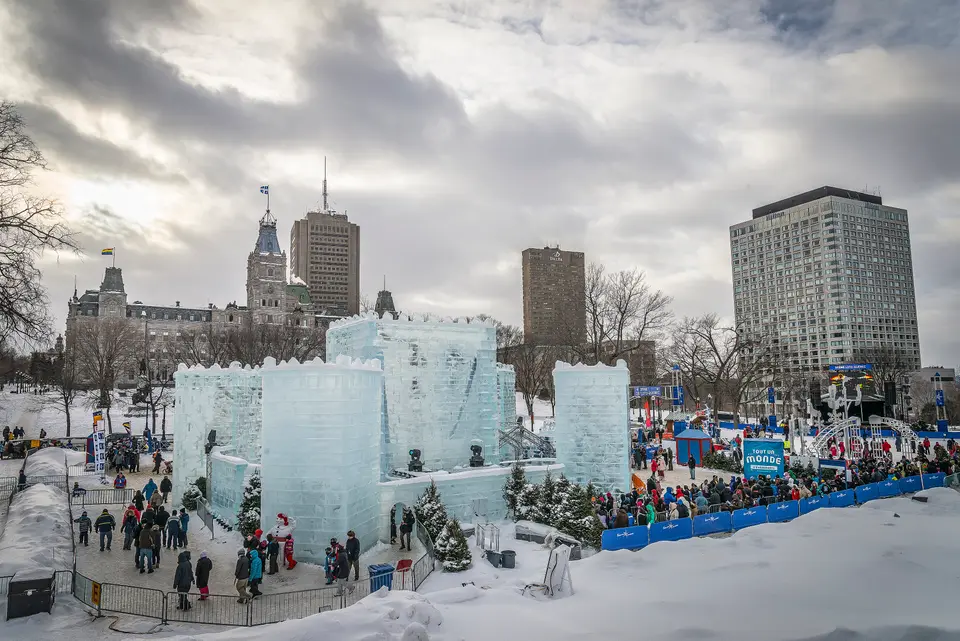
For ten days in February, Québec City celebrates winter with Bonhomme, a seven-foot snowman in a red tuque and arrow sash who holds the keys to the city, ice palaces, night parades with long red trumpets — and a snow bath in swimsuits.
5.–14. Februar 2027Offiziell bekannt gegeben