Esta página ainda não foi traduzida para português; mostra-se o texto original em inglês.
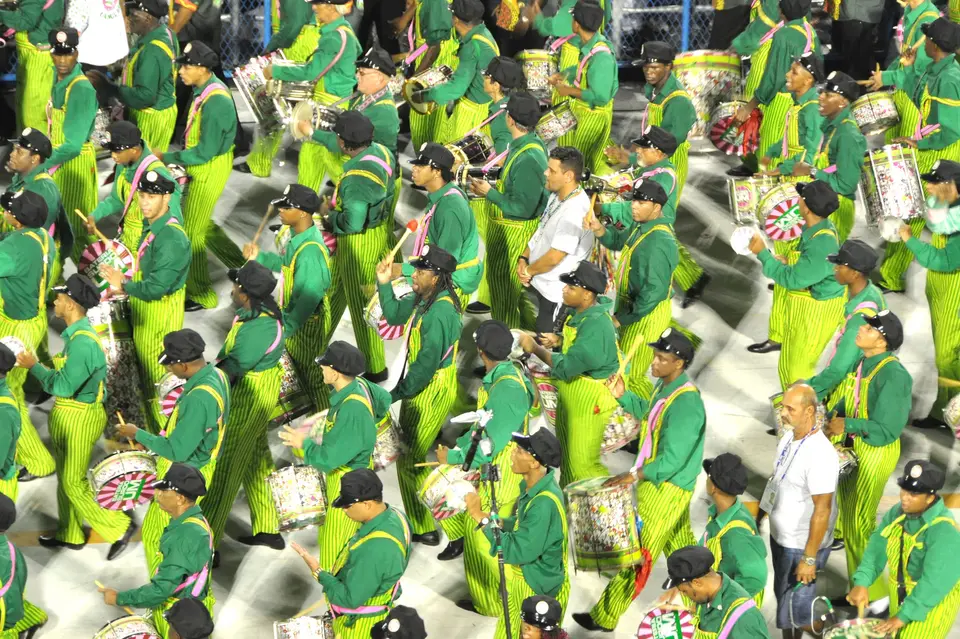
In the days before Lent, Rio de Janeiro holds what is considered the world’s largest carnival — two million people a day on the streets, and a contest of samba schools that parade through the Sambadrome with floats, drummers and thousands of dancers.
The samba schools
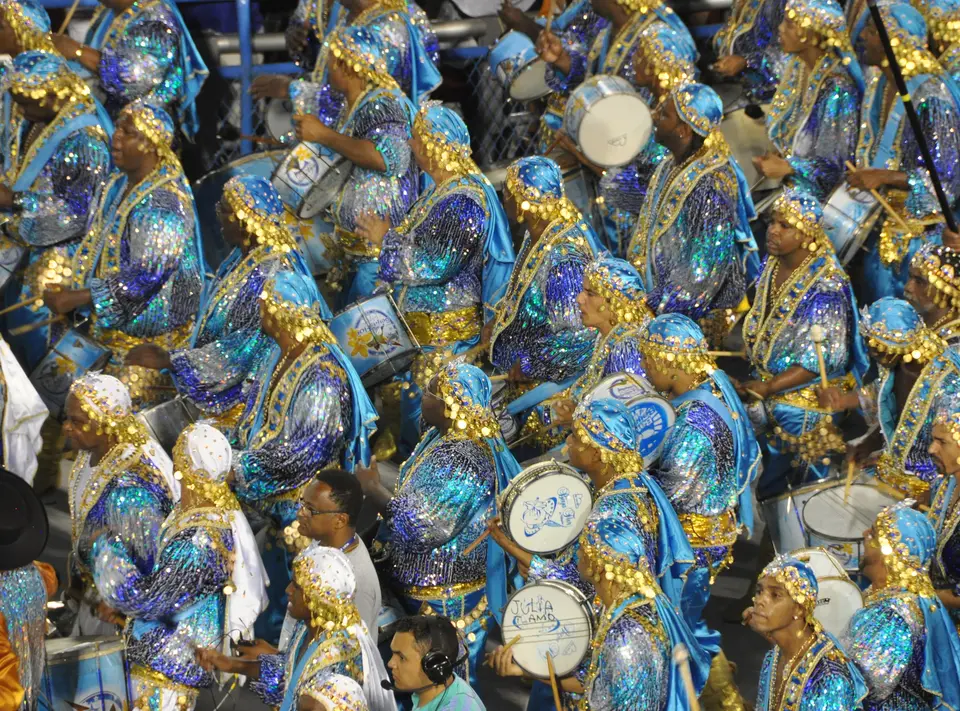
Rio’s carnival is built around its samba schools — more than two hundred of them, divided into leagues. A school is a community of neighbours who parade together, and each follows a set order. First comes the comissão de frente, ten to fifteen performers in elaborate costumes whose choreography introduces the school’s theme; then the first float, the abre-alas; then the mestre-sala and porta-bandeira, master of ceremonies and flag bearer. Behind them march the old guard, the ala das baianas, and at the rear the drum section, the bateria.
Since 1978 the parades have taken place on the Marquês de Sapucaí avenue, where Oscar Niemeyer designed a permanent stadium, the Sambadrome, commissioned in 1983. The Special Group schools compete over two nights, and Portela holds the most championships.
From entrudo to samba
Carnival was brought to Brazil by Portuguese colonists in the sixteenth and seventeenth centuries as the entrudo, a street festival of games and mockery; masks and costumes came later, and the first masquerade ball in Rio took place in 1840. At the beginning of the twentieth century Afro-Brazilians and people of mixed descent introduced the samba and batucada rhythms now associated with the carnival. In the 1920s and 1930s, when Black revellers were often harassed by the police, carnival groups turned themselves into samba schools to gain legitimacy; Estácio de Sá, Portela and Mangueira first paraded in 1929.
Quando acontece
Carnival ends on Shrove Tuesday, 47 days before Easter, so its dates change every year and fall in February or early March. The top samba schools of the Special Group parade on the Sunday and Monday nights; lower divisions parade on the Friday, Saturday and Tuesday, and the champions parade again on the Saturday after Ash Wednesday.
- 5 – 9 de fevereiro de 2027Carnival, Friday to Shrove TuesdayCalculada
- 7 – 8 de fevereiro de 2027Special Group parades, Sunday and Monday nightsCalculada
- 25 – 29 de fevereiro de 2028Carnival, Friday to Shrove TuesdayCalculada
- 27 – 28 de fevereiro de 2028Special Group parades, Sunday and Monday nightsCalculada
- 9 – 13 de fevereiro de 2029Carnival, Friday to Shrove TuesdayCalculada
- 11 – 12 de fevereiro de 2029Special Group parades, Sunday and Monday nightsCalculada
- 1 – 5 de março de 2030Carnival, Friday to Shrove TuesdayCalculada
- 3 – 4 de março de 2030Special Group parades, Sunday and Monday nightsCalculada
Visitar com respeito
Segurança
- Criminals target large celebrations such as Carnival. Stay aware of your surroundings and be wary of strangers who suggest leaving public areas.
- Pickpocketing is common, and thefts are frequent on public beaches. Leave valuables behind and do not go onto city beaches after dark.
- Card cloning and payment-machine scams are common. Keep your card in sight and check the amount before you pay.
Fontes
Esta entrada foi escrita a partir das fontes seguintes.
- Rio CarnivalWikipedia · consultado em 17 de setembro de 2026
- Brazil travel advice: safety and securityUK Foreign, Commonwealth & Development Office · consultado em 17 de setembro de 2026
Festas relacionadas
Carnival of Venice
Carnevale di Venezia
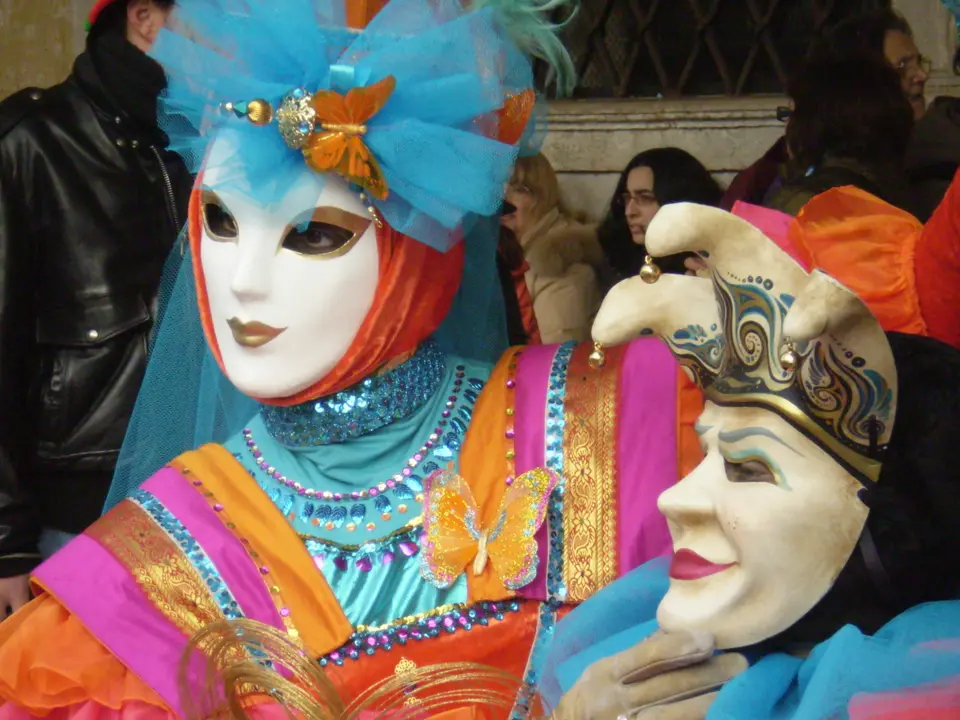
For two and a half weeks before Lent, Venice returns to the masks and costumes that made its carnival famous across Europe — banned for almost two centuries, revived in 1979, and now drawing millions of visitors to the city’s squares and canals.
23 de janeiro – 9 de fevereiro de 2027Anunciada oficialmente
Parintins Folklore Festival
Festival Folclórico de Parintins
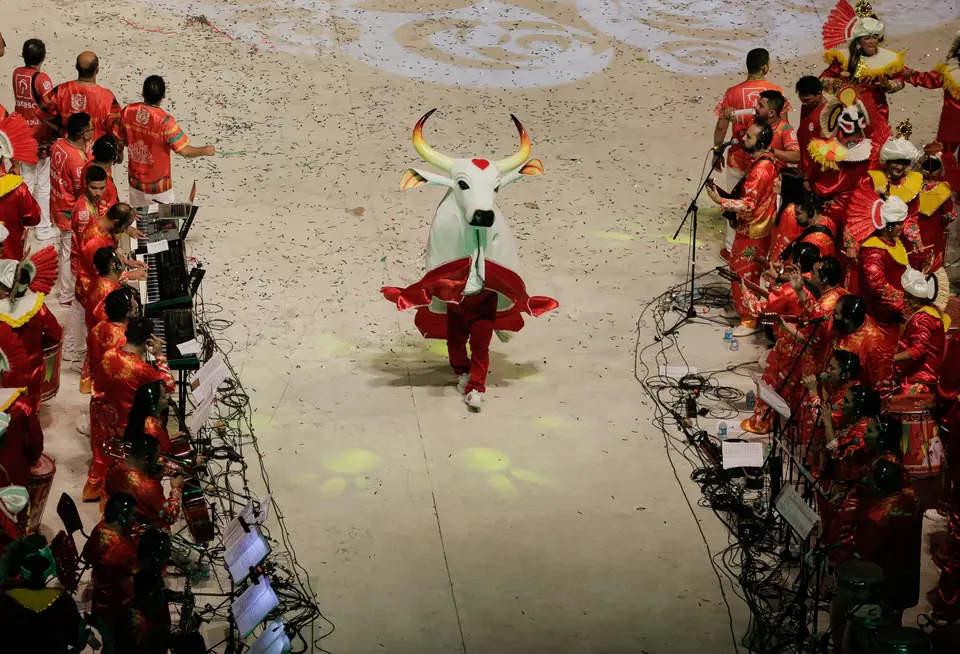
In a town in the Brazilian Amazon, two rival ox associations — blue Caprichoso and red Garantido — turn the story of the bumba-meu-boi into three nights of arena spectacle, with giant sets, drums, Amazonian legends and a whole town divided by colour.
25 – 27 de junho de 2027Estimada
Las Fallas
Falles
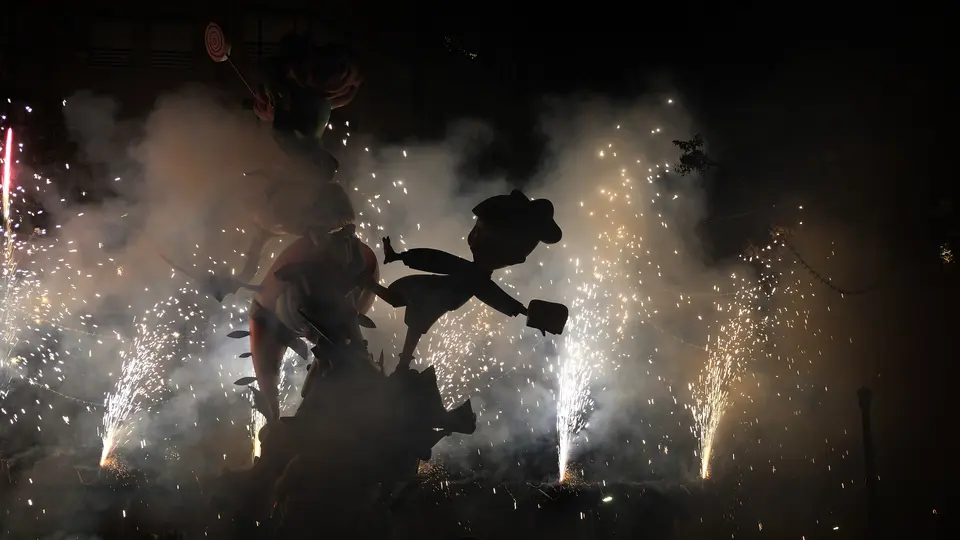
In March, Valencia fills its streets with giant satirical sculptures of cardboard and papier-mâché, shakes to the midday thunder of firecrackers, and then, on the night of 19 March, sets every one of the monuments on fire to welcome the spring.
15 – 19 de março de 2027Calculada