لم تُترجم هذه الصفحة إلى العربية بعد، ويُعرض نصها الأصلي بالإنجليزية.
Vodun Days
الصورة: Eureka9090، CC BY-SA 4.0، عبر ويكيميديا كومنز
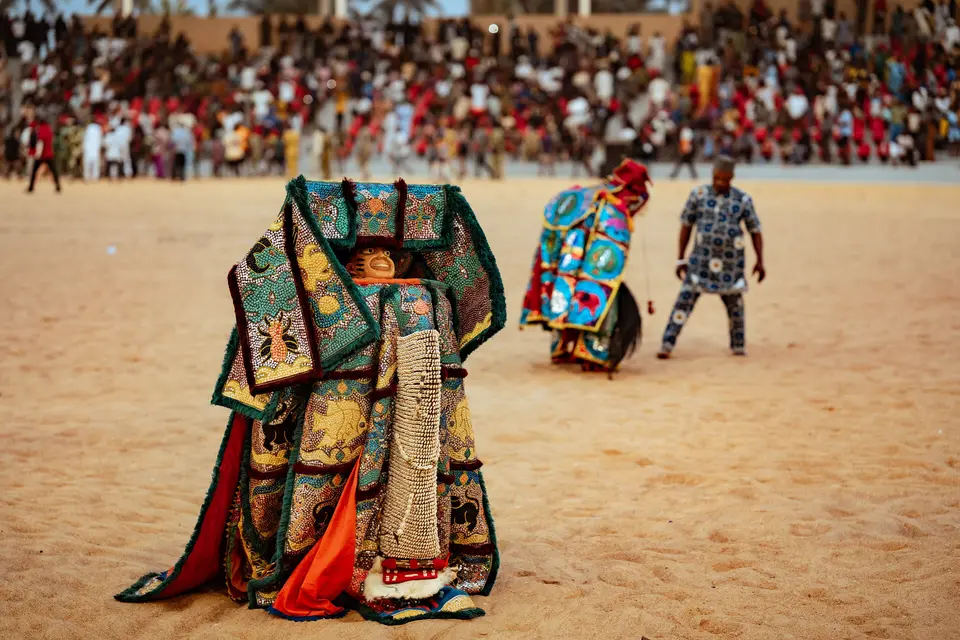
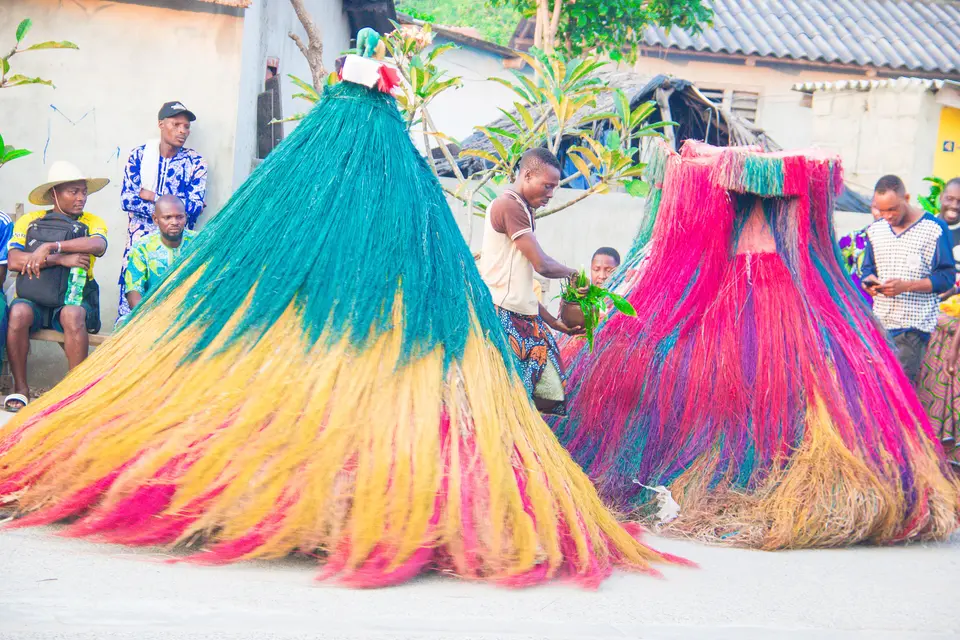
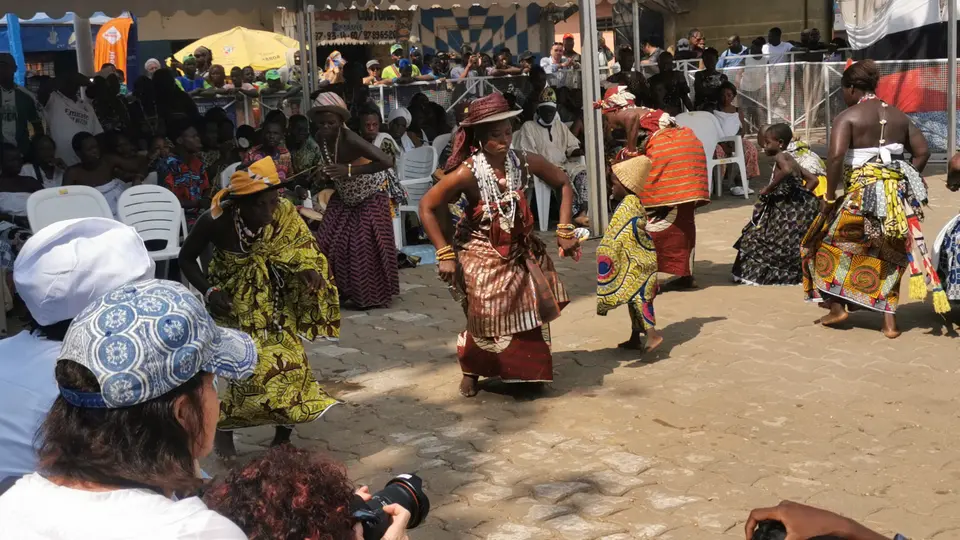
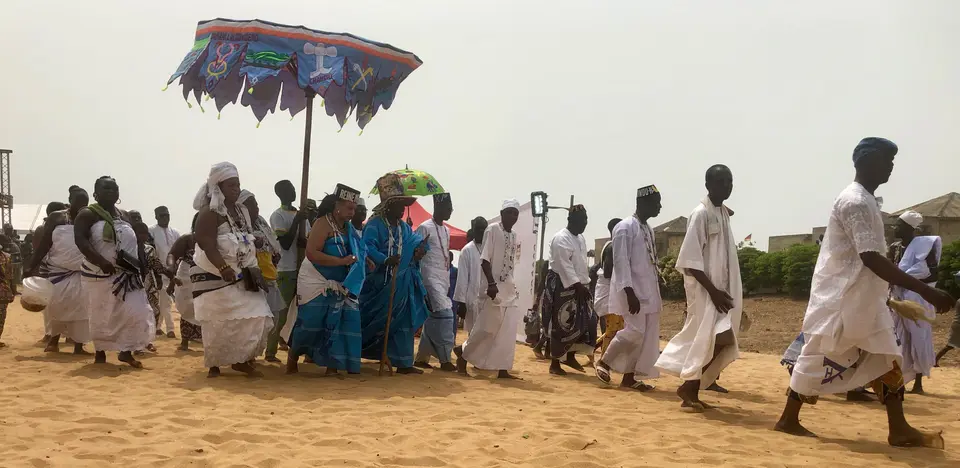
Each January the faithful of Benin’s Vodun convents come out into the streets and onto the beach of Ouidah — Zangbétɔ night guardians in straw, Egungun masquerades and Vodun dancers — for a festival that ends in a great ceremony where priests of Fá announce the sign for the year.
From 10 January to the Vodun Days
Vodun honours the balance between the visible and invisible worlds. Its pantheon includes the Vodun of the elements — Sakpata for the earth, Xɛvioso for cosmic fire and lightning, Tɔxɔsu for water and Dan for the air — as well as masked Vodun such as Egungun and Zangbétɔ. Carried across the Atlantic by the slave trade, it shaped traditions in the Americas such as Santería in Cuba, Vodou in Haiti and Candomblé in Brazil.
A national Vodun festival was introduced in the 1990s under President Nicéphore Soglo and celebrated every 10 January across the country, above all in Ouidah. In 2024 it was transformed into the Vodun Days, which President Patrice Talon hoped would “deconstruct the negative images” of Vodun and present it as art and culture as well as religion. The first edition, on 9 and 10 January 2024, drew nearly 100,000 visitors; the second, from 9 to 11 January 2025, more than 435,000. The same year a new law set the annual festival of traditional religions on the second Friday of January.
Masks, convents and the great ceremony
During the festival the faithful come out of the Vodun convents to fill the squares of the historic centre and the beach: the Place Maro, founded in 1812 by freed captives who had returned from Brazil, the esplanade of the French fort, the Temple of Pythons, where the sacred pythons live freely as divine messengers, and the sacred forest of Kpassè. There are Vodun Hounvè dances and a procession in honour of the divinities. The Zangbétɔ — the name means “night guardian” — appears by day as a tall straw costume; at night, followers say, it patrols the neighbourhood as an invisible guardian against wrongdoers. The Egungun, whose name means “the one who has died and returns”, embodies an ancestor made visible, and its masked appearance is both worship and spectacle.
Near the Door of No Return, the monument to the slave trade by the beach, the Arène de Ouidah hosts Egungun dances, and a temporary Mami Dan temple honours Mami Wata, the Vodun of the ocean. The high point is the Grande Cérémonie Vodun in the presence of the high dignitaries, where the bokɔnɔ, priests of the Fá divination system, read the sign for the year — in 2025 it was Fu-Yeku, associated with protection and prosperity. In the evenings there are open-air concerts of Beninese and international artists by the sea.
متى يُقام
The 2027 Vodun Days run from 2 to 9 January in Ouidah. By a law of 2024, the national festival of traditional religions falls on the second Friday of January, and the Thursday before is also a public holiday.
- 2–9 يناير 2027Vodun Days in Ouidahمعلن رسميًا
- 8 يناير 2027National day of traditional religions (public holiday on the Thursday before, too)محسوب
- 14 يناير 2028National day of traditional religions (public holiday on the Thursday before, too)محسوب
- 12 يناير 2029National day of traditional religions (public holiday on the Thursday before, too)محسوب
- 11 يناير 2030National day of traditional religions (public holiday on the Thursday before, too)محسوب
زيارة باحترام
من المفيد أن تعرف
- Vodun is a living religion. Research and respect religious and social traditions to avoid offending local sensitivities.
تجنّب
- Do not swim in the sea unless you have reliable local advice. Currents are very strong along the whole coast, and many people drown each year.
السلامة
- Most people in Benin celebrate the festival, so book travel and accommodation well ahead — options are limited — and watch out for pickpockets.
- Ouidah is about 40 km from Cotonou, around an hour by car. The organisers provide secure parking and a shuttle bus from Cotonou.
المصادر
كُتب هذا المدخل استنادًا إلى المصادر التالية.
- Vodun Days — OuidahVodun Days (official website) · اطُّلع عليه في 17 سبتمبر 2026
- À propos des Vodun DaysVodun Days (official website) · اطُّلع عليه في 17 سبتمبر 2026
- Informations pratiquesVodun Days (official website) · اطُّلع عليه في 17 سبتمبر 2026
- Vodun DaysWikipedia (French) · اطُّلع عليه في 17 سبتمبر 2026
- Vodun DaysWikipedia · اطُّلع عليه في 17 سبتمبر 2026
- Benin travel advice: safety and securityUK Foreign, Commonwealth & Development Office · اطُّلع عليه في 17 سبتمبر 2026
مهرجانات ذات صلة
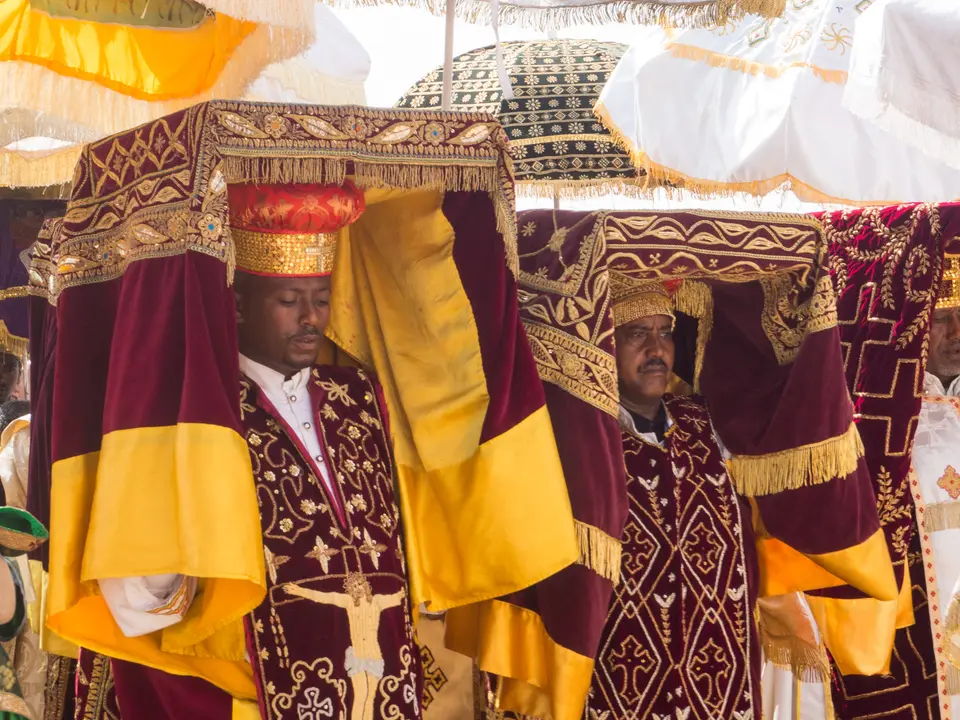
Timkat (Ethiopian Epiphany)
ጥምቀት
Ethiopia’s Orthodox Epiphany celebrates the baptism of Christ — on the eve, priests carry each church’s tabot, a replica of the Ark of the Covenant, to a river or pool; at dawn the water is blessed and sprinkled over hundreds of thousands, before the arks return home in dancing processions.
18–19 يناير 2027محسوب
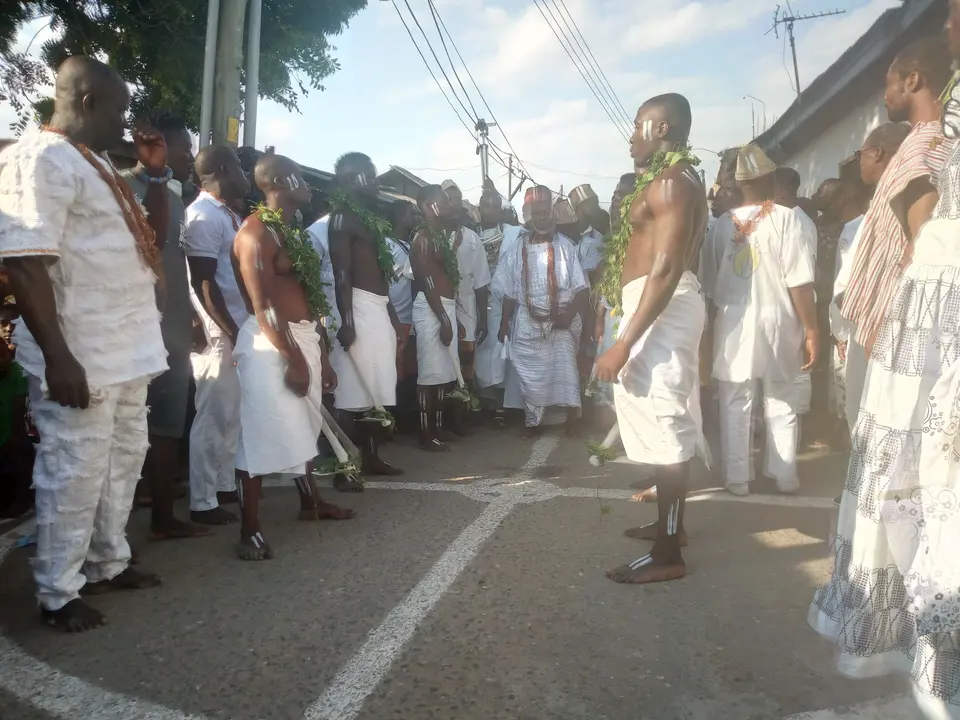
Homowo
The Ga people of Accra remember a famine by laughing at it: after weeks in which drumming and noise are banned, chiefs sprinkle kpokpoi — steamed maize with palm oil — through the streets, and the drums return for “hooting at hunger”.
أغسطس – سبتمبر 2026فترة تقريبية
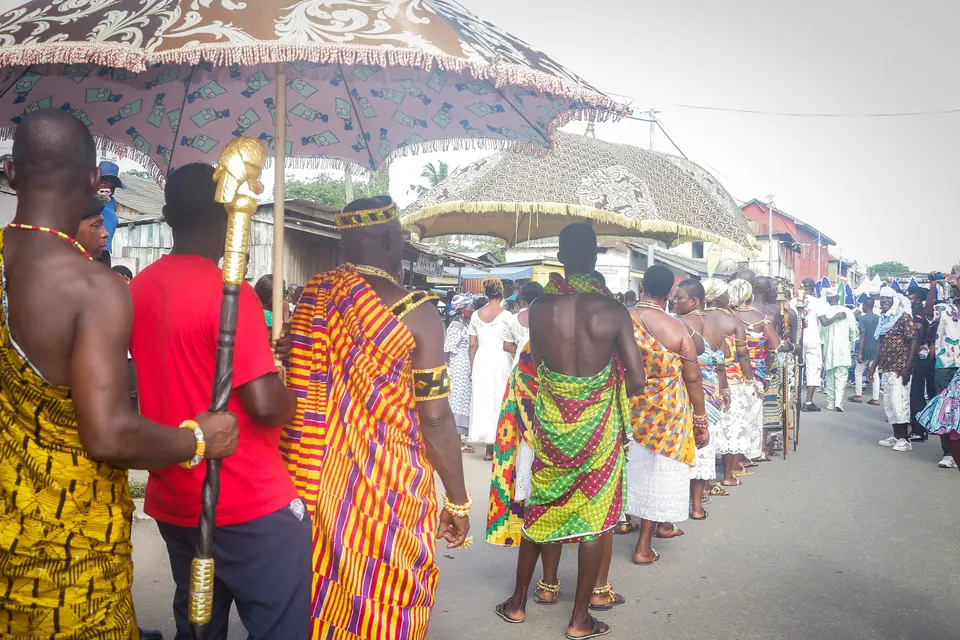
Aboakyer
On the first Saturday of May, the two Asafo warrior companies of Winneba set out at dawn armed only with sticks and clubs, and race to bring back a live bushbuck for their chief — a sacrifice to the god Otu that, according to tradition, once demanded a human life.
1 مايو 2027محسوب