Diese Seite ist noch nicht ins Deutsche übersetzt; der englische Originaltext wird angezeigt.
Nyepi
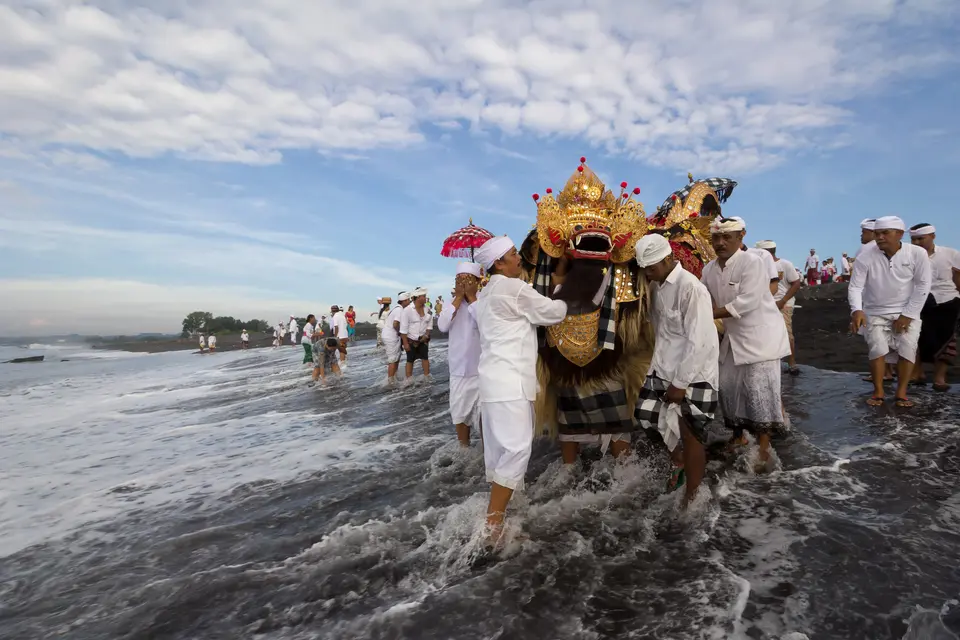
Foto: Wiaskara, CC BY-SA 4.0, über Wikimedia Commons
On the Balinese New Year the whole island stops for 24 hours — no fire or lights, no work, no travel, no entertainment, and even the airport closes — after a night in which villages parade giant demon figures, the ogoh-ogoh, through the streets to drive evil away.
Purifying before the new year
Nyepi comes from sepi, meaning silent, and marks the Hindu solar new year of the Saka era, which began in 78 AD. Three or four days before, the Melasti ritual is held at temples near the sea and on beaches, to purify sacred objects and collect holy water from the sea. On the eve of Nyepi comes the Bhuta Yajna, meant to defeat negative forces and restore balance between God, people and nature. At sunset the ngrupuk begins: people bang pots, pans and bamboo tubes and burn torches of dried coconut leaves to drive out demons.
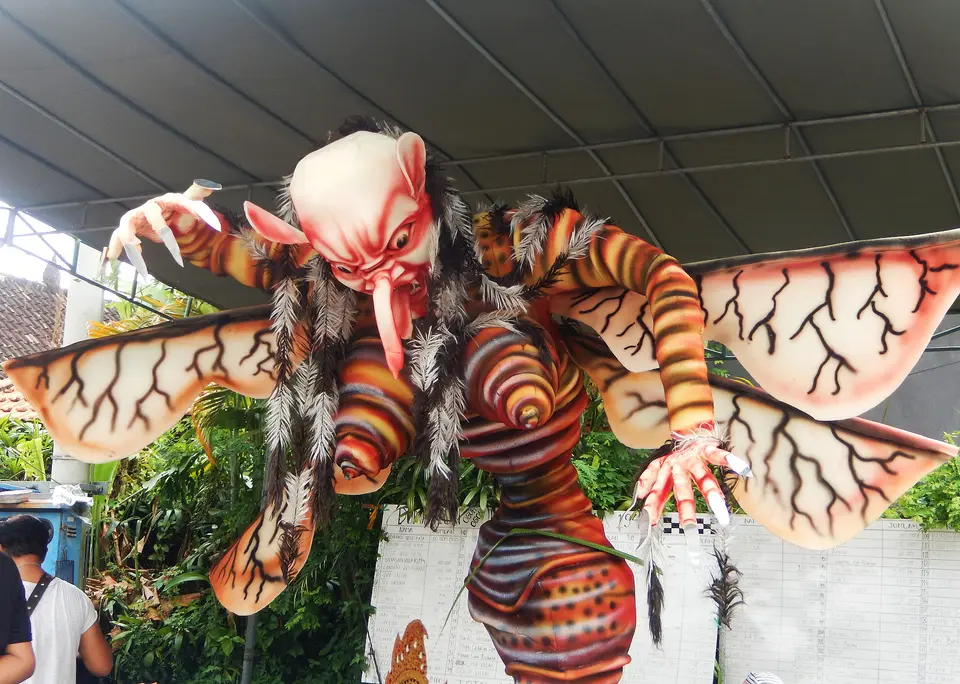
Most Balinese villages build ogoh-ogoh for the night — demonic figures of painted bamboo, papier-mâché, cloth and tinsel that stand for negative elements and evil spirits, or characters from Hindu mythology. After being paraded around the village they are burned, although many are displayed in front of community halls for a month or more.
A day of silence
From 6 am the island falls silent for 24 hours, a day given over to self-reflection, fasting and meditation. Four prohibitions apply: amati geni, no fire or light; amati karya, no work; amati lelungan, no travel; and amati lelanguan, no entertainment. The streets are empty, and the only people outside are the pecalang, traditional village security men who patrol to make sure the rules are kept. Exceptions are made only for emergency vehicles and women in labour.
The next day, Ngembak Geni — “relighting the fire” — families and friends gather to ask one another’s forgiveness and pray together, and fires, lights and cooking return.
Wann es stattfindet
Nyepi marks the New Year of the Saka calendar and moves each year. In 2027 it falls on Monday 8 March. Silence is kept from 6 am to 6 am the next day; the ogoh-ogoh parades take place on the evening before, and the Melasti purification three or four days earlier.
- 8. März 2027Offiziell bekannt gegeben
Respektvoll besuchen
Vermeiden
- Visitors are not exempt. Stay inside your hotel or accommodation for the whole day: no one is allowed on the streets or beaches, and Ngurah Rai International Airport is closed.
- Local custom requires everyone in Bali to stay indoors, turn off lights and make no noise. Tourists who break the rules can face deportation or prosecution.
Sicherheit
- On the afternoon and evening before Nyepi many roads close for the parades, most restaurants shut early and many ATMs are emptied until the day after. Get cash and supplies in advance.
- Emergency services and hospitals keep working during Nyepi.
Quellen
Dieser Eintrag beruht auf den folgenden Quellen.
- NyepiWikipedia · abgerufen am 17. September 2026
- Inilah SKB 3 Menteri Libur Nasional dan Cuti Bersama 2027Ministry of State Secretariat, Republic of Indonesia · abgerufen am 17. September 2026
- Indonesia travel advice: local laws and customsUK Foreign, Commonwealth & Development Office · abgerufen am 17. September 2026
- Indonesia travel advice: safety and securityUK Foreign, Commonwealth & Development Office · abgerufen am 17. September 2026
Verwandte Feste
Nowruz
نوروز
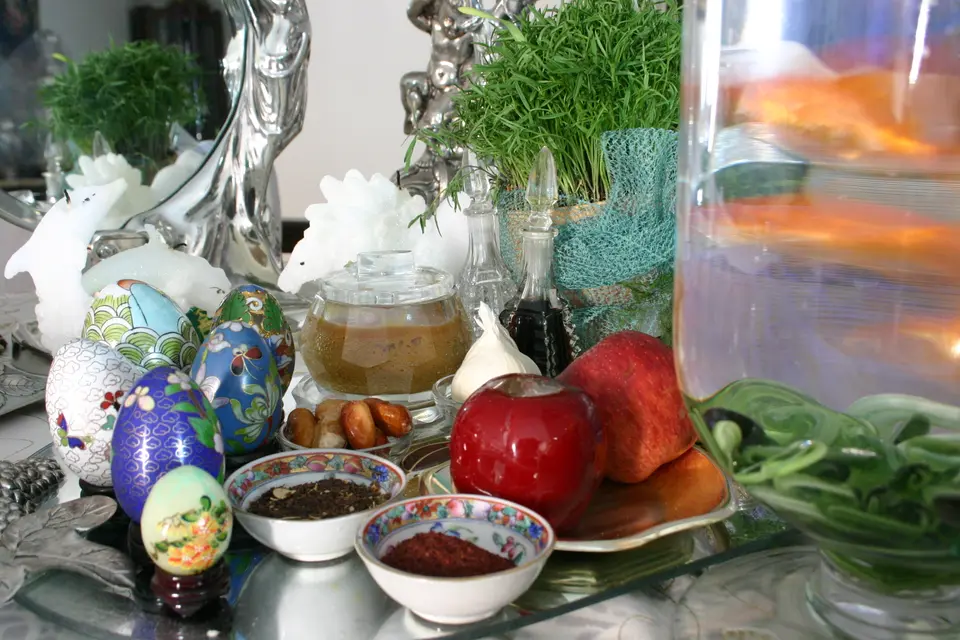
Nowruz, “new day”, is the Iranian New Year. It begins at the March equinox, when families gather around the Haft-sin table to wait for the exact moment the year turns, and opens two weeks of visits, food and time outdoors.
21. März 2027Berechnet
Songkran
สงกรานต์
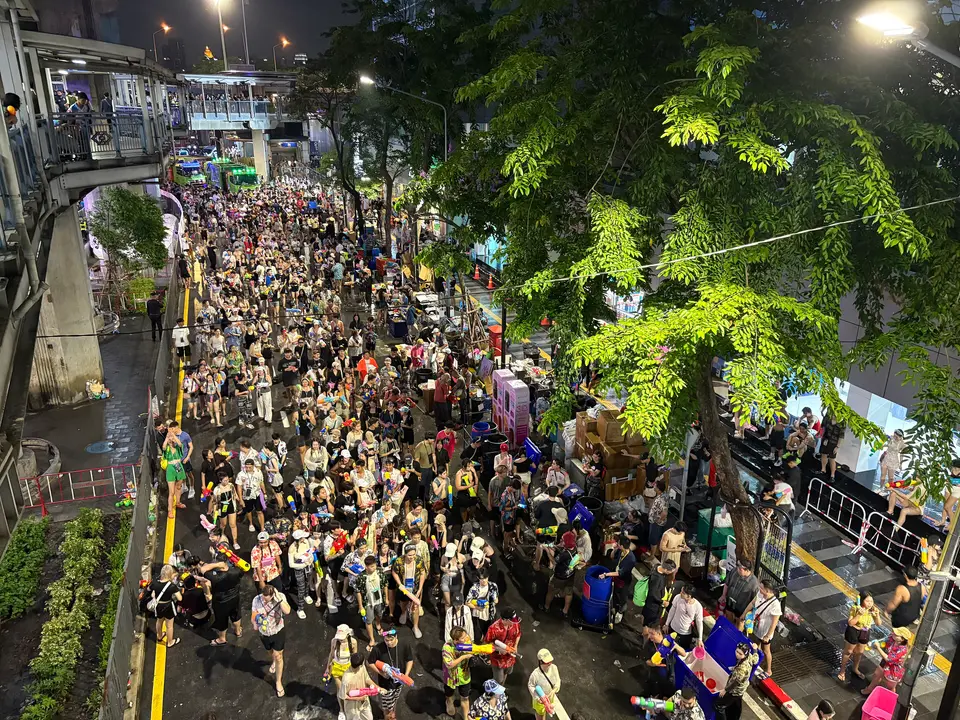
The traditional Thai New Year falls in mid-April, in the hottest weeks of the year. Families gather, pour water over the hands of their elders and over Buddha images — and in the streets, the gentle blessing becomes a nationwide water fight.
13.–15. April 2027Berechnet
Tết
Tết Nguyên Đán
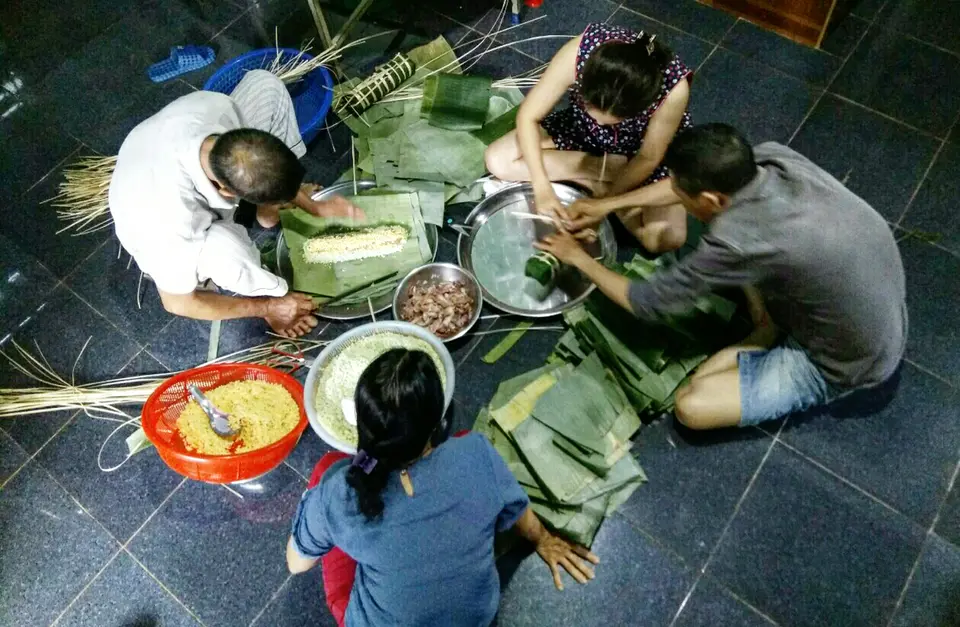
The Vietnamese Lunar New Year is the most important celebration in Vietnam — a time to go home, tend ancestors’ graves, fill the house with peach or yellow ochna blossom, wrap sticky rice cakes, and take care over who crosses the threshold first.
6.–8. Februar 2027Berechnet