یادداشت
Gujo Odori
郡上おどり
Gujo Odori is Japan’s longest-running bon dance, danced over more than thirty nights from mid-July to early September, one venue per night. It is danced rather than watched; visitors join the circle.
چه روی میدهد
Gujo Odori (郡上おどり) is a bon dance held in the castle town of Gujo Hachiman, in Gifu, over more than thirty nights from mid-July to early September. It is described as the longest-running bon dance in Japan. There is one venue each night, tied to neighbourhood festivals, so the dance does not stay in one place for the season but moves through the town.
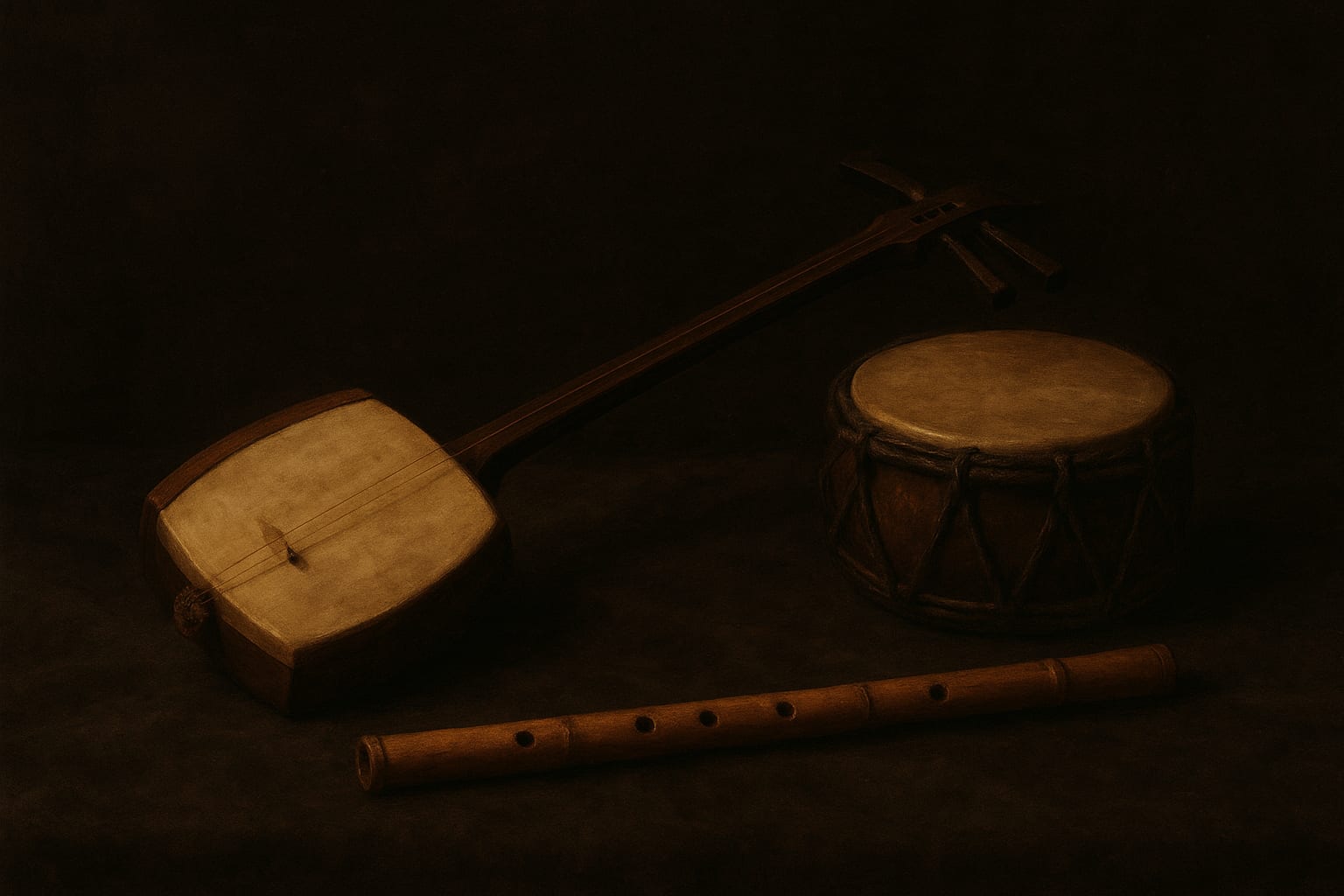
It is not a performance. It is described explicitly as not a dance to watch but a dance to dance, and the circle is open. The music is shamisen, drum and flute with singing, and by tradition the dance called Matsusaka (松阪) always closes the night.
The dancing has continued in the town for some four hundred years, and was encouraged by an Edo-period lord as a way of bringing the social classes together. One of its dances, Kochō Kawasaki (古調かわさき), is designated an Important Intangible Cultural Property nationally, and Gujo Odori was registered as UNESCO intangible cultural heritage in 2022.
The best-known part is the all-night dancing over Obon (お盆), which runs from evening until near dawn; the hour before first light is described as the high point of the whole season. In 2026 those nights were 13 to 16 August. That is given here as the 2026 dates, not as a fixed annual timetable: the schedule is published year by year, and this archive has not found a source stating that the all-night nights fall on the same dates every year.
For that reason, the dates below are a season rather than a list of nights. The window says when to start asking; the nights themselves have to be looked up for the year you are travelling.
چرا اهمیت دارد
Gujo Odori is a dance a visitor is meant to join rather than simply observe. The distinction is the town’s own: it is not 「見るおどり」 but 「踊るおどり」, not a dance to watch but a dance to dance. That is why this entry records it as open to all, where almost everything else in the archive is observe-only.
It is also a season rather than a single event. Danced over more than thirty nights from mid-July to early September, with one venue each night tied to neighbourhood festivals, it has a different shape from a festival with one date. It is something the town does for part of every year, not something staged on one day.
Gujo Odori was registered as UNESCO intangible cultural heritage in 2022, within “Furyu-odori, ritual dances imbued with people’s hopes and prayers”. The entry does not encode an annual timetable from a single year’s schedule; dates for any other year have to be checked when that year’s schedule is published.
چه زمانی برگزار میشود
احتیاط
در روزی از این دوره
تاریخ تخمینی
در روزی از این دوره
تاریخ تخمینی
در روزی از این دوره
تاریخ تخمینی
در روزی از این دوره
تاریخ تخمینی
در روزی از این دوره
تاریخ تخمینی
پیش از رفتن
Japan — national visitor guidance. Not specific to this festival.
هرگز
- Deface a cultural asset. Graffiti or marks of any kind on temples, shrines and other historic structures cause irreparable damage, and are a criminal offence.
- Take photographs without permission.
- Litter. Use a bin where there is one or carry your rubbish with you, and separate cans, glass and plastic bottles into the right recycling bins.
- Enter private property, including farmland.
- Take large luggage into crowded spaces.
- Ignore posted manner signs. The tourism agency publishes a pictogram set covering locally posted prohibitions — blocking walkways, cutting in line, eating while walking, using a selfie stick, going onto train tracks — and these apply where they are displayed.
عکاسی
National guidance rather than a rule for any one festival: a responsible traveller does not take photographs without permission, and is asked to be considerate of their surroundings when taking them. Some places post signs prohibiting selfie sticks.
ازدحام
Crowds gather at popular places and in peak seasons. The national advice is to plan around them — visit on weekdays, early in the morning or at night — and to avoid sightseeing during commuter rush hours, when local people are travelling to work and school. Using a luggage-storage service, a locker or a courier keeps your hands free in crowded places.
کجا برگزار میشود
Only the surrounding area is published for this location.
ژاپن
فقط محدودهٔ کلی
Gifu
فقط محدودهٔ کلی
Gujo
فقط محدودهٔ کلی
منابع
- 郡上八幡観光協会 — 郡上おどり · institutional
- 郡上八幡観光協会 — 2026年郡上おどり日程 · institutional
- UNESCO Intangible Cultural Heritage — Japan · institutional
کد کوتاه
jp-8nn3j
شناسهای کوتاه و پایدار برای این مدخل؛ روی کارتها چاپ میشود و همهجا قابل ارجاع است.