یادداشت
Nowruz
نوروز
Nowruz (نوروز) is the festival beginning the Persian new year and the first day of the solar year, 1 Farvardin. It falls between 19 and 22 March and coincides with the vernal equinox.
چه روی میدهد
In Iran, the Nowruz holidays last thirteen days. The moment of transition is called تحویل سال (tahvil-e sal), the instant of the vernal equinox.
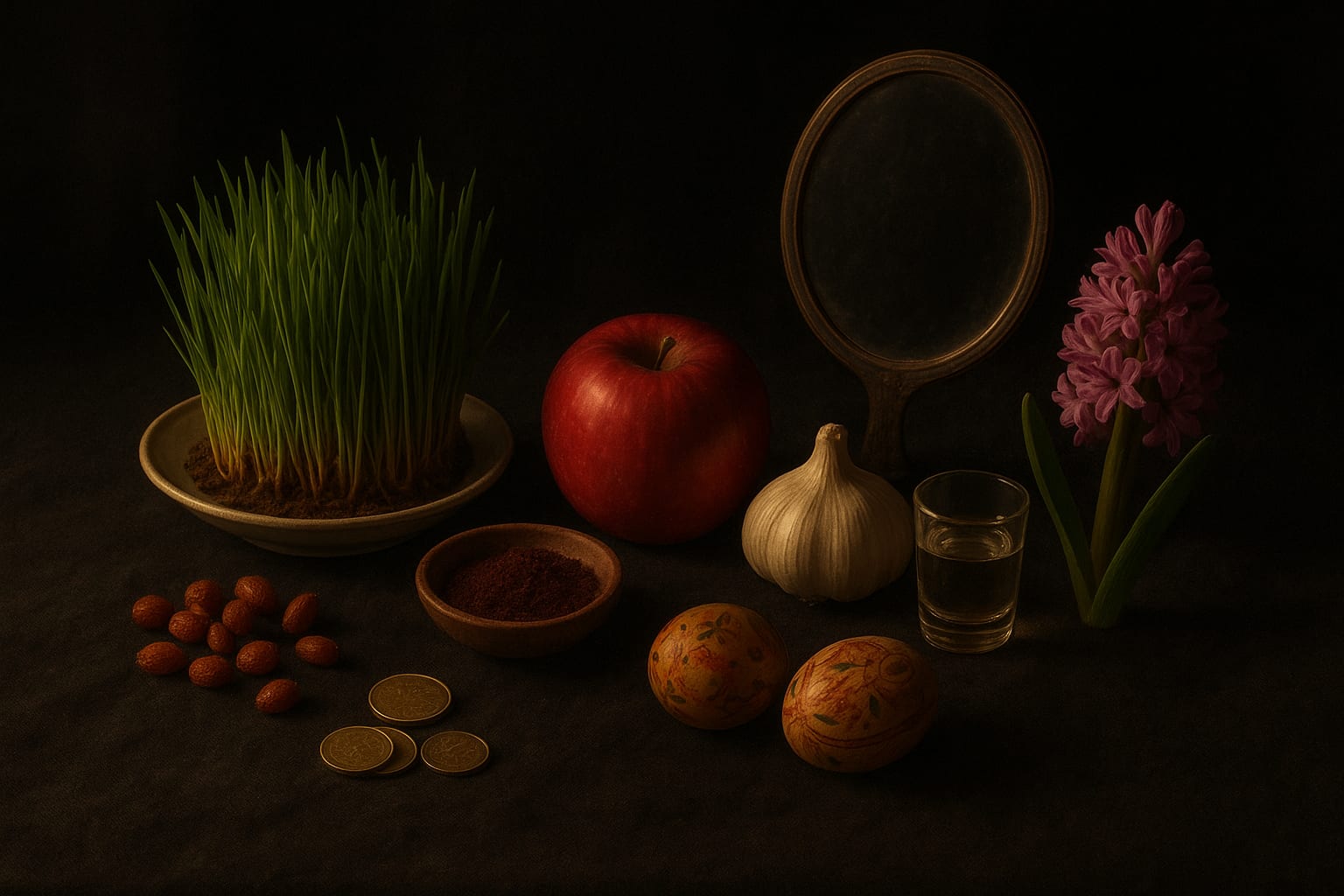
A central feature is the Haft-sin (سفره هفتسین), a table of seven things beginning with the Persian letter sin (س): sabze (sprouts), samanu (sweet pudding), senjed (Persian olive), serke (vinegar), sib (apple), sir (garlic), and somāq (sumac). The table may also include a mirror, candles, painted eggs, a bowl of water, goldfish, coins, hyacinth, and traditional confectioneries.
In the days around the New Year, related customs mark the wider cycle: Chaharshanbe Suri is observed before Nowruz with fire rituals, and on the thirteenth day Sizdah Bedar draws people outdoors for picnics and time in nature.
چرا اهمیت دارد
Nowruz is recognised internationally as a living cultural practice. UNESCO inscribed the element “Nawrouz, Novruz, Nowrouz, Nowrouz, Nawrouz, Nauryz, Nooruz, Nowruz, Navruz, Nevruz, Nowruz, Navruz” on the Representative List of the Intangible Cultural Heritage of Humanity, file no. 02097, in 2024 at the 19.COM session, expanding an earlier inscription (11.COM 10.b.1, 2016). It was submitted jointly by thirteen States Parties including Iran.
The United Nations General Assembly proclaimed 21 March the International Day of Nowruz in 2010, by resolution A/RES/64/253, describing it as an ancient celebration of life, rebirth, and the triumph of light over darkness, heralding the arrival of spring.
It remains one of the oldest surviving festivals connected with the cultural world of ancient Iran.
چه زمانی برگزار میشود
پیش از رفتن
Nowruz — visiting etiquette
مهم
Chaharshanbe Suri, the fire festival on the eve of the last Wednesday before Nowruz, injures people every year. In a survey of one hospital’s emergency department in Tabriz during the 2014 festival, 72.9% of fireworks injuries came from firecrackers and 73.5% happened while fire-jumping or handling fireworks — but 8.2% befell people simply passing through the streets or travelling in vehicles. Standing back is not the same as being safe.
هرگز
- Do not photograph military or government installations. Photography near them is strictly prohibited and foreign nationals have been detained and charged.
- Do not drink alcohol in public. There are no exceptions.
عکاسی
Photography near military and other government installations is strictly prohibited in Iran. Foreign nationals have been arrested for possessing photographic equipment near sensitive sites, and you can be detained and charged under national security laws (UK FCDO). Away from those sites, ask people before photographing them.
پوشش
Iran’s public dress code is law, not custom. In public places women must cover their heads with a headscarf, and wear trousers or a floor-length skirt with a long-sleeved tunic or coat reaching mid-thigh or knee. Men should wear long trousers and long-sleeved shirts (UK FCDO).
خوراک
- Senjed · سنجد
کجا برگزار میشود
Only the surrounding area is published for this location.
Tehran & Alborz
فقط محدودهٔ کلی
Isfahan & Yazd
فقط محدودهٔ کلی
Shiraz & Fars
فقط محدودهٔ کلی
منابع
- Nawrouz / Novruz / Nowruz — UNESCO Representative List of the Intangible Cultural Heritage · institutional
- International Day of Nowruz — United Nations · institutional
- Nowruz — English Wikipedia · editorial
- نوروز — Persian Wikipedia · editorial
- Iran travel advice: safety and security — UK Foreign, Commonwealth & Development Office · institutional
- Fireworks-Related Injuries in Iran: A Survey Following the 2014 New Year’s Festival in Tabriz · academic
کد کوتاه
ir-q7vgz
شناسهای کوتاه و پایدار برای این مدخل؛ روی کارتها چاپ میشود و همهجا قابل ارجاع است.