یادداشت
Setsubun
節分
Setsubun (節分) is the day before spring begins in the old reckoning, marked by throwing dried beans to drive out ill fortune. Its date is not fixed; the observatory publishes it.
چه روی میدهد
Setsubun (節分) is the day before Risshun (立春), the start of spring in the traditional Japanese reckoning. It once meant the day before each of the four seasons; only the spring one is still widely kept. It is a day for driving off ill fortune.
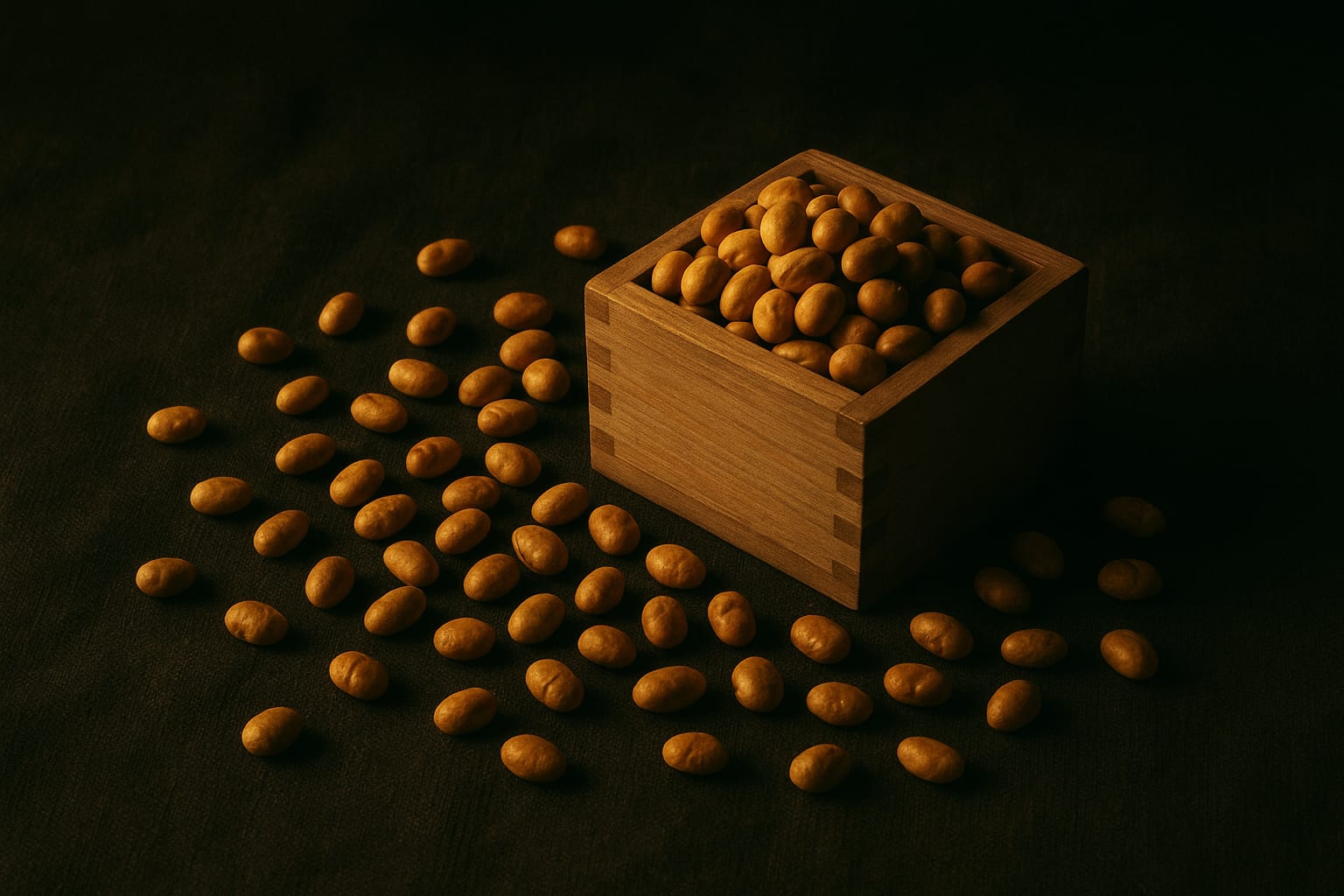
For most people, Setsubun means mamemaki: throwing dried beans, usually with the call “oni wa soto, fuku wa uchi” — demons out, good luck in. It is described as a ritual to drive out bad influences and pray for good things. The words are not the same everywhere: at Kinpusen-ji the call is reversed, and the demons are welcomed in.
The date is why this entry is limited in the way it is. Setsubun is not fixed to 3 February, although it falls there in most years. Risshun is the moment the sun reaches a particular point on the ecliptic; that moment slips about six hours later each year and is pulled back by each leap year, so the day moves. It fell on 2 February in 2021 — the first time it had not been the 3rd since 1984, and the first 2 February since 1897 — and it fell on 2 February again in 2025.
This entry holds no formula. The seasonal terms are computed and Setsubun is published by name; each year’s table appears in the Official Gazette in February of the year before. The dates listed here are the ones read from those tables, one year at a time, and there are no others. The list is short, and it will stay short: a date this archive has not read in the gazette is a date it does not have. Guessing the rest would be easy, would look right most of the time, and would be wrong exactly when it mattered.
چرا اهمیت دارد
Setsubun (節分) marks a seasonal boundary from a reckoning older than the calendar Japan now uses. When the country changed calendars, the day kept its old anchor—the sun’s position—instead of being assigned a fixed date. That is why it still moves, and why it remains the clearest surviving case of the older calendar setting the terms.
There were originally four such boundaries, one before the start of each season. Only the spring Setsubun, the day before Risshun (立春), is still generally observed. Temples and shrines hold public mamemaki, bean-throwing rituals whose stated purpose is to drive out bad influences and pray for good things. That purpose has stayed the same while the calendar around it changed completely.
چه زمانی برگزار میشود
پیش از رفتن
Japan — national visitor guidance. Not specific to this festival.
هرگز
- Deface a cultural asset. Graffiti or marks of any kind on temples, shrines and other historic structures cause irreparable damage, and are a criminal offence.
- Take photographs without permission.
- Litter. Use a bin where there is one or carry your rubbish with you, and separate cans, glass and plastic bottles into the right recycling bins.
- Enter private property, including farmland.
- Take large luggage into crowded spaces.
- Ignore posted manner signs. The tourism agency publishes a pictogram set covering locally posted prohibitions — blocking walkways, cutting in line, eating while walking, using a selfie stick, going onto train tracks — and these apply where they are displayed.
عکاسی
National guidance rather than a rule for any one festival: a responsible traveller does not take photographs without permission, and is asked to be considerate of their surroundings when taking them. Some places post signs prohibiting selfie sticks.
ازدحام
Crowds gather at popular places and in peak seasons. The national advice is to plan around them — visit on weekdays, early in the morning or at night — and to avoid sightseeing during commuter rush hours, when local people are travelling to work and school. Using a luggage-storage service, a locker or a courier keeps your hands free in crowded places.
کجا برگزار میشود
ژاپن
فقط محدودهٔ کلی
Only the surrounding area is published for this location.
منابع
- 国立天文台 暦要項 令和7年(2025) — 二十四節気および雑節 · institutional
- 国立天文台 暦要項 令和8年(2026) — 二十四節気および雑節 · institutional
- 国立天文台 暦要項 令和9年(2027) — 二十四節気および雑節 · institutional
- 国立天文台 暦計算室 — 節分の日が動き出す · institutional
- 国立国会図書館 — 日本の暦: 二十四節気 · institutional
- Japan Tourism Agency multilingual database — The Setsubun-e Ritual · institutional
کد کوتاه
jp-y1ca0
شناسهای کوتاه و پایدار برای این مدخل؛ روی کارتها چاپ میشود و همهجا قابل ارجاع است.