このページはまだ日本語に翻訳されていません。英語の原文を表示しています。
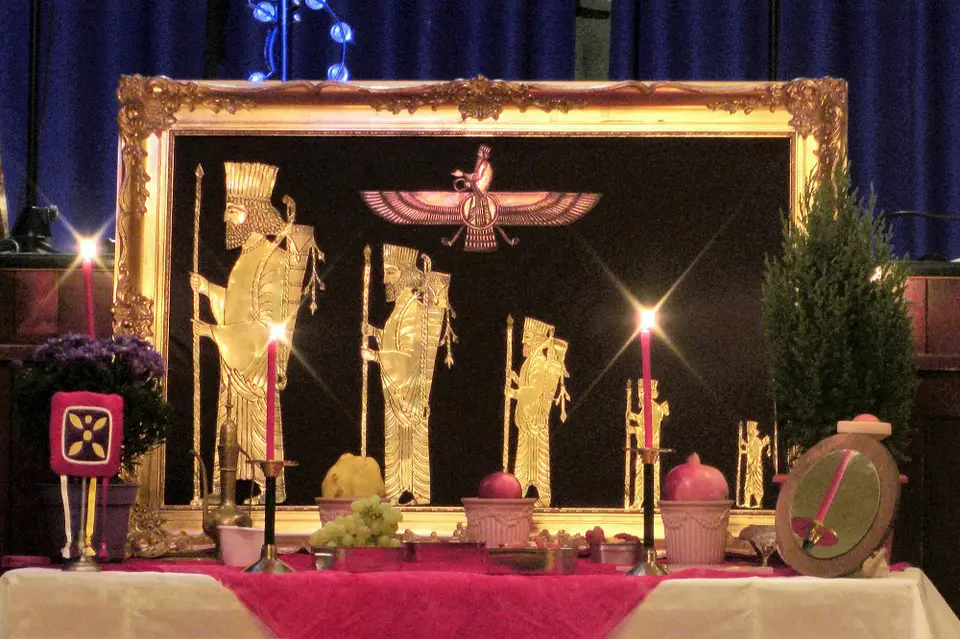
The ancient Iranian autumn festival of Mehr — friendship, affection and the harvest. Tables are laid with pomegranates, apples and grapes, prayers are said, and there is music, dance and, in places, wrestling.
A festival for Mehr
Mehregan honours Mehr — the ancient Mithra — a divine being of friendship, affection and love. It is one of the oldest festivals of the Iranian world. Under the Sasanian kings it ranked second only to Nowruz, kings held public audiences at both, and the two feasts were seen as a pair: Nowruz in spring, the time of sowing, and Mehregan in autumn, when what has grown reaches its fullness.
Legend ties the day to the hero Fereydun, who is said to have defeated the tyrant Zahhak on Mehregan and imprisoned him on Mount Damavand.
The Mehregan table
Today Mehregan is above all a harvest thanksgiving, kept by Zoroastrian and Muslim communities alike. UNESCO describes how both set out a table of goods from the land — pomegranates, watermelons, pears, limes and lemons, grapes, apples, rice and wheat — alongside home-cooked dishes, nuts, sweets and special drinks.
Around it come music, song and dance, theatre and local sports such as wrestling. Communities hold flower shows and sell handicrafts. In the old tradition people gave one another gifts, each according to their means, “even as simple as an apple”.
Shared with Tajikistan
In 2024 the Ceremony of Mehregan was inscribed on UNESCO’s Representative List of the Intangible Cultural Heritage of Humanity for Iran and Tajikistan, as a festival that brings together people of different ages, backgrounds and faiths.
開催時期
According to UNESCO, communities celebrate Mehregan each year between 2 October and 2 November. The traditional feast day is 16 Mehr in the Iranian calendar, when the day and the month both bear the name of Mehr, but many local celebrations fall on other days in this period.
- 2026/10/02~2026/11/02推定
- 2027/10/02~2027/11/02推定
- 2028/10/02~2028/11/02推定
- 2029/10/02~2029/11/02推定
敬意をもって訪れる
知っておきたいこと
- Celebrations held outdoors or in public halls are subject to Iran’s dress code. Women must cover their hair and wear a long-sleeved tunic or coat over trousers or a floor-length skirt; men should wear long trousers and long sleeves.
- Zoroastrian communities mark the day with readings from their scripture and Muslims with their own prayers. Ask before photographing a religious gathering.
避けること
- Do not photograph military or government buildings. Foreign nationals have been detained for photography near sensitive sites.
- Do not drink alcohol. It is illegal in Iran, and penalties can be severe.
安全のために
- As of September 2026 the UK government advises against all travel to Iran. Check your own government’s advice before planning a trip.
出典
この項目は次の資料をもとに書かれています。
- Ceremony of MehreganUNESCO Intangible Cultural Heritage · 2026年9月16日 閲覧
- MehreganWikipedia (English) · 2026年9月16日 閲覧
- Iran travel advice: safety and securityUK Foreign, Commonwealth & Development Office · 2026年9月16日 閲覧
関連する祭り
Shab-e Yalda
شب یلدا
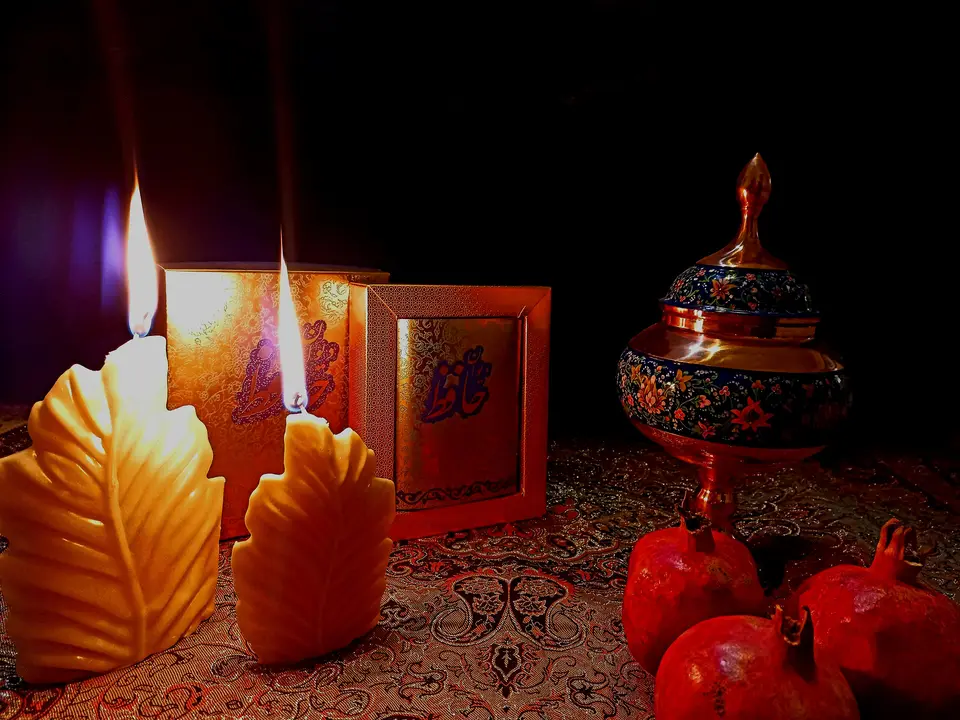
On the longest night of the year, families gather at the homes of their elders to stay up late around a table of pomegranates, watermelon, nuts and dried fruit, reading Hafez and telling stories until well after midnight.
2026年12月21日算出
Jashn-e Sadeh
جشن سده
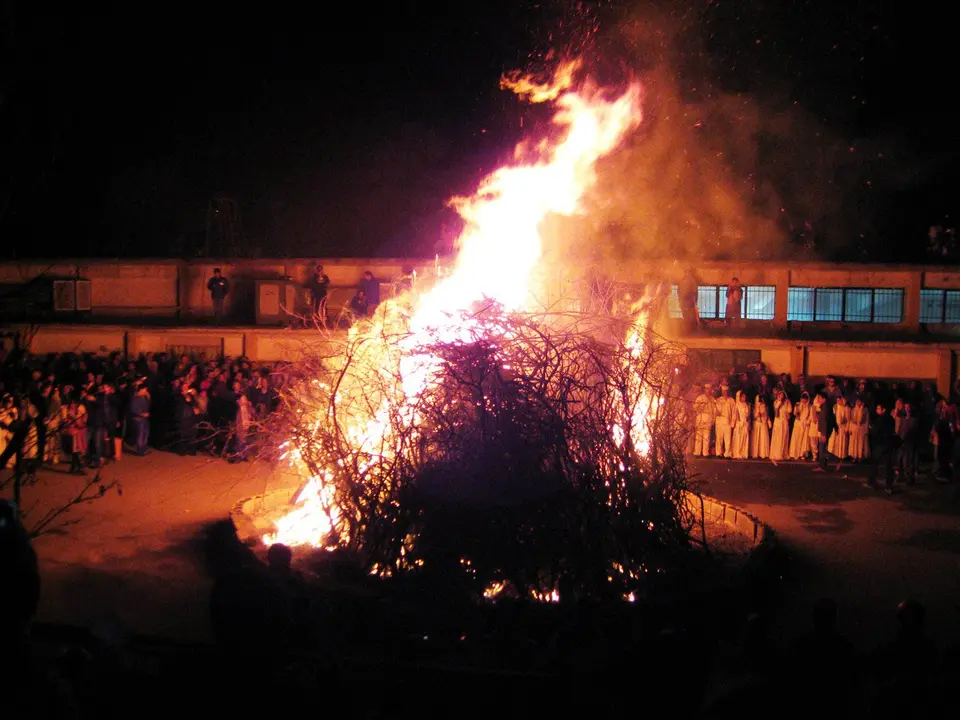
In the depth of winter, fifty days before spring, a great bonfire is lit at sunset. People gather around it to sing, dance and pray, offer blessings and fruit, and celebrate the passing of the coldest days.
2027年1月30日算出
Tirgan
جشن تیرگان
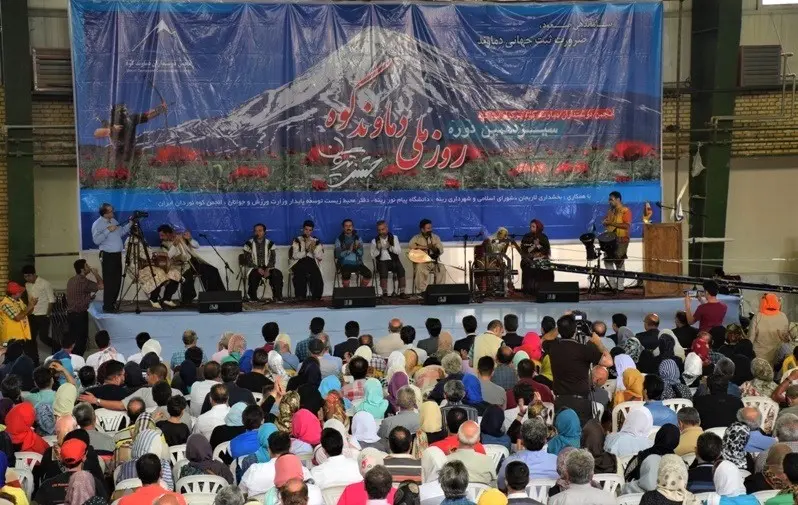
An ancient midsummer festival of water and rain. People splash each other with water, dance and recite poetry, share spinach soup and saffron rice pudding, and tie rainbow-coloured bands around their wrists.
2027年7月4日算出