提示
Shab-e Yalda
شب یلدا
Shab-e Yalda, also called Shab-e Chelleh, marks the longest night of the year and symbolises the victory of light over darkness. It usually falls on 20 or 21 December.
会发生什么
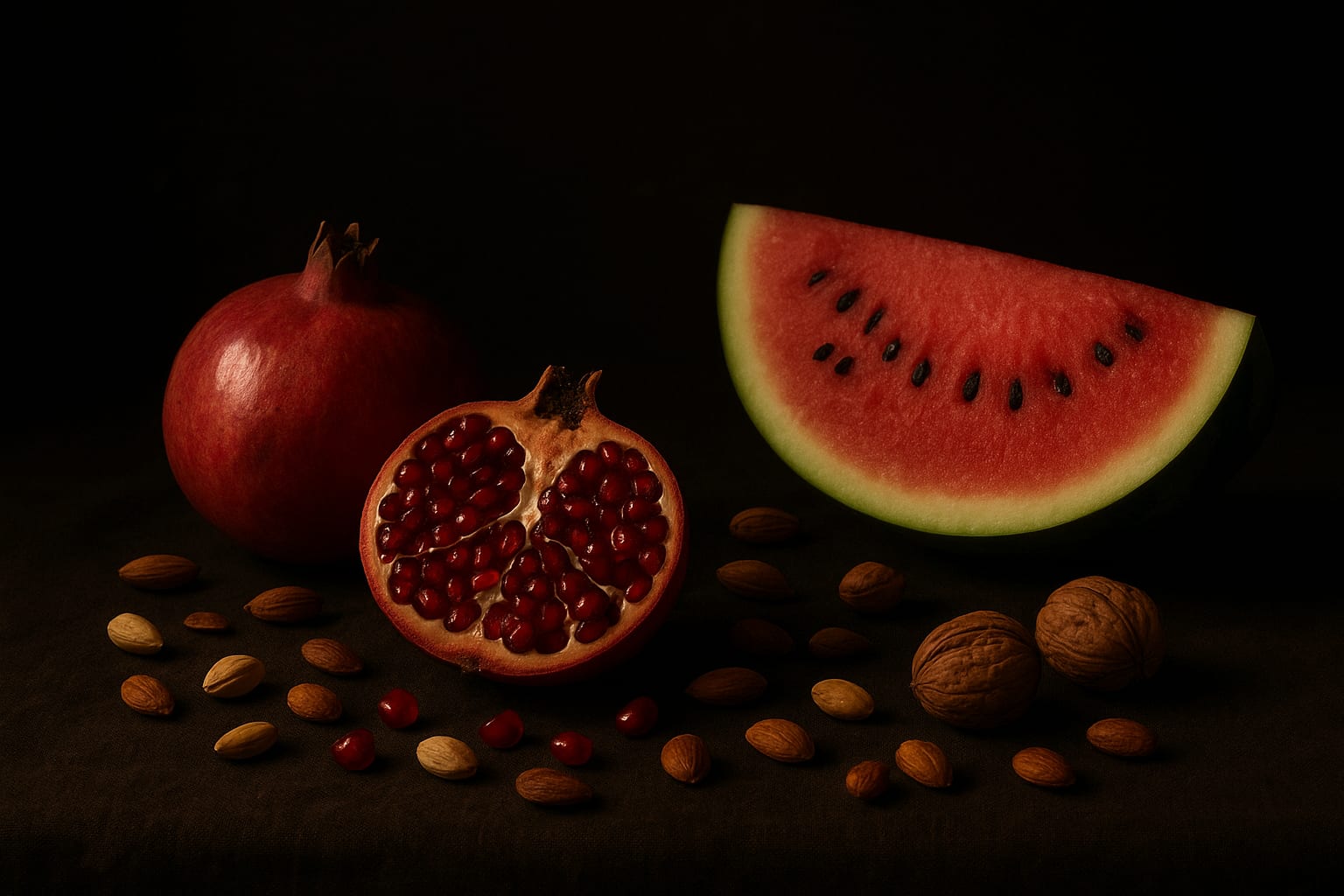
On the night of 30 Azar until sunrise on 1 Dey in the Jalali calendar, usually 20 or 21 December, family and friends gather for a private celebration on the winter solstice, the longest night of the year. A guest would find a table set with symbolic foods: pomegranate, watermelon, nuts and dried fruits. People stay awake until late in the night. Poetry is read, especially Hafez, including fal-e Hafez, when the divan is opened at random for a reading. Stories from the Shahnameh are also read or listened to.
为何重要
Shab-e Yalda, also called Shab-e Chelleh or Shab-e Chelleh Bozorg, marks the longest night of the year. Its symbolism centres on the victory of light over darkness and the rebirth of the sun. The name “Yalda” comes from Syriac and means “birth”. The practice has roots in ancient Iranian traditions and in the cult of Mithra. It was inscribed on UNESCO’s Intangible Cultural Heritage list in 2022, jointly for Iran and Afghanistan.
何时举行
出发之前
Yalda — visiting etiquette
切勿
- Do not photograph people without asking them first.
- Do not turn up uninvited. Yalda is primarily a private family gathering, not a public event.
拍摄
Yalda is usually celebrated privately at home. Ask before photographing anyone, and accept a refusal without pressing.
着装
If you are invited into a home, dress modestly.
饮食
- Watermelon · هندوانه
- Pomegranate · انار
在何处举行
Only the surrounding area is published for this location.
伊朗
仅大致区域
Tehran & Alborz
仅大致区域
Isfahan & Yazd
仅大致区域
Shiraz & Fars
仅大致区域
来源
- Yaldā/Chella — UNESCO Representative List of the Intangible Cultural Heritage · institutional
- Yalda Night — The Canadian Encyclopedia · editorial
- Yalda Night — English Wikipedia · editorial
- شب یلدا — Persian Wikipedia · editorial
短代码
ir-6sy17
本条目的简短固定标识,可印于卡片,也可在任何地方引用。