لم تُترجم هذه الصفحة إلى العربية بعد، ويُعرض نصها الأصلي بالإنجليزية.
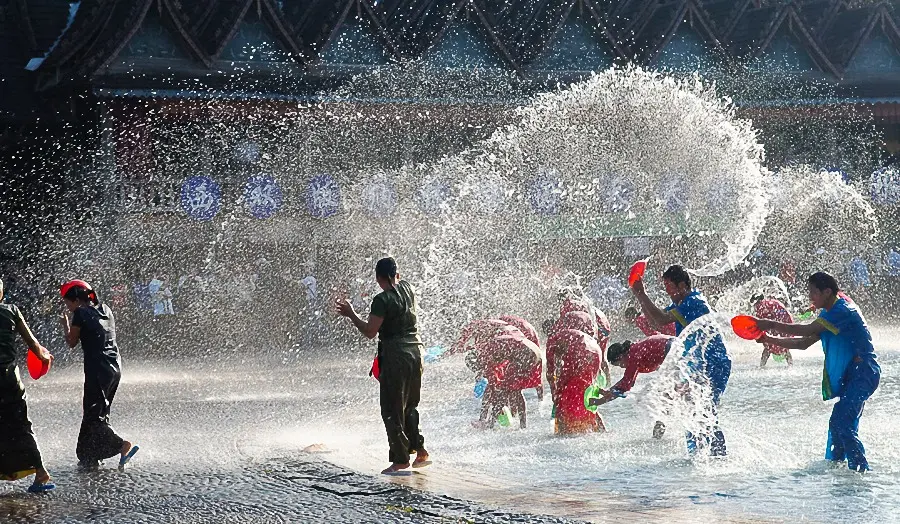
In mid-April the Dai of Xishuangbanna welcome their new year by washing statues of the Buddha and drenching each other with water for luck — three days of dragon boat races, rockets, dances and a city-wide water fight in Jinghong.
New Year of the Dai
The Water-Splashing Festival, Poshui jie, is the most important festival of the Dai people of southern Yunnan, who live mainly in Xishuangbanna and Dehong and who follow Theravada Buddhism. It marks the Dai New Year and is also known as the festival for bathing the Buddha. China’s Ministry of Culture and Tourism describes it as a festival of the Dai, Achang, Blang, Wa and De’ang peoples and one of the first items on the national intangible cultural heritage list.
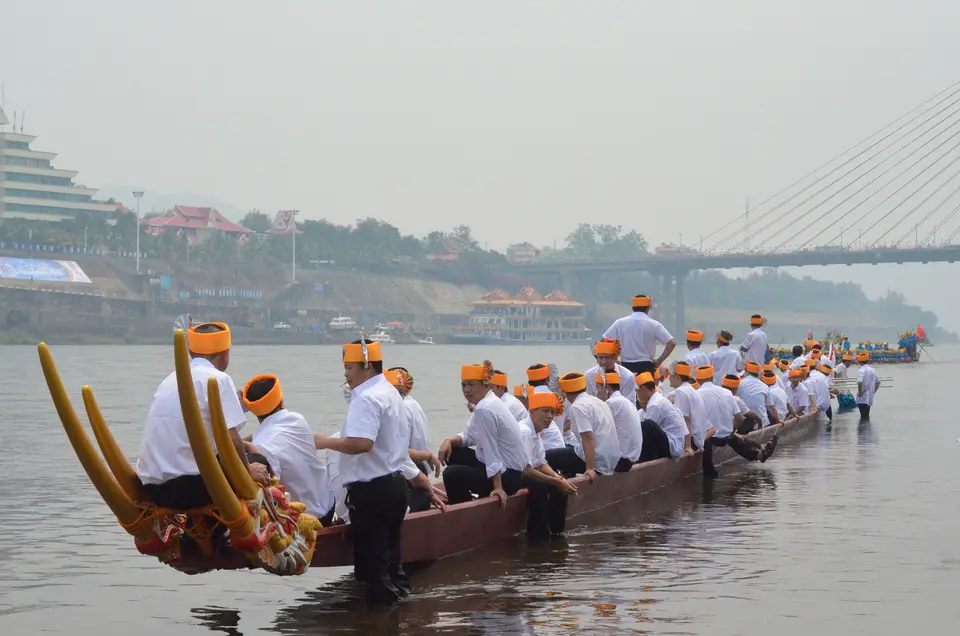
The festival usually lasts three days. On the first there are dragon boat races on the Lancang River, Dai rockets and performances. The second is the day of water-splashing. The third coincides with New Year’s Day itself: people put on traditional clothes and visit the temple. In the afternoon women first wash the statues of the Buddha to receive blessings, and then everyone splashes water on each other — a wish for good fortune and for washing away illness and disaster.
The demon king’s head
One Dai tale tells of a demon king with seven wives. The seventh learned that a strand of his own hair could cut off his head, and used it. The head fell and caught fire, bringing disaster wherever it rolled, so the wives took turns holding it and splashed each other with water to wash away the blood. In Xishuangbanna and Dehong the story is retold at the festival in memory of the seven women.
In recent years the festival in Jinghong has drawn huge crowds of visitors from across China. Alongside the splashing there are celebrations, parades of folk culture, markets and the release of sky lanterns.
متى يُقام
The festival is the Dai New Year, set by the Dai calendar, and usually falls in mid-April. In Xishuangbanna it lasts three days — 13 to 15 April in 2026, but 14 to 16 April in 2025 — so check the prefecture’s announcement for the year you travel.
- 13–15 أبريل 2027تقديري
- 13–15 أبريل 2028تقديري
- 13–15 أبريل 2029تقديري
- 13–15 أبريل 2030تقديري
زيارة باحترام
من المفيد أن تعرف
- Expect to get completely soaked in town during the water-splashing days. Keep phones and documents in waterproof bags.
المصادر
كُتب هذا المدخل استنادًا إلى المصادر التالية.
- Water-Sprinkling FestivalWikipedia · اطُّلع عليه في 16 سبتمبر 2026
- 到云南体验“泼天的欢乐”Ministry of Culture and Tourism of the People’s Republic of China (from China Tourism News) · اطُّلع عليه في 16 سبتمبر 2026
- 2025西双版纳泼水节是哪天Kunming Bendibao · اطُّلع عليه في 16 سبتمبر 2026
- 2026年云南泼水节活动汇总Kunming Bendibao · اطُّلع عليه في 16 سبتمبر 2026
- China travel advice: safety and securityUK Foreign, Commonwealth & Development Office · اطُّلع عليه في 16 سبتمبر 2026
مهرجانات ذات صلة
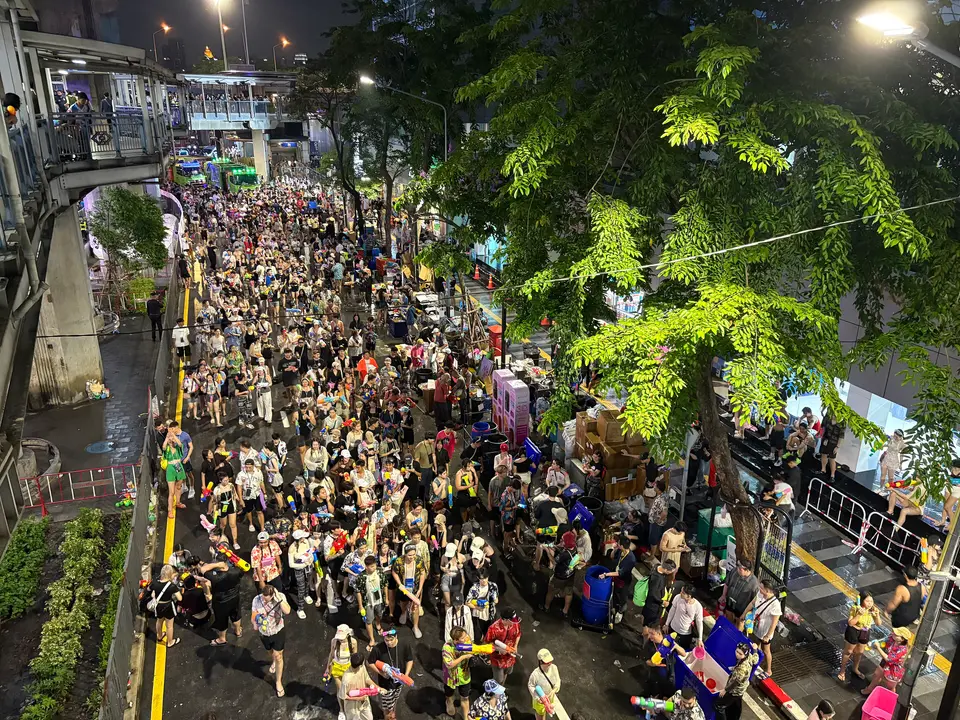
Songkran
สงกรานต์
The traditional Thai New Year falls in mid-April, in the hottest weeks of the year. Families gather, pour water over the hands of their elders and over Buddha images — and in the streets, the gentle blessing becomes a nationwide water fight.
13–15 أبريل 2027محسوب
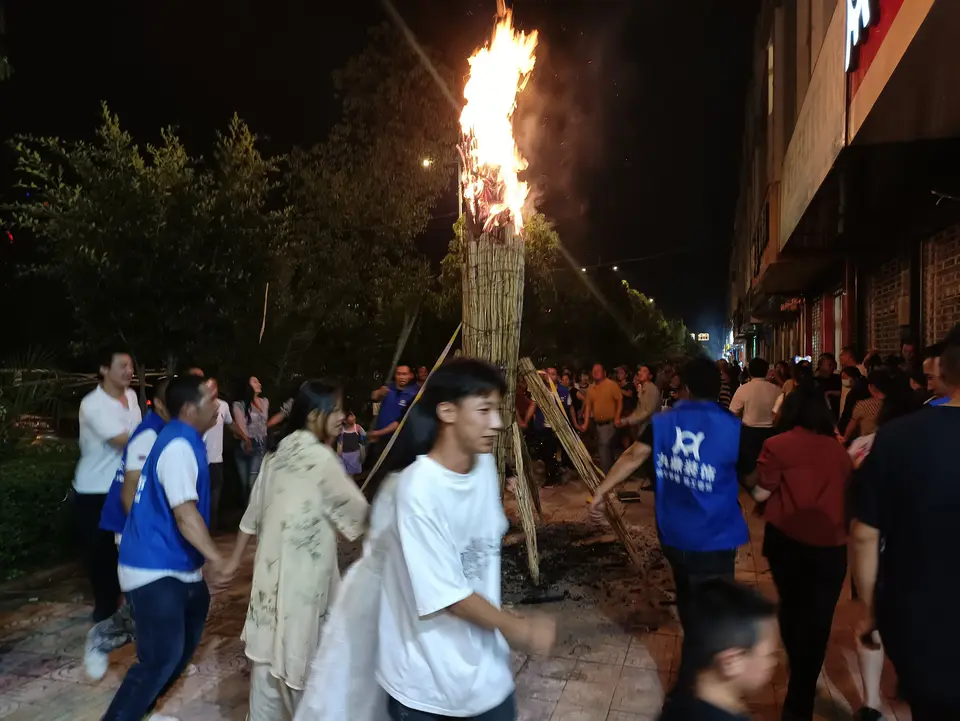
Torch Festival
火把节
At the height of summer the Yi of Liangshan and Yunnan light torches of wormwood and pine, carry them around their homes and fields to drive away misfortune, and dance around bonfires all night — with horse races, wrestling and bullfights by day.
27 يوليو 2027محسوب
Dragon Boat Festival
端午节
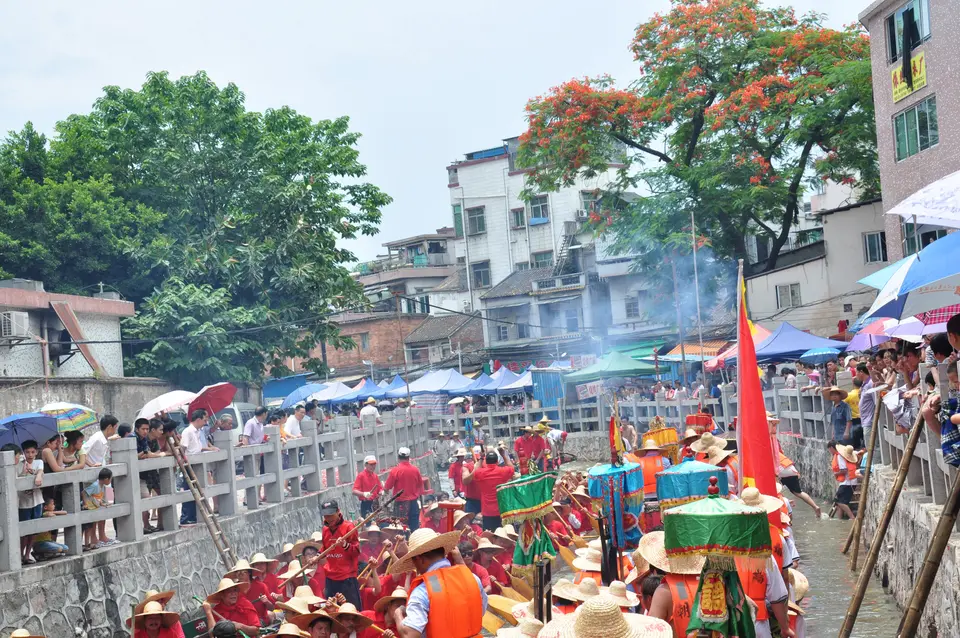
On the fifth day of the fifth lunar month, crews race long carved dragon boats, families eat zongzi, and doors are hung with calamus and mugwort — a festival of remembrance and protection, the first Chinese festival inscribed by UNESCO.
9 يونيو 2027محسوب