Diese Seite ist noch nicht ins Deutsche übersetzt; der englische Originaltext wird angezeigt.

Three days in the middle of April, when the harvest is in and the heat is at its worst. Houses are cleaned and lit for the new year's angel, mounds of sand are raised in the pagoda courtyards, elders are washed with scented water, and the street games that belong to no other week of the year come out again.
The angel of the year
Chaul Chnam Thmey turns the solar year, the same turn that Thailand, Laos and Myanmar keep in their own ways in the middle of April. The first day, Maha Sangkran, is the crossing: houses are cleaned and lamps lit to receive the tevoda, the angel who will look after the coming year, and people wash their faces in the morning, their chests at midday and their feet in the evening for luck. The second day, Virak Vanabat, is for giving — to the poor, to servants, to those with nothing — and for the ceremony for the family's dead at the monastery. The third, Virak Loeung Sak, is for washing: Buddha images are bathed in scented water, and so are parents and grandparents, which is said to bring them long life.
Sand, games and water
In the pagoda courtyards people build mounds of sand, phnom khsach, one large stupa for the Buddha and smaller ones around it for his disciples; each grain is counted as a sin carried away. Outside, the games of the new year are played in the street and nowhere else in the calendar: chol chhoung, a cloth ball thrown between a line of young men and a line of young women; bos angkunh, throwing seeds at seeds; leak kanseng, a scarf hidden behind a circle of sitting players; bay khom, a board of holes and beads. In many towns water and chalk are thrown as well, though that part is younger and is not kept everywhere.
When it falls
The date is calculated, not fixed: it is the moment the sun enters the new year, and in most years that makes the holiday 14 to 16 April, with some years beginning on the 13th. It is the one week when Phnom Penh empties almost completely and the provinces fill.
Wann es stattfindet
The Khmer New Year is solar, not lunar, and falls in the middle of April, most often from the 14th to the 16th; in some years it begins on the 13th, according to the calculated hour at which the new year's angel arrives. It is a public holiday throughout the country.
- 14.–16. April 2027Geschätzt
- 14.–16. April 2028Geschätzt
- 14.–16. April 2029Geschätzt
- 14.–16. April 2030Geschätzt
Respektvoll besuchen
Gut zu wissen
- Water and powder are thrown in the streets in some towns, and not in others. Watch what the local people are doing before you join in.
- At the pagoda, add your handful of sand to a stupa rather than climbing on one, and walk around it the way everyone else does.
- Washing the hands and feet of an older relative with scented water is a blessing given to the elder, not a joke. If you are asked to do it, do it carefully.
Vermeiden
- Do not throw water at monks, at people carrying offerings, or at anyone on a motorbike.
- Do not photograph the washing of an elder or a Buddha image from inside the family group unless you have been asked in.
Sicherheit
- It is the hottest week of the Cambodian year. Drink water, and keep out of the sun in the early afternoon.
- Road accidents rise sharply during the holiday, with drink involved in many of them. Avoid night journeys and overloaded vehicles.
- Businesses, banks and many restaurants close for the three days; buses and hotels are booked out well in advance.

Quellen
Dieser Eintrag beruht auf den folgenden Quellen.
- Cambodian New YearWikipedia · abgerufen am 24. September 2026
- Khmer calendar — festivals and holidaysKhmer Calendar · abgerufen am 24. September 2026
- Cambodia travel advice: safety and securityUK Foreign, Commonwealth & Development Office · abgerufen am 24. September 2026
Verwandte Feste
Songkran
สงกรานต์
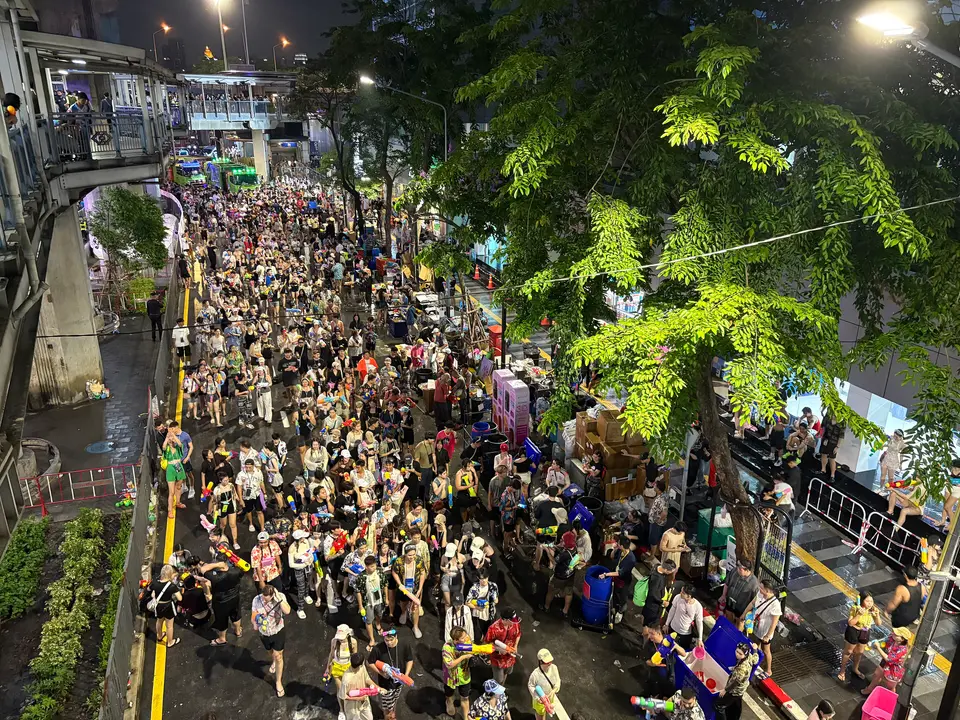
Das überlieferte thailändische Neujahr fällt in die Mitte des April, in die heißesten Wochen des Jahres. Familien kommen zusammen, gießen Wasser über die Hände der Älteren und über Buddhafiguren — und auf den Straßen wird aus dem sanften Segen eine landesweite Wasserschlacht.
13.–15. April 2027Berechnet
Pohela Boishakh
পহেলা বৈশাখ
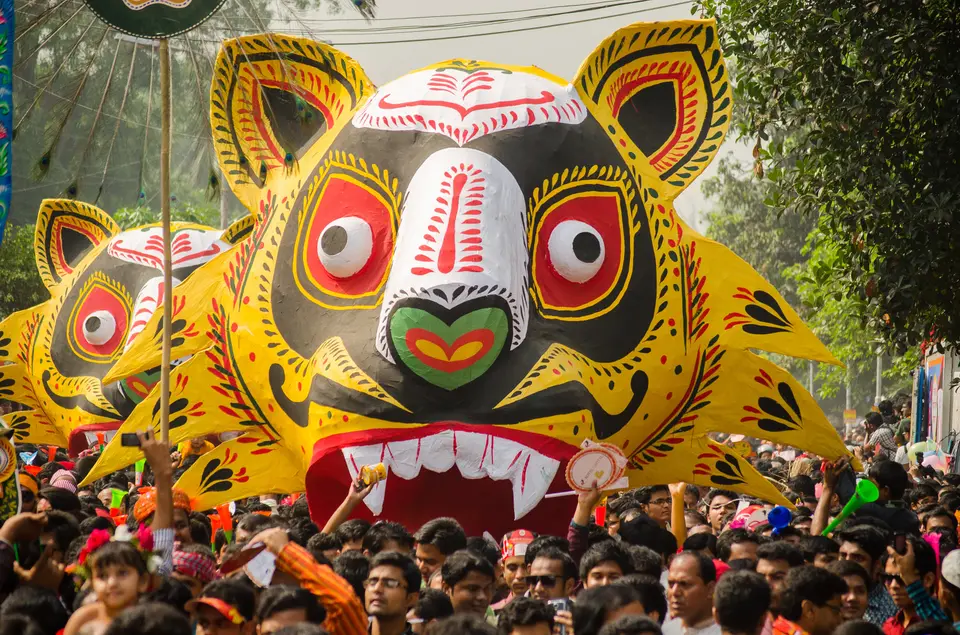
Im Morgengrauen des 14. April begrüßt Dhaka das bengalische Neujahr mit Tagores „Esho he Boishakh“ unter dem Banyanbaum von Ramna, danach zieht ein Umzug riesiger Masken und Wagen durch die Stadt — einer für das Böse, einer für den Mut, einer für den Frieden —, gebaut von den Kunststudenten.
14. April 2027Berechnet
Wasserfest
泼水节
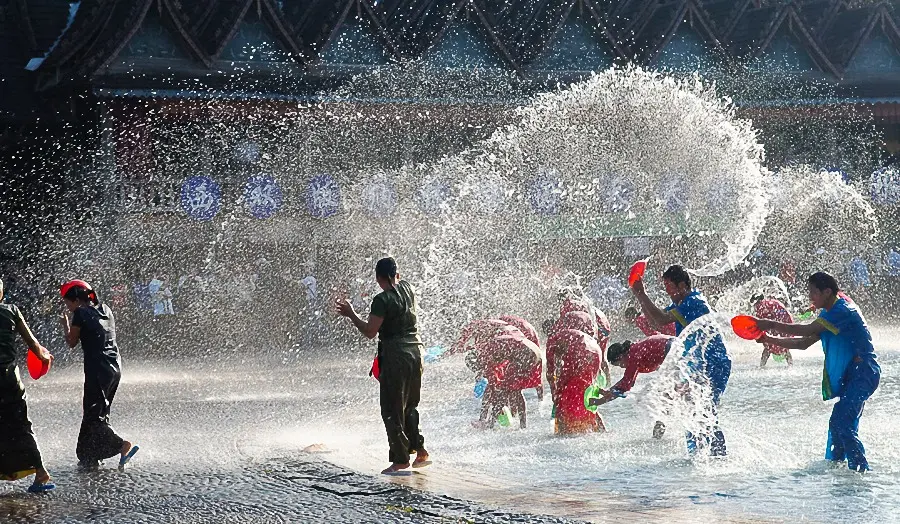
Mitte April begrüßen die Dai von Xishuangbanna ihr neues Jahr, indem sie Buddhastatuen waschen und einander zum Glück mit Wasser überschütten — drei Tage Drachenbootrennen, Raketen, Tänze und eine Wasserschlacht in ganz Jinghong.
13.–15. April 2027Geschätzt
Kommentare
Waren Sie dort? Sagen Sie anderen, was sie erwartet.
Noch keine Kommentare.
Kommentare werden vom Betreiber gelesen, bevor sie erscheinen.