Diese Seite ist noch nicht ins Deutsche übersetzt; der englische Originaltext wird angezeigt.
Timkat (Ethiopian Epiphany)
ጥምቀት
Auf der UNESCO-Liste des immateriellen Kulturerbes der Menschheit
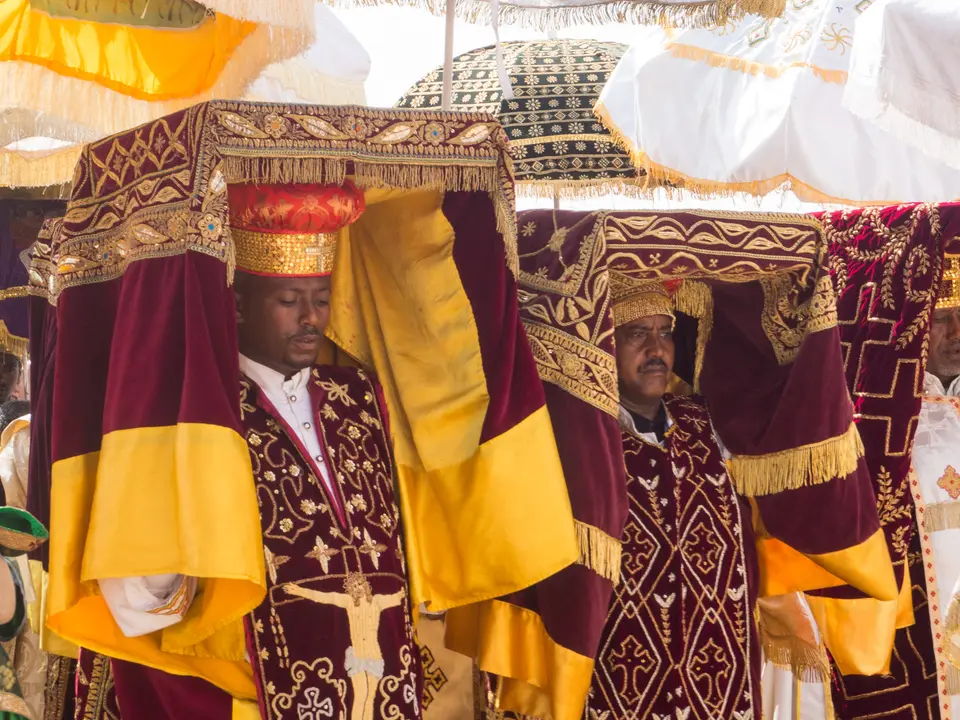
Foto: Jean Rebiffé from Addis Ababa, Ethiopia, CC BY 2.0, über Wikimedia Commons
Ethiopia’s Orthodox Epiphany celebrates the baptism of Christ — on the eve, priests carry each church’s tabot, a replica of the Ark of the Covenant, to a river or pool; at dawn the water is blessed and sprinkled over hundreds of thousands, before the arks return home in dancing processions.
The eve and the dawn
Timkat commemorates the baptism of Jesus in the River Jordan. On the eve, Ketera — a word meaning the blocking of the flow of water for the blessing — each parish escorts its tabot to a river, pool or reservoir with great ceremony. The tabot, a model of the Ark of the Covenant kept on every Ethiopian altar and otherwise rarely seen, is wrapped in rich cloth and carried on the head of a priest.
The celebrations on Timkat day start before sunrise. The Divine Liturgy is sung by the water in the early hours, and towards dawn the water is blessed and sprinkled on the congregation; some people enter the water, renewing their baptismal vows. Hundreds of thousands take part. UNESCO inscribed the Ethiopian Epiphany on its Representative List in 2019.
Back to the church
Later in the day the arks are escorted back to their churches in colourful processions. An account from the 1960s describes clergy in robes of many colours under bright umbrellas singing hymns, elders marching solemnly, children running about, women in their finest clothes, and young men leaping in spirited dances and songs. When the tabot is safely back in its church, everyone goes home to feast. In Addis Ababa, Timkat is celebrated at Jan Meda among other places.
Wann es stattfindet
Timkat falls on 11 Ter in the Ethiopian calendar — 19 January, or 20 January in Gregorian leap years. The celebrations begin on the eve, called Ketera.
- 18.–19. Januar 202710. Ṭərr 2019 AMBerechnet
- 19.–20. Januar 202810. Ṭərr 2020 AMBerechnet
- 18.–19. Januar 202910. Ṭərr 2021 AMBerechnet
- 18.–19. Januar 203010. Ṭərr 2022 AMBerechnet
Respektvoll besuchen
Gut zu wissen
- The tabot is sacred and rarely seen by lay people. Give way to the processions and follow the directions of the clergy and organisers.
Sicherheit
- Very large crowds gather on Timkat. Keep valuables secure and agree on a meeting point with your group.
- The UK advises against all travel to the Amhara and Tigray regions and to parts of Oromia and Afar. Check current advice before planning to attend celebrations outside Addis Ababa.

Quellen
Dieser Eintrag beruht auf den folgenden Quellen.
- Ethiopian epiphanyUNESCO Intangible Cultural Heritage · abgerufen am 17. September 2026
- TimkatWikipedia · abgerufen am 17. September 2026
- Ethiopian calendarWikipedia · abgerufen am 17. September 2026
- Ethiopia travel advice: safety and securityUK Foreign, Commonwealth & Development Office · abgerufen am 17. September 2026
- Ethiopia travel advice: warnings and insuranceUK Foreign, Commonwealth & Development Office · abgerufen am 17. September 2026
Verwandte Feste
Meskel
መስቀል
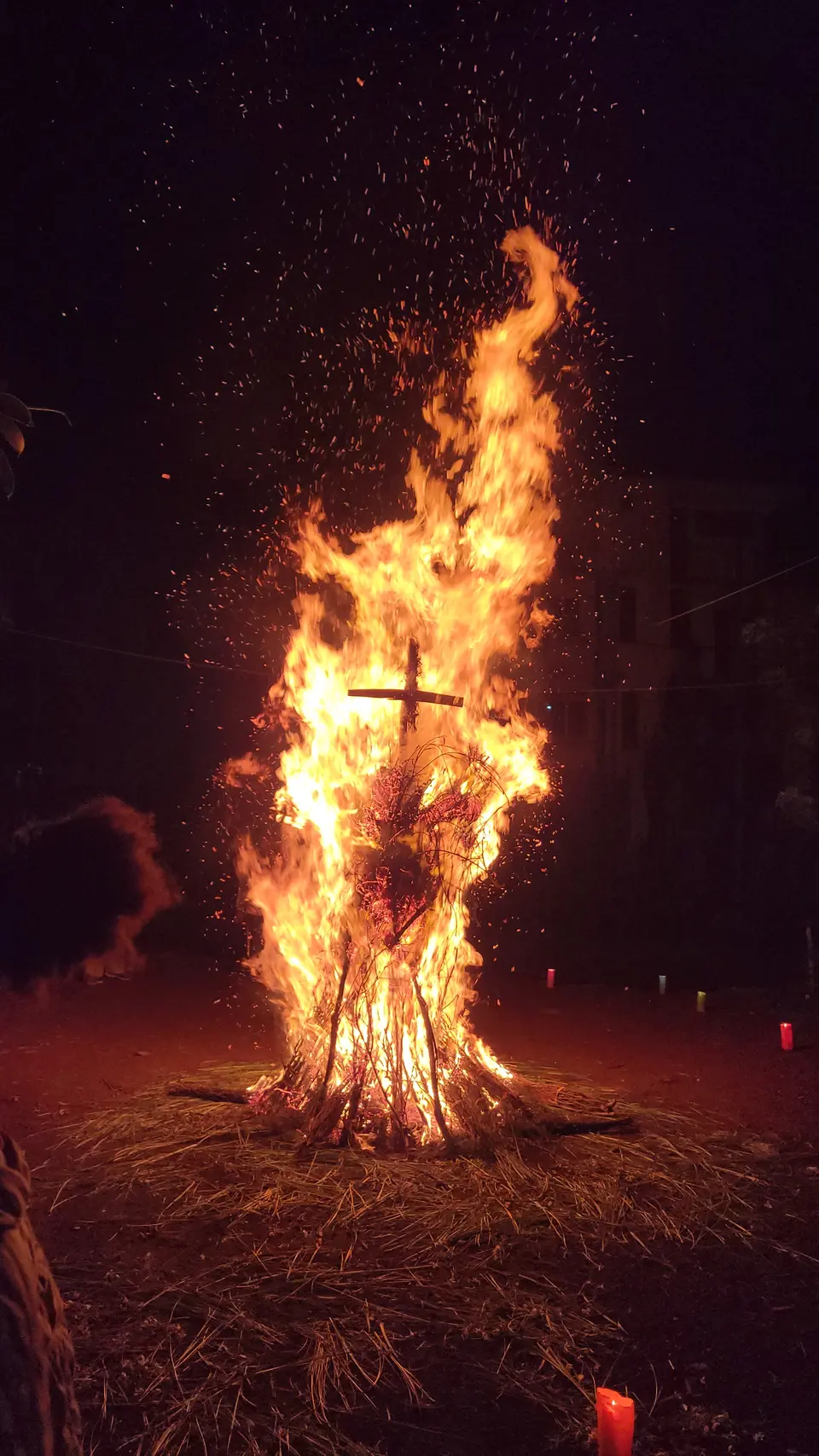
At the end of the rainy season, Ethiopians commemorate the finding of the True Cross by lighting the demera — a great pyre decorated with yellow daisies — in Addis Ababa’s Meskel Square, where priests chant and dance before the patriarch sets it alight.
26.–27. September 2026Berechnet

Enkutatash (Ethiopian New Year)
እንቁጣጣሽ
The Ethiopian New Year arrives in September, as the rains end and hillsides turn yellow with adey abeba flowers — a day of church, family meals of injera and wat, and girls in new clothes going door to door with bouquets and the song “Abebaye hoy”.
12. September 2027Berechnet

Círio de Nazaré
On the second Sunday of October about two million people fill the streets of Belém, in the state of Pará, to follow a small wooden image of Our Lady of Nazareth — thousands of them straining to hold a 400-metre rope — in the largest Catholic event in Brazil.
11. Oktober 2026Berechnet