
Gamou de Tivaouane
Photo: Cheikh Ahmed Tidiane Diagne, CC BY 2.0, via Wikimedia Commons
Senegal has two vast pilgrimages and they belong to two brotherhoods. The Mourides walk to Touba in Safar; the Tijanis fill Tivaouane on the twelfth night of Rabi' al-awwal, after ten nights of reciting a thirteenth-century poem in praise of the Prophet.
Two brotherhoods, two cities
Islam in Senegal is organised into Sufi brotherhoods, and the two largest each have a city and a date. Touba belongs to the Mourides, and the Grand Magal fills it in Safar. Tivaouane, in the Thiès region, is one of the holy places of the Tijaniyya, and its date is the Mawlid — the birth of the Prophet — which Wolof calls the Gamou.
The man at the centre of it is El Hadj Malick Sy, born at Gaé on 18 February 1855 and dead at Tivaouane on 27 June 1922. He returned from Mecca in 1888 carrying the title of caliph of the Tijaniyya for the region, and in 1902, at the suggestion of his father-in-law Mor Massamba Diery Dieng, he founded his zawiya at Tivaouane. He did as much as anyone to spread the order through Senegal and West Africa, and he wrote: the Khilâsu ez-Zahab, a rhymed life of the Prophet, the Ifhâm al-munkir al-jâni in defence of the Tijaniyya, the Faakihatul Tullab. His tomb is visited every week of the year. Once a year the town cannot hold the people who come. His sons Ababacar Sy and Abdou Aziz Sy succeeded him as caliphs, and the line continues: Serigne Babacar Sy Mansour is the present caliph general.
Ten nights, a pause, and the night
The Gamou is not one evening. From the first night of Rabi' al-awwal the faithful recite al-Burda, the poem of Muhammad al-Busiri in praise of the Prophet, and they do it for ten nights running. The eleventh night is a pause. The twelfth is the summit — the night of the Mawlid itself, with Quran, teaching and lectures, held by the caliph general in the zawiya of El Hadj Malick Sy.
It draws tens of thousands from across Senegal, from neighbouring countries and from the diaspora. Households prepare for it the way one prepares for a harvest: one man, quoted before the 2026 Gamou, was readying space for more than two hundred pilgrims coming from Dakar. The 2026 edition took as its theme the divine unity — to think and act together through the word of tawhid.
Why the date moves twice
The Gamou runs on the lunar Hijri calendar, which walks backwards through the solar year by about eleven days. On top of that, Senegal fixes the month locally rather than by table, so the announced night can land a day either side of a calculated one. The date shown here is arithmetic; the one to travel on is the one Tivaouane announces.
When it happens
The twelfth night of Rabi' al-awwal, the Mawlid. The recitations begin on the first night of the month; the tenth ends them, the eleventh is a pause, and the twelfth is the night itself. The Senegalese date is set locally and may fall a day either side of the tabular one — the 2026 Gamou was announced for 25 August.
- August 14, 2027Rabiʻ I 12, 1449 AHEstimated
- August 3, 2028Rabiʻ I 12, 1450 AHEstimated
- July 24, 2029Rabiʻ I 12, 1451 AHEstimated
- July 13, 2030Rabiʻ I 12, 1452 AHEstimated
Visiting with respect
Good to know
- It is a night of recitation rather than a spectacle, and the town takes in far more people than it has beds for. Families open their houses to pilgrims they have never met.

Sources
This entry was written from the following sources.
- El Hadji Malick SyWikipédia · read September 26, 2026
- TivaouaneWikipedia · read September 26, 2026
- Le Sénégal : la ville de Tivaouane se prépare au Gamou 2026Cellule Zawiya Tijaniyya · read September 26, 2026
Related festivals
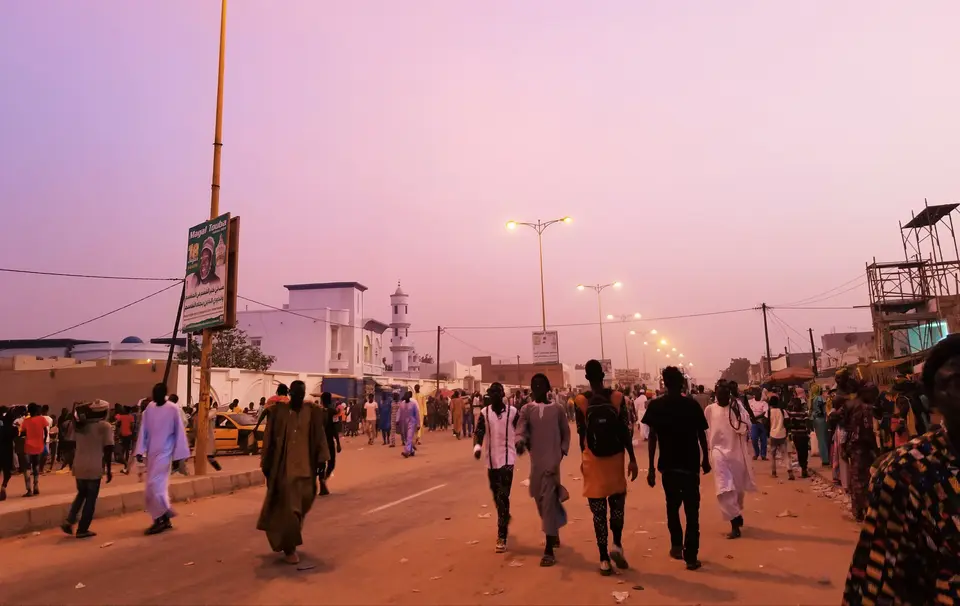
Grand Magal of Touba
Grand Magal de Touba
On the 18th of Safar, millions of pilgrims of the Mouride brotherhood converge on the holy city of Touba to honour its founder, Sheikh Amadou Bamba, and the anniversary of his exile by the French — the largest celebration in Senegal and one of the most popular pilgrimages in the world.
July 22 – 23, 2027Estimated
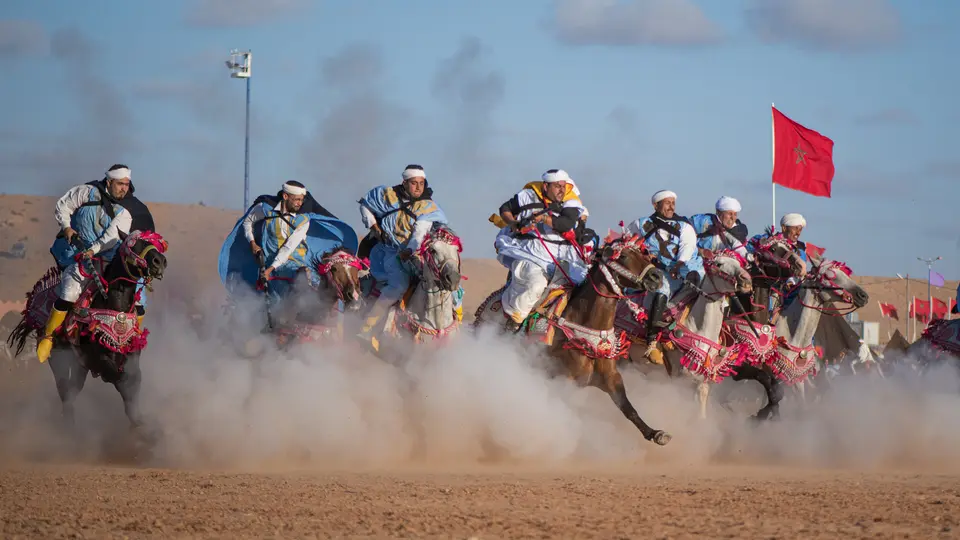
Moussem of Tan-Tan
موسم طانطان
At the edge of the Sahara, nomadic peoples from more than thirty tribes gather for a great annual fair of camels and horses, tents and trade, Hassani poetry and song — revived after a quarter of a century in which it could not be held.
October 3 – 7, 2026Officially announced
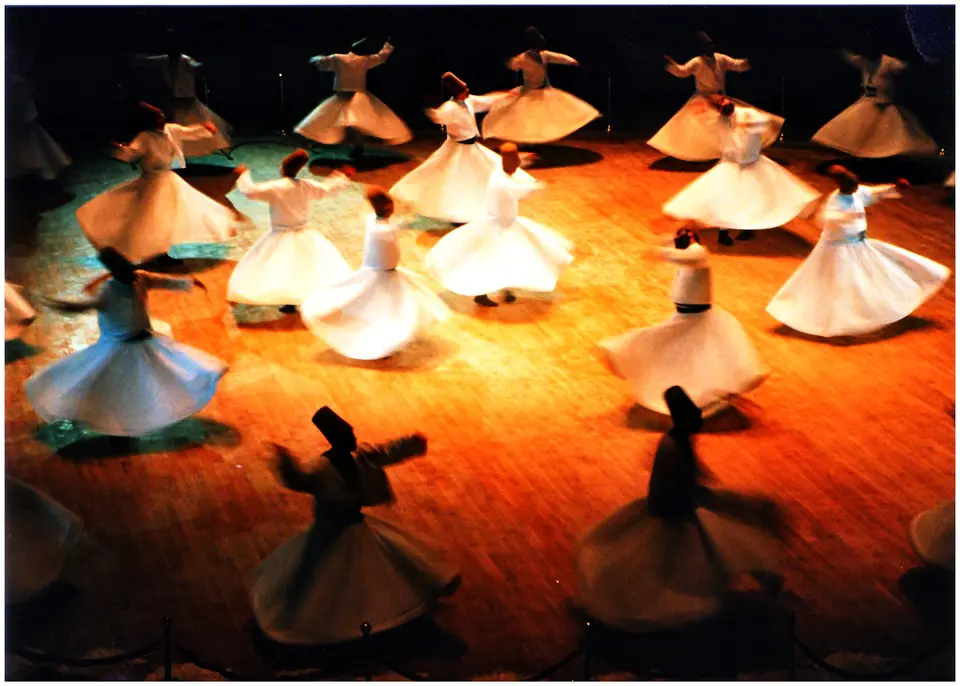
Şeb-i Arus
Şeb-i Arûs
Every December, Konya remembers the death of Mevlana Jalaluddin Rumi, which he himself called his wedding night. For eleven days the city holds sema ceremonies of the whirling Mevlevi, concerts, poetry and exhibitions, ending on the night of 17 December.
December 7 – 17, 2026Calculated
Comments
Have you been there? Tell other readers what to expect.
No comments yet.
Comments are read by the site’s owner before they appear.