International Festival of the Sahara
المهرجان الدولي للصحراء بدوز
Photo: McKay Savage, CC BY 2.0, via Wikimedia Commons
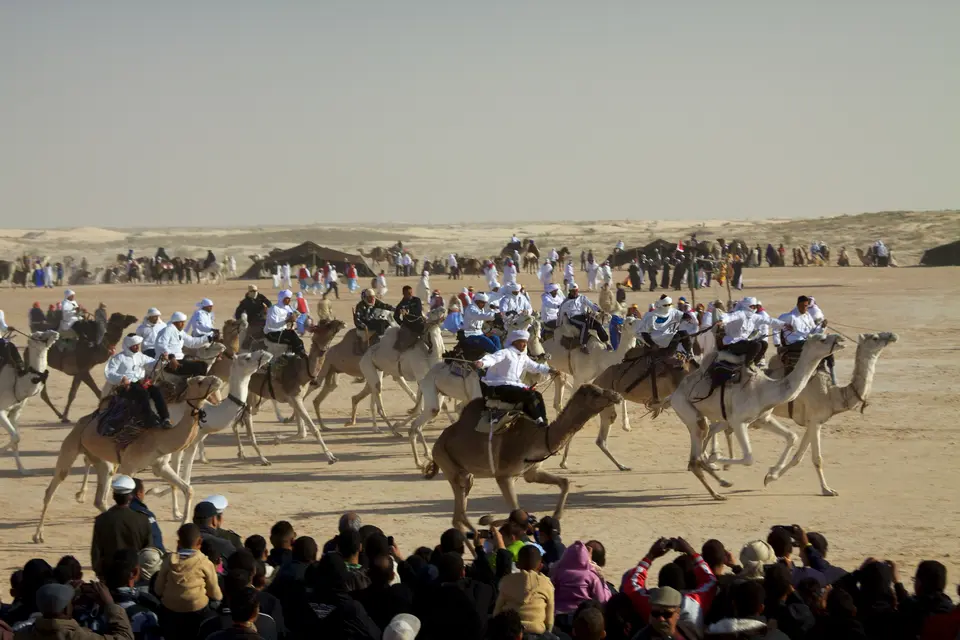
For four days at the end of December, Douz celebrates the life of the desert — camel races and fantasias on a vast sandy square ringed with Bedouin tents, hunting with sloughi hounds, Bedouin weddings, folk poetry and, at night, music and dance from across the Arab world and beyond.
The camel feast
Douz, known as the gateway to the Tunisian Sahara, is an oasis town of more than half a million palm trees and was once an important stop on the trans-Saharan caravan routes. It is the home of the Mrazig, once nomads, who now mostly live settled lives in the town, and its people are known for their mastery of popular poetry.
The festival began in 1910 as camel races and folk games under the patronage of the French resident-general, and was long known as the Aïd al-Jamal, the camel feast, after its races of the finest and fastest camels. It became international in 1967 with the support of several ministries, and it is considered the oldest festival in Tunisia. It preserves and enriches the traditions of the Mrazig and has helped to develop desert tourism.
On Hnich Square
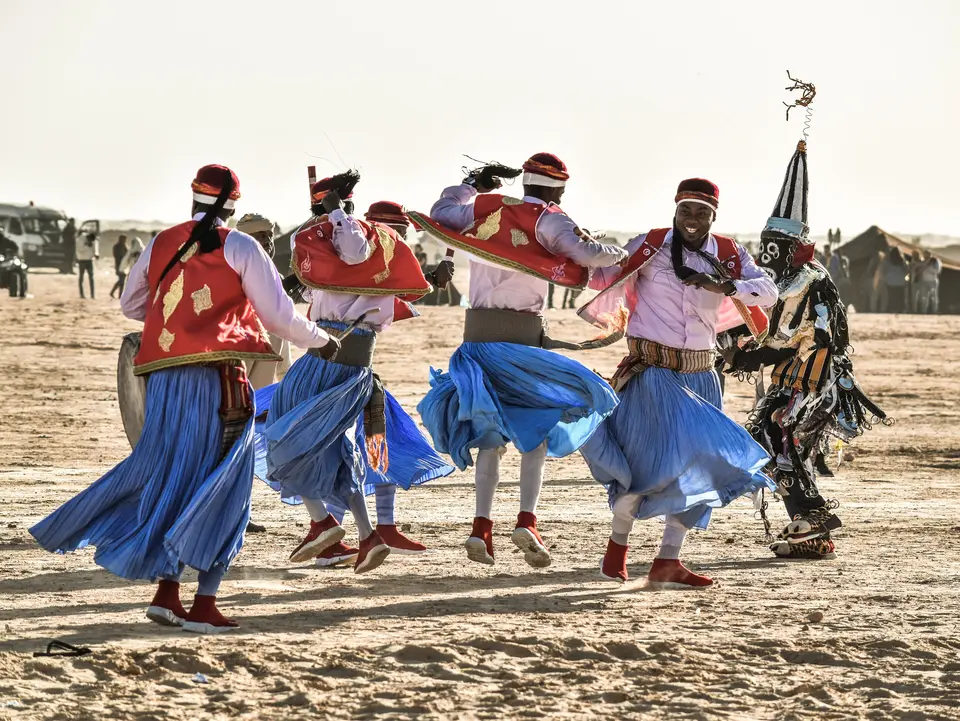
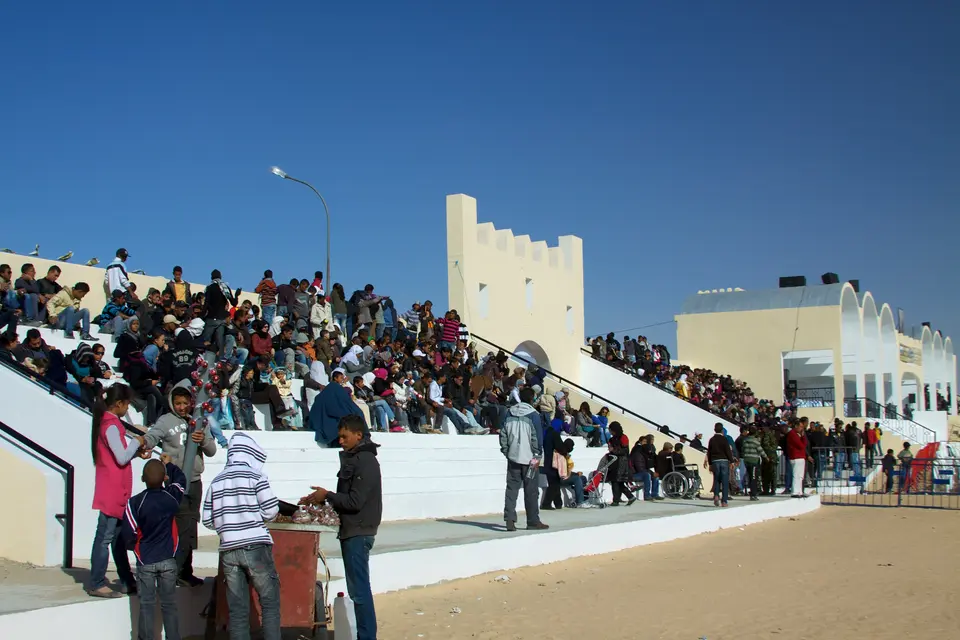
After the official opening, the main events take place on Hnich Square, an area of more than 15 hectares surrounded by Bedouin tents, where around 100,000 spectators gather each year. There are camel races and camel wrestling, fantasias, endurance races on horseback, hunting with sloughi hounds, and re-enactments of traditional Bedouin weddings and the customs of the desert tribes. At the festival’s 40th edition more than fifty of the best-known popular poets took part, and crafts fairs show the traditions of the Tunisian Sahara. In the evenings folk groups from other countries — among them Algeria, Libya and Egypt — perform songs and dances, alongside music and theatre from Tunisia and abroad.
When it happens
Held every year over four days at the end of December.
- December 2026Approximate window
- December 2027Approximate window
- December 2028Approximate window
- December 2029Approximate window
Visiting with respect
Good to know
- Dress modestly away from the resorts, as local custom expects in remote areas of the country.
Stay safe
- The UK government warns that the risk of terrorism may be higher at festivals and in crowded places. Stay aware of your surroundings.
- Theft is the most common crime; do not display expensive items or carry unnecessary valuables.
Sources
This entry was written from the following sources.
- Festival international du SaharaWikipedia (French) · read September 17, 2026
- المهرجان الدولي للصحراء بدوزWikipedia (Arabic) · read September 17, 2026
- DouzWikipedia · read September 17, 2026
- Tunisia travel advice: safety and securityUK Foreign, Commonwealth & Development Office · read September 17, 2026
Related festivals
Moussem of Tan-Tan
موسم طانطان
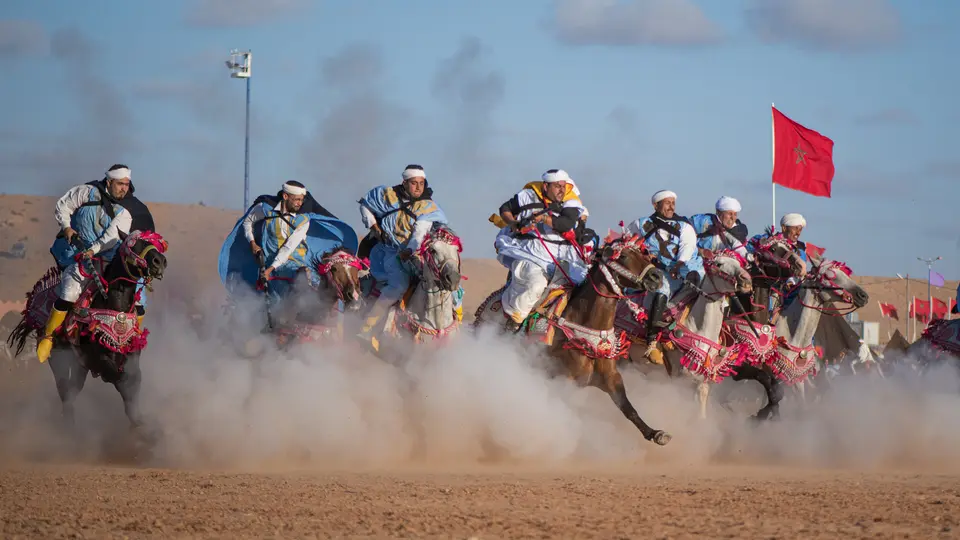
At the edge of the Sahara, nomadic peoples from more than thirty tribes gather for a great annual fair of camels and horses, tents and trade, Hassani poetry and song — revived after a quarter of a century in which it could not be held.
October 3 – 7, 2026Officially announced
Golden Eagle Festival
Бүркіт той
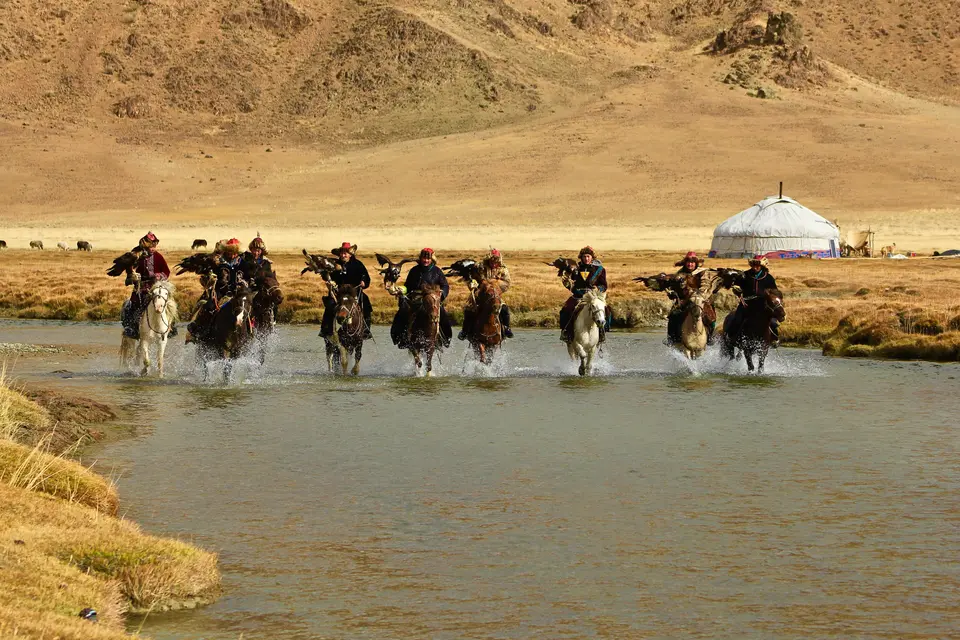
In Mongolia’s far west, Kazakh eagle hunters in fur hats ride out with golden eagles on their arms to compete — calling their birds down from the hills to the glove, showing off their horsemanship and traditional dress on the steppe outside Ölgii.
October 3 – 4, 2026Estimated
Naadam
Наадам
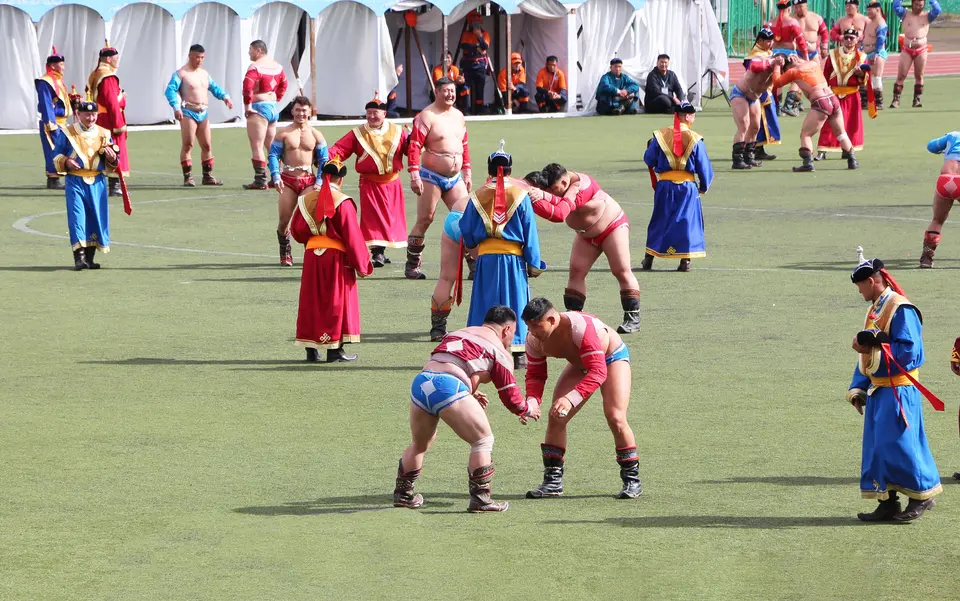
Every July Mongolia stops for the “three games of men” — wrestling, cross-country horse racing ridden by children, and archery — opened in Ulaanbaatar’s stadium with parades of riders, dancers and the nine horse-tail banners of Genghis Khan.
July 11 – 13, 2027Calculated