Esta página aún no está traducida al español; se muestra el texto original en inglés.
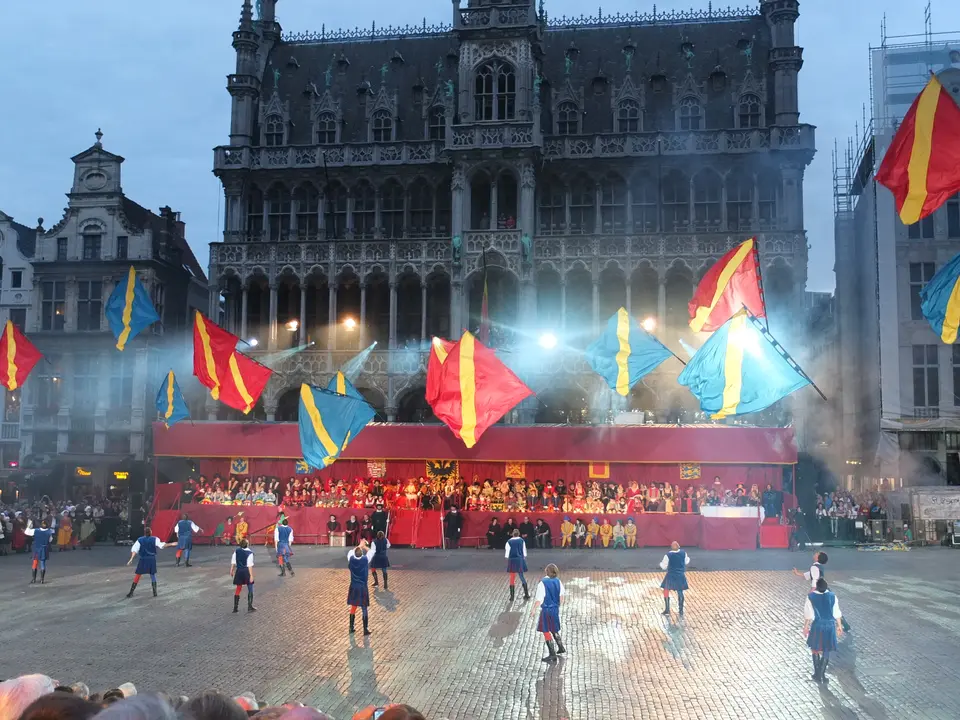
Ommegang of Brussels
Ommegang
En la Lista del Patrimonio Cultural Inmaterial de la Humanidad de la UNESCO
Foto: Christophe Degryse, CC BY-SA 4.0, vía Wikimedia Commons
On two summer evenings, Brussels relives the day in 1549 when it dazzled Emperor Charles V — some 1,400 people in Renaissance dress, horsemen, crossbowmen, stilt walkers and giants parade from the Sablon to a grand spectacle on the Grand-Place, with real nobles playing their ancestors.
From a stolen statue to an emperor’s welcome
The Ommegang — Dutch for “walking around” — began in the fourteenth century as Brussels’ great procession in honour of a miraculous statue of the Virgin. Legend tells of Beatrix Soetkens, who in a vision was told by the Virgin to take the statue of Our Lady from Antwerp cathedral to the crossbowmen’s chapel in the Sablon; the guild promised to carry it through the city every year. The procession gradually became a great civic occasion, and in 1549 the city’s elites staged a magnificent Ommegang to honour Emperor Charles V and his son, the future Philip II.
The tradition declined in the eighteenth century and the last small annual Ommegang took place in 1785. In 1930, for the centenary of Belgium, enthusiasts revived it — not as the old procession but as a re-enactment of the pageant of 1549. It has been held every year since 1958, and UNESCO inscribed it on its Representative List in 2019.
The procession today
About 1,400 participants take part in period costume, among them riders, crossbowmen, archers, fencers and arquebusiers, stilt walkers and processional giants such as St Michael, St Gudula and the horse Bayard. The magistrates and members of the Seven Noble Houses of Brussels walk in scarlet, and many roles, including the emperor himself, are played by members of noble families. From the Sablon the procession crosses the city centre and ends with a sound and light show on the Grand-Place.
Cuándo se celebra
The Ommegang is held on two evenings in the first week of July, with a free day between in case the costumes need to dry after rain; in 2026 it took place on 1 and 3 July. The procession leaves the Sablon at about 8.30 p.m.
- julio de 2027Periodo aproximado
- julio de 2028Periodo aproximado
- julio de 2029Periodo aproximado
- julio de 2030Periodo aproximado
Visitar con respeto
Conviene saber
- Watching along the route is free; grandstand seats on the Grand-Place must be booked and paid for.
Seguridad
- Pickpocketing is common in crowded places in Brussels. Keep your belongings close.
Fuentes
Esta entrada se escribió a partir de las siguientes fuentes.
- Ommegang of Brussels, an annual historical procession and popular festivalUNESCO Intangible Cultural Heritage · consultado el 17 de septiembre de 2026
- Ommegang of BrusselsWikipedia · consultado el 17 de septiembre de 2026
- Brussels Ommegang brings history and pageantry to the streets of the capitalVRT NWS · consultado el 17 de septiembre de 2026
- Belgium travel advice: safety and securityUK Foreign, Commonwealth & Development Office · consultado el 17 de septiembre de 2026
Fiestas relacionadas
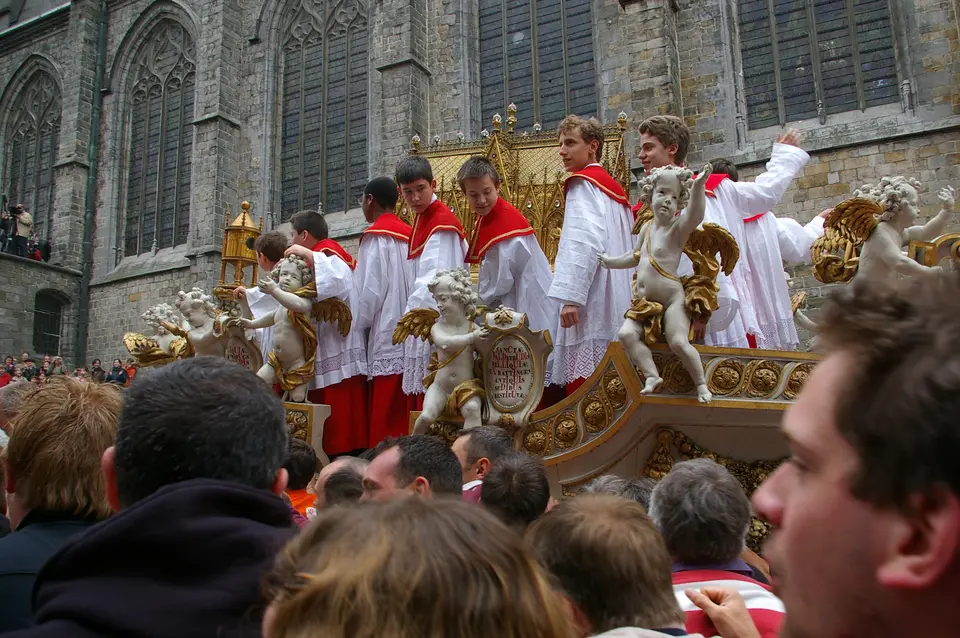
Ducasse de Mons (Doudou)
On Trinity Sunday, Mons carries the shrine of its patron saint through town on a golden chariot that the crowd must push up a steep cobbled slope in one go — and then, on the Grand-Place, St George fights the dragon in the frantic half-hour combat called the Lumeçon.
22–23 de mayo de 2027Calculada
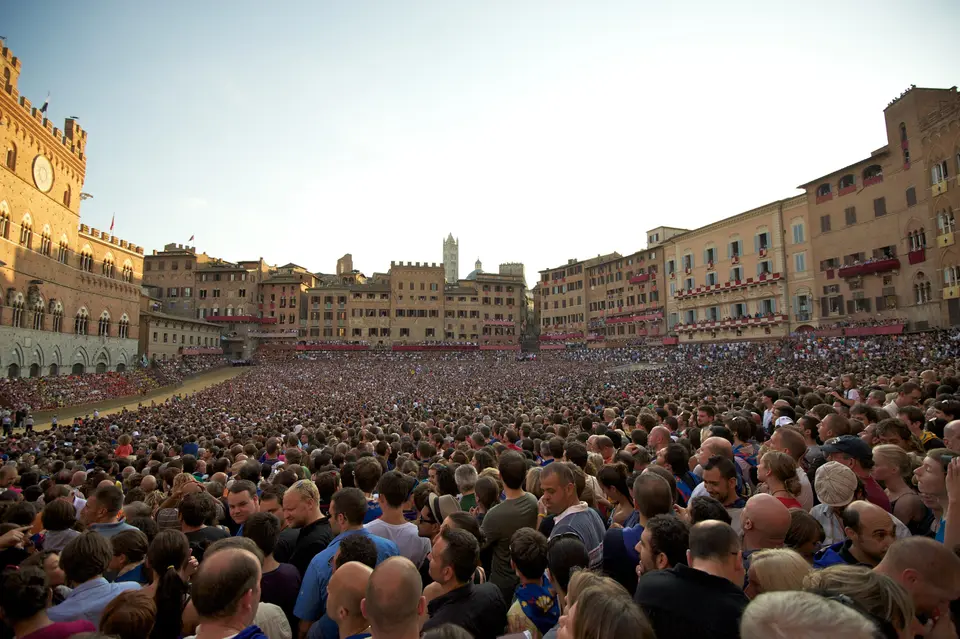
Palio di Siena
Twice every summer, ten of Siena’s seventeen city wards race horses bareback three times around the Piazza del Campo. The race lasts about ninety seconds; the rivalries, alliances, pageantry and devotion around it last all year.
2 de julio de 2027Calculada
Carnival of Binche
Carnaval de Binche
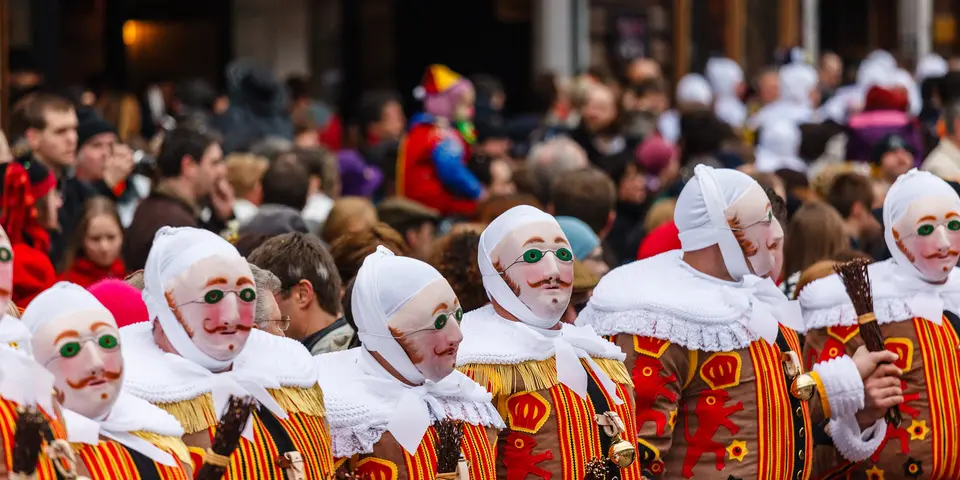
For the three days before Lent, the small Walloon town of Binche belongs to its Gilles — up to a thousand men in wax masks and wooden clogs who dance from dawn to drive away evil spirits and, crowned with ostrich plumes, throw oranges to the crowd.
7–9 de febrero de 2027Calculada