Cette page n’est pas encore traduite en français ; le texte original anglais est affiché.
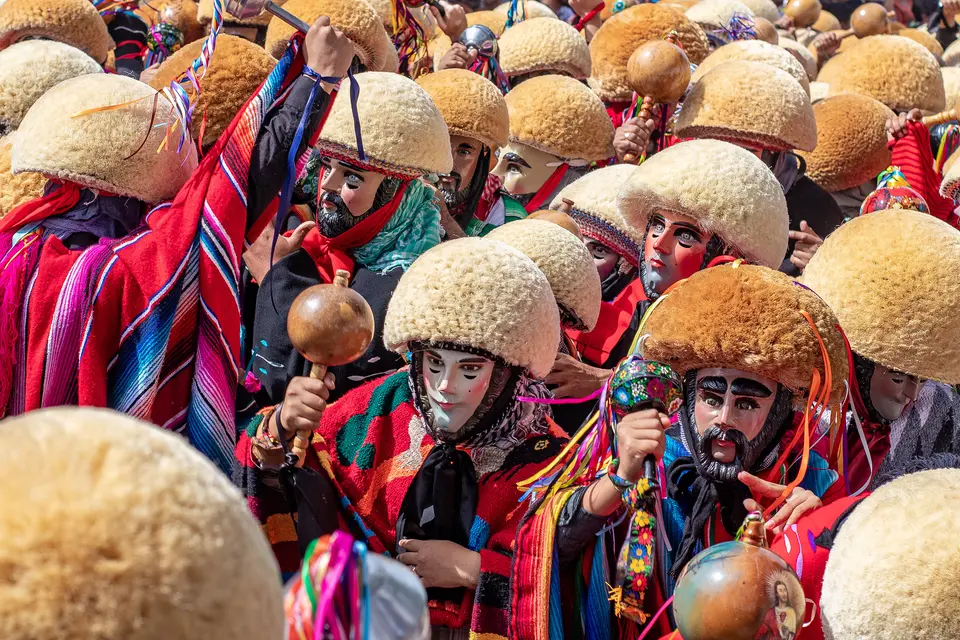
Parachicos of Chiapa de Corzo
Fiesta Grande de Enero — Parachicos
Inscrite sur la Liste du patrimoine culturel immatériel de l’humanité de l’UNESCO
Photo : Alonso Cerro, CC BY-SA 4.0, via Wikimedia Commons
For almost three weeks every January, the dancers of Chiapa de Corzo put on carved wooden masks, shake their maracas and carry the images of their saints through the streets from morning to night, in the town’s Great Feast.
A feast for three saints
The Great Feast of January fills Chiapa de Corzo, a town in the southern Mexican state of Chiapas, with music, dance, crafts, food, religious ceremonies and communal meals. It is held in honour of three Catholic saints: Saint Anthony Abbot, Our Lord of Esquipulas and, most important of all, Saint Sebastian.
The Parachicos
The dance of the Parachicos — the word means both the dancers and the dance — is seen as a communal offering to these saints. It begins in the morning and ends at night, as the dancers carry statues of the saints through the town, visiting its places of worship.
Every Parachico wears a carved wooden mask with a headdress, a serape, an embroidered shawl and many-coloured ribbons, and shakes chinchines, maracas. They are led by the Patrón, whose mask is stern, who carries a guitar and a whip and plays a flute to the beat of one or two drummers. As they dance he calls out praises, and the Parachicos answer with cheers.
Learned by dancing
Children learn the dance by joining in and copying the adults, and the art of mask-making — cutting and drying the wood, carving and painting it — passes from one generation to the next. UNESCO describes a feast that reaches into every part of local life and encourages mutual respect between communities, groups and individuals. It was inscribed on the Representative List of the Intangible Cultural Heritage of Humanity in 2010.
Quand a-t-elle lieu
The Great Feast (Fiesta Grande) is held in Chiapa de Corzo every year from 4 to 23 January.
- 4–23 janvier 2027Calculée
- 4–23 janvier 2028Calculée
- 4–23 janvier 2029Calculée
- 4–23 janvier 2030Calculée
Visiter avec respect
Bon à savoir
- The dance is a communal offering to the saints, not a costume parade. Watch the processions with respect, especially when statues of the saints are carried past or taken into churches.
- Dress modestly when entering churches and places of worship.
- Ask before photographing people outside the processions.
Sécurité
- The UK government advises against all but essential travel within 40 km of the Guatemalan border in Chiapas and on Federal Highway 199 between San Cristóbal de las Casas and Palenque. Chiapa de Corzo lies outside these areas, but check the current advice before travelling.
Sources
Cette entrée a été rédigée à partir des sources suivantes.
- Parachicos in the traditional January feast of Chiapa de CorzoUNESCO Intangible Cultural Heritage · consulté le 16 septembre 2026
- Mexico travel advice — State of ChiapasUK Foreign, Commonwealth & Development Office · consulté le 16 septembre 2026
Fêtes apparentées
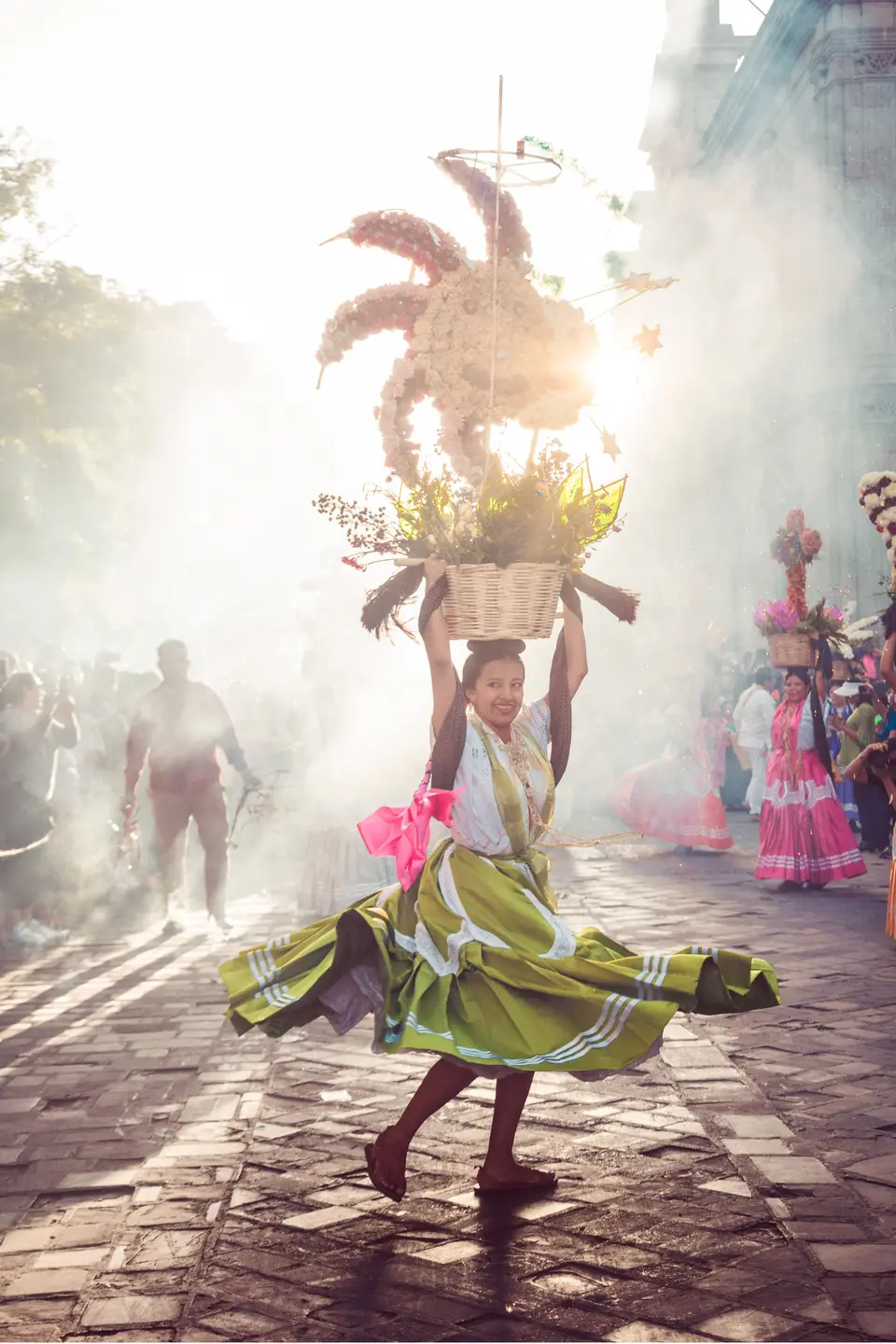
Guelaguetza
On two Mondays each July, delegations from the eight regions of Oaxaca climb the Cerro del Fortín to present their dances, music and costumes — the best-known indigenous gathering of its kind in Mexico, with a month of food, mezcal and craft fairs around it.
19 juillet 2027Estimée
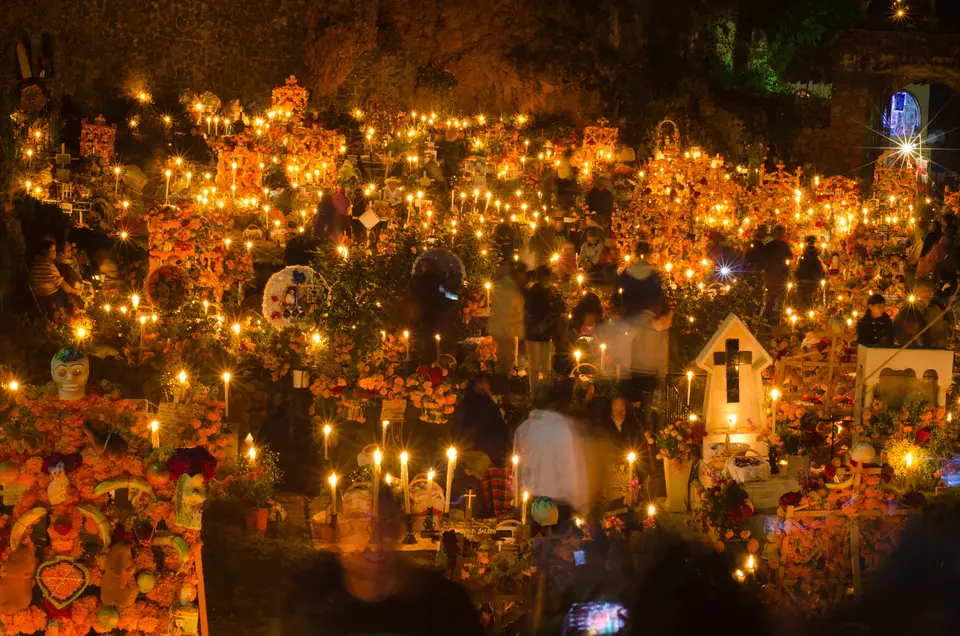
Day of the Dead
Día de Muertos
At the turn of October and November, Mexican families welcome their dead home for a brief visit. They build altars with marigolds, candles and the departed’s favourite food, decorate graves, and in some towns keep vigil in the cemetery all night.
1–2 novembre 2026Calculée