Cette page n’est pas encore traduite en français ; le texte original anglais est affiché.
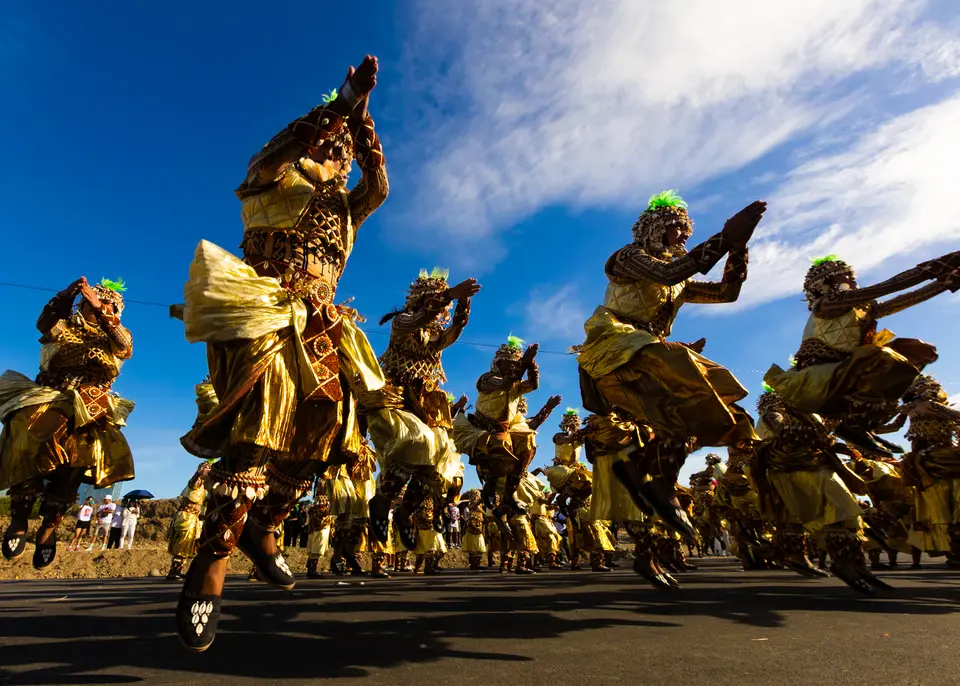
Sinulog
Photo : Idolwanderer, CC0, via Wikimedia Commons
On the third Sunday of January, millions crowd Cebu City for the Philippines’ grandest festival — a prayer dance for the Santo Niño, the Holy Child, whose image Magellan’s expedition brought to Cebu in 1521, performed by street-dance contingents in dazzling costumes.
The dance of the current
Sinulog comes from the Cebuano sulog, a water current — a picture of the dance’s forward-and-backward steps, performed to drums. It is a ritual prayer dance honouring the Señor Santo Niño, the Child Jesus. Cebuanos performed similar dances for animist idols long before Christianity reached the island.
According to historical accounts, Ferdinand Magellan arrived in Cebu in 1521 and presented an image of the Child Jesus to Rajah Humabon, who was baptised with his queen Hara Humamay — renamed Juana — and hundreds of their subjects. When Miguel López de Legazpi’s expedition returned in 1565, one of his men found the image in a burning hut, and the Augustinians built a church on the spot, today the Basilica del Santo Niño. A favourite theme of Sinulog dances is Queen Juana holding the Santo Niño and blessing her people.
A modern festival
Pilgrims from all over the country come to the basilica each year for the procession and the festival. The first Sinulog parade was organised in 1980 as a “true Cebuano festival”, and it has grown into one of the largest cultural and religious celebrations in the Philippines — over 5.2 million people attended in 2026. Street parties used to take over the city; in 2016 they were banned along the parade route to curb the disorder. Many other towns hold their own versions in honour of the Santo Niño.
Quand a-t-elle lieu
Sinulog is held on the third Sunday of January, with religious events and street parties in the days and night before.
- 17 janvier 2027Calculée
- 16 janvier 2028Calculée
- 21 janvier 2029Calculée
- 20 janvier 2030Calculée
Visiter avec respect
Sécurité
- Crowds are enormous. Keep valuables secure and agree on a meeting point.
- Use taxis only from reputable companies. Some drivers and their accomplices have robbed passengers.
- Methanol poisoning from alcoholic drinks is a risk in popular travel destinations. Be careful what you drink.
Sources
Cette entrée a été rédigée à partir des sources suivantes.
- SinulogWikipedia · consulté le 17 septembre 2026
- Philippines travel advice: safety and securityUK Foreign, Commonwealth & Development Office · consulté le 17 septembre 2026
Fêtes apparentées
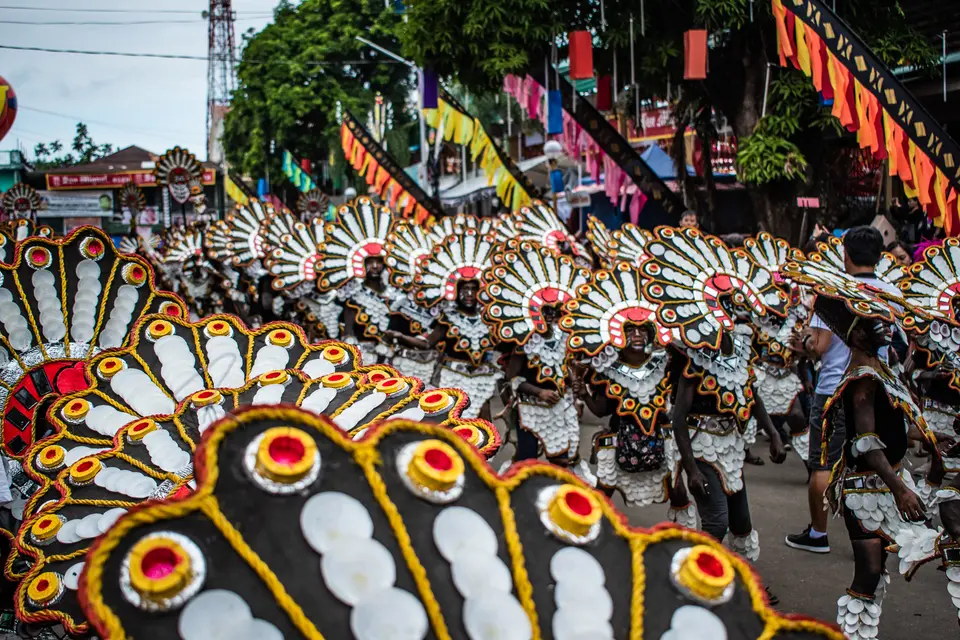
Ati-Atihan
Kalibo on Panay honours the Santo Niño with the festival often called the mother of all Philippine festivals — drumbeats, the dragging sadsad dance step, body paint and towering tribal-style costumes filling the streets for several days in January.
17 janvier 2027Calculée
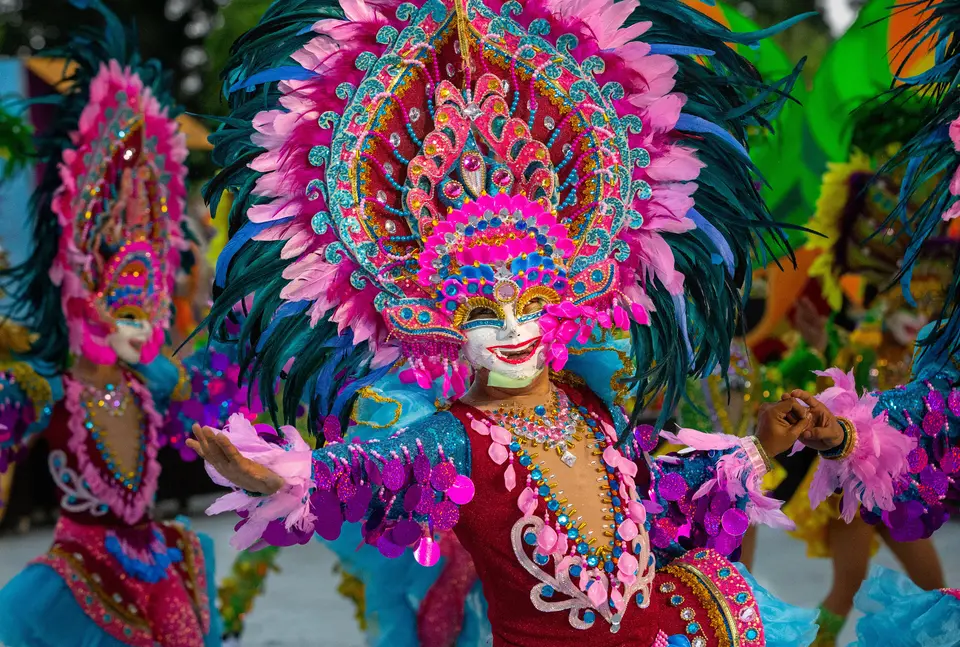
MassKara Festival
MassKara
Born in 1980 in a year of tragedy and a sugar-price crash, Bacolod’s “festival of smiles” fills the streets each October with dancers in grinning masks and feathered costumes, glowing Electric MassKara floats and a city determined to smile through hard times.
18 octobre 2026Estimée
Rio Carnival
Carnaval do Rio de Janeiro
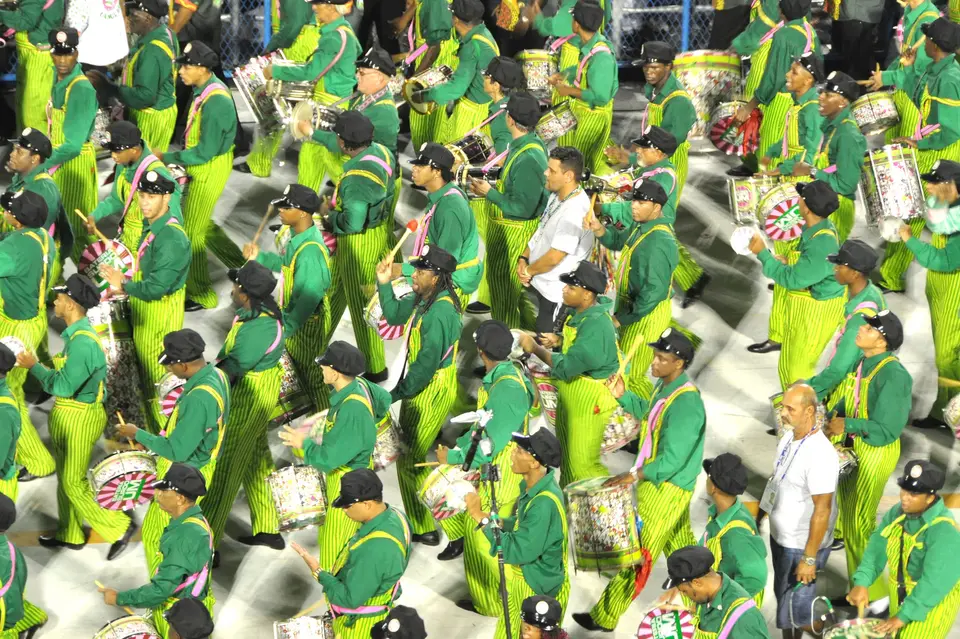
In the days before Lent, Rio de Janeiro holds what is considered the world’s largest carnival — two million people a day on the streets, and a contest of samba schools that parade through the Sambadrome with floats, drummers and thousands of dancers.
5–9 février 2027Calculée