Cette page n’est pas encore traduite en français ; le texte original anglais est affiché.
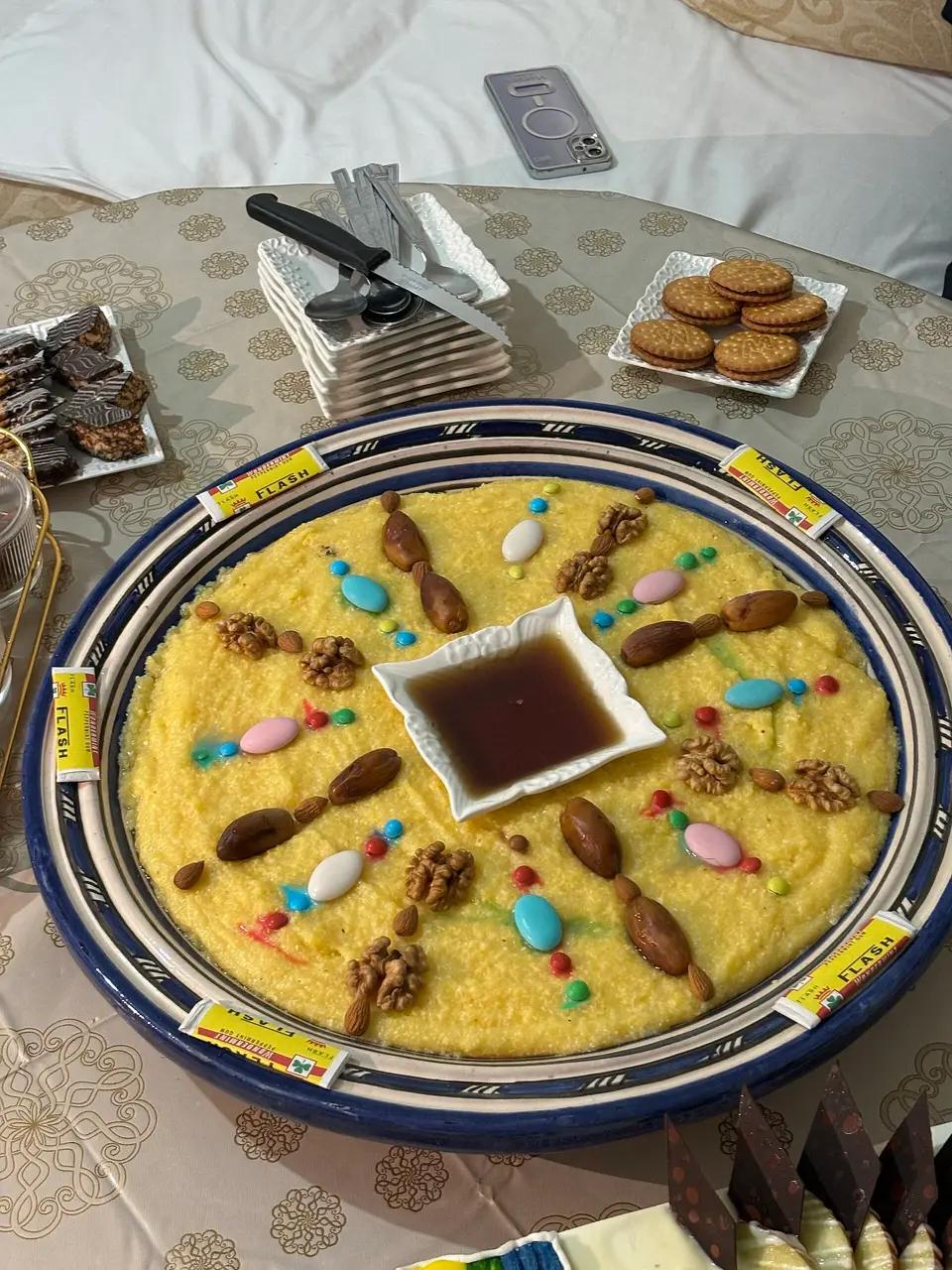
The Amazigh new year, a national holiday in Morocco on 14 January. Families mark it with a special meal — in the Sous, a barley porridge called tagoula with smen and argan oil — and wishes for a year of plenty.
The first month
Yennayer is the first month of the Amazigh (Berber) calendar, and its first day is the New Year. The name is usually explained as joining two Amazigh words, yan, “one”, and ayyur, “month”. In Morocco the day also goes by popular names such as id n yennayer, id seggas or haguza.
In May 2023 King Mohammed VI declared the Amazigh new year a national public holiday. Morocco’s official list of holidays now shows three new years together: the Gregorian, the Islamic and the Amazigh.
A meal for the New Year
At the heart of Yennayer is a special, symbolic meal, richer than everyday food. Dishes differ from region to region. In the Sous, in southern Morocco, families eat tagoula, a porridge of barley served with smen (preserved butter) and argan oil, often decorated for the occasion. The day is a time for exchanging wishes for prosperity and a long life.
Across North Africa, Yennayer rites share a purpose: to keep hunger away, to welcome change and to call for a good harvest in the year ahead.
Counting the years
The Amazigh calendar as a numbered era is modern. In 1980 the Algerian scholar Ammar Negadi proposed counting the years from 950 BC, around the time the Berber king Shoshenq I took the throne of Egypt — which is why the Amazigh year is about 950 years ahead of the Gregorian one. The celebration itself is far older, rooted in the farming year of North Africa.
Quand a-t-elle lieu
In Morocco Yennayer is a national public holiday on 14 January. Offices and public administration close. Customs and the exact evening of celebration can differ between regions and families.
- 14 janvier 2027Annoncée officiellement
- 14 janvier 2028Annoncée officiellement
- 14 janvier 2029Annoncée officiellement
- 14 janvier 2030Annoncée officiellement
Visiter avec respect
Bon à savoir
- Yennayer is a public holiday rather than an event with a venue; it is mainly celebrated at home with family.
- Ask before photographing people.
Sources
Cette entrée a été rédigée à partir des sources suivantes.
- Fêtes nationales et religieusesMaroc.ma, Kingdom of Morocco · consulté le 16 septembre 2026
- YennayerWikipedia (English) · consulté le 16 septembre 2026
Fêtes apparentées
Nowruz
نوروز
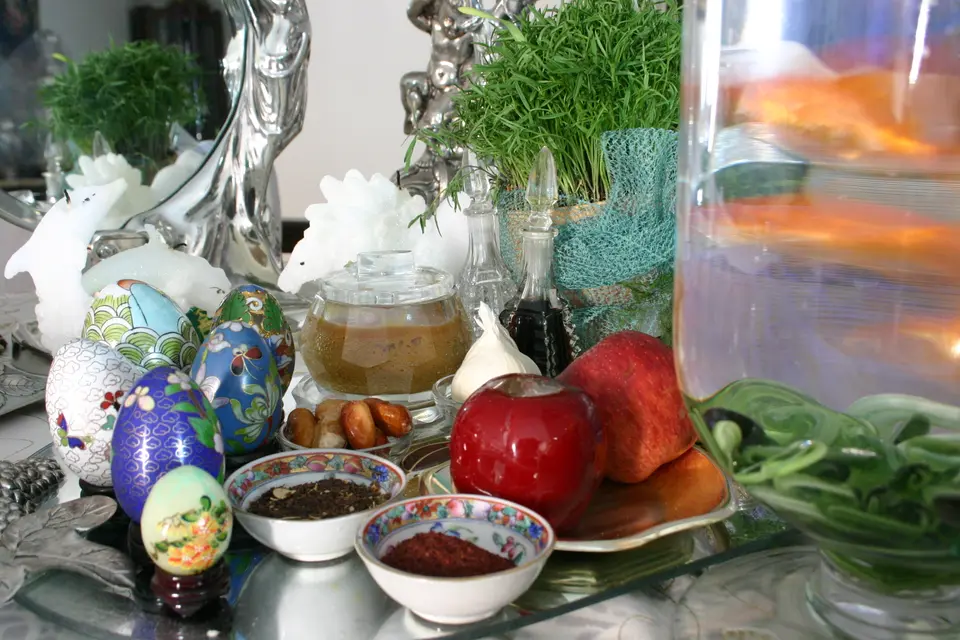
Nowruz, “new day”, is the Iranian New Year. It begins at the March equinox, when families gather around the Haft-sin table to wait for the exact moment the year turns, and opens two weeks of visits, food and time outdoors.
21 mars 2027Calculée
Gnaoua and World Music Festival
Festival Gnaoua et Musiques du Monde
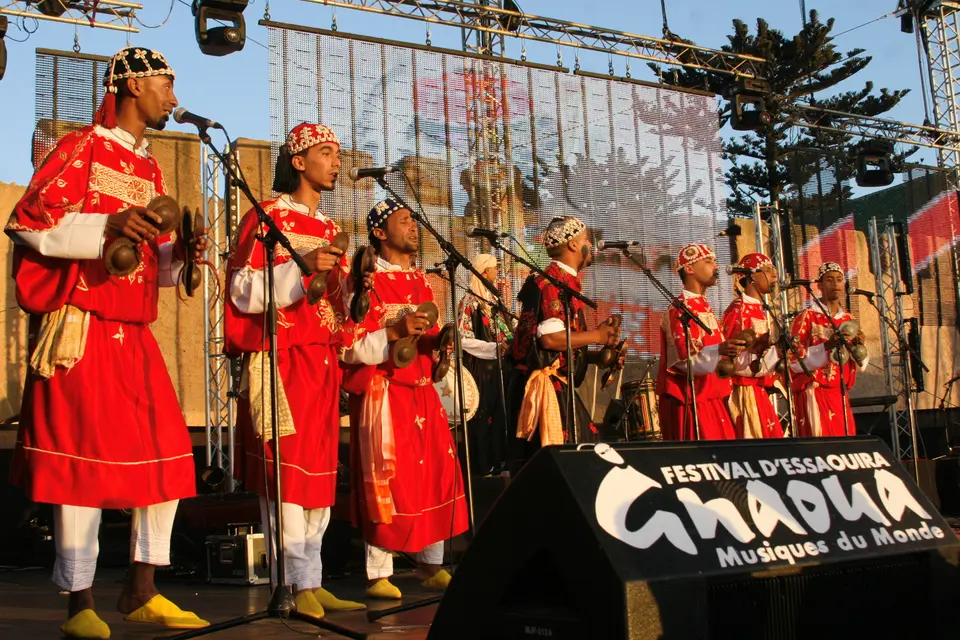
Every June the Atlantic port of Essaouira fills with the rhythms of Gnawa — the trance music of a Sufi brotherhood — as master Gnaoua musicians share stages with artists from around the world.
24–26 juin 2027Annoncée officiellement