यह पृष्ठ अभी हिन्दी में अनूदित नहीं हुआ है; मूल अंग्रेज़ी पाठ दिखाया जा रहा है।
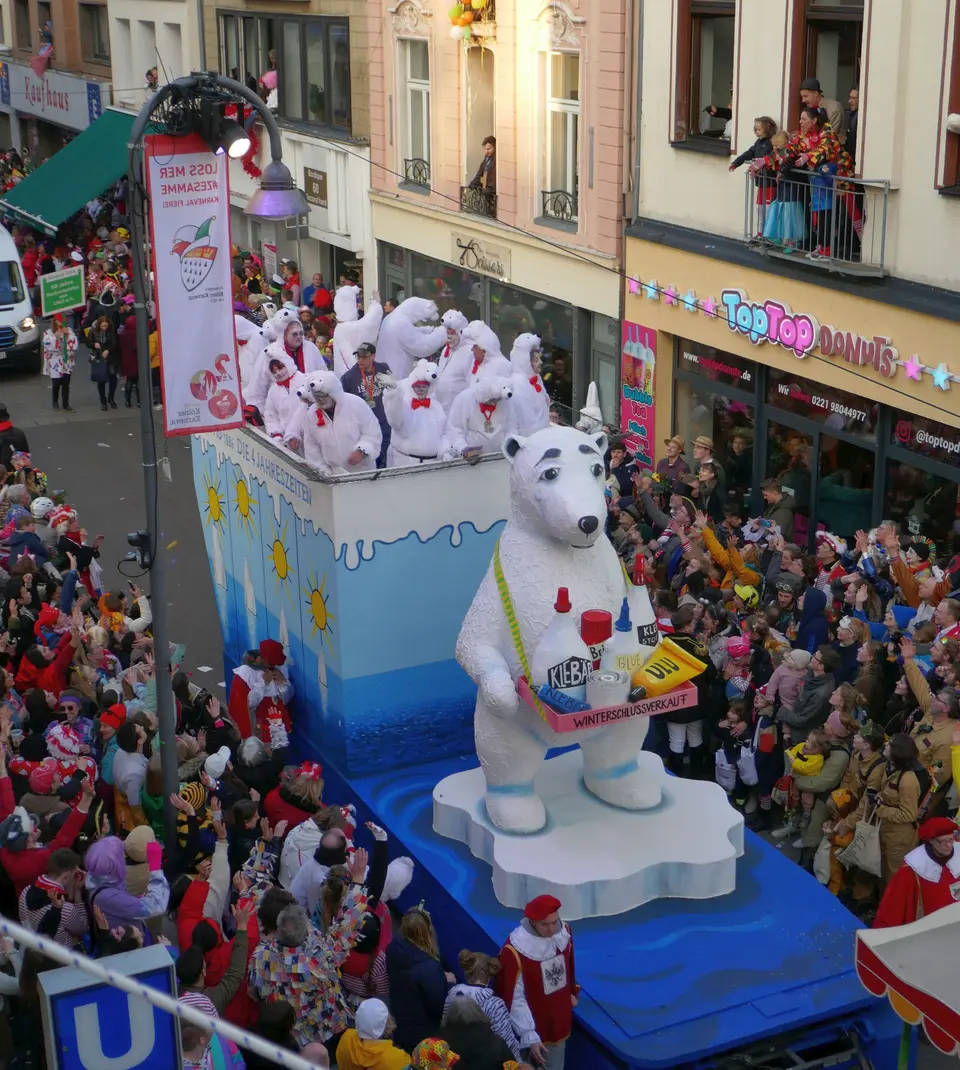
Cologne’s “fifth season” opens at 11:11 on 11 November and explodes onto the streets in the days before Lent, when costumed crowds shout “Kölle Alaaf!” and more than a million people watch the Rose Monday parade throw sweets from its floats.
The fifth season
The carnival season is officially opened on the 11th of the 11th month at 11:11, on the Alter Markt and Heumarkt, with performances by well-known carnival bands in front of thousands of spectators and the presentation of the new Dreigestirn. After a quieter Advent and Christmas, the season picks up again after New Year with musters of the carnival corps, balls and Sitzungen — stage shows of speeches, music and dance — and the prince is proclaimed in early January.
Street carnival begins on Weiberfastnacht, the Thursday before Ash Wednesday, again at 11:11 on the Alter Markt. From then on people celebrate in pubs and on the streets until Tuesday night. On Carnival Sunday the schools and neighbourhoods parade, and the best groups win a place in the Rose Monday parade, the official highlight. On the night before Ash Wednesday neighbourhoods burn the Nubbel, a straw figure that hangs above many pubs during carnival.
Prince, peasant and maiden
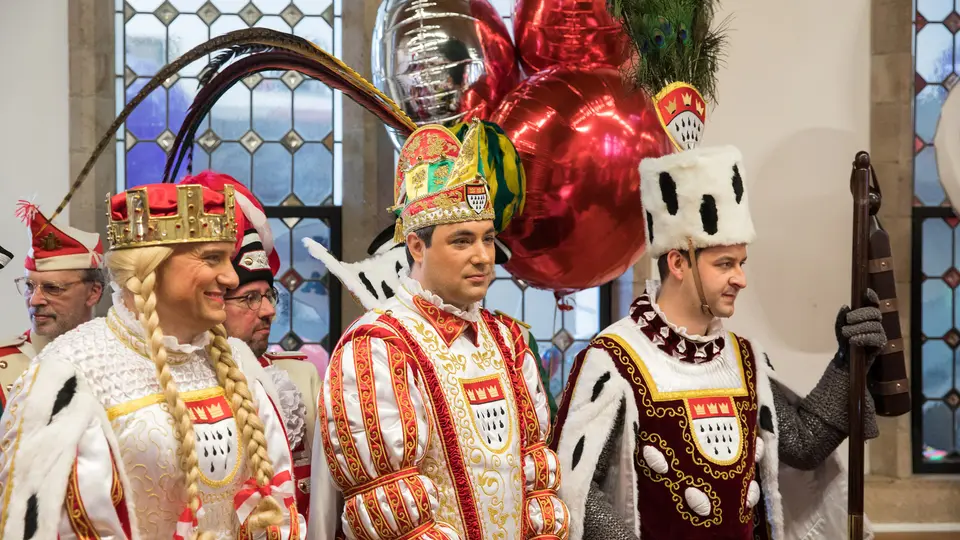
Each year three people are chosen as the Dreigestirn: the Prince, the Peasant and the Maiden. The trio has existed as a group since 1883. The Prince is the most important figure of the carnival and his float is the last in the Rose Monday parade; the Peasant carries the keys of the city; and the Maiden, who stands for Colonia, the city’s mother figure, is traditionally played by a man.
From 1220 to 1823
Written records of carnival in Cologne go back to 1220. The city council repeatedly tried to rein it in — in 1341 it stopped paying for it from the city purse, and in 1487 it banned masking. French occupiers forbade carnival in 1795 and allowed it again in 1804. The modern carnival was reorganised in 1823 by a new carnival society, which held the first Rose Monday parade on 10 February that year; the Festkomitee Kölner Karneval still runs the official parades and balls. According to the German UNESCO Commission, it was from Cologne that this civic form of carnival — with its prince, carnival societies and dialect songs — spread to other towns of the Rhineland.
कब होता है
The season opens on 11 November at 11:11. Street carnival starts at 11:11 on Weiberfastnacht, the Thursday before Ash Wednesday, and lasts until the evening of Carnival Tuesday; the Rose Monday parade is the highlight. Because it depends on Easter, the street carnival falls between early February and early March.
- 11 नवंबर 2026Opening of the season, 11 November at 11:11गणना से
- 4–9 फ़रवरी 2027Street carnival, Weiberfastnacht to Carnival Tuesdayगणना से
- 11 नवंबर 2027Opening of the season, 11 November at 11:11गणना से
- 24–29 फ़रवरी 2028Street carnival, Weiberfastnacht to Carnival Tuesdayगणना से
- 11 नवंबर 2028Opening of the season, 11 November at 11:11गणना से
- 8–13 फ़रवरी 2029Street carnival, Weiberfastnacht to Carnival Tuesdayगणना से
- 11 नवंबर 2029Opening of the season, 11 November at 11:11गणना से
- 28 फ़रवरी – 5 मार्च 2030Street carnival, Weiberfastnacht to Carnival Tuesdayगणना से
सम्मान के साथ जाएँ
सुरक्षित रहें
- Terrorists are very likely to try to carry out attacks in Germany, including at crowded public gatherings. Stay aware of your surroundings.
- Take care against pickpockets and bag-snatching in the crowds and at railway stations.
स्रोत
यह प्रविष्टि इन स्रोतों के आधार पर लिखी गई है।
- Rheinischer Karneval mit all seinen lokalen VariantenDeutsche UNESCO-Kommission · 17 सितंबर 2026 को देखा गया
- Kölner KarnevalWikipedia (German) · 17 सितंबर 2026 को देखा गया
- Cologne CarnivalWikipedia · 17 सितंबर 2026 को देखा गया
- Germany travel advice: safety and securityUK Foreign, Commonwealth & Development Office · 17 सितंबर 2026 को देखा गया
संबंधित त्योहार
Carnival of Binche
Carnaval de Binche
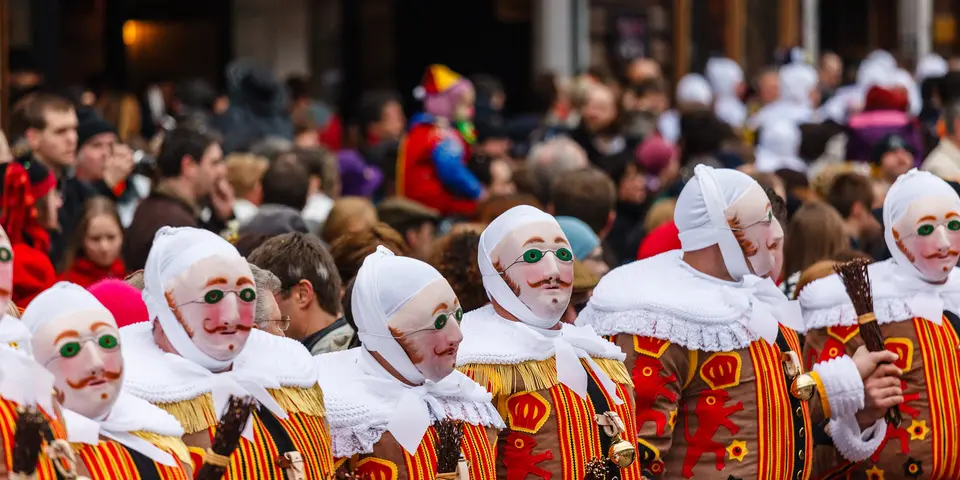
For the three days before Lent, the small Walloon town of Binche belongs to its Gilles — up to a thousand men in wax masks and wooden clogs who dance from dawn to drive away evil spirits and, crowned with ostrich plumes, throw oranges to the crowd.
7–9 फ़रवरी 2027गणना से
Patras Carnival
Πατρινό Καρναβάλι
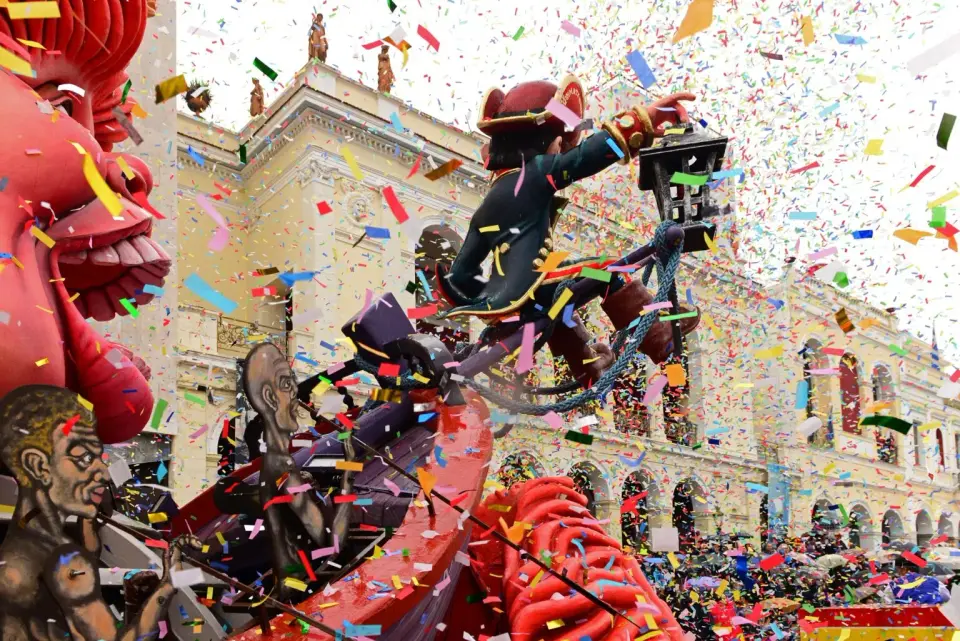
Greece’s largest carnival opens on St Anthony’s Day and builds for weeks — balls, a city-wide treasure hunt, a night parade — to a Sunday procession of satirical floats and tens of thousands of costumed revellers, ending with the burning of the Carnival King in the harbour.
17 जनवरी 2027गणना से
Busójárás
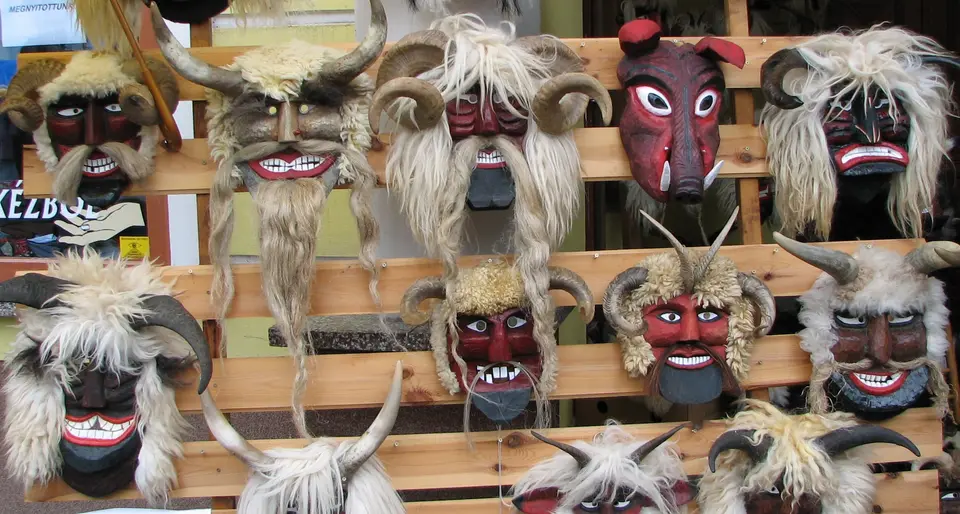
At the end of carnival, the Danube town of Mohács is overrun by busós — men in carved wooden masks and shaggy sheepskins who arrive by rowing boat, parade through the streets with noise and fire, and burn a coffin that stands for winter.
4–9 फ़रवरी 2027गणना से