यह पृष्ठ अभी हिन्दी में अनूदित नहीं हुआ है; मूल अंग्रेज़ी पाठ दिखाया जा रहा है।
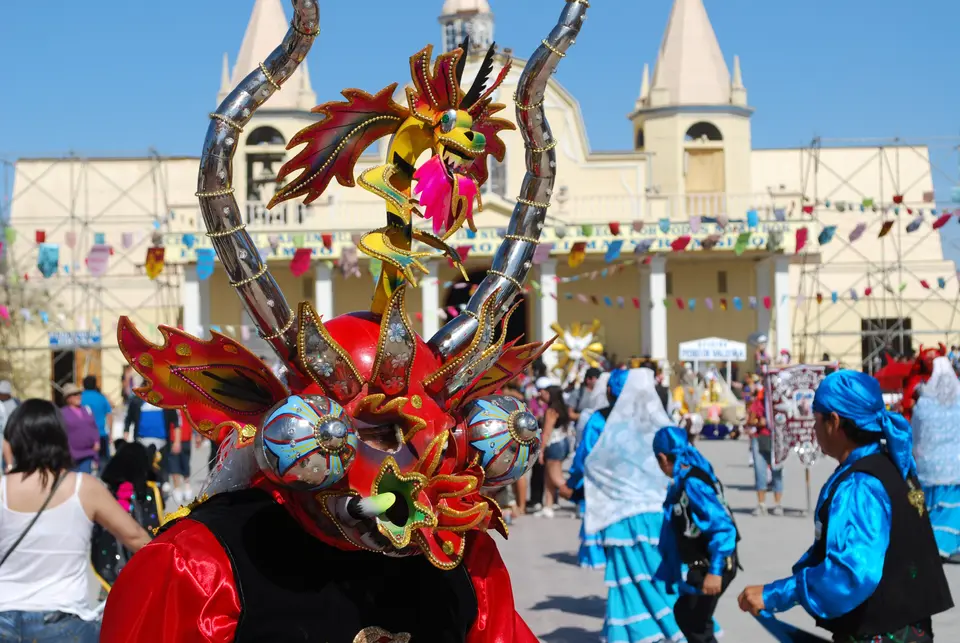
Fiesta de La Tirana
फ़ोटो: Patricio Antonio Soto Latrille, CC BY-SA 3.0, विकिमीडिया कॉमन्स से
Every July, a desert village of about 800 people in northern Chile receives between 250,000 and 500,000 pilgrims, as religious dance societies — devils, Incas, miners and gypsies — dance day and night for the Virgen del Carmen of La Tirana.
Dancing for the Virgin
The Fiesta de La Tirana honours the Virgen del Carmen in the village of La Tirana, in the commune of Pozo Almonte in the Tarapacá region. It is the largest religious festival of Chile’s far north and the most popular in the country, drawing pilgrims from across Chile, Peru and Bolivia. Arriving in the village, the religious dance societies greet the Virgin one by one at the Cruz del Calvario, then process through the streets to the church. Many pilgrims fulfil vows, most often by walking the ten kilometres from the highway junction to the sanctuary along the “pilgrim’s path”.
From 10 July the societies dance day and night. On the evening of 15 July more than 200,000 of the faithful attend the vigil mass in the square, and at midnight fireworks burst over the village to celebrate the “birthday” of the Virgin, whom devotees call la chinita. The dancers greet her at dawn, and on the morning of the 16th the image of the Virgin is brought down to a square covered in thousands of ribbons, followed by mass and a procession through the streets that lasts more than eight hours.
Devils, miners and Incas
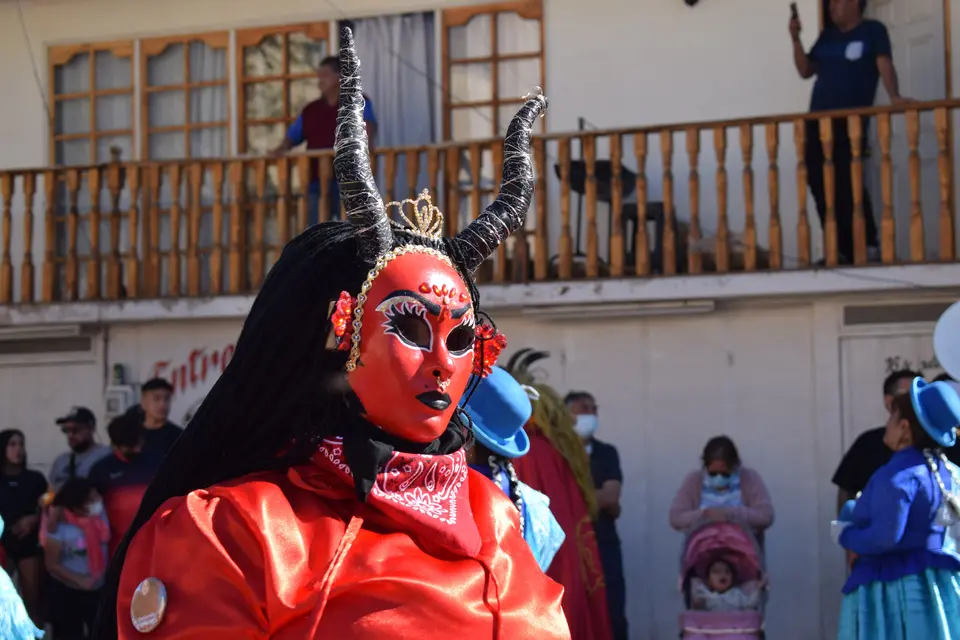
Each dance society has its own costumes and music. The Chinos, the oldest society in the festival, wear costumes recalling the region’s old miners, with leather pads on their backs for carrying ore. The Diabladas, inspired by the devil dances of the Oruro Carnival in Bolivia, wear elaborate masks that light up at night. The Morenos use rattles that imitate the sound of chains, the Cuyacas are an all-women dance of pre-Hispanic roots, and the Indios, whose feathered headdresses and spears were inspired by American films, dance around bonfires at night.
From the mines to the Virgin of Carmen
The festival grew among the Aymara and other workers of the region’s silver, copper and nitrate mines, as an Andean celebration linked to the Pachamama. After the War of the Pacific, Chileans, Peruvians and Bolivians celebrated it on different dates; around 1910, as part of the Chileanisation of Tarapacá, it was fixed on 16 July, the feast of the Virgen del Carmen, patroness of the Chilean Army. In 1917 Bishop José María Caro brought the dances closer to Catholic ritual, and over the twentieth century they absorbed Bolivian carnival dances, pre-Columbian traditions and the culture of the nitrate pampa. In January 2018 Pope Francis recognised the festival and crowned the image of the Virgin in Iquique.
A popular legend, spread by the historian Rómulo Cúneo Vidal, tells of an Inca princess, Ñusta Huillac, who led a rebellion from the tamarugo forests and was feared as “the Tyrant of the Tamarugal”, until she fell in love with a Portuguese explorer and was killed with him when she accepted baptism. A friar is said to have found a cross there in 1540 and built a chapel in their memory.
कब होता है
The festival runs from about 10 to 20 July. Its high points are the vigil on the night of 15 July, when fireworks go off at midnight, and the mass and procession on 16 July. The closing mass is held on 19 July.
- 15–16 जुलाई 2027गणना से
- 15–16 जुलाई 2028गणना से
- 15–16 जुलाई 2029गणना से
- 15–16 जुलाई 2030गणना से
स्रोत
यह प्रविष्टि इन स्रोतों के आधार पर लिखी गई है।
- Fiesta de La TiranaWikipedia (Spanish) · 17 सितंबर 2026 को देखा गया
- Chile travel advice: safety and securityUK Foreign, Commonwealth & Development Office · 17 सितंबर 2026 को देखा गया
संबंधित त्योहार
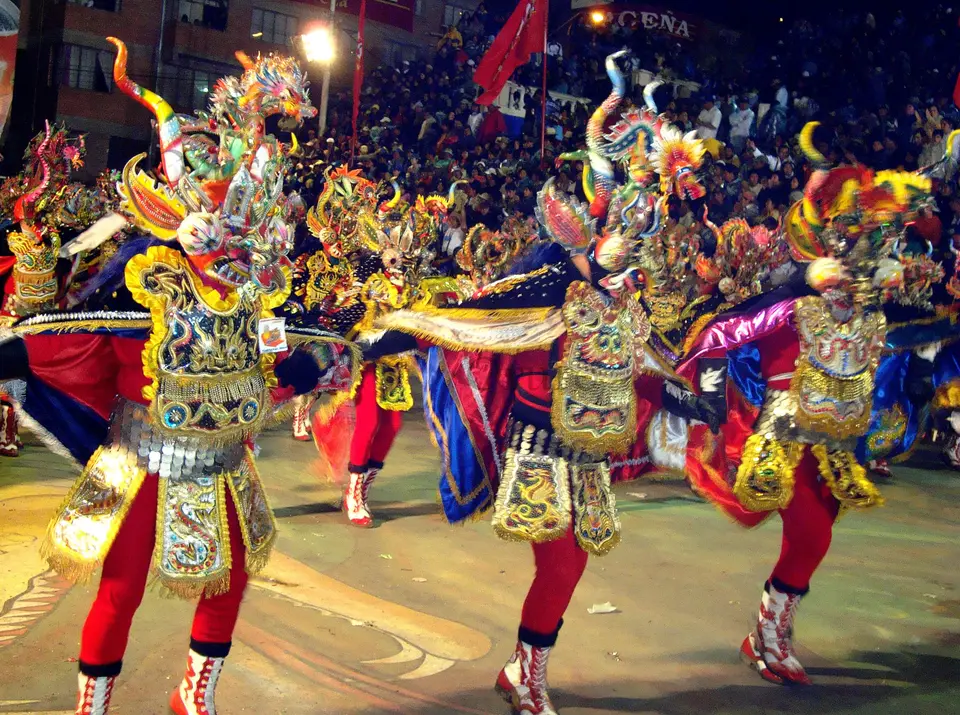
Carnival of Oruro
Carnaval de Oruro
In the Bolivian highlands, some 28,000 dancers and 10,000 musicians dance their way along a four-kilometre route to the Sanctuary of the Virgin of the Mineshaft — devils, llama herders and caporales in a carnival where Andean gods and Catholic saints have long shared the stage.
6–8 फ़रवरी 2027गणना से
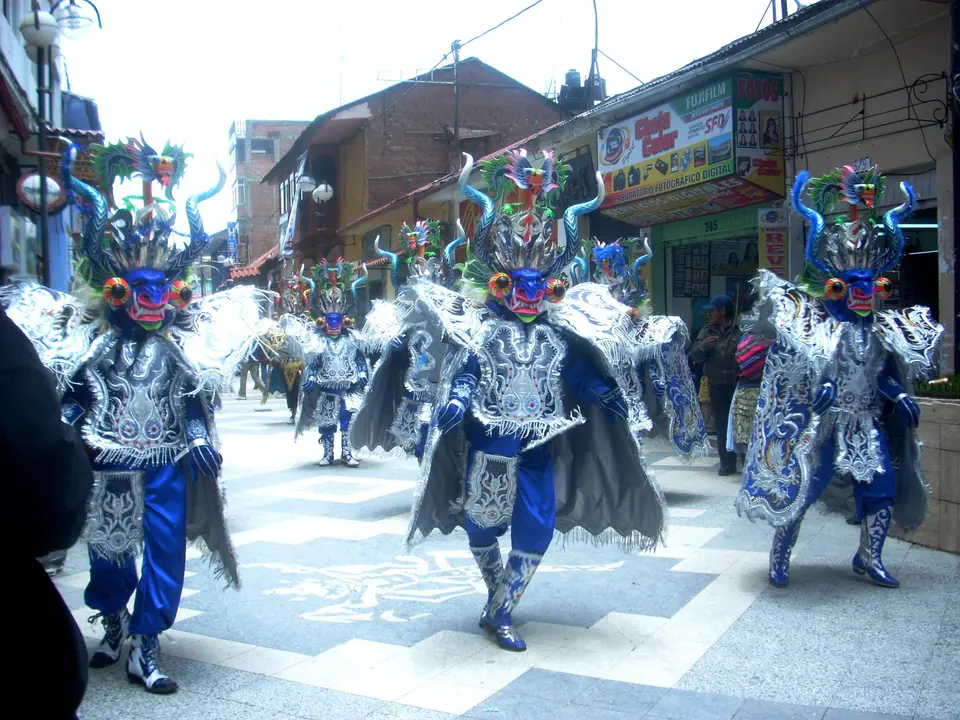
Festival of the Virgen de la Candelaria
Festividad de la Virgen de la Candelaria
Each February, Puno on the shore of Lake Titicaca honours its patron saint with Peru’s largest festival of music and dance — about a hundred thousand dancers and ten thousand musicians, most of them Quechua and Aymara, and weeks of masses, processions and contests.
1–15 फ़रवरी 2027अनुमानित
Qoyllur Rit'i
Quyllurit'i
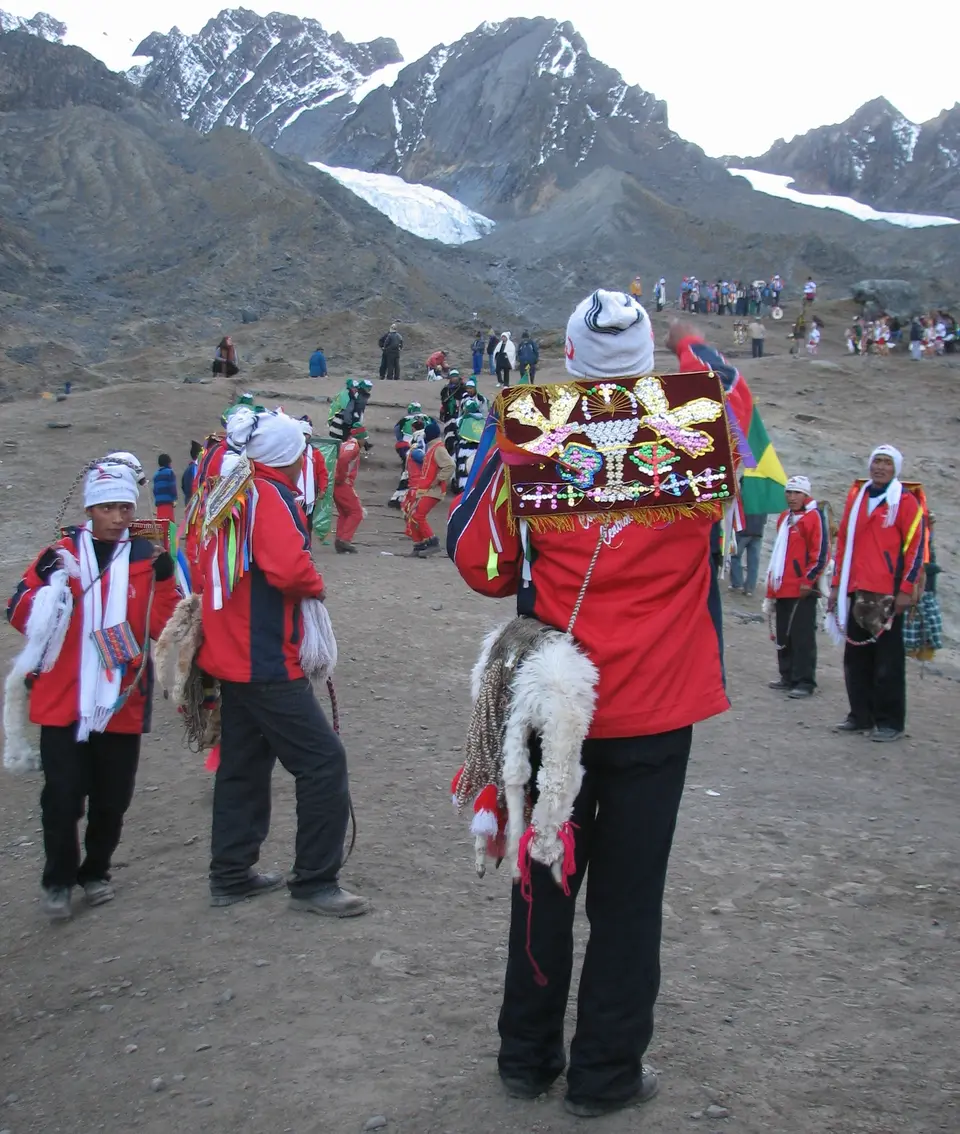
In a high valley below the glaciers of the Cusco region, tens of thousands of pilgrims gather each year for the Lord of Qoyllur Rit'i — a feast that joins Catholic devotion to older Andean beliefs about nature and the stars, with a hundred dances and a day-and-night procession to greet the sunrise.
25 मई 2027अनुमानित