यह पृष्ठ अभी हिन्दी में अनूदित नहीं हुआ है; मूल अंग्रेज़ी पाठ दिखाया जा रहा है।
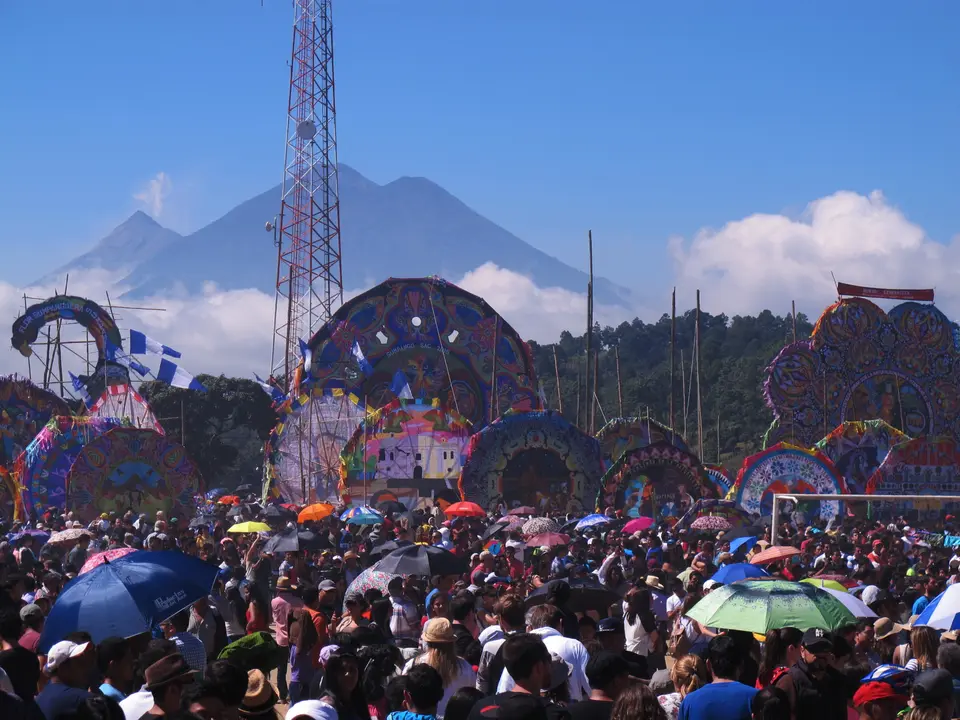
Sumpango Giant Kite Festival
Festival de Barriletes Gigantes
यूनेस्को की मानवता की अमूर्त सांस्कृतिक विरासत की सूची में शामिल
फ़ोटो: SantiagoGG, CC BY-SA 4.0, विकिमीडिया कॉमन्स से
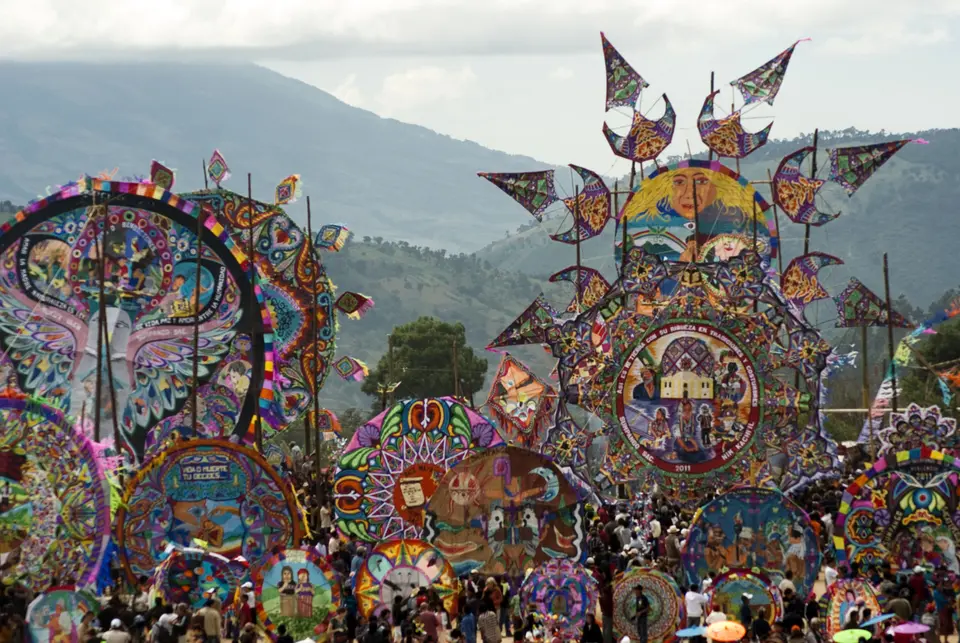
On All Saints’ Day, the town of Sumpango gathers at the football field beside its cemetery for a contest of giant kites — vast, intricately patterned discs that teams spend months building, judged on their artistry and on how well they fly.
Kites for the dead
Sumpango is a town in the Guatemalan department of Sacatepéquez. Every year on 1 November, All Saints’ Day, its people gather at the football field beside the cemetery for a contest of giant kites, judged on creativity and on flight. Families remember their dead by sending multicoloured kites into the sky. A local legend tells that evil spirits used to invade the cemetery on this day and disturb the good souls resting there; on the elders’ advice, the townspeople flew pieces of paper against the wind to drive the intruders away, and the good spirits were left in peace. The rattle of the kites’ fringes and tails is still said to keep bad souls away from the town.
The festival was recognised as cultural heritage of Guatemala in 1998, and in 2024 UNESCO inscribed the technique of making the giant kites of Santiago Sacatepéquez and Sumpango on its Representative List; UNESCO dates the tradition of making and flying the kites to the late nineteenth and early twentieth centuries. In 2023, when bad weather forced a postponement, the festival was held over two days for the first time and drew more than 100,000 visitors.
Months of work
About sixty groups, some 2,700 people, build the kites. The largest measure from 5.5 to 20 metres across and take months of work — hours every day, sometimes whole nights. Each group first decides the message its kite will carry, often about unity, faith, respect for tradition or Mother Earth, then draws a scale sketch before building the frame and the full-size design in tissue paper. The frame, made of cane and tied with hemp, rope or wire, is assembled on the night of 31 October; a cloth tail and paper fringes give the kite its balance in the air.
कब होता है
The festival takes place every year on 1 November.
- 1 नवंबर 2026गणना से
- 1 नवंबर 2027गणना से
- 1 नवंबर 2028गणना से
- 1 नवंबर 2029गणना से
सम्मान के साथ जाएँ
सुरक्षित रहें
- Armed robberies have occurred on tourist routes around Antigua and Guatemala City. Travel in daylight with reputable transport and avoid public buses.
- Express kidnappings are common. Use radio-dispatched or hotel taxis rather than hailing one on the street.
स्रोत
यह प्रविष्टि इन स्रोतों के आधार पर लिखी गई है।
- Technique of making the giant kites of Santiago Sacatepéquez and Sumpango, GuatemalaUNESCO Intangible Cultural Heritage · 17 सितंबर 2026 को देखा गया
- Festival de SumpangoWikipedia (Spanish) · 17 सितंबर 2026 को देखा गया
- SumpangoWikipedia · 17 सितंबर 2026 को देखा गया
- Guatemala travel advice: safety and securityUK Foreign, Commonwealth & Development Office · 17 सितंबर 2026 को देखा गया
संबंधित त्योहार
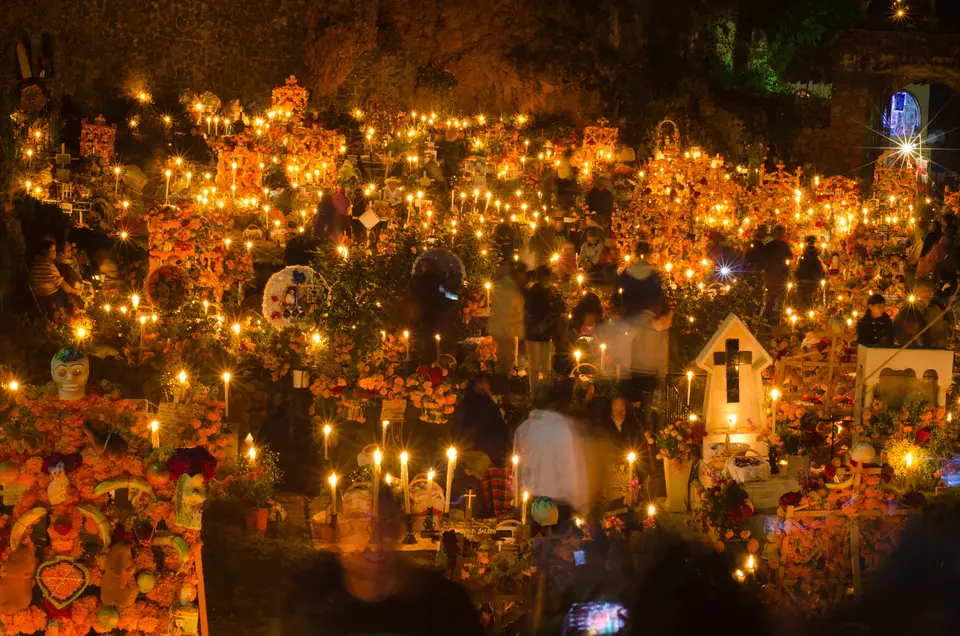
Day of the Dead
Día de Muertos
At the turn of October and November, Mexican families welcome their dead home for a brief visit. They build altars with marigolds, candles and the departed’s favourite food, decorate graves, and in some towns keep vigil in the cemetery all night.
1–2 नवंबर 2026गणना से
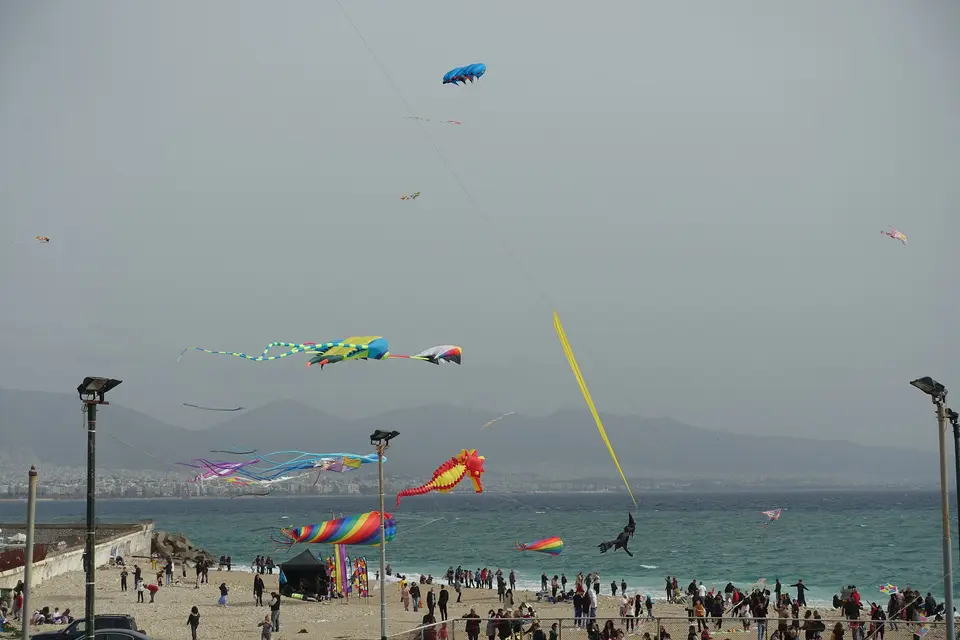
Clean Monday (Kathara Deftera)
Καθαρά Δευτέρα
The first day of Orthodox Lent is a public holiday in Greece, spent outdoors — families head out of town to fly kites, and share shellfish, fasting dishes and lagana, a flatbread baked only on this day.
15 मार्च 2027गणना से
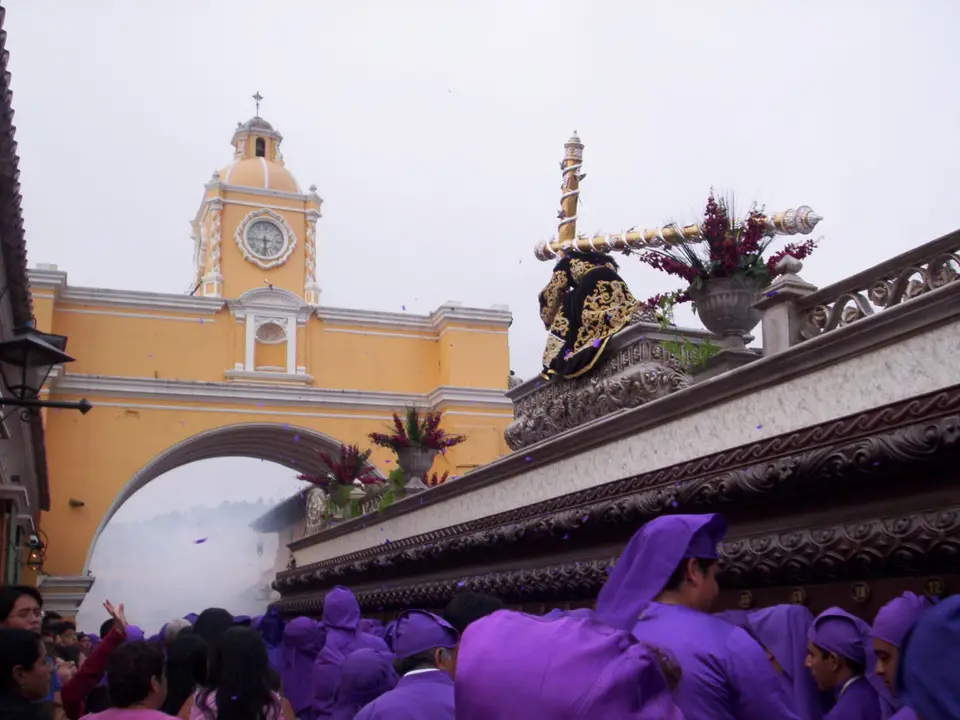
Holy Week in Guatemala
Semana Santa
In Holy Week, Guatemala walks with its saints — purple-robed cucuruchos shoulder huge processional floats through the streets of Antigua and Guatemala City, over carpets of coloured sawdust and flowers that take hours to make and vanish as the procession passes.
21–28 मार्च 2027गणना से