Esta página ainda não foi traduzida para português; mostra-se o texto original em inglês.
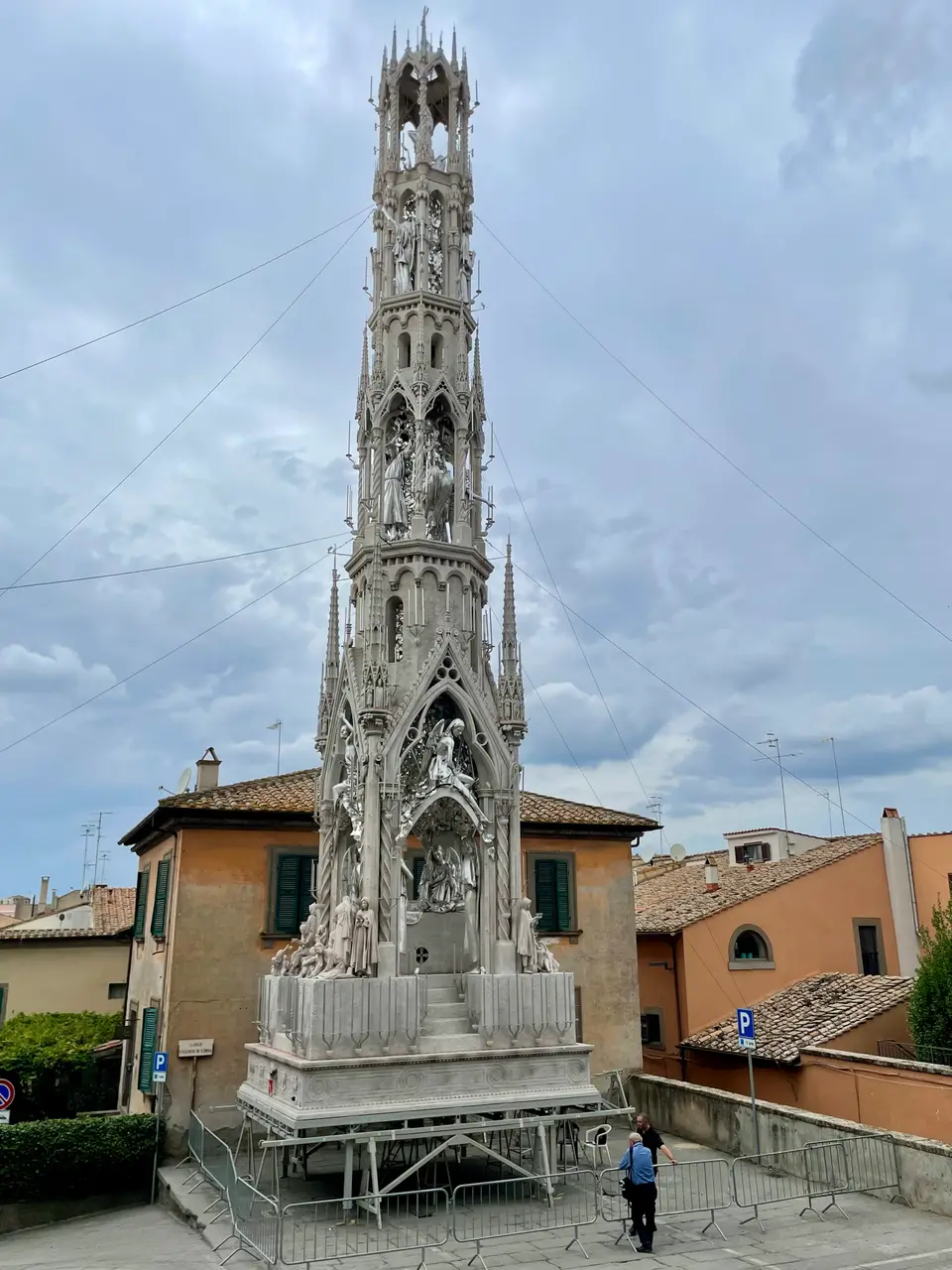
Macchina di Santa Rosa
Na Lista do Património Cultural Imaterial da Humanidade da UNESCO
Foto: Dietrich Kuhlgatz, CC BY-SA 4.0, via Wikimedia Commons
On the evening of 3 September, a hundred porters lift a tower some thirty metres tall and five tonnes in weight onto their shoulders and carry it through the medieval streets of Viterbo in honour of the city’s patron saint.
A tower on a hundred shoulders
The Macchina di Santa Rosa is a tower about 30 metres high, built to honour Rose of Viterbo, the city’s patron saint. Every 3 September about a hundred men, the Facchini di Santa Rosa — the porters of Saint Rose — lift the structure, which weighs around 5,000 kilograms, and carry it along a route of just over a kilometre through the squares and streets of Viterbo’s medieval centre, among crowds of devotees and onlookers. A new design for the Macchina is built every five years.
From a saint’s body to a machine
The festival has two parts. On the afternoon of 2 September a reliquary holding the heart of Saint Rose is carried in procession, accompanied by people in costumes of the fourteenth to the nineteenth centuries. The transport of the Macchina follows the next evening. It recalls the moving of the saint’s body in 1258, six years after her death, from a small parish church to the church of Santa Maria delle Rose.
The first “machine” was probably designed in 1686, and in the eighteenth century noble families of Viterbo paid for ever grander towers. The history has not been without disaster: the machine fell in 1790; in 1801 panic in the crowd left twenty-two people dead and the machine caught fire, and the transport was banned for some years; in 1814 it tipped backwards and porters died.
One of four
The Macchina di Santa Rosa is one of four Catholic processions of giant shoulder-borne structures — with the obelisks of Nola, the processional structure of Palmi and the Candelieri of Sassari — inscribed together on UNESCO’s Representative List. UNESCO describes how the shared, carefully coordinated effort of the bearers binds these communities together through mutual respect and cooperation.
Quando acontece
The transport of the Macchina di Santa Rosa takes place every year on the evening of 3 September. On the afternoon of 2 September, a reliquary with the heart of Saint Rose is carried in procession with participants in historical costume.
- 3 de setembro de 2027Calculada
- 3 de setembro de 2028Calculada
- 3 de setembro de 2029Calculada
- 3 de setembro de 2030Calculada
Visitar com respeito
Bom saber
- The transport is an act of devotion. Stay behind the barriers, keep the route clear, and follow the instructions of the organisers and police.
- Arrive early to find a place along the route through the historic centre; thousands of spectators attend.
Segurança
- The streets are narrow and crowded. Keep your group together and look after your belongings.
Fontes
Esta entrada foi escrita a partir das fontes seguintes.
- Macchina di Santa RosaWikipedia (English) · consultado em 16 de setembro de 2026
- Celebrations of big shoulder-borne processional structuresUNESCO Intangible Cultural Heritage · consultado em 16 de setembro de 2026
Festas relacionadas
Gion Matsuri
祇園祭
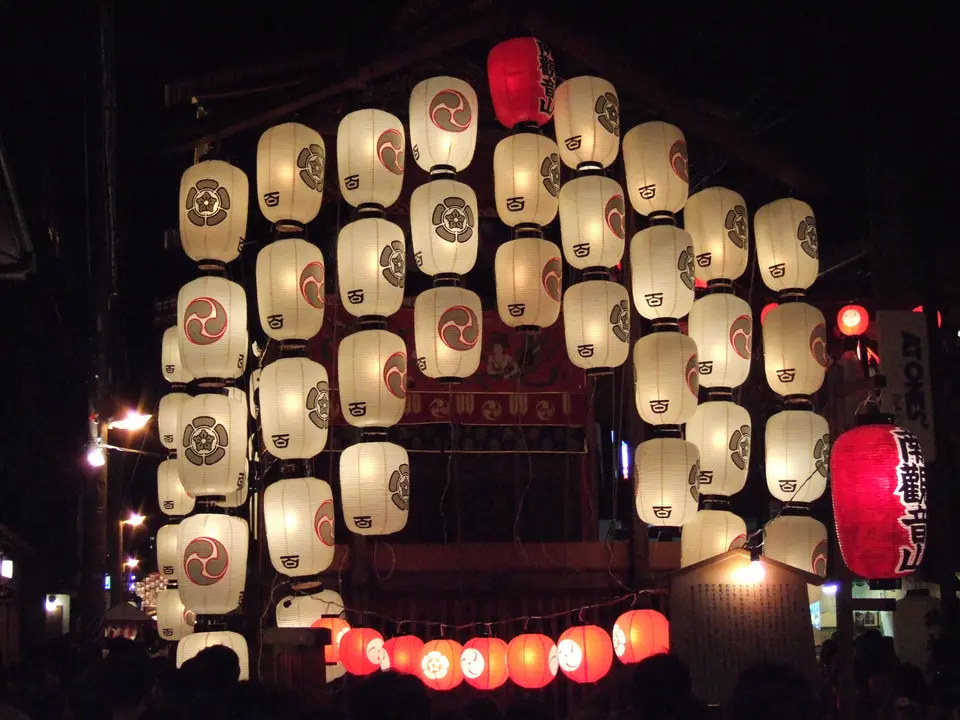
Kyoto’s great summer festival lasts the whole of July. Its high points are the lantern-lit yoiyama evenings and the processions of towering yamahoko floats on 17 and 24 July, built and hauled by the city’s own neighbourhoods.
1 – 31 de julho de 2027Calculada
Chichibu Yomatsuri
秩父夜祭
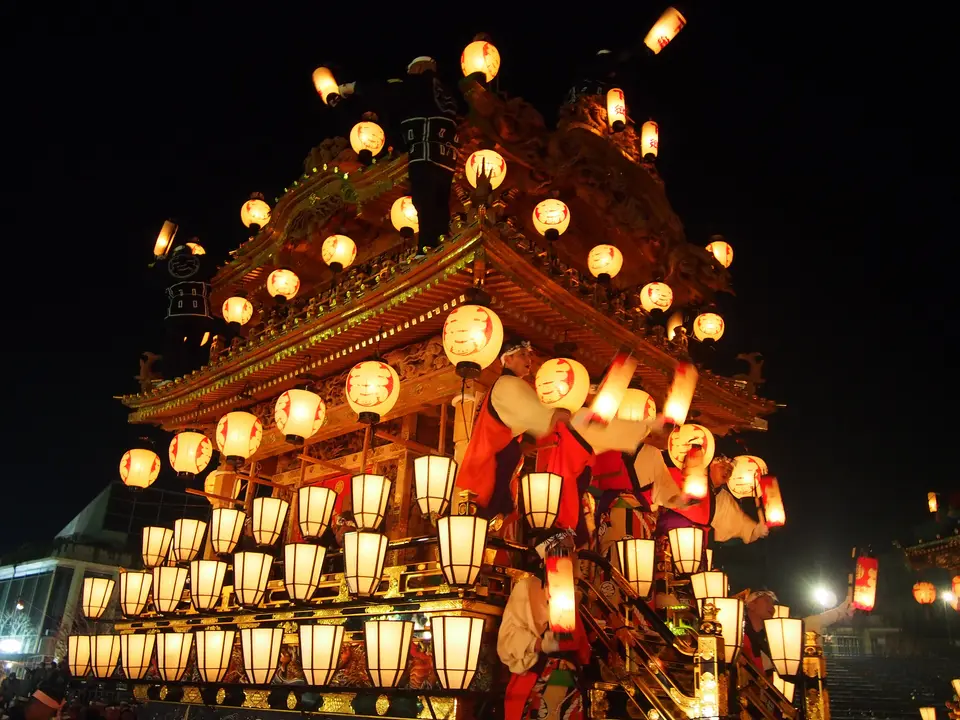
On a cold December night in the mountains of Saitama, six great floats blazing with lanterns are hauled through Chichibu and up the steep Dango-zaka slope, while fireworks burst over the town.
2 – 3 de dezembro de 2026Calculada
Palio di Siena
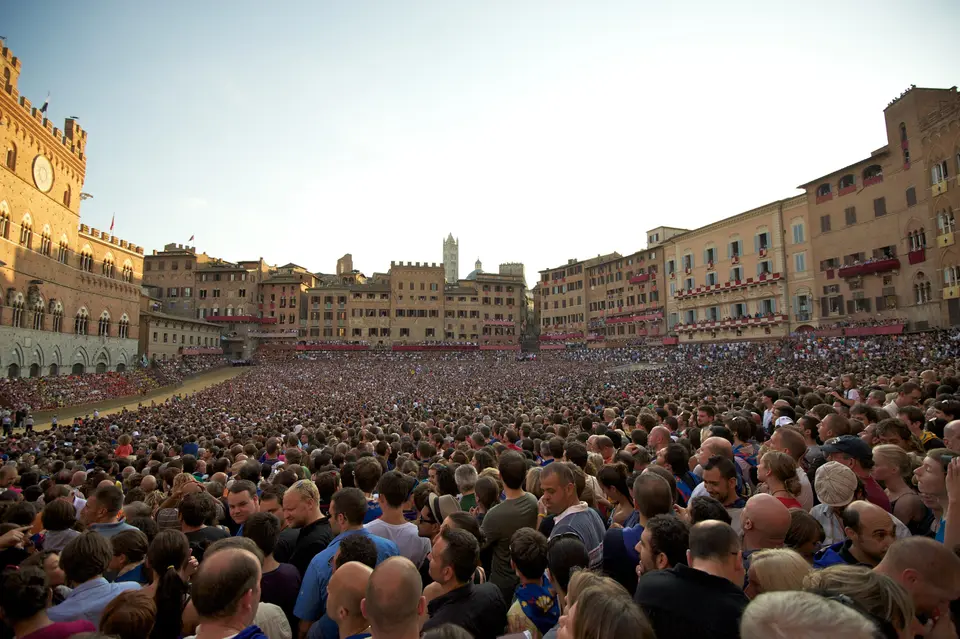
Twice every summer, ten of Siena’s seventeen city wards race horses bareback three times around the Piazza del Campo. The race lasts about ninety seconds; the rivalries, alliances, pageantry and devotion around it last all year.
2 de julho de 2027Calculada