لم تُترجم هذه الصفحة إلى العربية بعد، ويُعرض نصها الأصلي بالإنجليزية.
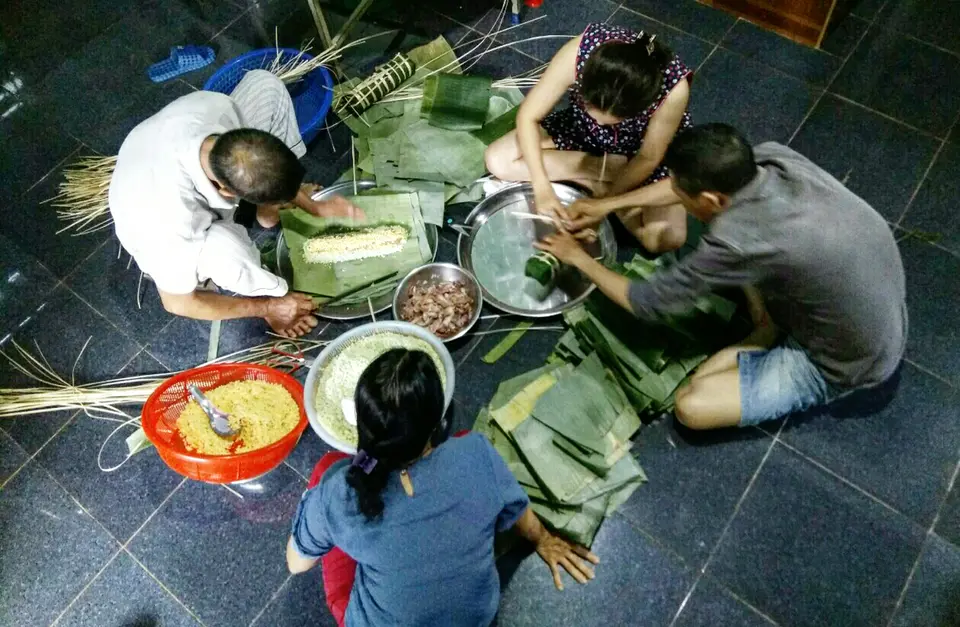
The Vietnamese Lunar New Year is the most important celebration in Vietnam — a time to go home, tend ancestors’ graves, fill the house with peach or yellow ochna blossom, wrap sticky rice cakes, and take care over who crosses the threshold first.
Before the New Year
Tết is short for Tết Nguyên Đán, the feast of the first day. The holiday falls into three parts: tất niên, the preparations before the end of the year; giao thừa, New Year’s Eve; and năm mới, the new year itself. In the weeks before, people return home to their families. From the 23rd day of the last lunar month until the eve, many visit their ancestral villages to worship at the family altar and clean their ancestors’ graves. Houses are cleaned, special food is cooked, and some families pay off their debts.
Homes are decorated with the yellow blossom of ochna, hoa mai, in central and southern Vietnam and peach blossom, hoa đào, in the north; in the north and centre a kumquat tree, heavy with fruit, is a popular wish for fruitfulness. Preparing bánh chưng or bánh tét can take days, and the story of their origin is told to children while the cakes boil through the night.
The first days
The first day belongs to the immediate family. Children put on new clothes, wish their elders a long life, and receive red envelopes of money — mừng tuổi in the north, lì xì in the south. Because the first visitor of the year is believed to determine a household’s fortune, families invite someone of good character, success and temper to be the first to enter; some owners step outside just before midnight so that they can be the first to come back in.
On the following days people visit relatives and friends. Traditionally the second day is for friends and the third for teachers. Temples are busy with people making donations and having their fortunes told, and lion dancers perform in the streets and at homes. The usual greeting is Chúc mừng năm mới — Happy New Year.
متى يُقام
Tết is the first day of the first month of the Vietnamese lunisolar calendar, usually between late January and 20 February, and is celebrated for at least three days. It normally coincides with Chinese New Year, but Vietnam reckons the calendar one hour behind China, so the two can occasionally fall on different days.
- 6–8 فبراير 2027محسوب
- 26–28 يناير 2028محسوب
- 13–15 فبراير 2029محسوب
- 2–4 فبراير 2030محسوب
زيارة باحترام
من المفيد أن تعرف
- Do not visit someone’s home on the first day of Tết unless you have been invited. The first visitor is believed to shape the household’s fortune for the whole year.
- Keep the first three days free of arguments and anger; harmony in these days is thought to bring good luck.
تجنّب
- Sweeping during Tết is considered unlucky, as it sweeps the luck away. Houses are cleaned before the New Year instead.
السلامة
- Petty crime usually rises around Christmas and Tết. Bag-snatching from motorbikes is common — carry bags on the side away from traffic.
- Use pre-booked transport or official taxi apps rather than unlicensed taxis.
الطعام والشراب
Bánh chưng and bánh tét
Sticky rice with meat or bean fillings, wrapped in dong or banana leaves and boiled for hours. The square bánh chưng, more popular in the north, stands for the Earth; the cylindrical bánh tét, more common in the south, for the moon.
المصادر
كُتب هذا المدخل استنادًا إلى المصادر التالية.
- TếtWikipedia · اطُّلع عليه في 16 سبتمبر 2026
- Vietnam travel advice: safety and securityUK Foreign, Commonwealth & Development Office · اطُّلع عليه في 16 سبتمبر 2026
- Gregorian-Lunar Calendar Conversion TablesHong Kong Observatory · اطُّلع عليه في 16 سبتمبر 2026
- Phases of the MoonUS Naval Observatory, Astronomical Applications · اطُّلع عليه في 16 سبتمبر 2026
مهرجانات ذات صلة
Spring Festival (Chinese New Year)
春节
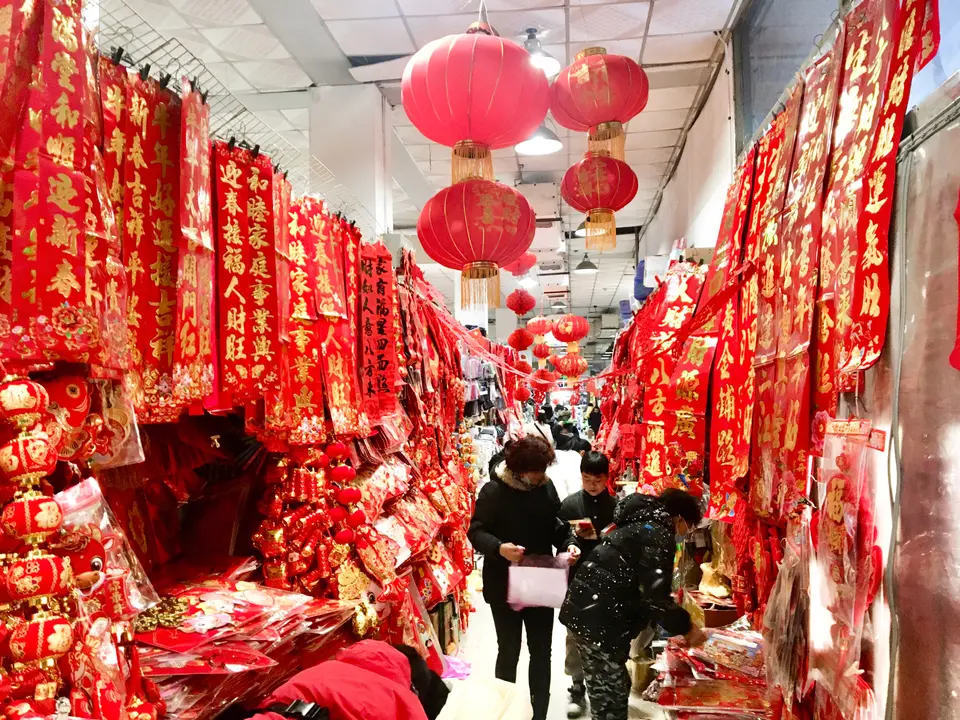
The first day of the Chinese lunisolar year is the most important holiday in Chinese culture — a season of homecoming, spring couplets on the door, a reunion dinner on New Year’s Eve and visits to relatives, which sets off one of the largest annual migrations in the world.
5–6 فبراير 2027محسوب
Hùng Kings’ Temple Festival
Giỗ Tổ Hùng Vương
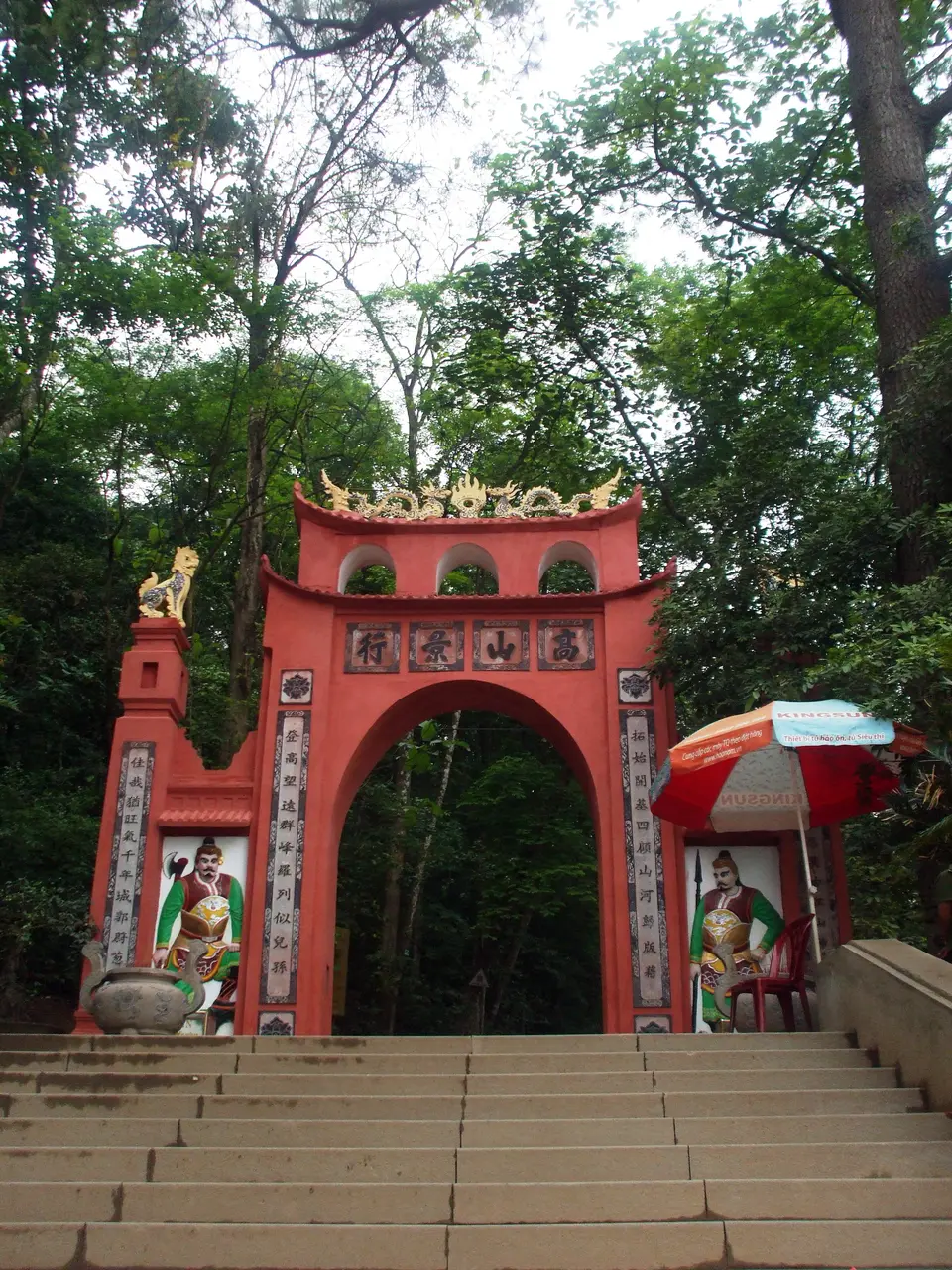
Early in the third lunar month, millions of Vietnamese climb Nghĩa Lĩnh mountain in Phú Thọ to honour the Hùng Kings, legendary founders of the nation, with processions of palanquins, drums and gongs, offerings of rice cakes and Xoan singing.
16 أبريل 2027محسوب
Nowruz
نوروز
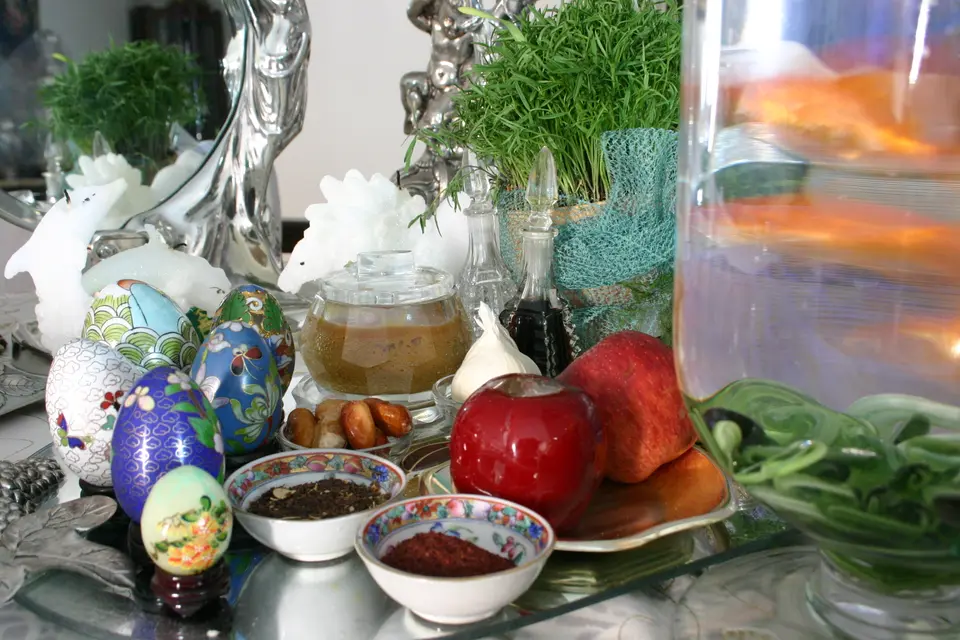
Nowruz, “new day”, is the Iranian New Year. It begins at the March equinox, when families gather around the Haft-sin table to wait for the exact moment the year turns, and opens two weeks of visits, food and time outdoors.
21 مارس 2027محسوب