Diese Seite ist noch nicht ins Deutsche übersetzt; der englische Originaltext wird angezeigt.
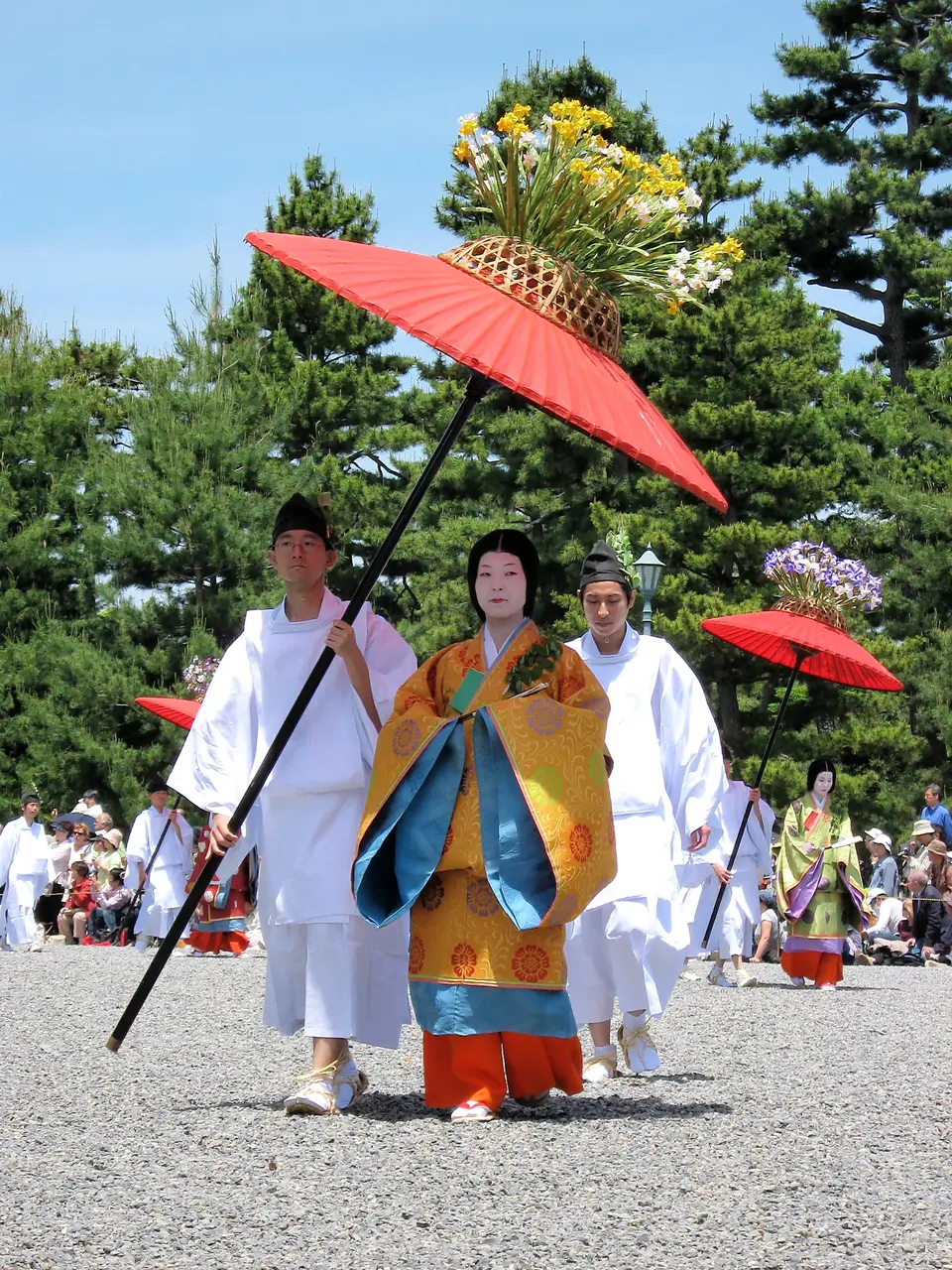
On 15 May a procession in the court dress of the Heian era leaves the Kyoto Imperial Palace for the Shimogamo and Kamigamo shrines. It is one of Kyoto’s three great festivals, and once so central to court life that “the festival” simply meant this one.
Kyoto’s imperial festival
Aoi Matsuri, also called Kamo Matsuri, is the principal annual rite of both Shimogamo and Kamigamo shrines and a chokusai — an imperial festival at which the emperor’s envoy presents offerings. According to the shrines it began about 1,500 years ago, in 544, when crop failure, famine and epidemic were taken as signs of the Kamo deity’s anger, and horses were raced and rites performed to appease it.
In the Heian court it was so central that “the festival”, with no other name, meant this one. Its name comes from the aoi leaves that decorate the shrine buildings and are worn by everyone who serves in it. Together with Gion Matsuri and Jidai Matsuri it is counted among the three great festivals of Kyoto.
The procession
At 10:30 the procession leaves the Kyoto Imperial Palace. It goes first to Shimogamo Shrine, where rites are performed, then re-forms and continues north along the Kamo-kaido road, arriving at Kamigamo Shrine at about 15:30. There it advances along the white-sand approach; inside the second torii the imperial envoy reads the emperor’s message, and rites in their old form follow, among them the leading of horses and the azuma-asobi dance.
A tradition chosen again and again
What visitors see today is not an unbroken line but a tradition repeatedly revived. The festival lapsed after the Onin War of the fifteenth century, was restored in 1694 and held until 1870, and returned in 1884 as one of Japan’s three imperial festivals. The procession stopped in 1943 and came back only in 1953. Since 1956 a Kyoto woman chosen as the Saio-dai has taken the place once held by an imperial princess.
Wann es stattfindet
Aoi Matsuri is held every year on 15 May. The procession leaves the Kyoto Imperial Palace at 10:30 and reaches Kamigamo Shrine at about 15:30.
- 15. Mai 2027Berechnet
- 15. Mai 2028Berechnet
- 15. Mai 2029Berechnet
- 15. Mai 2030Berechnet
Respektvoll besuchen
Gut zu wissen
- The street procession can be watched freely along its route from the Imperial Palace to Shimogamo Shrine and north along the Kamo-kaido.
- Kamigamo Shrine requires prior permission to film or photograph inside its grounds, at every festival including Aoi Matsuri and at all other times. It gives safety and the proper conduct of the rites as its reasons.
Vermeiden
- Do not photograph or film inside the grounds of Kamigamo Shrine without the shrine’s permission.
- Do not fly a drone over Kamigamo Shrine without prior permission, whether or not you are filming.
Quellen
Dieser Eintrag beruht auf den folgenden Quellen.
- 賀茂祭(葵祭)Shimogamo Shrine (賀茂御祖神社) · abgerufen am 20. August 2026
- 賀茂祭Kamigamo Shrine (賀茂別雷神社) · abgerufen am 20. August 2026
- 撮影・ドローンについてKamigamo Shrine (賀茂別雷神社) · abgerufen am 20. August 2026
Verwandte Feste
Gion Matsuri
祇園祭
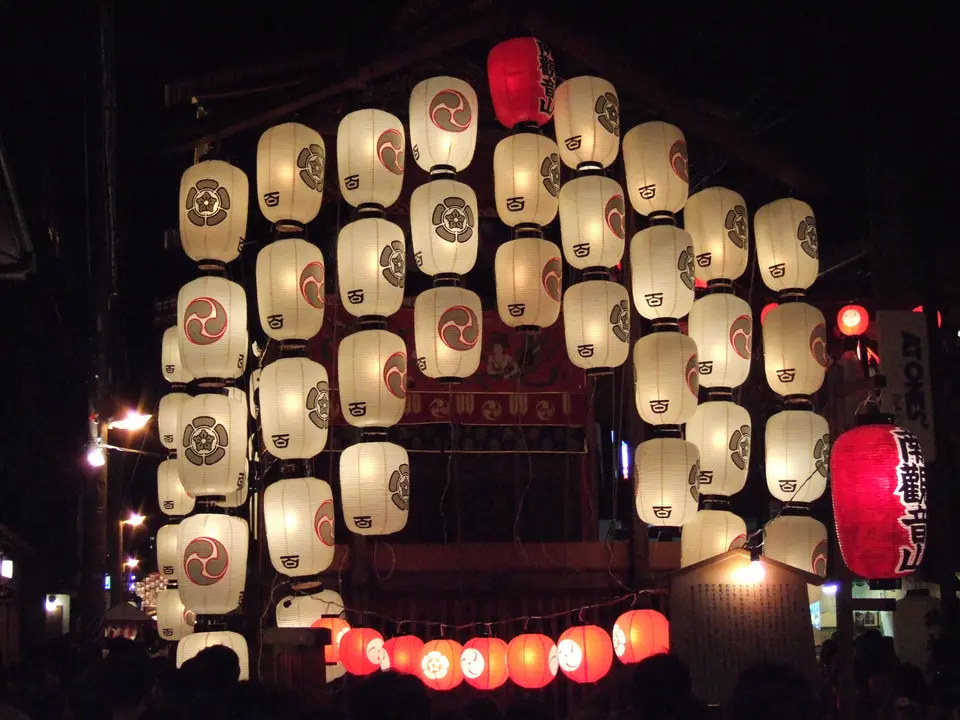
Kyoto’s great summer festival lasts the whole of July. Its high points are the lantern-lit yoiyama evenings and the processions of towering yamahoko floats on 17 and 24 July, built and hauled by the city’s own neighbourhoods.
1.–31. Juli 2027Berechnet