Diese Seite ist noch nicht ins Deutsche übersetzt; der englische Originaltext wird angezeigt.
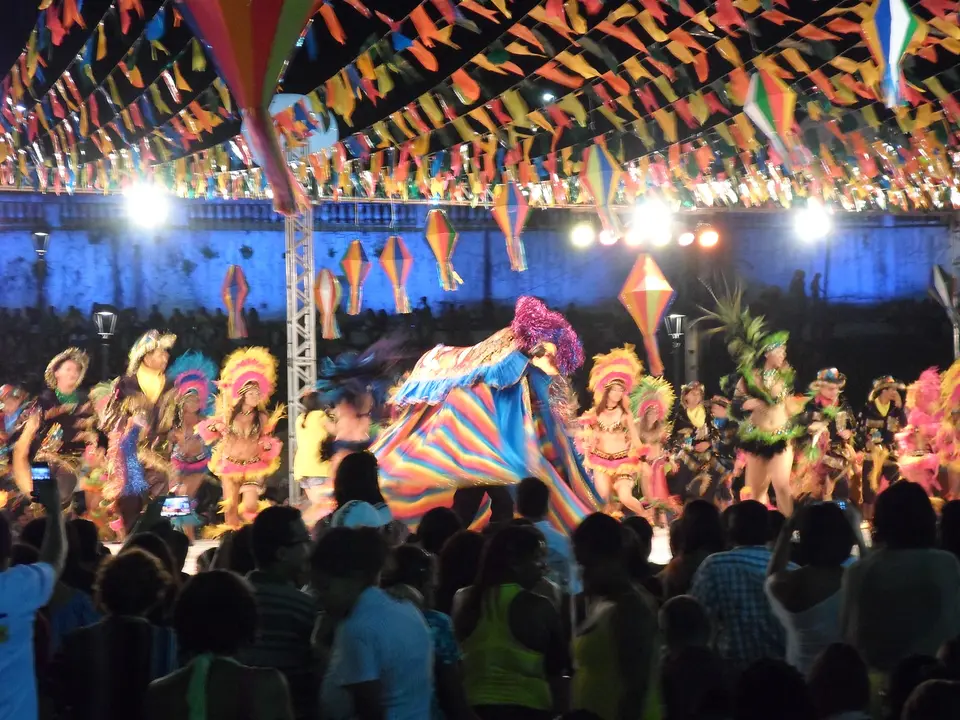
Bumba-meu-boi of Maranhão
Bumba-meu-boi
Auf der UNESCO-Liste des immateriellen Kulturerbes der Menschheit
Foto: Marcus Soares, CC BY-SA 3.0, über Wikimedia Commons
Through June the arraiais of São Luís fill with embroidered oxen, drums and wooden clappers as almost a hundred bumba-meu-boi groups act out, in song and dance, the death and resurrection of an ox — a folk play born among the poor of colonial Brazil.
The story of the ox
Bumba-meu-boi, roughly “dance, my ox”, is a folk play that appeared in eighteenth-century Brazil among enslaved people and rural workers, and has long been a way for poorer Brazilians to mock the powerful. Its versions vary, but at its heart is the death and resurrection of an ox. The pregnant Catirina craves an ox’s tongue; the ox is killed and its tongue given to her by the cowhand Pai Francisco. The farm’s owner demands that the culprit be caught; in Maranhão Indigenous healers, the pajés, are summoned, and when the ox comes back to life, lowing, everyone joins in a great feast. The audience cheers, weeps and mocks along the way.
In Maranhão the cast includes the amo, the farm owner who leads the group with a whistle and a maracá and sings the main songs, cowboys, Indigenous figures and the cazumbás, mischievous beings who embody the spirit of the celebration. Today’s performances rarely tell the whole story, and put more weight on the songs, toadas, and the dancing.
Accents of the ox
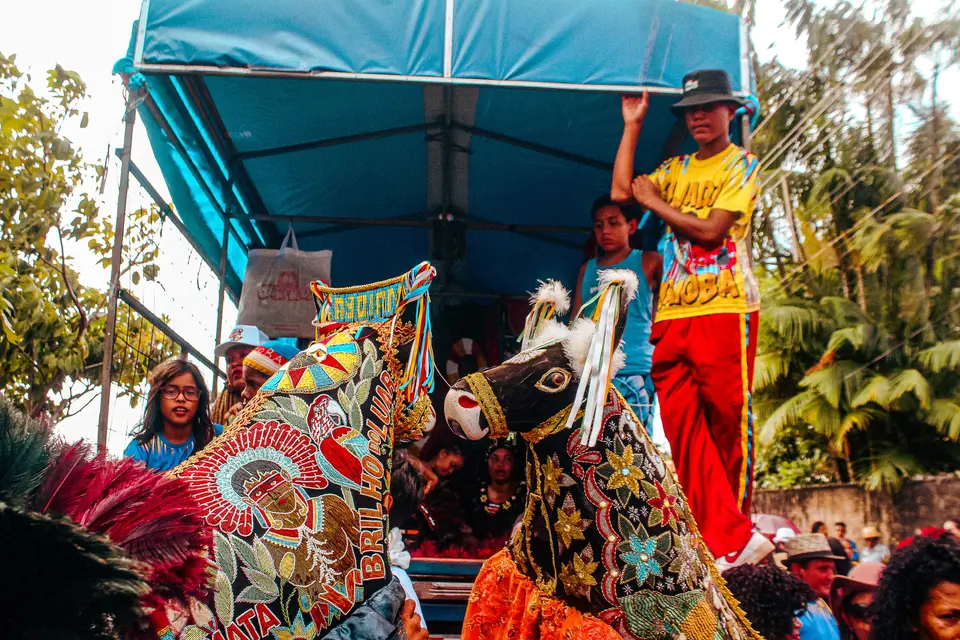
There are almost a hundred groups in the state, divided into styles called sotaques, “accents” — matraca, zabumba, orquestra, Baixada and costa de mão — each with its own costumes, instruments, rhythm and choreography. Matraca groups, such as Boi da Maioba, beat time with two small blocks of wood; Boi de Axixá is among the best-known orquestra groups.
The festival is also an act of devotion to the June saints, John, Peter and Martial. On St Peter’s Day groups go to St Peter’s chapel to give thanks, and on São Marçal’s Day matraca groups gather in huge numbers in the João Paulo neighbourhood of São Luís. UNESCO, which inscribed the cultural complex in 2019, describes how each year the groups reinvent the celebration — new songs and comedies, new embroidery on the ox’s hide and new costumes — and how the ox, through the cycle of birth, life and death, becomes a metaphor for human life.
Wann es stattfindet
The groups perform through the June festivities (Festas Juninas) from 13 June, reaching their peak with St John on 24 June, St Peter on 29 June and São Marçal on 30 June. The whole cycle — rehearsals, baptisms of the ox, performances and the ritual death — can last four to eight months.
- 13.–30. Juni 2027Berechnet
- 13.–30. Juni 2028Berechnet
- 13.–30. Juni 2029Berechnet
- 13.–30. Juni 2030Berechnet
Quellen
Dieser Eintrag beruht auf den folgenden Quellen.
- Cultural Complex of Bumba-meu-boi from MaranhãoUNESCO Intangible Cultural Heritage · abgerufen am 17. September 2026
- Bumba Meu BoiWikipedia · abgerufen am 17. September 2026
Verwandte Feste
Parintins Folklore Festival
Festival Folclórico de Parintins
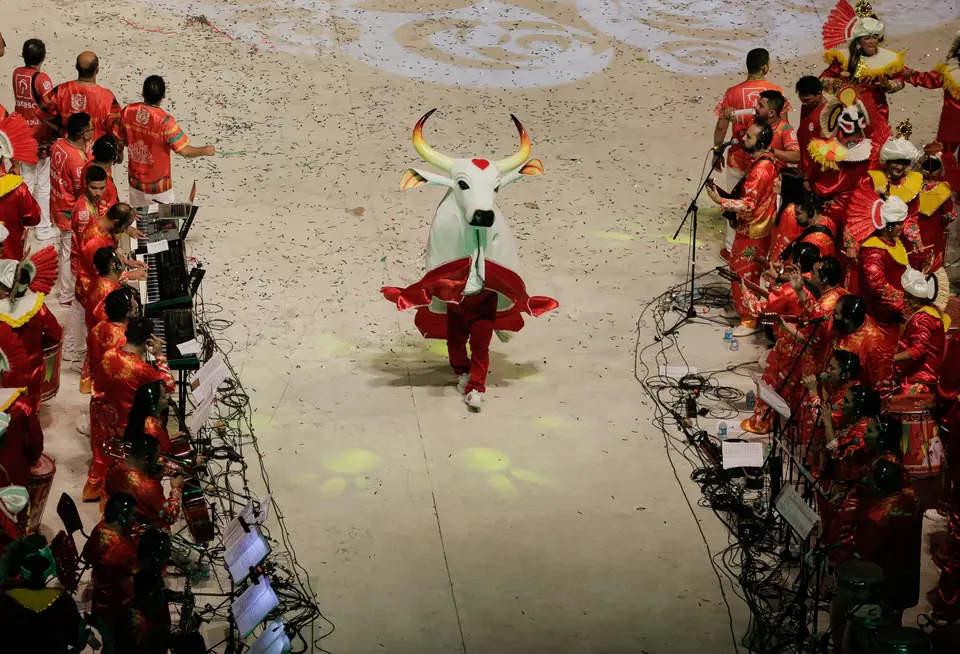
In a town in the Brazilian Amazon, two rival ox associations — blue Caprichoso and red Garantido — turn the story of the bumba-meu-boi into three nights of arena spectacle, with giant sets, drums, Amazonian legends and a whole town divided by colour.
25.–27. Juni 2027Geschätzt
Guelaguetza
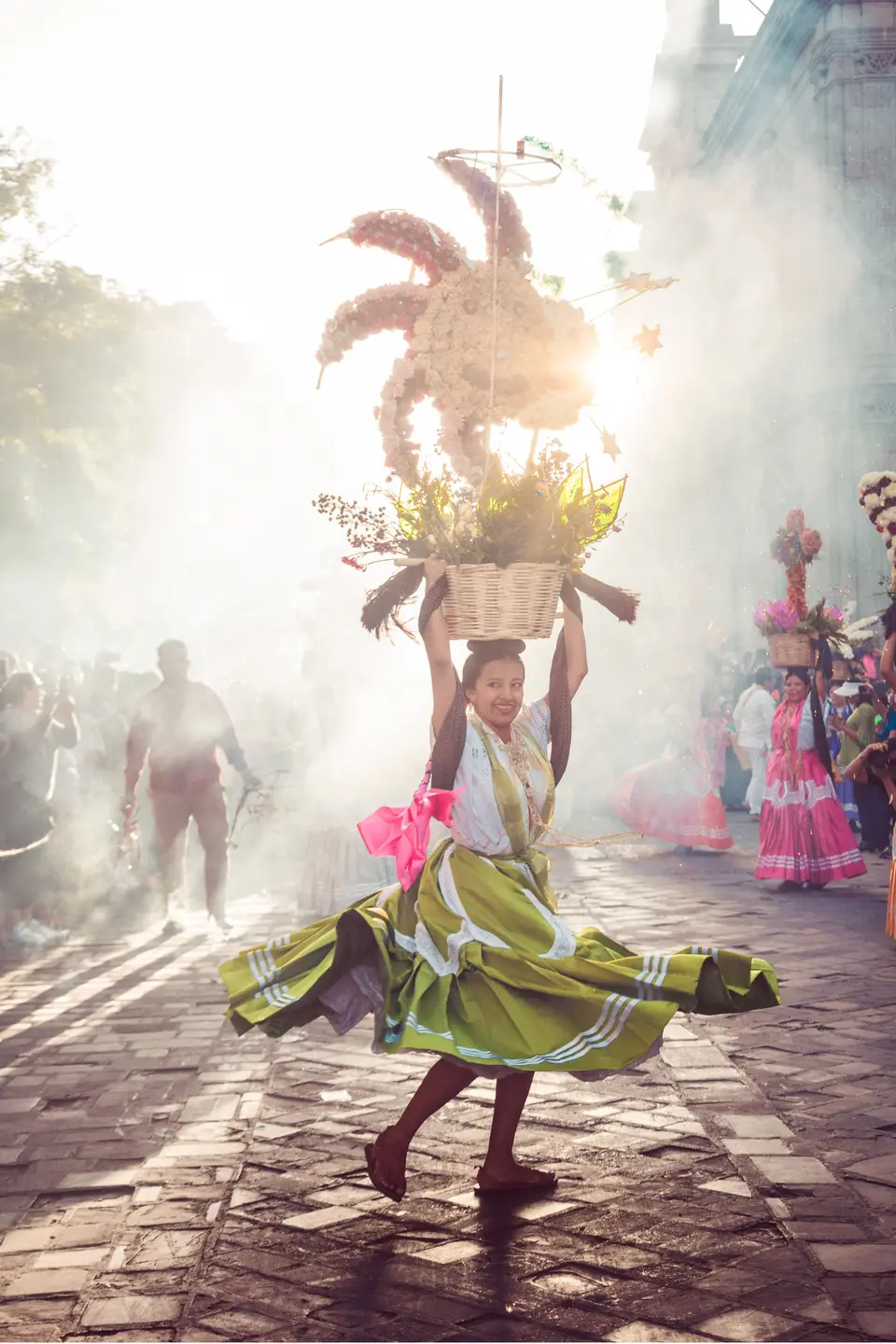
On two Mondays each July, delegations from the eight regions of Oaxaca climb the Cerro del Fortín to present their dances, music and costumes — the best-known indigenous gathering of its kind in Mexico, with a month of food, mezcal and craft fairs around it.
19. Juli 2027Geschätzt
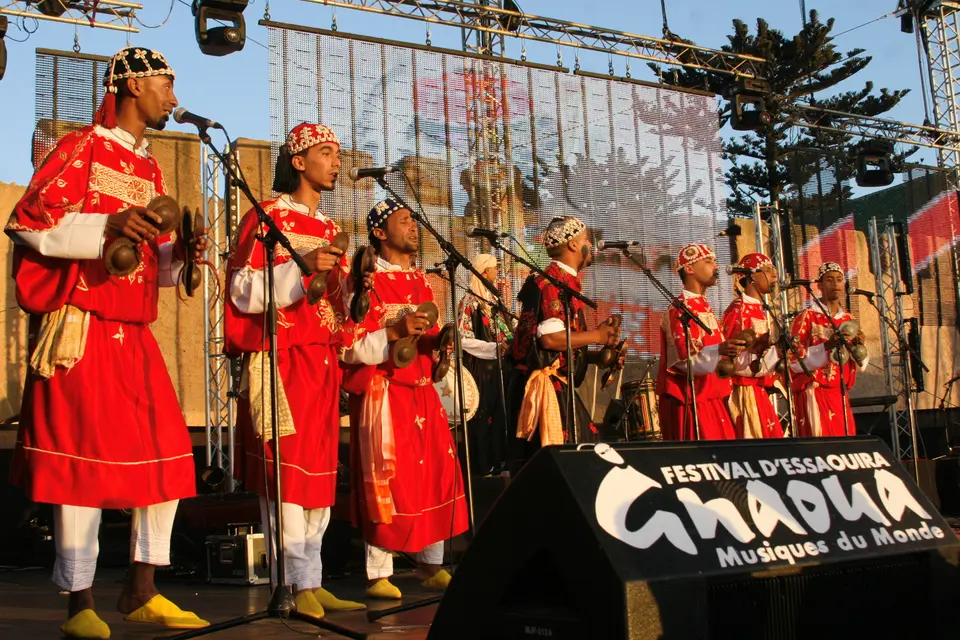
Gnaoua and World Music Festival
Festival Gnaoua et Musiques du Monde
Every June the Atlantic port of Essaouira fills with the rhythms of Gnawa — the trance music of a Sufi brotherhood — as master Gnaoua musicians share stages with artists from around the world.
24.–26. Juni 2027Offiziell bekannt gegeben