Diese Seite ist noch nicht ins Deutsche übersetzt; der englische Originaltext wird angezeigt.
Seollal
설날
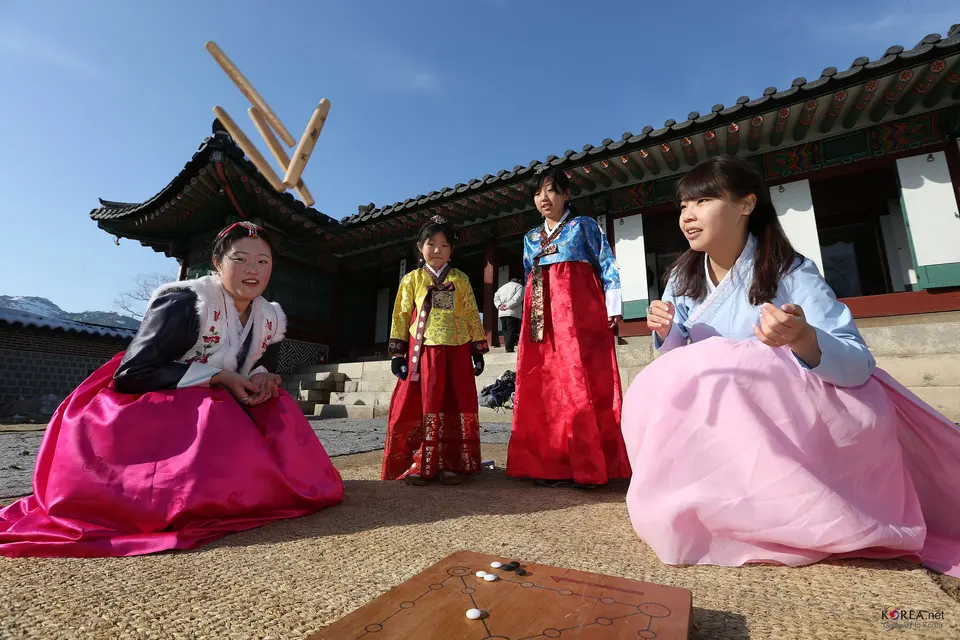
Foto: Korea.net / Korean Culture and Information Service (Jeon Han), CC BY-SA 2.0, über Wikimedia Commons
Korean Lunar New Year is a three-day family holiday — tens of millions travel home to perform the ancestral rite, bow deeply to their elders in hanbok, eat a bowl of rice-cake soup and, by old custom, grow a year older.
Home for the New Year
Seollal is one of the most important holidays for Koreans, in both South and North Korea and across the diaspora. Seol is an old word for a year of age, and New Year’s Day was traditionally when everyone grew a year older. The three-day holiday is used to return to hometowns, visit parents and grandparents, and perform the ancestral rite, charye; in 2016 some 36 million South Koreans were reported to be travelling.
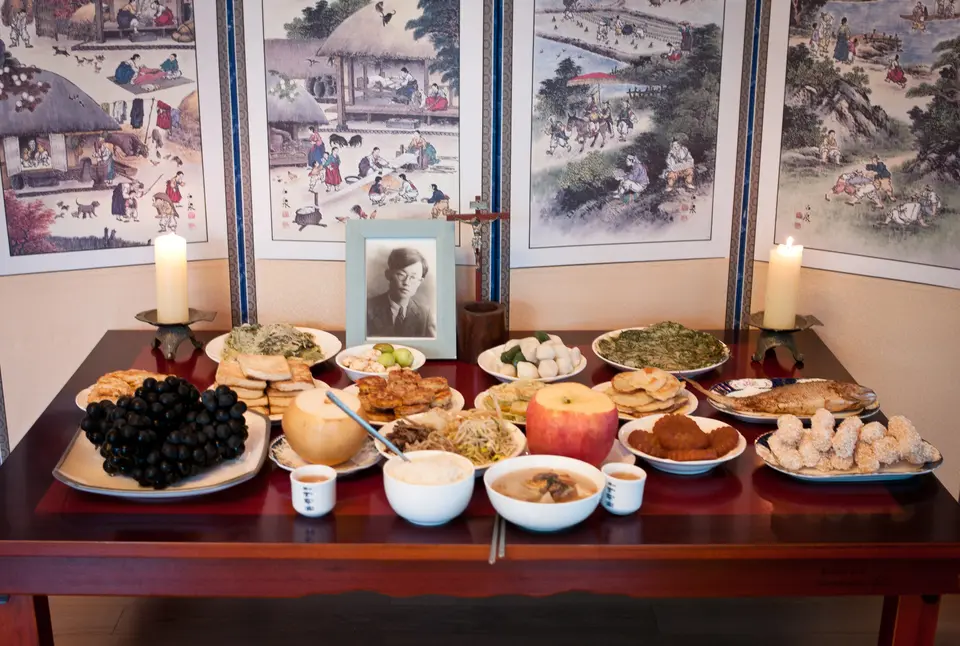
On the first morning, traditional foods are laid on a table as offerings to the ancestors, and the rite begins with deep bows from all the family, who pray for the well-being of everyone in it. Many people wear hanbok, the colourful traditional dress. After the rite comes a large feast, and families play folk games.
Sebae
The best-known custom is sebae. Younger family members, dressed in traditional clothes, bow deeply to their grandparents, parents, aunts and uncles and say saehae bok mani badeuseyo — “please receive a lot of good fortune in the new year”. The elders give crisp new banknotes, sebaet don, often in silk pouches, along with words of wisdom.
Banned and restored
In 1907, under Japanese pressure, the celebration of Seollal was banned, and during colonial rule the official New Year was moved to 1 January. After liberation in 1945, 1 to 3 January became the public New Year holiday. In the 1980s there was widespread support in South Korea for bringing Seollal back: the government made the lunar New Year a “folk day” from 1985 to 1988, and in 1989 restored Seollal as the official Korean New Year and a national holiday.
Wann es stattfindet
Seollal is the first day of the first month of the Korean lunisolar calendar, in January or February. The public holiday lasts three days — the day before, the day itself and the day after. Korea reckons the calendar at Korean time, so Seollal is occasionally a day later than Chinese New Year, as in 2027 (7 February).
- 6.–8. Februar 2027Berechnet
- 26.–28. Januar 2028Berechnet
- 12.–14. Februar 2029Berechnet
- 2.–4. Februar 2030Berechnet
Respektvoll besuchen
Sicherheit
- Tens of millions of people travel during the holiday. Book trains and flights well in advance and expect heavy traffic.
Essen und Trinken
Tteokguk
Soup of sliced rice cakes, usually in a beef broth with egg and green onion. The long rice-cake ropes stand for an expanding fortune, the oval slices resemble old coins, and eating a bowl is said to add a year to your age.
Jeon
Savoury pancakes, typically part of the New Year table.
Quellen
Dieser Eintrag beruht auf den folgenden Quellen.
- SeollalWikipedia · abgerufen am 16. September 2026
- 2027년 월력요항 (Korean almanac for 2027)Korea Astronomy and Space Science Institute · abgerufen am 16. September 2026
- 2027년 공휴일 72일·주5일제 휴일 119일…3일 이상 연휴 10번Asia Economy · abgerufen am 16. September 2026
- Gregorian-Lunar Calendar Conversion TablesHong Kong Observatory · abgerufen am 16. September 2026
- Phases of the MoonUS Naval Observatory, Astronomical Applications · abgerufen am 16. September 2026
Verwandte Feste
Chuseok
추석
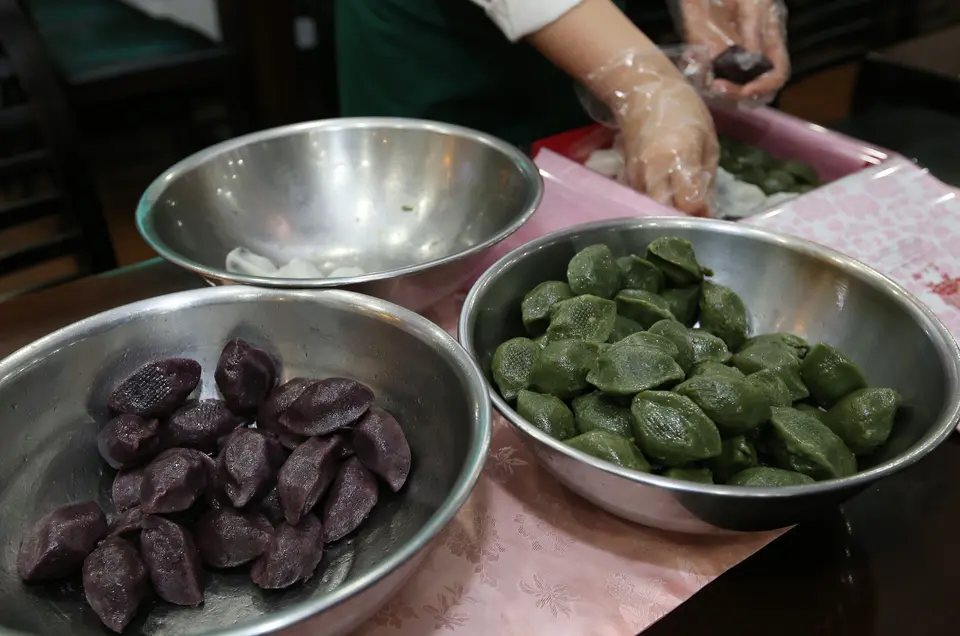
Korea’s harvest festival under the full moon of the eighth lunar month — three days when cities empty as families go home to honour their ancestors, tidy the family graves and make half-moon rice cakes steamed over pine needles.
24.–26. September 2026Berechnet
Spring Festival (Chinese New Year)
春节
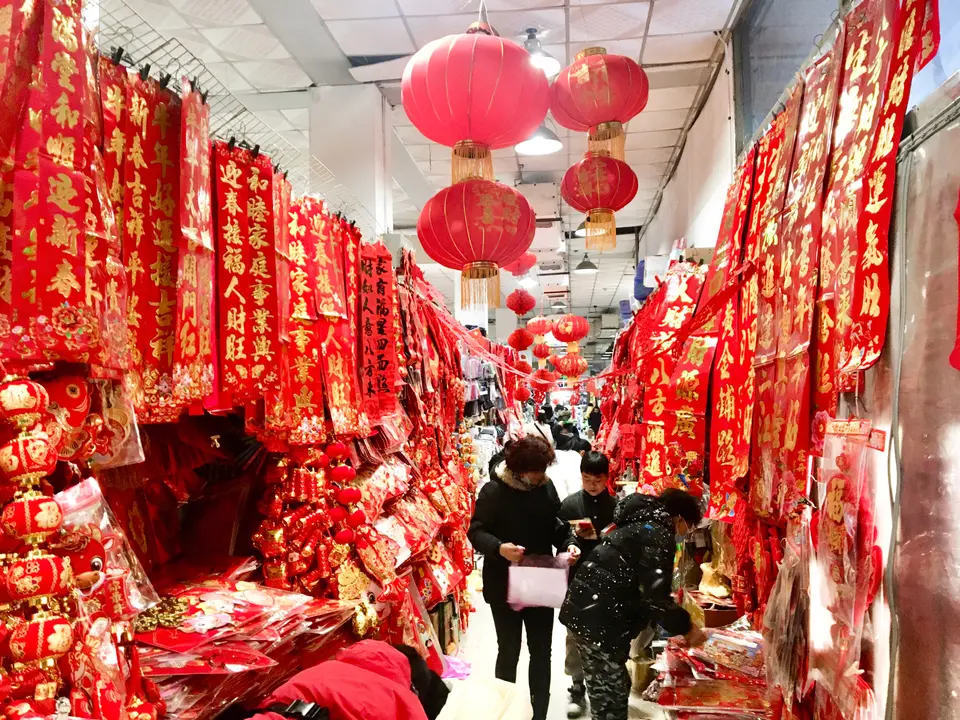
The first day of the Chinese lunisolar year is the most important holiday in Chinese culture — a season of homecoming, spring couplets on the door, a reunion dinner on New Year’s Eve and visits to relatives, which sets off one of the largest annual migrations in the world.
5.–6. Februar 2027Berechnet
Tết
Tết Nguyên Đán
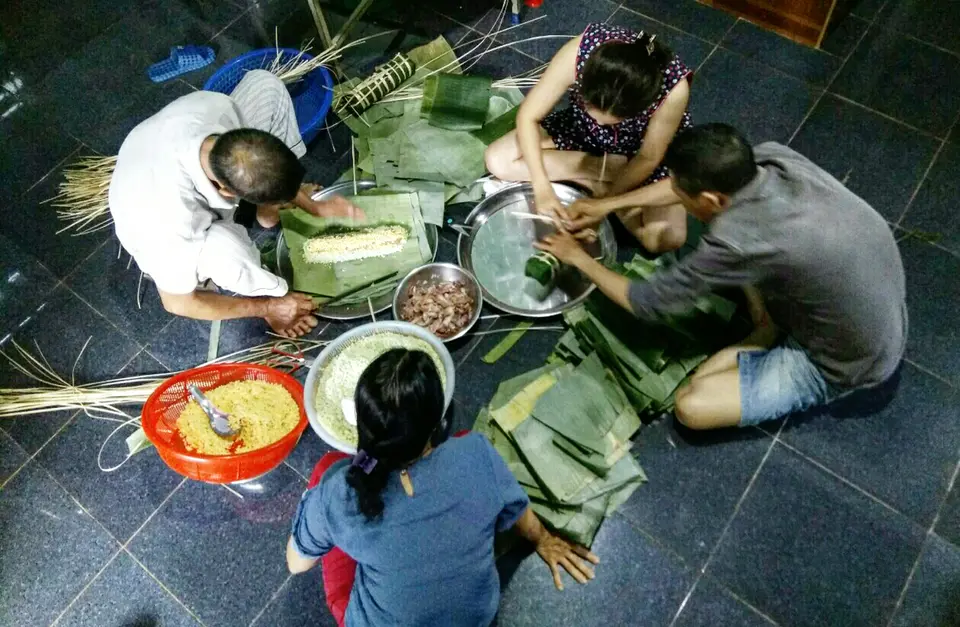
The Vietnamese Lunar New Year is the most important celebration in Vietnam — a time to go home, tend ancestors’ graves, fill the house with peach or yellow ochna blossom, wrap sticky rice cakes, and take care over who crosses the threshold first.
6.–8. Februar 2027Berechnet