Diese Seite ist noch nicht ins Deutsche übersetzt; der englische Originaltext wird angezeigt.
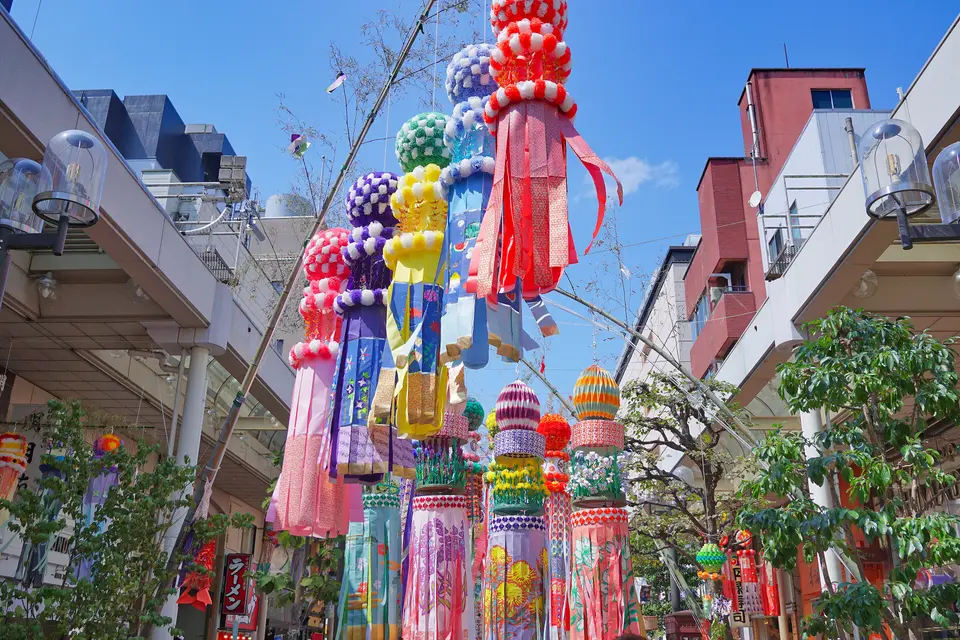
The star festival of the seventh night of the seventh month. Most of Japan keeps it on 7 July; Sendai, one of several places that kept the old season, hangs its great paper streamers from 6 to 8 August.
One of the five seasonal festivals
Tanabata, written with the characters for “seventh evening”, was one of the five seasonal festivals of the old calendar, held on the seventh day of the seventh month of the lunisolar year. It is a festival about the night sky.
A date that moved
When Japan adopted the solar calendar, many places simply kept the numbers, and Tanabata came to be held on 7 July. That moved it about a month earlier in the season — and 7 July usually falls before the rainy season has ended, a poor time for looking at stars.
Some places chose to keep the old season instead and hold the festival a month later. Sendai is the best-known example: its organisers say they use the calendar one month behind the current one, so the festival runs from 6 to 8 August, close to where the old date used to fall. The arcades of the city are hung with enormous, colourful paper streamers for the three days.
The traditional date
There is a third reckoning. Since 2001 the National Astronomical Observatory of Japan has published the traditional Tanabata date each year: the seventh day counted from the new moon that comes before the solar term Shosho. It falls somewhere between late July and late August and changes every year. If you want to see the sky the festival is about, that is the night to look up.
Wann es stattfindet
In most of Japan Tanabata is on 7 July. Sendai’s Tanabata Matsuri runs from 6 to 8 August, a month later, to stay close to the season of the old date. The traditional lunisolar date moves every year between late July and late August and is published by the National Astronomical Observatory of Japan.
- 7. Juli 2027Most of JapanBerechnet
- 6.–8. August 2027Sendai Tanabata MatsuriBerechnet
- 7. Juli 2028Most of JapanBerechnet
- 6.–8. August 2028Sendai Tanabata MatsuriBerechnet
- 7. Juli 2029Most of JapanBerechnet
- 6.–8. August 2029Sendai Tanabata MatsuriBerechnet
- 7. Juli 2030Most of JapanBerechnet
- 6.–8. August 2030Sendai Tanabata MatsuriBerechnet
Respektvoll besuchen
Gut zu wissen
- Do not photograph people without permission, and be considerate of others when you do.
- Sendai’s shopping arcades are packed during the festival. Travel light, and visit early in the day or on a weekday if you can.
Vermeiden
- Do not pull at or damage the decorations hanging in the streets.
- Do not litter; carry your rubbish if there is no bin nearby.
Quellen
Dieser Eintrag beruht auf den folgenden Quellen.
- 暦Wiki: 七夕National Astronomical Observatory of Japan · abgerufen am 20. August 2026
- 質問3-10: 伝統的七夕について教えてNational Astronomical Observatory of Japan · abgerufen am 20. August 2026
- 仙台七夕まつり — 開催概要Sendai Tanabata Festival Association · abgerufen am 20. August 2026
Verwandte Feste
Obon
お盆
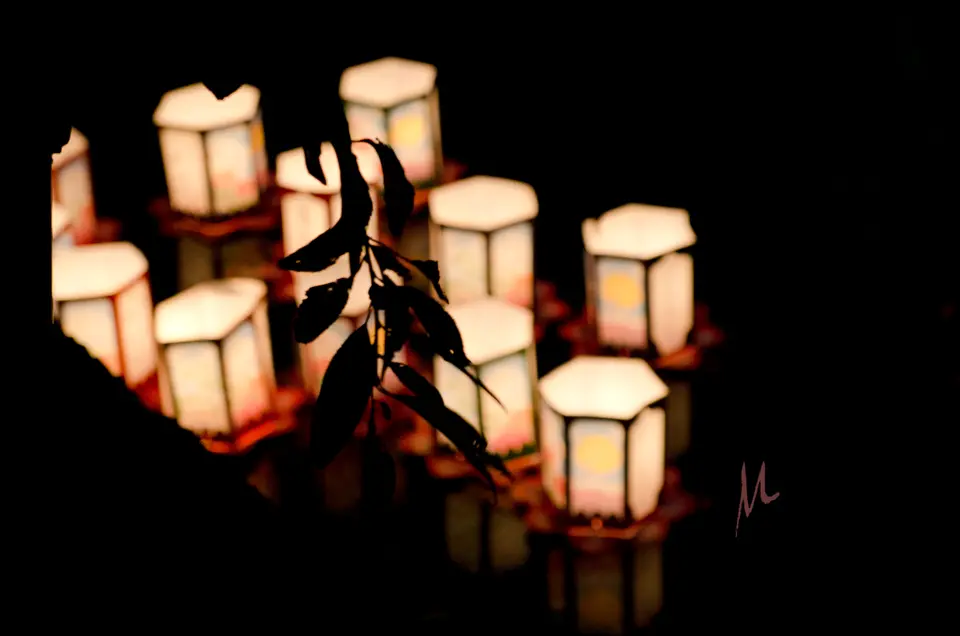
Japan’s summer days of the dead, when ancestors are said to come home for a few days. Families light lanterns to guide them, visit graves, and at the end set lanterns on the water to send them back. Mostly kept in August; in some places in July.
13.–15. Juli 2027Berechnet
Aomori Nebuta Matsuri
青森ねぶた祭
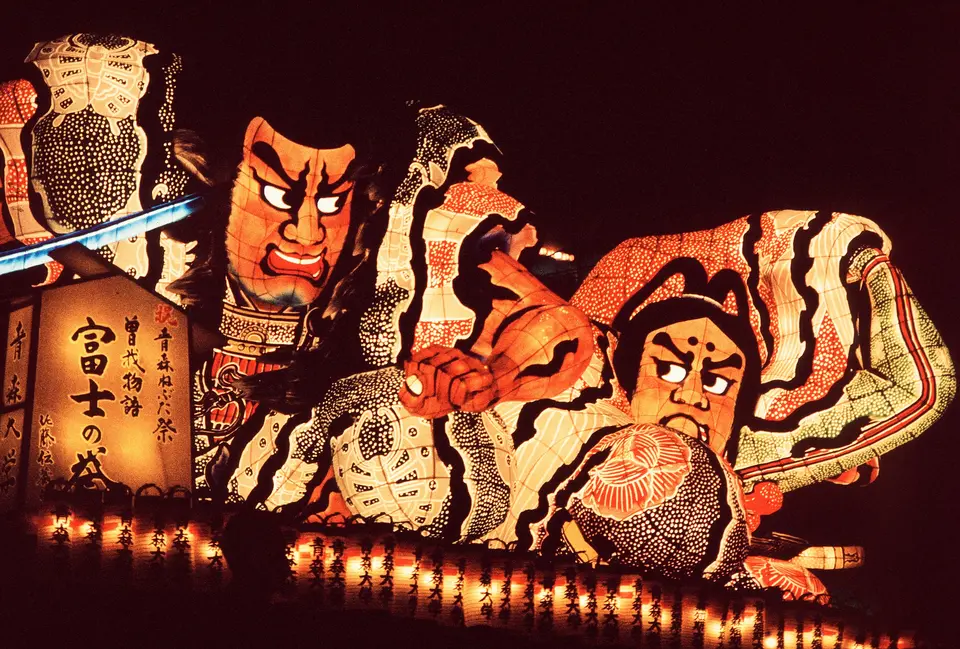
For six nights in August, giant paper figures lit from within are hauled through Aomori to flute, drum and gong, with thousands of costumed dancers leaping alongside. Anyone may join the dancers — the costume is the only ticket.
2.–7. August 2027Berechnet