Diese Seite ist noch nicht ins Deutsche übersetzt; der englische Originaltext wird angezeigt.
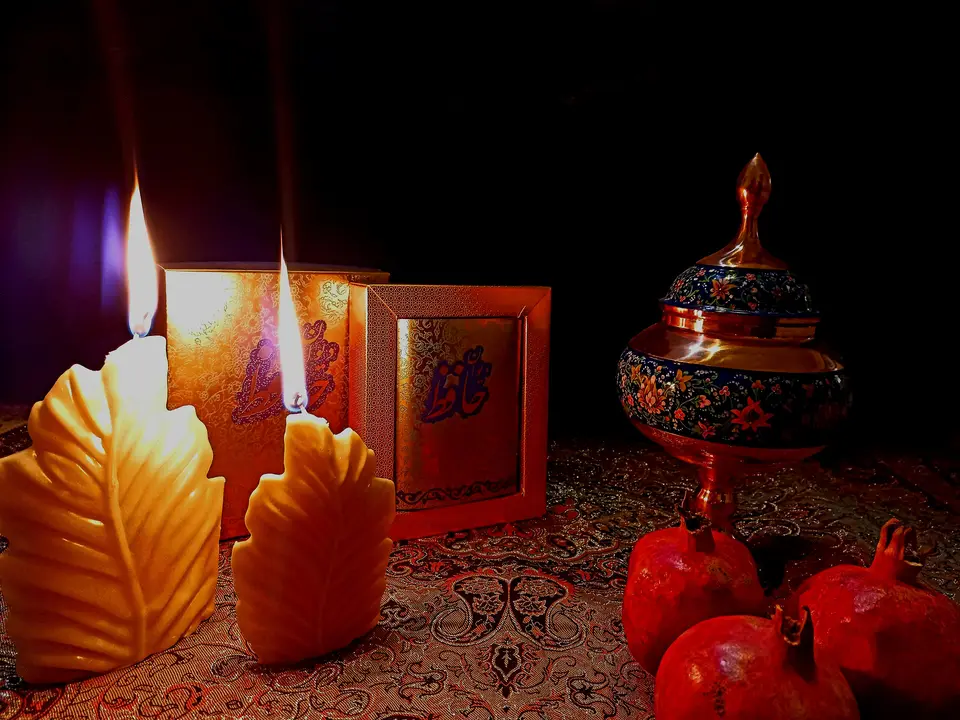
Shab-e Yalda
شب یلدا
Auf der UNESCO-Liste des immateriellen Kulturerbes der Menschheit
Foto: طاها حجتی, CC BY-SA 4.0, über Wikimedia Commons
On the longest night of the year, families gather at the homes of their elders to stay up late around a table of pomegranates, watermelon, nuts and dried fruit, reading Hafez and telling stories until well after midnight.
The longest night
Shab-e Yalda, also called Shab-e Chelleh, “the night of forty”, falls on the winter solstice, the longest and darkest night of the year. From the next morning the days begin to lengthen again, and the celebration has long been read as the victory of light over darkness and the rebirth of the sun. Chelleh refers to the forty-day period of deep winter that the night opens.
The word yalda came into Persian from Syriac, where it means “birth”.
Around the table
Families gather at the house of the oldest relatives and sit around a table laid with symbolic things: a lamp or candles for light, water for purity, and red fruits for warmth — pomegranates and watermelon above all, and also jujubes, grapes or beetroot. Nuts, dried fruit and sweets made for the occasion are shared as the night goes on.
People stay up late. Poems are recited, especially those of Hafez, whose Divan sits on the bookshelves of most Iranian families. Many open it at random for a fal-e Hafez, reading the verse they land on as a kind of fortune. Stories from the Shahnameh are told, games are played, and gifts are given to children, to brides and to new in-laws.
A shared heritage
In 2022 Yalda/Chella was inscribed on UNESCO’s Representative List of the Intangible Cultural Heritage of Humanity for Iran and Afghanistan. UNESCO describes it as a celebration of the sun and the warmth of life, of friendship, hospitality and respect, passed on mostly within families.
Wann es stattfindet
Yalda is the night between 30 Azar, the last day of autumn in the Iranian solar calendar, and 1 Dey. In the Gregorian calendar that is the night of 20 or 21 December, the winter solstice.
- 21. Dezember 202630. Āsar 1405 APBerechnet
- 21. Dezember 202730. Āsar 1406 APBerechnet
- 20. Dezember 202830. Āsar 1407 APBerechnet
- 20. Dezember 202930. Āsar 1408 APBerechnet
Respektvoll besuchen
Gut zu wissen
- Yalda is a private family gathering, not a public event. The way to take part is to be invited into someone’s home.
- If you are invited, dress modestly, and ask before photographing anyone.
Vermeiden
- Do not turn up uninvited.
Essen und Trinken
Pomegranate
One of the two fruits that matter most on Yalda night; its red is said to stand for the crimson of dawn and the glow of life.
Watermelon
The other essential red fruit of the table, eaten with the pomegranates for the warmth their colour stands for.
Ajil
A mix of nuts and dried fruit, shared through the long evening.
Quellen
Dieser Eintrag beruht auf den folgenden Quellen.
- Yaldā/ChellaUNESCO Intangible Cultural Heritage · abgerufen am 16. September 2026
- Yalda NightThe Canadian Encyclopedia · abgerufen am 11. August 2026
- Yalda NightWikipedia (English) · abgerufen am 16. September 2026
- شب یلداویکیپدیا (فارسی) · abgerufen am 11. August 2026
Verwandte Feste
Nowruz
نوروز
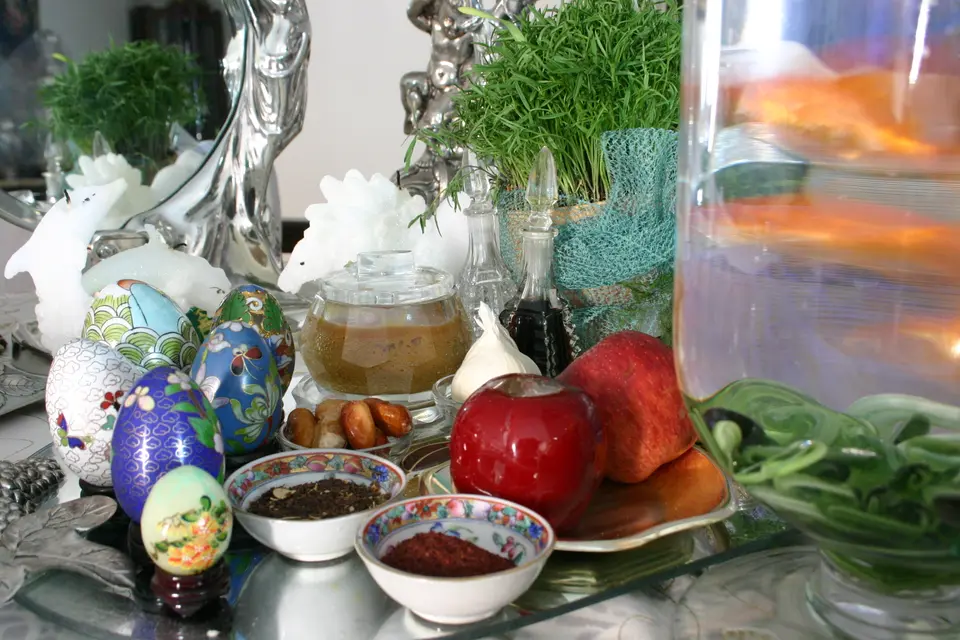
Nowruz, “new day”, is the Iranian New Year. It begins at the March equinox, when families gather around the Haft-sin table to wait for the exact moment the year turns, and opens two weeks of visits, food and time outdoors.
21. März 2027Berechnet
Mehregan
مهرگان
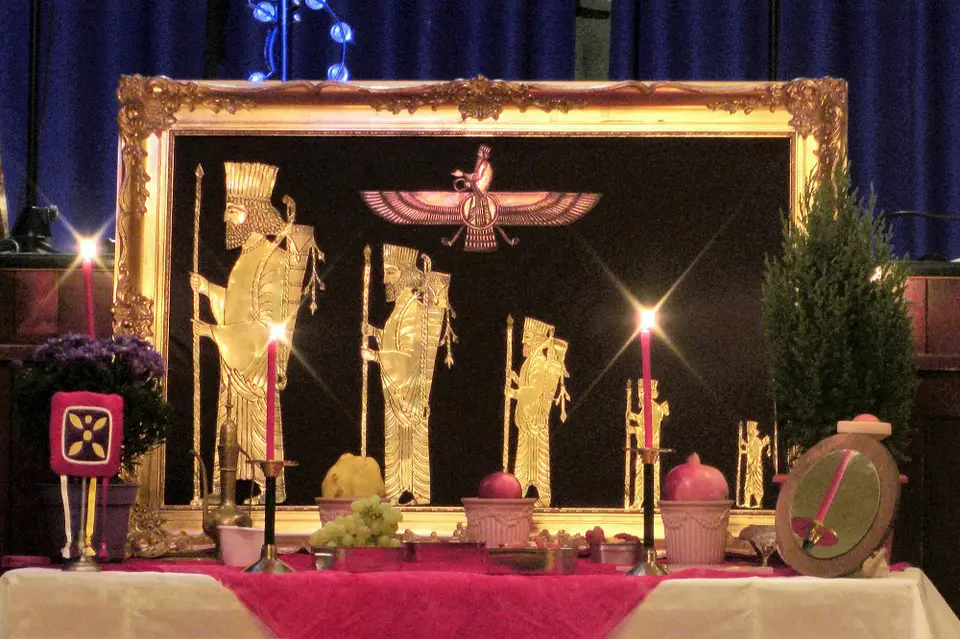
The ancient Iranian autumn festival of Mehr — friendship, affection and the harvest. Tables are laid with pomegranates, apples and grapes, prayers are said, and there is music, dance and, in places, wrestling.
2. Oktober – 2. November 2026Geschätzt
Jashn-e Sadeh
جشن سده
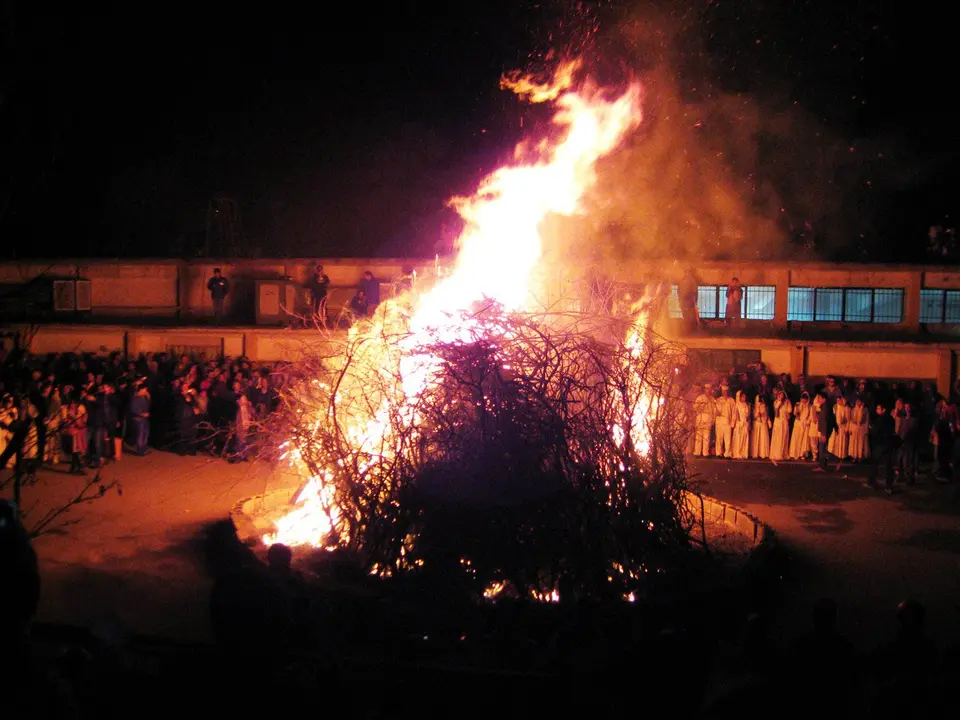
In the depth of winter, fifty days before spring, a great bonfire is lit at sunset. People gather around it to sing, dance and pray, offer blessings and fruit, and celebrate the passing of the coldest days.
30. Januar 2027Berechnet