Basel Fasnacht
Basler Fasnacht
On UNESCO’s list of the Intangible Cultural Heritage of Humanity
Photo: Claude TRUONG-NGOC, CC BY-SA 3.0, via Wikimedia Commons
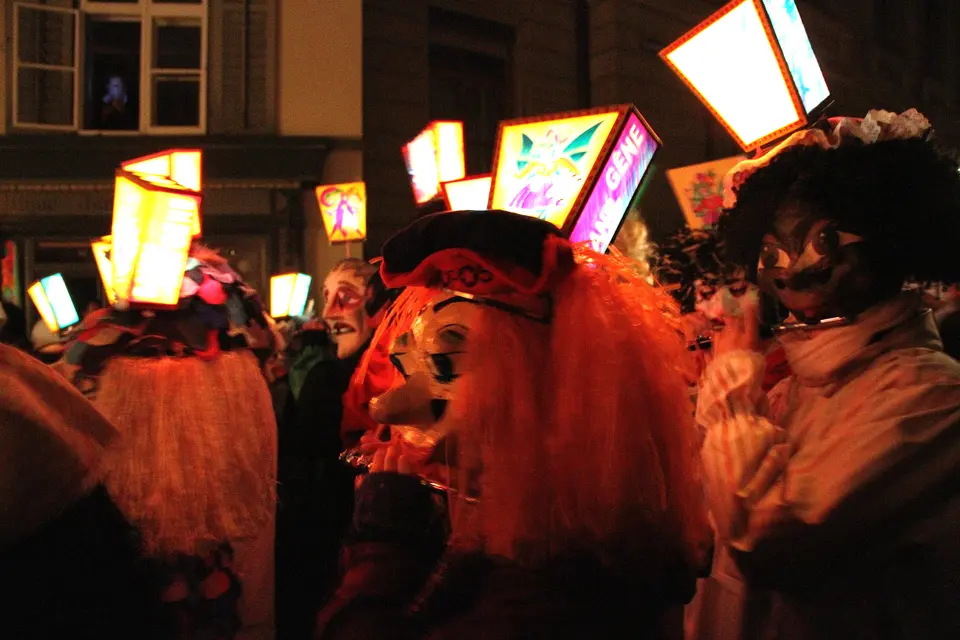
At exactly four o’clock on the Monday morning after Ash Wednesday, Basel switches off its lights and thousands of masked piccolo players and drummers march out behind glowing lanterns — the start of 72 hours of satire, confetti and music that UNESCO lists as world heritage.
Morgestraich
The carnival starts in the dark. At exactly 4 am on Monday all the lights in the old town are switched off, and the only light comes from the lanterns of the cliques — large painted parade lanterns carried or wheeled in front of each group, and small lanterns worn on the head. On the command “Morgestraich, vorwärts marsch!” every clique begins to play the same march on piccolos and drums, and moves off through the streets. For the next 72 hours many restaurants and bars stay open.
Three days of satire
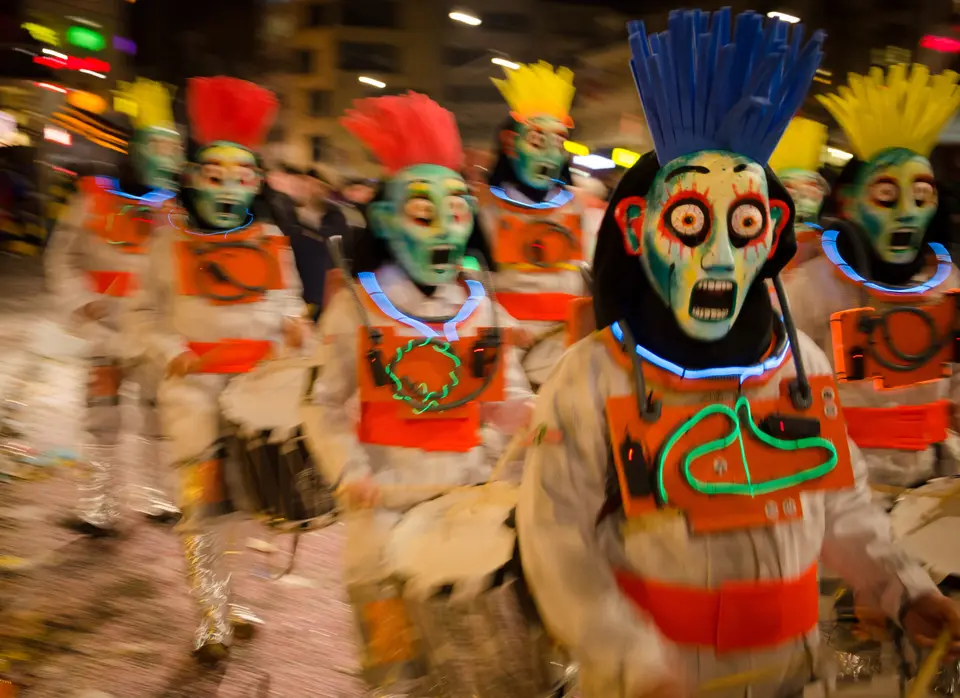
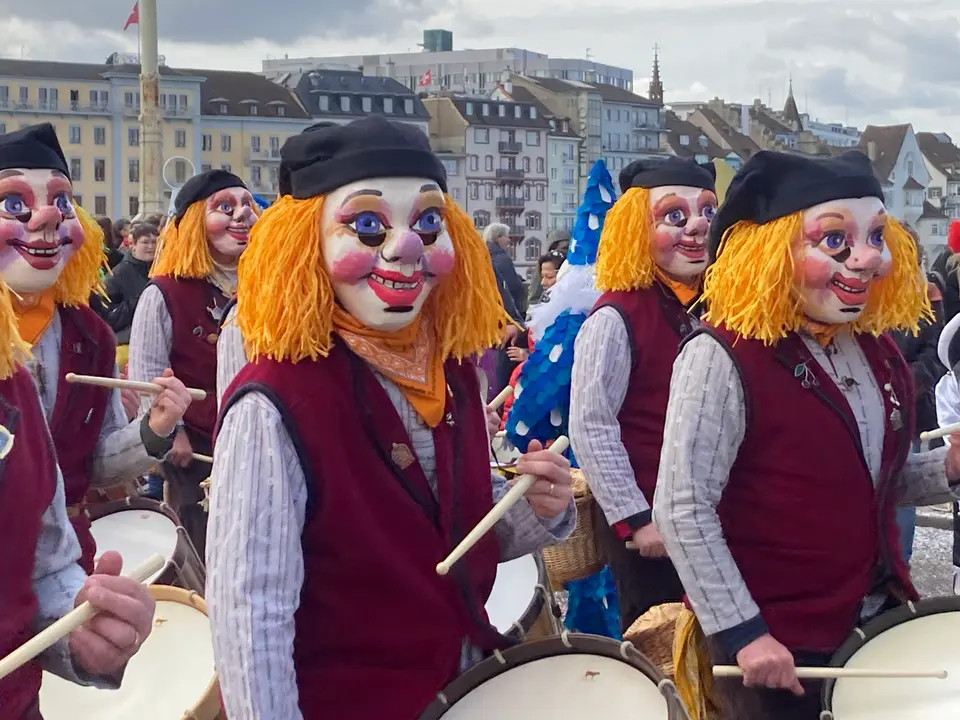
UNESCO compares the carnival to a huge satirical magazine. Most groups choose a sujet, a theme that mocks recent events, and paint it on their lanterns, wear it in their costumes and print it in verse on flyers. On Monday and Wednesday afternoons the Cortège, a parade of about 11,000 costumed participants, follows two ring routes through the city: fife and drum cliques, Guggenmusik brass bands, carriages handing out treats, and floats of Waggis — caricatures of Alsatian farmers — who throw oranges, sweets, flowers and huge amounts of confetti. Participants wear a mask called a Larve and are meant to stay incognito.
Tuesday belongs to children and families, who parade in mixed costumes. In the evening Guggenmusik bands play concerts on stages at the Marktplatz, Barfüsserplatz and Claraplatz, and from Monday evening to Wednesday morning the lanterns are displayed and lit on the Münsterplatz. In restaurants and bars, Schnitzelbank singers perform satirical verses in Swiss German. The carnival ends at 4 am on Thursday, when the cliques bid farewell to their lanterns.
Seven centuries
The early history of Fasnacht is unknown, because the city’s records were destroyed in the earthquake of 1356; the earliest surviving document about the carnival dates from 1376. It has been organised since 1901 by the Fasnachts-Comité. Around 20,000 people of every age and background take part and around 200,000 visitors come to watch. UNESCO inscribed the carnival on its Representative List in 2017, noting that it helps safeguard the local dialect and is passed on in families that have taken part for generations.
When it happens
Fasnacht begins at 4 am on the Monday after Ash Wednesday and lasts exactly 72 hours, until 4 am on Thursday. It is held between mid-February and early March — in 2027 from 15 to 17 February, and in 2028 from 6 to 8 March.
- February 15 – 17, 2027Calculated
- March 6 – 8, 2028Calculated
- February 19 – 21, 2029Calculated
- March 11 – 13, 2030Calculated
Visiting with respect
Good to know
- The Fasnachts-Comité asks visitors to buy and wear a carnival badge, the *Blaggedde*; the proceeds go to the carnival groups. Spectators without one are more likely to be showered with confetti.
- Masked and costumed participants are not to be pelted with confetti.
- Confetti is sold in single colours only. Throwing mixed confetti, which can only have been picked up from the street, is very bad form.
- When a clique comes by with its piccolos and drums, step aside and let it pass.
Stay safe
- Pickpocketing and bag-snatching happen in crowded places in Switzerland. Keep your valuables close in the crowds.
Food and drink
Mehlsuppe
Flour soup, served in the restaurants and bars of the old town that open at 4 am on Monday and stay open for the 72 hours of Fasnacht.
Zwiebelkuchen and Käsewähe
Onion tart and a quiche-like cheese tart, the other traditional carnival specialities.
Sources
This entry was written from the following sources.
- Basel CarnivalUNESCO Intangible Cultural Heritage · read September 17, 2026
- Basler FasnachtKanton Basel-Stadt · read September 17, 2026
- Die offizielle Seite zur Basler FasnachtFasnachts-Comité Basel · read September 17, 2026
- Carnival of BaselWikipedia · read September 17, 2026
- Switzerland travel advice: safety and securityUK Foreign, Commonwealth & Development Office · read September 17, 2026
Related festivals
Carnival of Binche
Carnaval de Binche
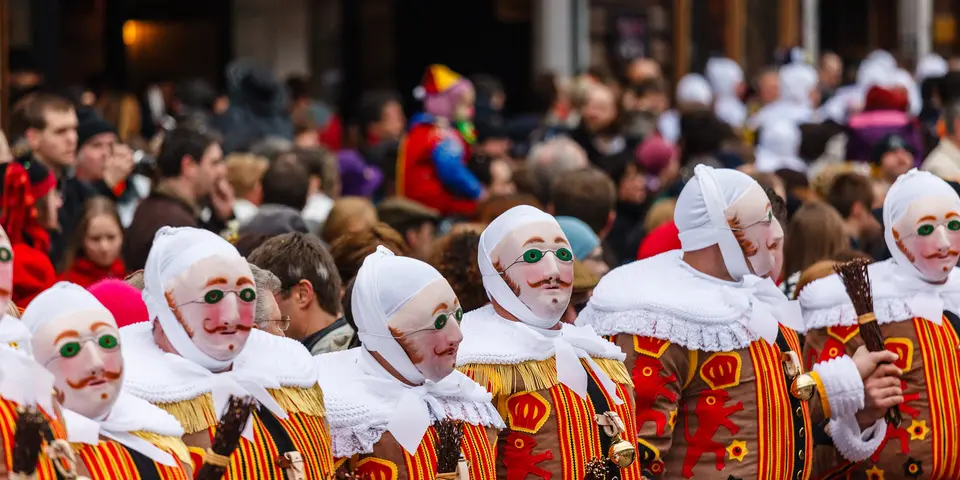
For the three days before Lent, the small Walloon town of Binche belongs to its Gilles — up to a thousand men in wax masks and wooden clogs who dance from dawn to drive away evil spirits and, crowned with ostrich plumes, throw oranges to the crowd.
February 7 – 9, 2027Calculated
Cologne Carnival
Kölner Karneval
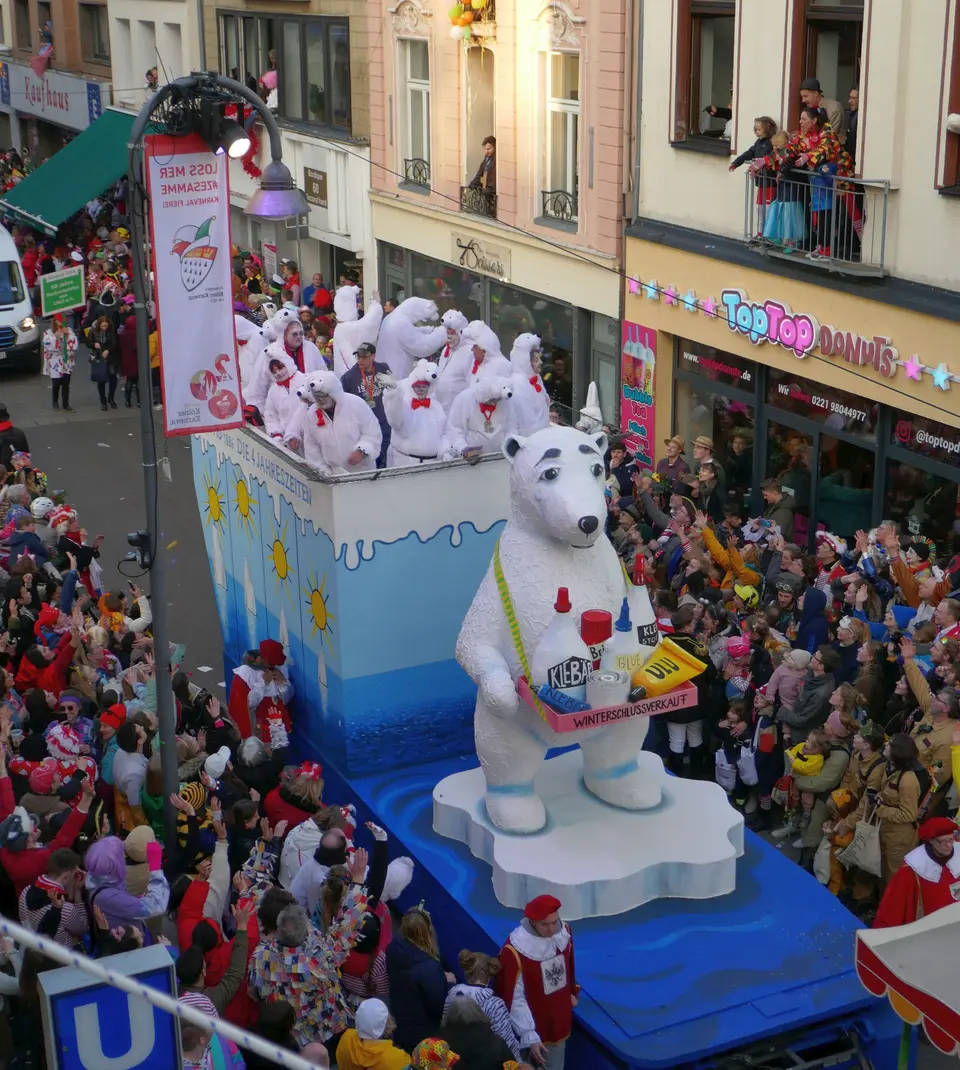
Cologne’s “fifth season” opens at 11:11 on 11 November and explodes onto the streets in the days before Lent, when costumed crowds shout “Kölle Alaaf!” and more than a million people watch the Rose Monday parade throw sweets from its floats.
November 11, 2026Calculated
Busójárás
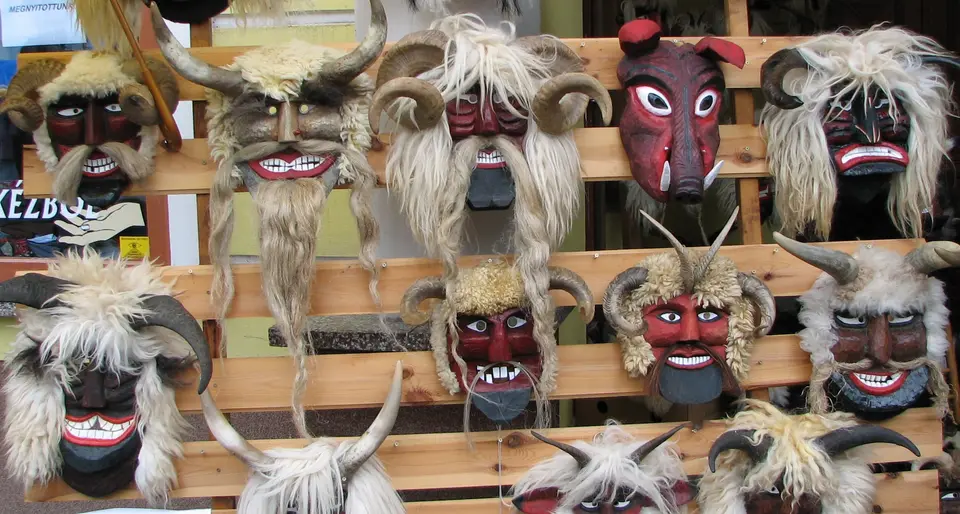
At the end of carnival, the Danube town of Mohács is overrun by busós — men in carved wooden masks and shaggy sheepskins who arrive by rowing boat, parade through the streets with noise and fire, and burn a coffin that stands for winter.
February 4 – 9, 2027Calculated