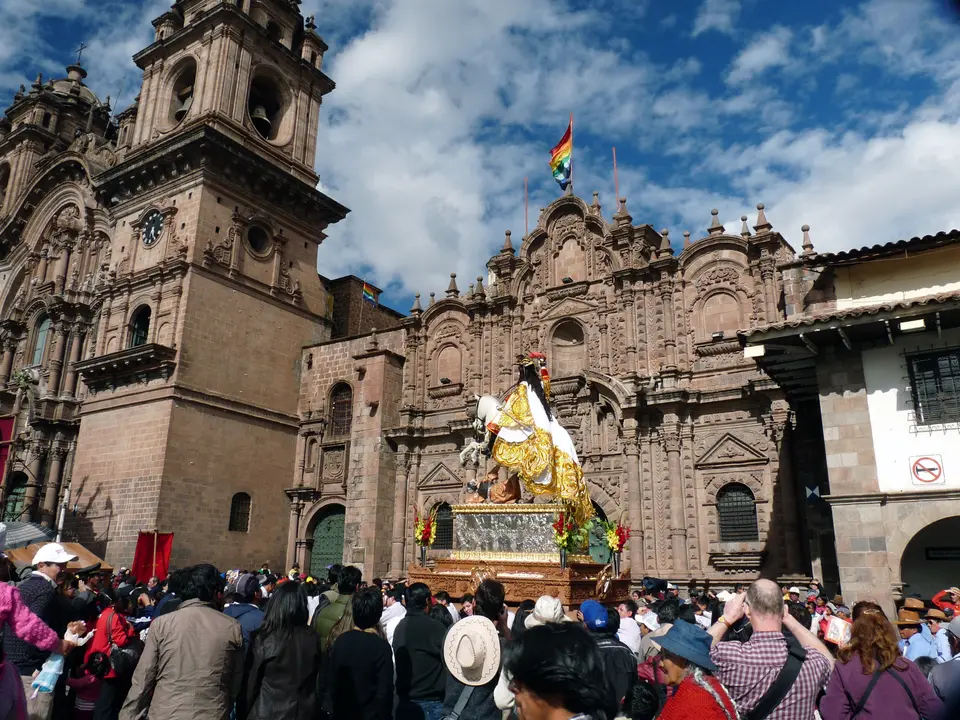
On the feast of Corpus Christi, the parishes of Cusco carry fifteen images of saints and virgins into the Plaza de Armas, where they process with the cathedral’s gold and silver monstrance and then stay in the cathedral for a week — a Catholic feast shaped by centuries of Andean devotion and rivalry.
Fifteen saints come to the square
Corpus Christi, the Catholic feast of the Eucharist, arrived in Peru with the Spanish conquerors in the sixteenth century. Over the years Cusco gave it customs of its own, and in 2004 Peru’s National Institute of Culture declared the celebration part of the nation’s cultural heritage. In the late seventeenth century, under Bishop Manuel de Mollinedo y Angulo, the processions included Inca nobles in ceremonial dress.
The day before the feast, in the Subida de Corpus, parishioners carry the images of their patron saints in procession from their own churches to the church of Santa Clara. The fifteen images include Saint Anthony the Abbot, Saint Jerome, Saint Christopher, Saint Sebastian, Saint Barbara, Saint Anne, Saint James, Saint Blaise, Saint Peter and Saint Joseph, together with the Virgin of Bethlehem, the Virgin of the Almudena, the Virgin of the Remedies, the Purified Virgin and the Immaculate Conception.
The procession and the Octava
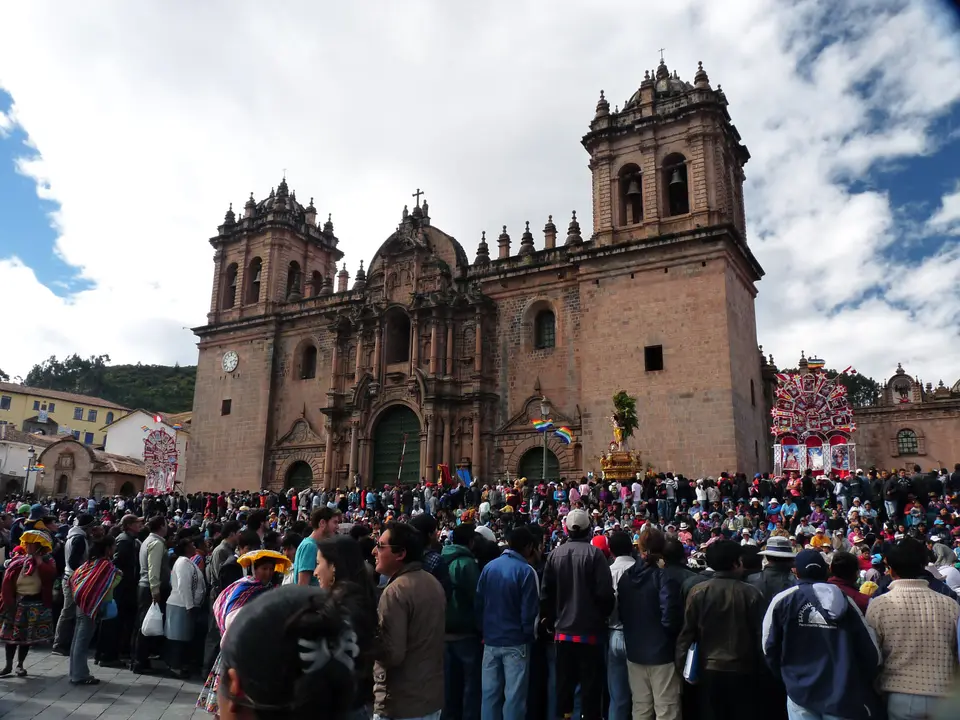
On Thursday the images process along the streets of Santa Clara, Marqués and Mantas to the Plaza de Armas, where they join the cathedral’s monstrance, a piece of gold and silver that holds the consecrated host. After the archbishop celebrates mass at the entrance of the cathedral, the Corpus Christi sets out at midday on a silver carriage, followed in line by the other images in a slow circuit of the square. In the afternoon a blessing is given, and the images enter the cathedral, where they stay for a week until the Octava. Then they return to their parishes.
The procession is competitive as well as devout. Each parish comes with its own bands and groups of musicians, who play for their dances against those of the others.
When it happens
Corpus Christi is a Thursday sixty days after Easter Sunday, so it falls in late May or June. The saints are brought to the church of Santa Clara on the Wednesday; the main procession is on Thursday; the images return to their parishes after the Octava, a week later.
- May 26 – 27, 2027Entradas and Corpus ChristiCalculated
- June 3, 2027OctavaCalculated
- June 14 – 15, 2028Entradas and Corpus ChristiCalculated
- June 22, 2028OctavaCalculated
- May 30 – 31, 2029Entradas and Corpus ChristiCalculated
- June 7, 2029OctavaCalculated
- June 19 – 20, 2030Entradas and Corpus ChristiCalculated
- June 27, 2030OctavaCalculated
Visiting with respect
Good to know
- The procession is a religious act. Leave the processional route clear and let the images and their bearers pass.
Stay safe
- Street crime, including theft, is a significant problem in Cusco. Be alert in crowds and when withdrawing cash.
- Cusco lies at high altitude, and altitude sickness is a serious risk. Give yourself time to adjust.
Food and drink
Chiriuchu
A typical dish of the Cusco area, sold in the Plaza San Francisco and the surrounding streets during the festival.
Sources
This entry was written from the following sources.
- Celebración del Corpus Christi en el CuscoWikipedia (Spanish) · read September 16, 2026
- Quyllurit'iWikipedia · read September 16, 2026
- Peru travel advice: safety and securityUK Foreign, Commonwealth & Development Office · read September 16, 2026
Related festivals
Qoyllur Rit'i
Quyllurit'i
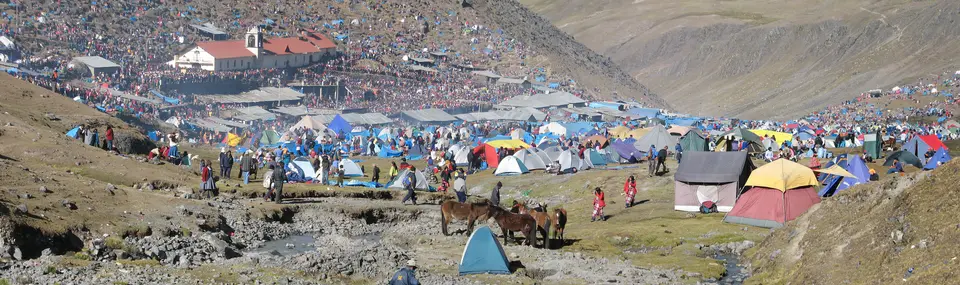
In a high valley below the glaciers of the Cusco region, tens of thousands of pilgrims gather each year for the Lord of Qoyllur Rit'i — a feast that joins Catholic devotion to older Andean beliefs about nature and the stars, with a hundred dances and a day-and-night procession to greet the sunrise.
May 25, 2027Estimated
Inti Raymi
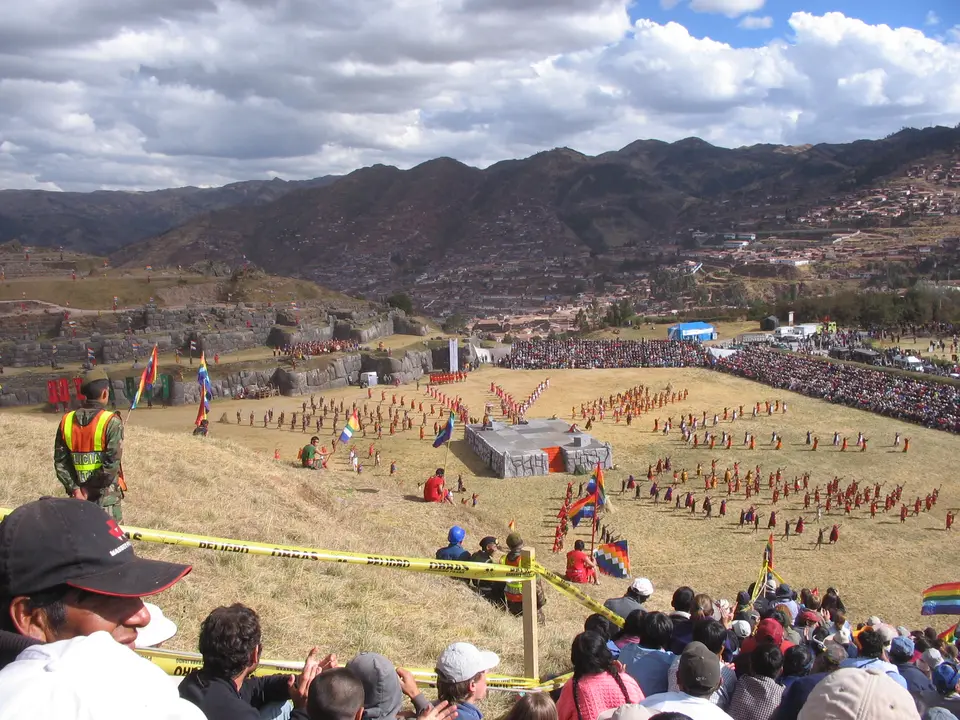
Every 24 June, Cusco stages the great sun festival of the Inca Empire — a procession from the temple of Qorikancha through the Plaza de Armas to the stone terraces of Saqsaywaman, with hundreds of performers, revived in 1944 from the accounts of a sixteenth-century chronicler.
June 24, 2027Calculated
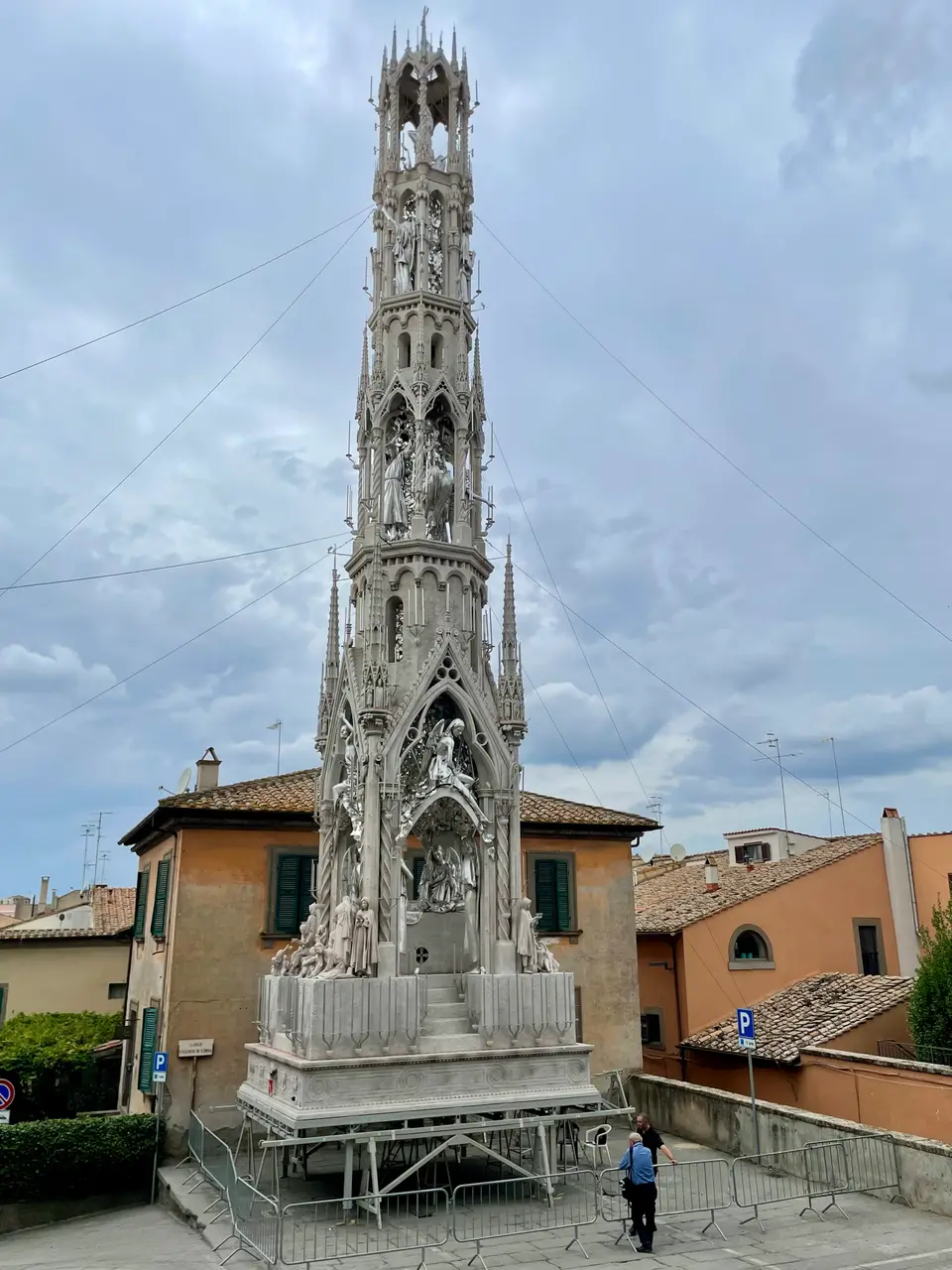
Macchina di Santa Rosa
On the evening of 3 September, a hundred porters lift a tower some thirty metres tall and five tonnes in weight onto their shoulders and carry it through the medieval streets of Viterbo in honour of the city’s patron saint.
September 3, 2027Calculated