Qoyllur Rit'i
Quyllurit'i
On UNESCO’s list of the Intangible Cultural Heritage of Humanity
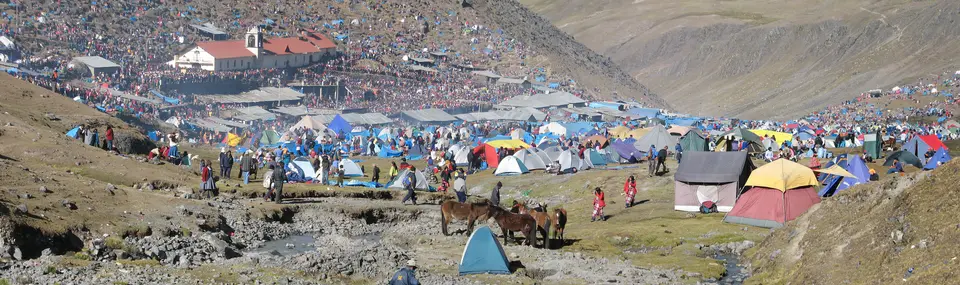
Photo: AgainErick, CC BY-SA 3.0, via Wikimedia Commons
In a high valley below the glaciers of the Cusco region, tens of thousands of pilgrims gather each year for the Lord of Qoyllur Rit'i — a feast that joins Catholic devotion to older Andean beliefs about nature and the stars, with a hundred dances and a day-and-night procession to greet the sunrise.
The Lord of the Star Snow
Quyllurit’i means “bright white snow” in Quechua. The festival is held every year in the Sinakara valley, in the southern highlands of the Cusco region. For the Catholic Church it honours the Lord of Qoyllur Rit’i, an image of Christ. For many Andean people it is also a celebration of the stars — above all the return of the Pleiades, called Qullqa, “the storehouse”, which vanish from the sky in April and reappear in June, and which have long been linked to the coming harvest.
The Church’s account dates from the late eighteenth century. A young herder, Mariano Mayta, befriended a boy named Manuel on the mountain. When the bishop’s envoys came to find Manuel, he turned into a tayanka bush with the crucified Christ hanging from it, and Mariano fell dead on the spot. He was buried under a rock, which became a place of pilgrimage, and an image of Christ was painted on the stone.
Nations, dances and the sunrise
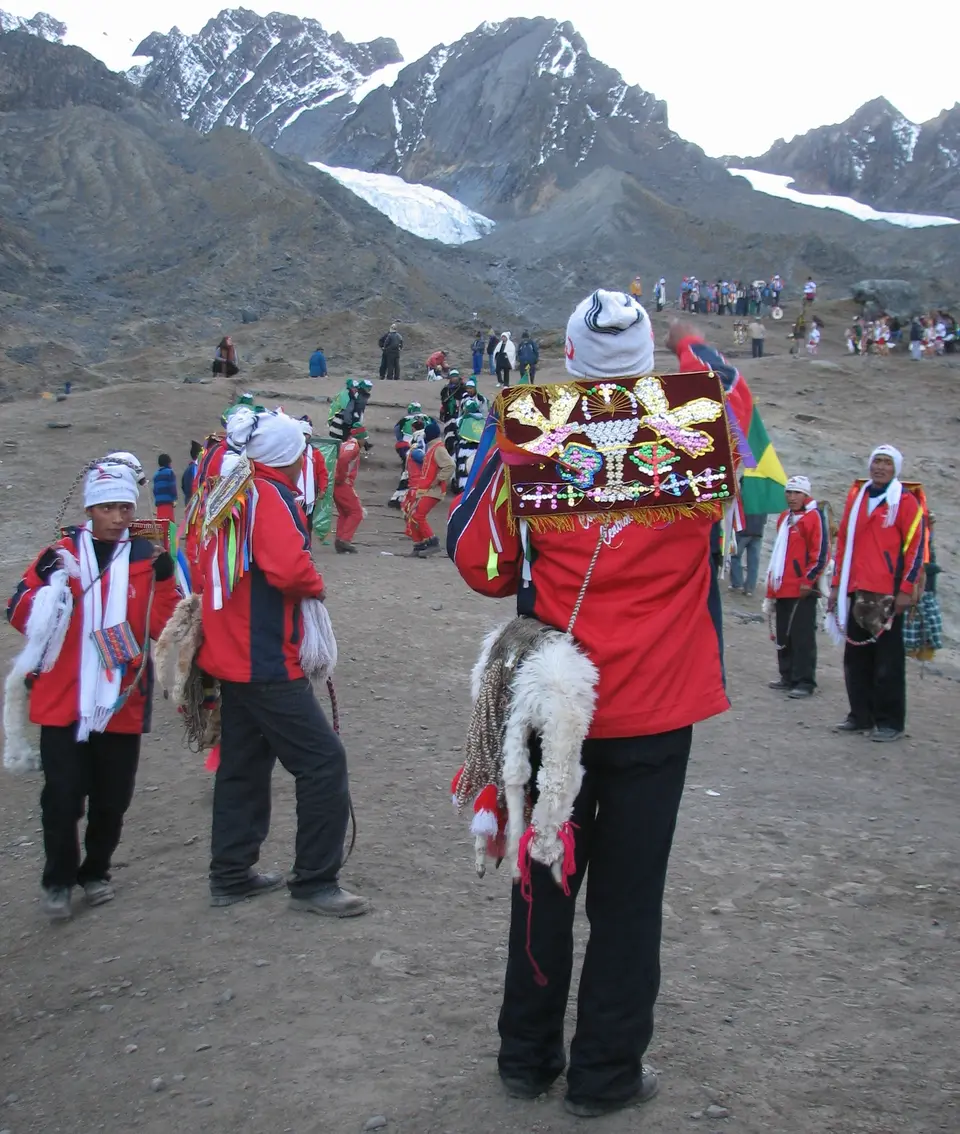
According to UNESCO, around ninety thousand people travel to the sanctuary. They are organised into eight “nations” named after their home areas: Paucartambo, Quispicanchi, Canchis, Acomayo, Paruro, Tawantinsuyo, Anta and Urubamba. A hundred different dances are performed. Processions carry crosses up and down the snow-capped mountain. In a twenty-four-hour procession, the Paucartambo and Quispicanchi nations carry images of the Lord of Tayancani and the Grieving Virgin to the village of Tayancani to greet the first rays of the sun.
Some participants have special roles. The ukukus once climbed the glaciers and brought back crosses and blocks of ice, which were believed to heal; as the glacier has melted, the ice is no longer carried down. The pablitos or pabluchas, in alpaca garments and woven animal masks, keep order, while a council of pilgrim nations and the brotherhood of the Lord of Qoyllur Rit’i direct the pilgrimage and supply food.
When it happens
The pilgrimage is tied to Easter. UNESCO describes it as beginning fifty-eight days after Easter Sunday, shortly before Corpus Christi, so it falls in late May or June. Pilgrims arrive over several days; confirm the programme locally.
- May 25, 2027Estimated
- June 13, 2028Estimated
- May 29, 2029Estimated
- June 18, 2030Estimated
Visiting with respect
Good to know
- This is a pilgrimage, not a performance. The brotherhood of the sanctuary and the council of pilgrim nations set its rules and codes of behaviour, and masked figures called *pablitos* keep order. Follow their instructions.
Stay safe
- The sanctuary lies high in the Andes, and altitude sickness is a serious risk in the Cusco region. Give yourself time to adjust to the altitude before you go.
Sources
This entry was written from the following sources.
- Pilgrimage to the sanctuary of the Lord of Qoyllurit'iUNESCO Intangible Cultural Heritage · read September 16, 2026
- Quyllurit'iWikipedia · read September 16, 2026
- Peru travel advice: healthUK Foreign, Commonwealth & Development Office · read September 16, 2026
Related festivals
Corpus Christi in Cusco
Corpus Christi del Cusco
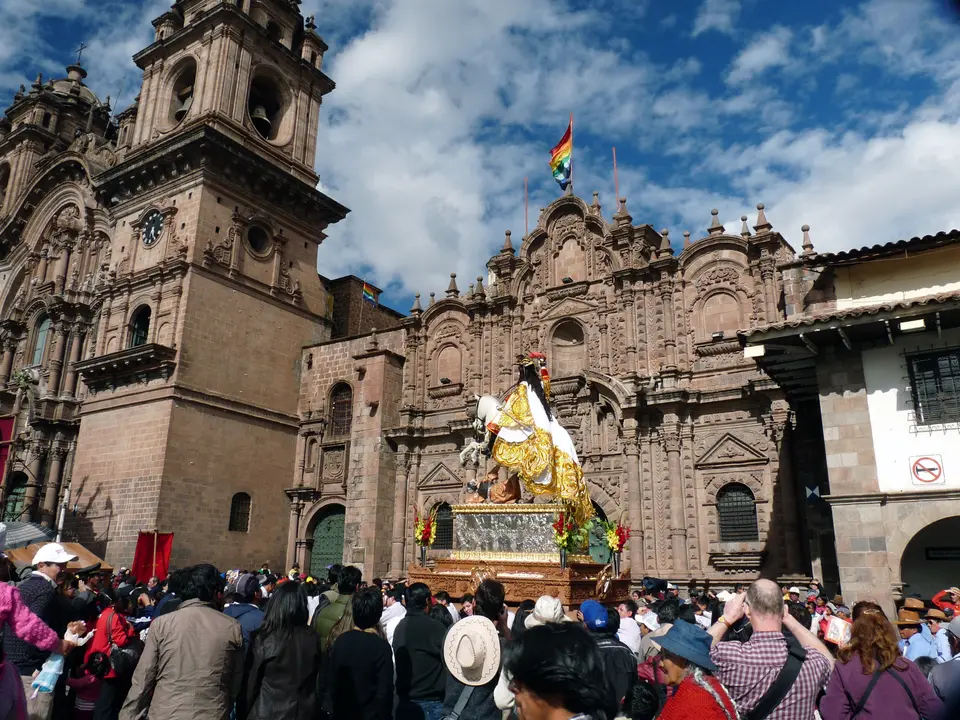
On the feast of Corpus Christi, the parishes of Cusco carry fifteen images of saints and virgins into the Plaza de Armas, where they process with the cathedral’s gold and silver monstrance and then stay in the cathedral for a week — a Catholic feast shaped by centuries of Andean devotion and rivalry.
May 26 – 27, 2027Calculated
Inti Raymi
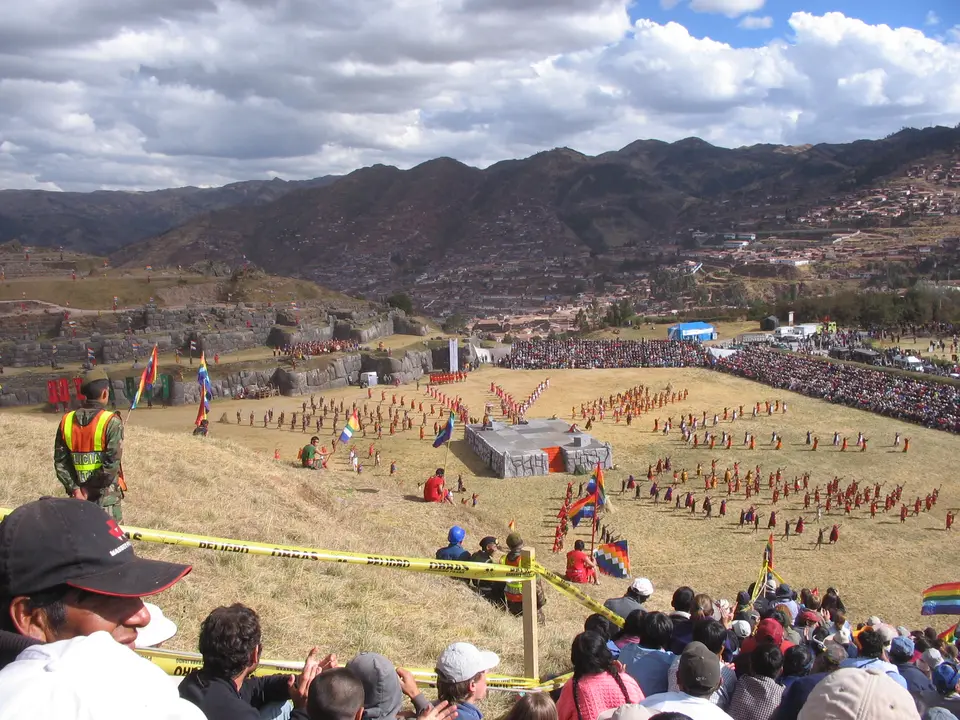
Every 24 June, Cusco stages the great sun festival of the Inca Empire — a procession from the temple of Qorikancha through the Plaza de Armas to the stone terraces of Saqsaywaman, with hundreds of performers, revived in 1944 from the accounts of a sixteenth-century chronicler.
June 24, 2027Calculated
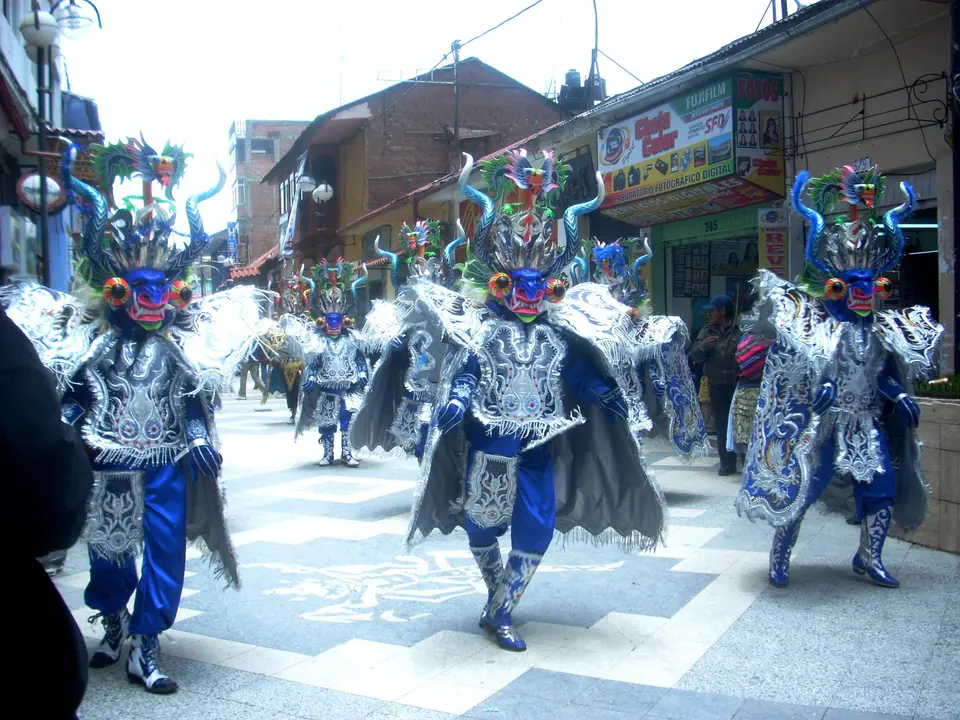
Festival of the Virgen de la Candelaria
Festividad de la Virgen de la Candelaria
Each February, Puno on the shore of Lake Titicaca honours its patron saint with Peru’s largest festival of music and dance — about a hundred thousand dancers and ten thousand musicians, most of them Quechua and Aymara, and weeks of masses, processions and contests.
February 1 – 15, 2027Estimated