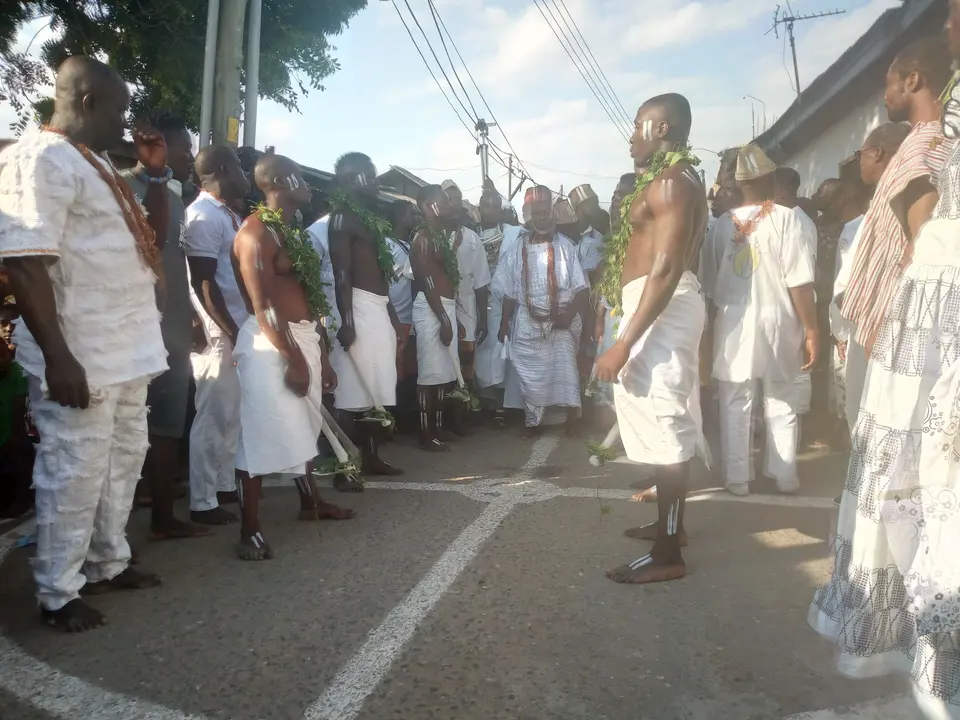
Homowo
Photo: Jwale2, CC BY-SA 4.0, via Wikimedia Commons
The Ga people of Accra remember a famine by laughing at it: after weeks in which drumming and noise are banned, chiefs sprinkle kpokpoi — steamed maize with palm oil — through the streets, and the drums return for “hooting at hunger”.
Hooting at hunger
Homowo means “hooting at hunger” in the Ga language. According to Ga oral tradition, the people suffered a severe famine during their migration and early settlement on the coast of what is now Greater Accra. They planted, waited in silence and offered libations, and when the rains returned and the harvest came, they celebrated by mocking the hunger that had nearly destroyed them.
The Ga State is made up of several autonomous traditional areas, among them Nungua, Osu, La, Teshie, Tema and Ga Mashie, each with its own ceremonial calendar. Their celebrations are deliberately spaced out so that people with ties to more than one town can take part in each. Nungua, considered one of the oldest Ga towns, traditionally celebrates first, and Teshie last.
From silence to drums
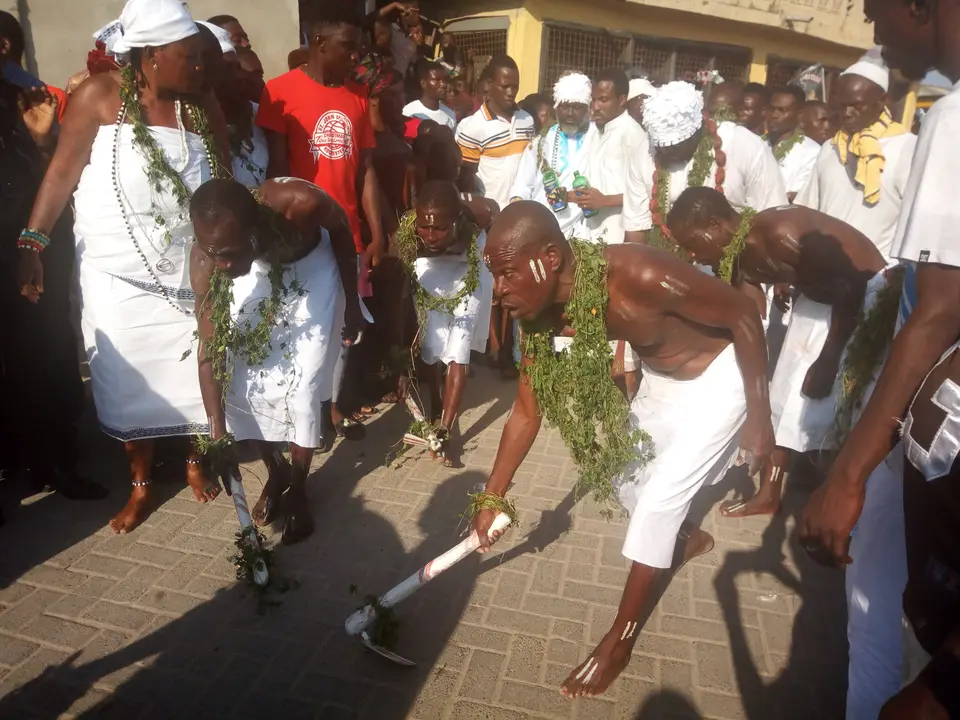
Homowo begins in silence. Around May the Ga Traditional Council imposes a ban on drumming and noise across Ga communities, a period of restraint and preparation. As the crops ripen, the first maize is harvested and families prepare kpokpoi. Then comes the most visible ritual, kpashimo: chiefs and elders walk through the town sprinkling kpokpoi in public spaces, a declaration that hunger has been defeated. Only when it is complete do the drums return, and processions, music and dancing fill the streets. People who live and work elsewhere come home for the festival, and twins are honoured with a celebration of their own.
When it happens
The Ga calendar is set each year by traditional priests, so Homowo has no fixed date. The ban on drumming usually begins around May, and the celebrations move from town to town between August and September, beginning in Nungua and ending in Teshie.
- August – September 2026Approximate window
- August – September 2027Approximate window
- August – September 2028Approximate window
- August – September 2029Approximate window
- August – September 2030Approximate window
Visiting with respect
Good to know
- Respect the ban on drumming and noise while it is in force.
- Dress modestly during ritual moments, observe before joining in, and ask local hosts or guides for advice.
Stay safe
- Pickpocketing and bag-snatching are increasing in Accra. Keep valuables out of sight in the crowds.
Food and drink
Kpokpoi
Steamed maize mixed with palm oil, prepared at home, shared with neighbours and elders, and sprinkled in the streets. It is eaten with palm soup at the climax of the festival.
Sources
This entry was written from the following sources.
- Homowo FestivalGhana Tourism Authority (Visit Ghana) · read September 17, 2026
- HomowoWikipedia · read September 17, 2026
- Ghana travel advice: safety and securityUK Foreign, Commonwealth & Development Office · read September 17, 2026
Related festivals
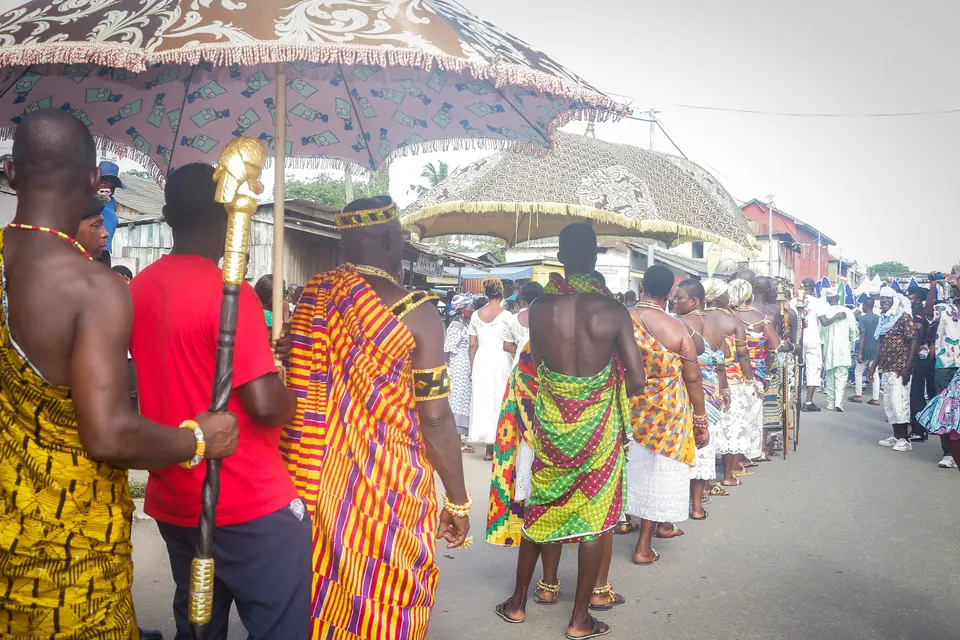
Aboakyer
On the first Saturday of May, the two Asafo warrior companies of Winneba set out at dawn armed only with sticks and clubs, and race to bring back a live bushbuck for their chief — a sacrifice to the god Otu that, according to tradition, once demanded a human life.
May 1, 2027Calculated
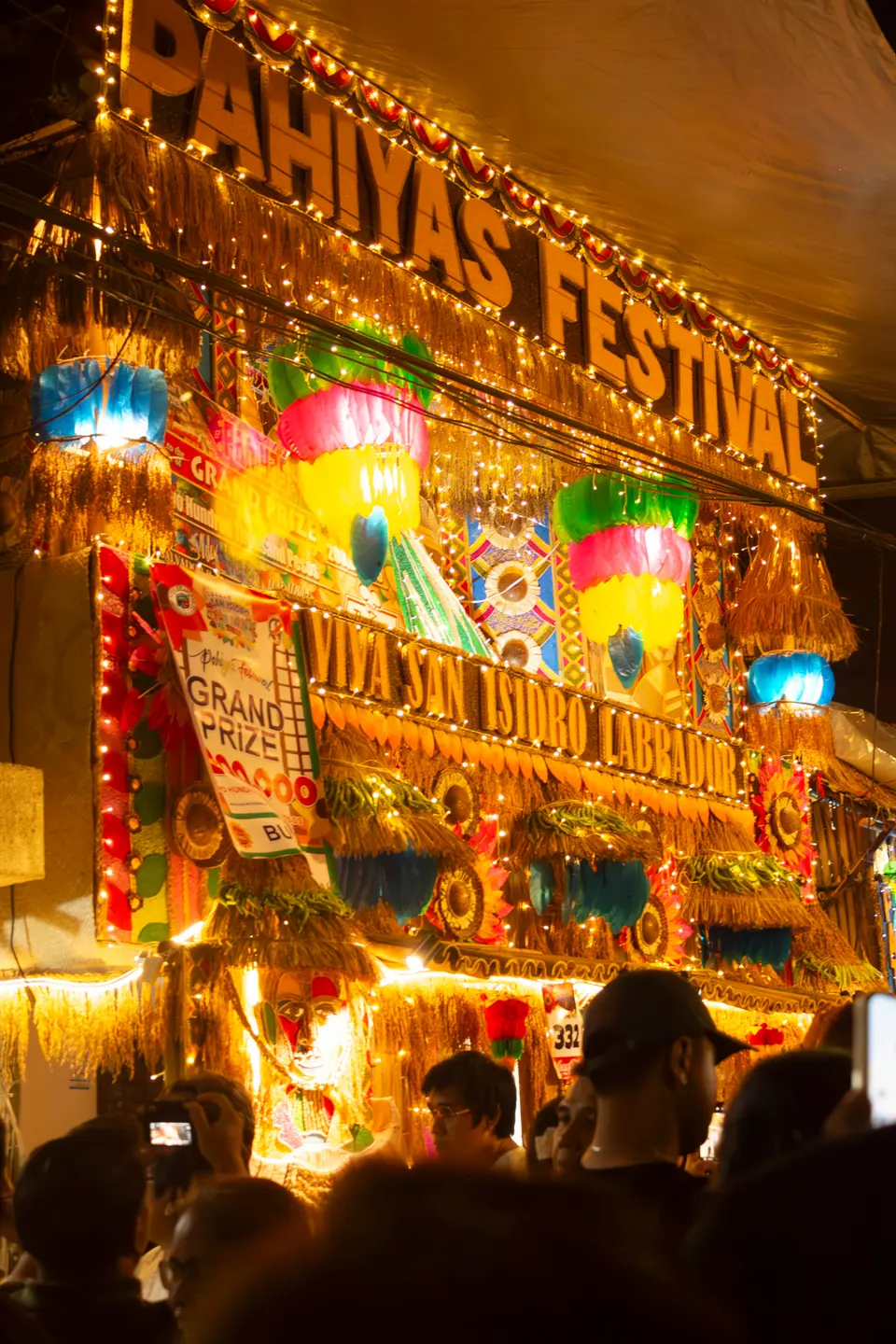
Pahiyas Festival
Pahiyas
Every 15 May the farming town of Lucban honours St Isidore the Labourer by dressing its houses in the harvest — fruit, vegetables, handicrafts and kiping, leaf-shaped rice wafers in every colour that can later be grilled or fried and eaten.
May 15, 2027Calculated
Bumba-meu-boi of Maranhão
Bumba-meu-boi
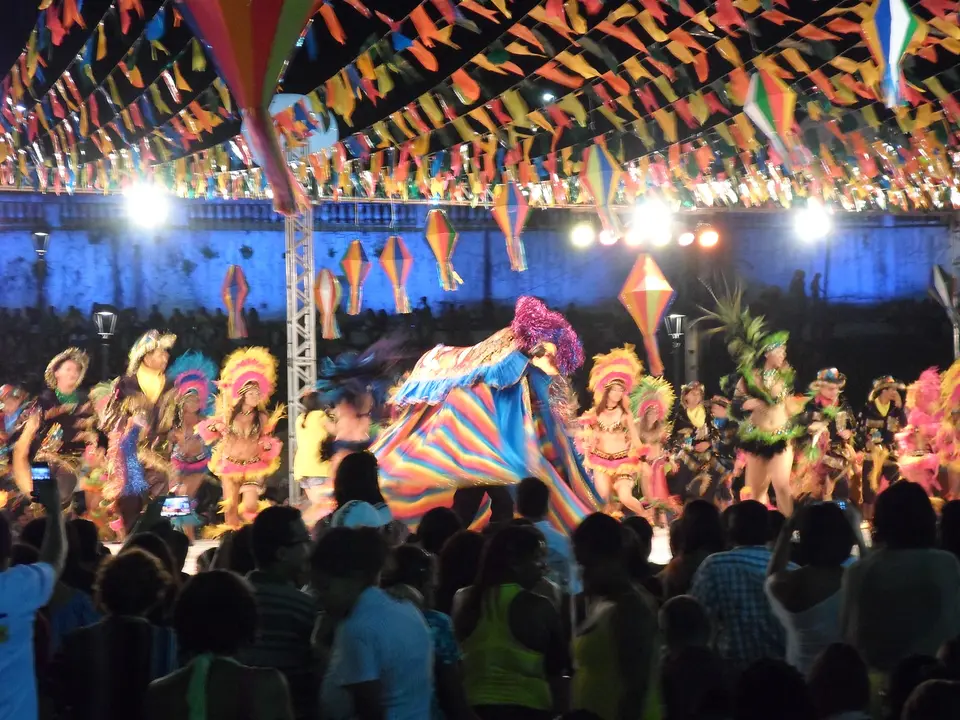
Through June the arraiais of São Luís fill with embroidered oxen, drums and wooden clappers as almost a hundred bumba-meu-boi groups act out, in song and dance, the death and resurrection of an ox — a folk play born among the poor of colonial Brazil.
June 13 – 30, 2027Calculated