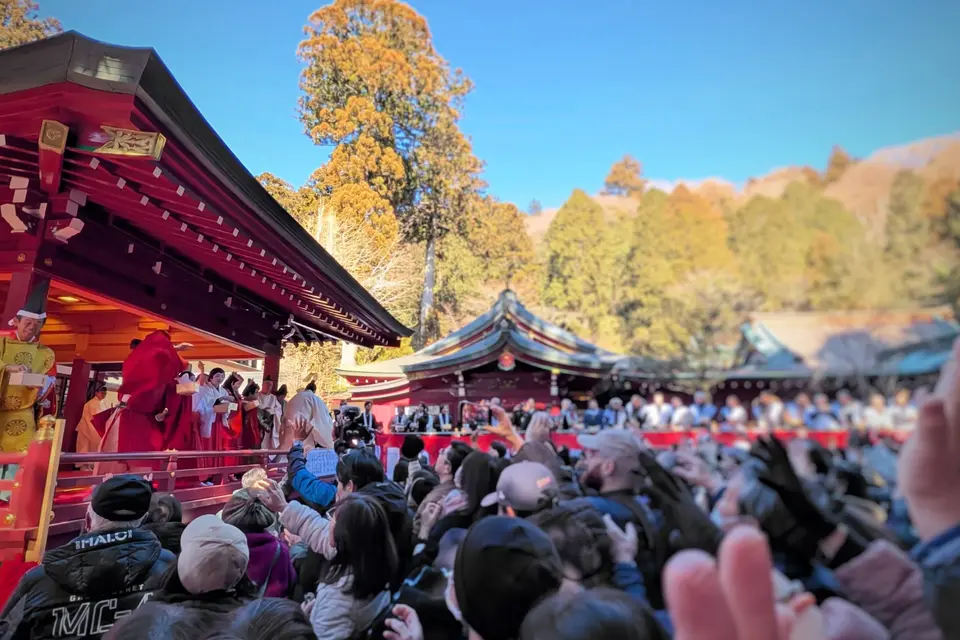
The day before spring begins in the old reckoning, when dried beans are thrown to drive out misfortune — “Demons out, good luck in!” Temples and shrines hold public bean-throwing, and the date is set by the sun, not the calendar.
The eve of spring
Setsubun means “seasonal division”. It once referred to the day before the start of each of the four seasons, but today only the one before Risshun, the beginning of spring, is widely kept. It is a day for driving away ill fortune before the new season begins.
Throwing beans
For most people Setsubun means mamemaki, throwing dried beans while calling out oni wa soto, fuku wa uchi — “demons out, good luck in”. Families do it at home, and temples and shrines hold public ceremonies to drive out bad influences and pray for good things in the year ahead.
The words are not the same everywhere. At Kinpusen-ji, a temple in the mountains of Yoshino, the call is reversed and the demons are welcomed in.
A day set by the sun
Setsubun is not fixed to 3 February. Risshun is the moment the Sun reaches a set point on the ecliptic; that moment slips about six hours later each year and is pulled back by each leap year, so the day moves. In 2021 Setsubun fell on 2 February for the first time since 1897, and it did so again in 2025.
The official date is calculated and published each February for the following year, and this page lists only the dates that have been published.
When it happens
Setsubun is the day before Risshun, the start of spring in the traditional reckoning. It usually falls on 3 February but sometimes on 2 February. The date for each year is published by the National Astronomical Observatory of Japan in the February of the year before, so only the published years are listed here.
- February 3, 2027Officially announced
Visiting with respect
Good to know
- Public mamemaki at temples and shrines draw large, lively crowds reaching for the beans. Keep hold of your belongings and watch out for small children.
- Do not photograph people without permission.
Avoid
- Do not push or shove to catch the beans.
Sources
This entry was written from the following sources.
- 暦要項 令和9年(2027) — 二十四節気および雑節National Astronomical Observatory of Japan · read August 20, 2026
- 節分の日が動き出すNational Astronomical Observatory of Japan · read August 20, 2026
- The Setsubun-e RitualJapan Tourism Agency multilingual database · read August 20, 2026
- 日本の暦: 二十四節気National Diet Library · read August 20, 2026
Related festivals
Obon
お盆
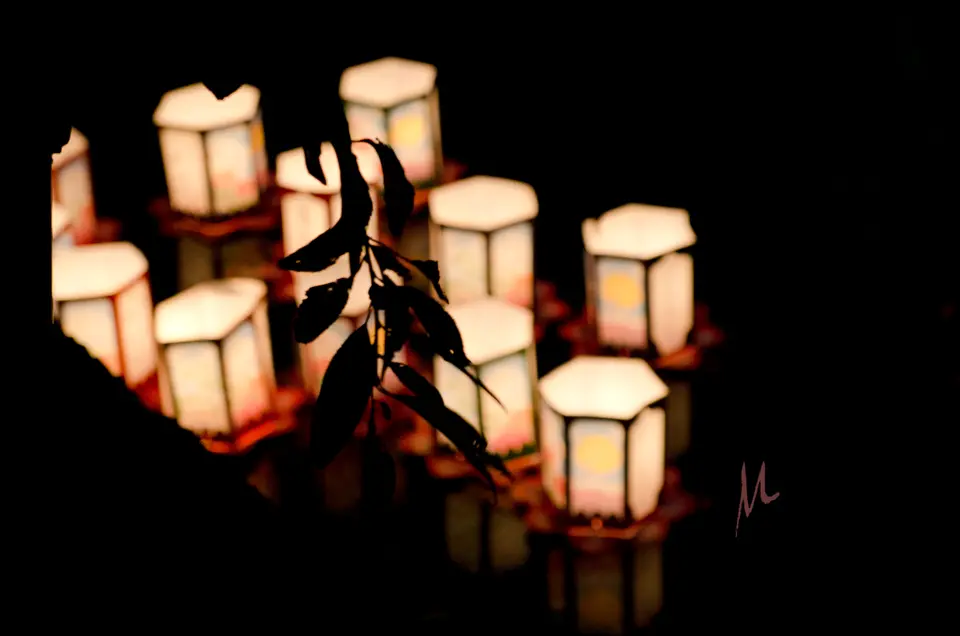
Japan’s summer days of the dead, when ancestors are said to come home for a few days. Families light lanterns to guide them, visit graves, and at the end set lanterns on the water to send them back. Mostly kept in August; in some places in July.
July 13 – 15, 2027Calculated
Tanabata
七夕
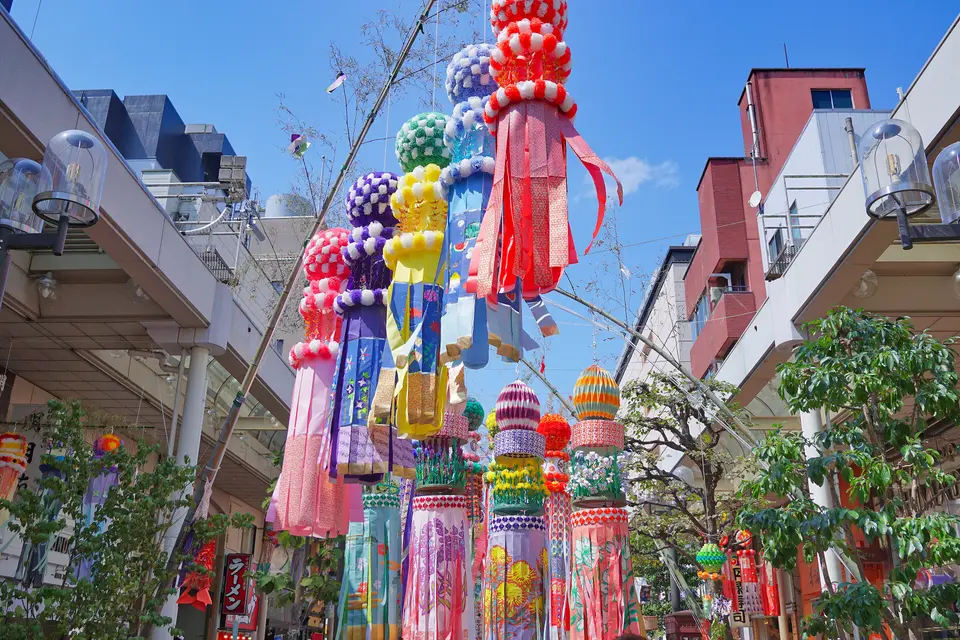
The star festival of the seventh night of the seventh month. Most of Japan keeps it on 7 July; Sendai, one of several places that kept the old season, hangs its great paper streamers from 6 to 8 August.
July 7, 2027Calculated