Esta página aún no está traducida al español; se muestra el texto original en inglés.
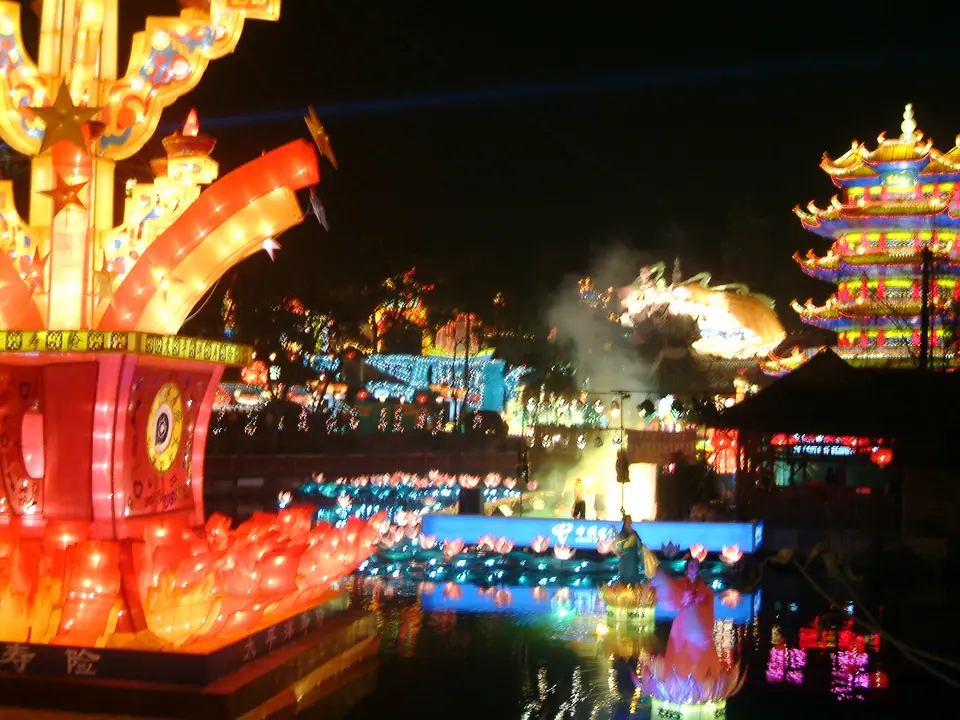
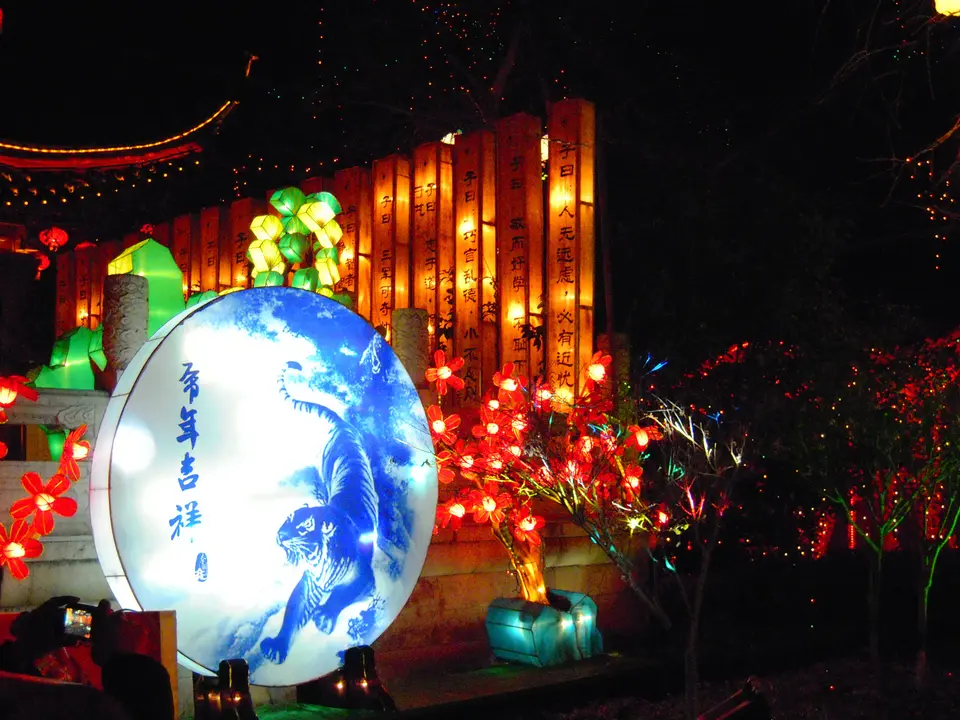
On the first full moon of the Chinese year, the New Year season ends in light — lantern riddles, sweet rice balls, and great lantern fairs such as those at Nanjing’s Confucius Temple and in Zigong, Sichuan, which run from the Spring Festival to this night.
The first full moon
The Lantern Festival, Yuanxiao jie, falls on the fifteenth day of the first month, the first full moon of the year, and marks the end of the New Year celebrations. It was already an important festival under the Western Han dynasty. There are many accounts of its origin: one tells that Emperor Ming, an advocate of Buddhism, saw monks lighting lanterns in temples on this night and ordered households, temples and the palace to do the same.
Families walk the streets with lanterns, and riddles are written on them for others to guess — caidengmi. Tangyuan, sweet rice balls in soup, are eaten on this day.
Two famous lantern fairs
The Qinhuai Lantern Fair, also called the Jinling Lantern Fair, is held every year at the Confucius Temple in Nanjing between the Spring Festival and the Lantern Festival, and peaks on the fifteenth. Its history reaches back to the Eastern Wu period. Under the Ming, when Nanjing was the capital, the Hongwu Emperor extended the lantern nights to ten, the longest in Chinese history. A Nanjing saying goes that if you don’t see the lanterns at the Confucius Temple, you haven’t celebrated the New Year. In 2006 the fair was listed as national intangible cultural heritage.
In Zigong, Sichuan, a great lantern fair is held each year from the Spring Festival to the Lantern Festival in the city’s Lantern Park. Customs of lighting lanterns at New Year go back to the Tang and Song dynasties there. The first lantern fair of the People’s Republic was organised by the city in 1964; since then the lanterns have grown from bamboo, wood and silk into large steel-framed groups, and because many dinosaur fossils have been found in Zigong, the event is now called the Zigong International Dinosaur Lantern Festival.
Cuándo se celebra
The Lantern Festival is the fifteenth day of the first month of the Chinese calendar, the night of the full moon, usually in February or early March. The big lantern fairs open around the Spring Festival and reach their climax on this night.
- 20 de febrero de 2027Calculada
- 9 de febrero de 2028Calculada
- 27 de febrero de 2029Calculada
- 17 de febrero de 2030Calculada
Comida y bebida
Tangyuan (yuanxiao)
Sweet balls of glutinous rice served in soup, eaten on the fifteenth day; they symbolise family togetherness.
Fuentes
Esta entrada se escribió a partir de las siguientes fuentes.
- Lantern FestivalWikipedia · consultado el 16 de septiembre de 2026
- Qinhuai Lantern FairWikipedia · consultado el 16 de septiembre de 2026
- 金陵灯会Wikipedia (Chinese) · consultado el 16 de septiembre de 2026
- 自贡灯会Wikipedia (Chinese) · consultado el 16 de septiembre de 2026
- Chinese New YearWikipedia · consultado el 16 de septiembre de 2026
- Gregorian-Lunar Calendar Conversion TablesHong Kong Observatory · consultado el 16 de septiembre de 2026
Fiestas relacionadas
Spring Festival (Chinese New Year)
春节
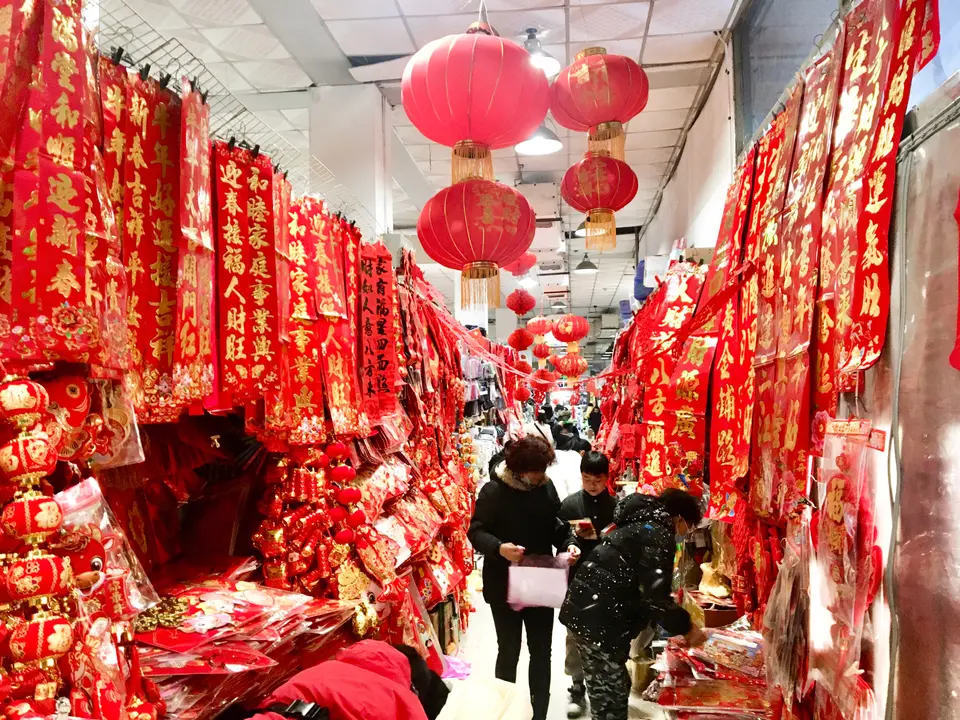
The first day of the Chinese lunisolar year is the most important holiday in Chinese culture — a season of homecoming, spring couplets on the door, a reunion dinner on New Year’s Eve and visits to relatives, which sets off one of the largest annual migrations in the world.
5–6 de febrero de 2027Calculada
Mid-Autumn Festival
中秋节
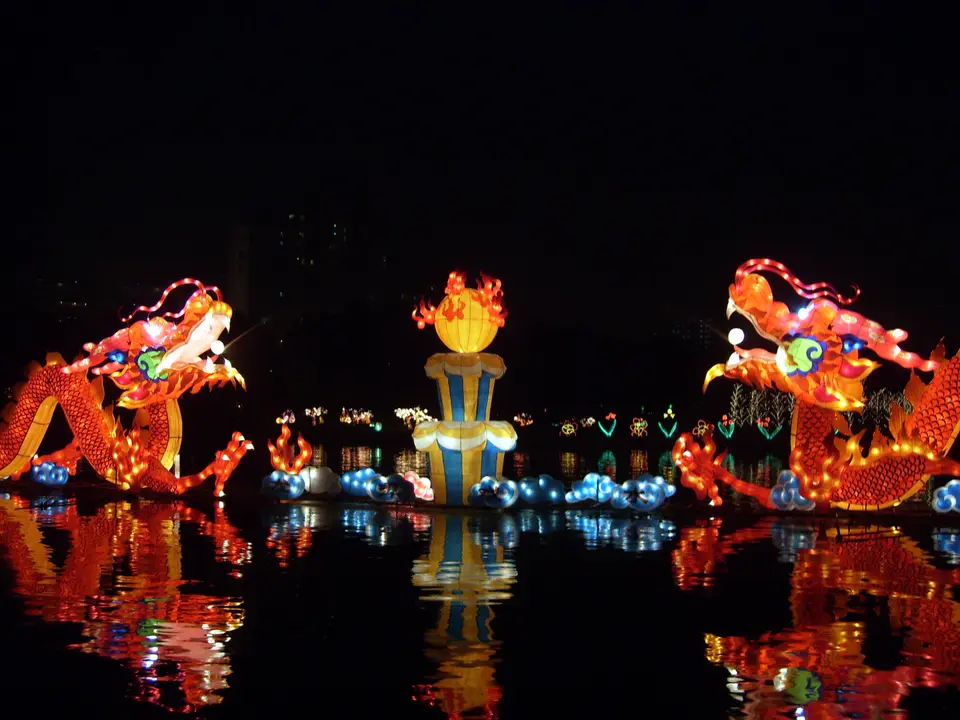
On the fifteenth night of the eighth lunar month, when the moon is held to be at its fullest and brightest, Chinese families gather to share mooncakes, carry lanterns and look at the moon — a harvest festival with the legend of Chang’e at its heart.
25 de septiembre de 2026Calculada
Loy Krathong
ลอยกระทง
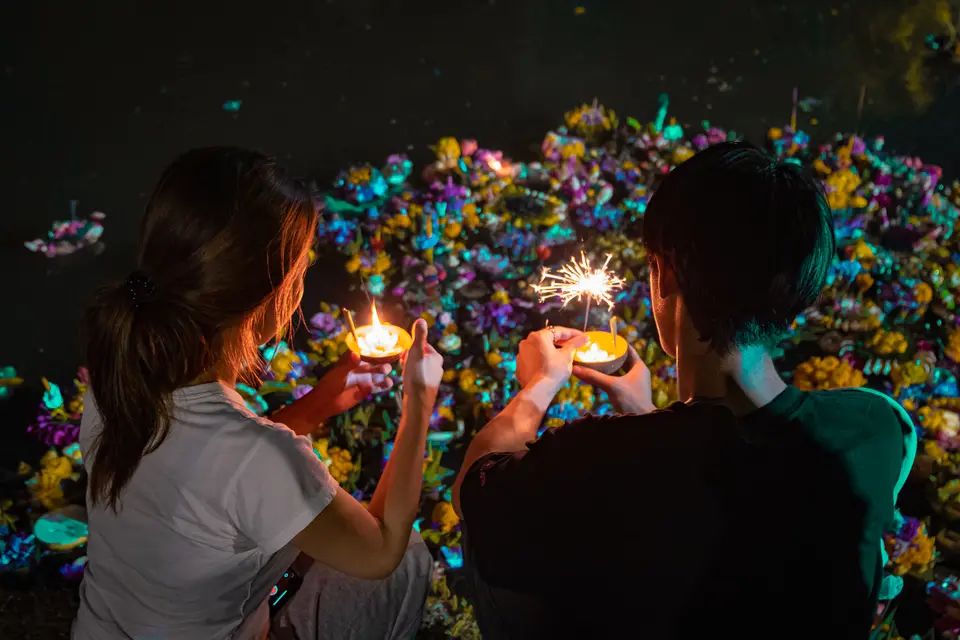
On the full-moon night of the twelfth Thai month, people float small decorated baskets bearing a candle, incense and a wish on rivers, canals and ponds across Thailand. In Chiang Mai the night coincides with Yi Peng, when sky lanterns drift up into the dark.
25 de noviembre de 2026Estimada