Esta página aún no está traducida al español; se muestra el texto original en inglés.
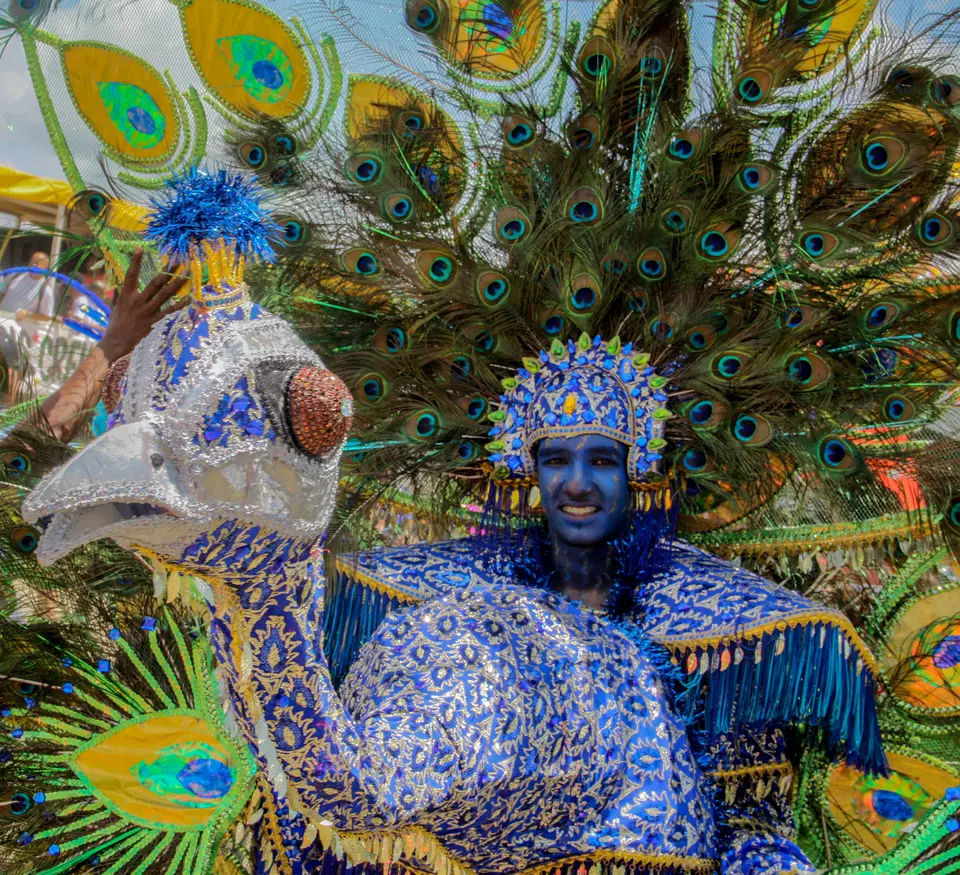
Trinidad and Tobago Carnival
Foto: Idobi, CC BY-SA 4.0, vía Wikimedia Commons
On the Monday and Tuesday before Ash Wednesday, Trinidad and Tobago takes to the streets — J’ouvert at daybreak in mud, oil and paint, then bands of masqueraders in colourful costumes, steelpan and soca — in a carnival born of French balls and the Canboulay of freed Africans.
Break of day
The official two days of Carnival begin in the dark on Monday morning with J’ouvert — from the French for “break of day”. Revellers parade through town in homemade or satirical costumes, covering themselves in oil, mud and powder and dancing to calypso and soca. Later on Monday and on Tuesday come the formal costumes of the mas bands: mas, short for masquerade, is the word for the costumes and for playing in a band.
Alongside the big bands, the National Carnival Commission keeps alive the traditional characters. The Midnight Robber wears a costume drawn from the American Wild West, with an oversized hat and a cape covered in symbols of death, blows a whistle and delivers boastful “Robber Talk” speeches drawn from sources including the Bible and Shakespeare, threatening his audience with a coffin-shaped money box. The Moko Jumbie strides on stilts ten to fifteen feet high; the name comes from West African tradition, and his height was said to let him see evil before ordinary people could. Other characters include the Dame Lorraine, a parody of an eighteenth-century French aristocrat often played by a man, and the Jab Jab devils.
From balls to Canboulay
From 1783, French settlers in Trinidad celebrated a carnival season from Christmas to Ash Wednesday with dinners, balls, concerts and hunting parties. After the Emancipation Bill of 1833, freed Africans joined in and brought Canboulay — from the French for “burnt cane” — with drums, singing, dancing and stick-fighting. It was first held on 1 August, Emancipation Day, and later moved to the night after Dimanche Gras, the Sunday before Carnival. The colonial government tried repeatedly to suppress the festivities, leading to the Canboulay riots of 1881 and 1884; a law of 1884 banned torches, drumming and stick-fighting and fixed the start of Carnival at 6 am on the Monday. Street carnival, once held over three days, was restricted to Monday and Tuesday in 1943.
Calypso and steelpan
Calypso, mainly of African origin, has been called a poor man’s newspaper: it grew from improvised songs of self-praise and scorn for others. Its stars have included the Roaring Lion, Lord Kitchener and the Mighty Sparrow, and in 1978 Calypso Rose became the first woman to win the Calypso Monarch competition. Today soca has overtaken calypso as the most popular carnival music.
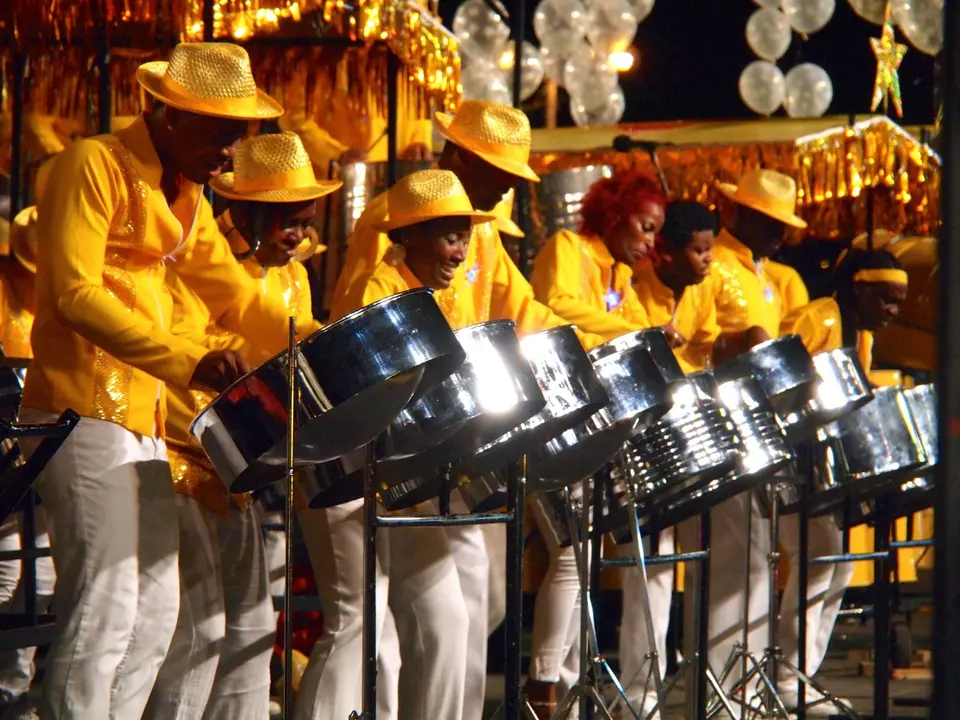
The steelpan was born between 1935 and 1945. The bands of the time played tamboo bamboo — lengths of bamboo cut to different pitches — and around 1935 some began to beat metal containers instead. Players discovered that hammering and stretching the metal changed its pitch, and soon the first pan with enough notes to carry a simple melody appeared. At the end of the Second World War the rival bands of Port of Spain took the new sound onto the streets.
Cuándo se celebra
Street carnival is held on the Monday and Tuesday before Ash Wednesday, 48 and 47 days before Easter, so it falls in February or early March. It begins before dawn on Monday with J’ouvert. Fetes and competitions fill the weeks beforehand.
- 8–9 de febrero de 2027Calculada
- 28–29 de febrero de 2028Calculada
- 12–13 de febrero de 2029Calculada
- 4–5 de marzo de 2030Calculada
Visitar con respeto
Evita
- It is an offence to wear camouflage clothing in Trinidad and Tobago — including as part of a costume.
Seguridad
- Robberies and opportunistic crime happen during the carnival period. Do not display jewellery or valuables, take care in crowds, and plan how you will get home safely.
- Do not accept drinks from strangers or leave drinks unattended; drugs have been used to rob and assault people in bars, clubs and on the street.
- Take particular care in parts of downtown Port of Spain and inside the Queen’s Park Savannah, which the UK government lists among areas of higher crime.

Fuentes
Esta entrada se escribió a partir de las siguientes fuentes.
- History of Carnival and its ElementsNational Carnival Commission of Trinidad and Tobago · consultado el 17 de septiembre de 2026
- Traditional Mas Characters – Midnight RobberNational Carnival Commission of Trinidad and Tobago · consultado el 17 de septiembre de 2026
- Traditional Mas Characters – Moko JumbieNational Carnival Commission of Trinidad and Tobago · consultado el 17 de septiembre de 2026
- Trinidad and Tobago CarnivalWikipedia · consultado el 17 de septiembre de 2026
- Trinidad and Tobago travel advice: safety and securityUK Foreign, Commonwealth & Development Office · consultado el 17 de septiembre de 2026
Fiestas relacionadas

Notting Hill Carnival
Over the August bank holiday weekend around two million people fill the streets of west London for Europe’s largest street festival — Caribbean masquerade bands in feathers and jewels, steel pans, soca and calypso, and the sound systems of Notting Hill.
29–30 de agosto de 2027Calculada
Rio Carnival
Carnaval do Rio de Janeiro
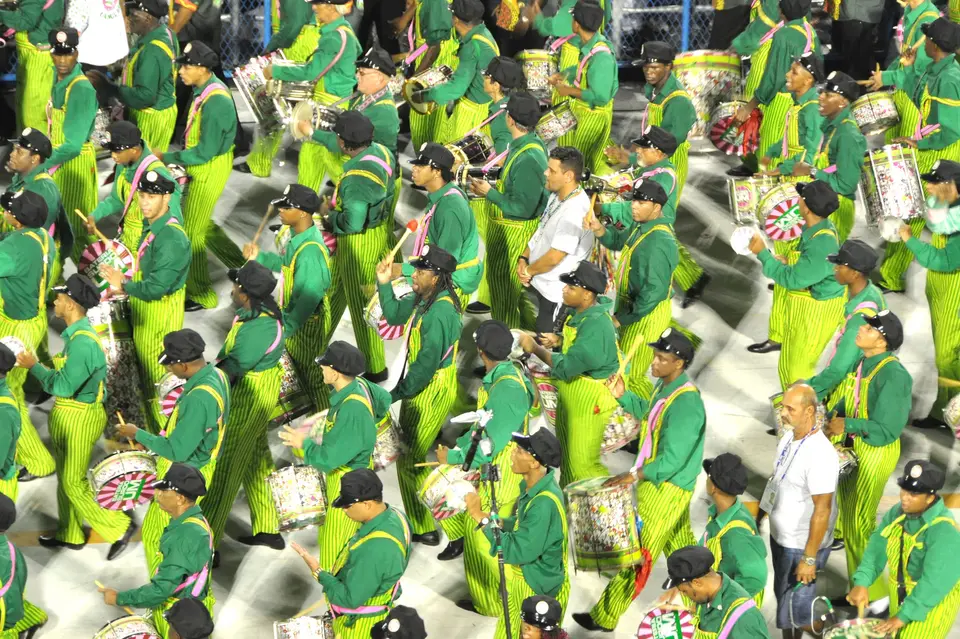
In the days before Lent, Rio de Janeiro holds what is considered the world’s largest carnival — two million people a day on the streets, and a contest of samba schools that parade through the Sambadrome with floats, drummers and thousands of dancers.
5–9 de febrero de 2027Calculada
Barranquilla Carnival
Carnaval de Barranquilla
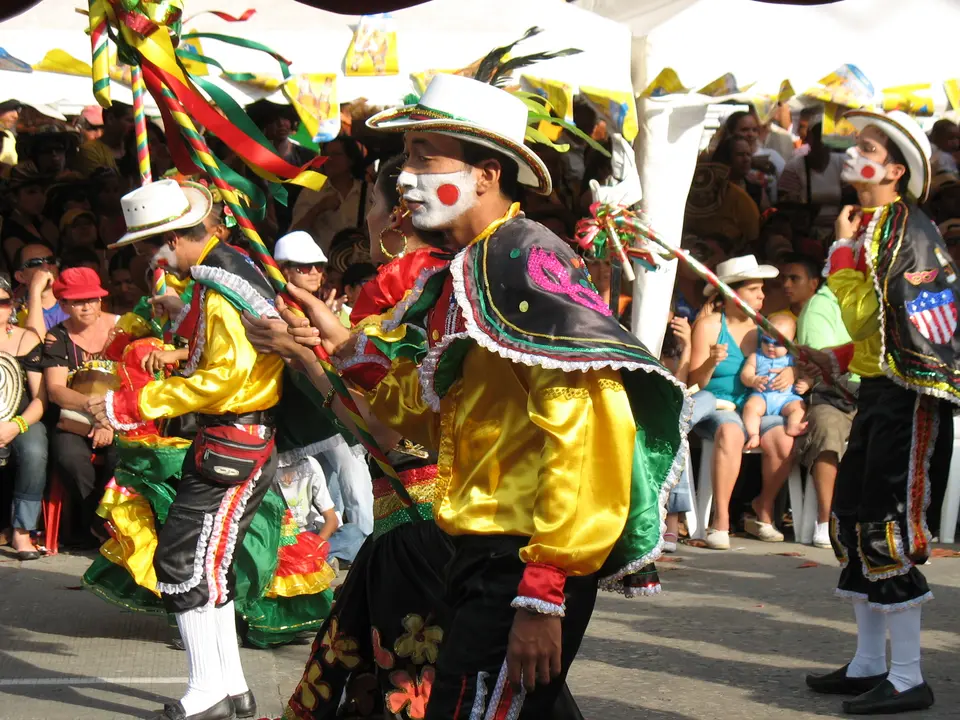
For the four days before Lent, Colombia’s Caribbean port sets work aside for one of the world’s largest carnivals — a Battle of Flowers, a Great Parade of cumbia, congo and garabato dancers, an orchestra contest, and the burial of Joselito Carnaval.
6–9 de febrero de 2027Calculada