Cette page n’est pas encore traduite en français ; le texte original anglais est affiché.
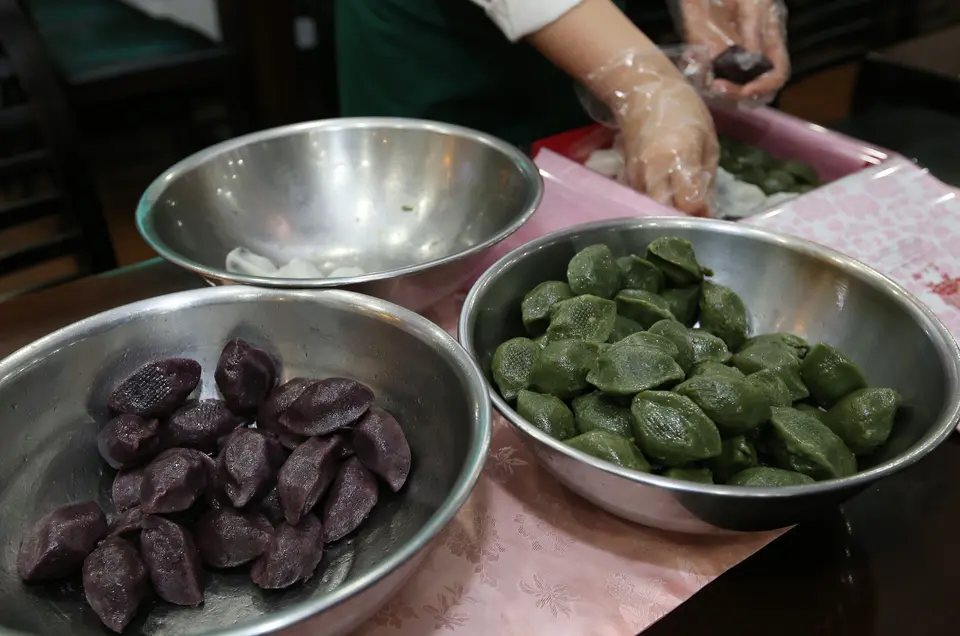
Chuseok
추석
Photo : Korea.net / Korean Culture and Information Service, CC BY-SA 2.0, via Wikimedia Commons
Korea’s harvest festival under the full moon of the eighth lunar month — three days when cities empty as families go home to honour their ancestors, tidy the family graves and make half-moon rice cakes steamed over pine needles.
Autumn evening
Chuseok means “autumn evening”; the festival is also called Hangawi, “the great middle of autumn”. As a celebration of the harvest, it sends huge numbers of people from the big cities back to their ancestral hometowns.
The day begins early with charye, a memorial rite at home. Freshly harvested rice, songpyeon, meat, fruit and vegetables are laid out for the ancestors, traditionally in a set order on the table — rice and soup to the north, fruit and vegetables to the south. Families then go to the graves of their immediate ancestors in seongmyo, trimming the grass and clearing weeds, beolcho, and offering food and drink. The rest of the day is spent together, often playing folk games. Many people wear hanbok, and the National Folk Museum in Seoul holds festivities.
Weaving contests and half-moons
By popular belief, Chuseok goes back to gabae in the kingdom of Silla: a month-long weaving contest between two teams, after which the losers treated the winners to a feast. Many scholars also see its roots in ancient celebrations of the harvest moon.
A legend from the Three Kingdoms era explains the shape of songpyeon. Under King Uija of Baekje, a message was found on a turtle’s back reading “Baekje is a full moon, Silla is a half-moon” — foretelling the fall of Baekje and the rise of Silla. Ever since, the half-moon has been a sign of a bright future, and families eat half-moon songpyeon under the full moon. It is said that a single woman who makes pretty songpyeon will find a good husband.
Quand a-t-elle lieu
Chuseok is the fifteenth day of the eighth lunar month, the day of the full moon, in September or early October. In South Korea the holiday lasts three days, including the days before and after.
- 24–26 septembre 2026Calculée
- 14–16 septembre 2027Calculée
- 2–4 octobre 2028Calculée
- 21–23 septembre 2029Calculée
- 11–13 septembre 2030Calculée
Visiter avec respect
Sécurité
- Airline tickets around Chuseok often sell out months in advance, and roads and hotels are overcrowded. Plan ahead.
- Many banks, post offices, government offices and shops close during the holiday.
À boire et à manger
Songpyeon
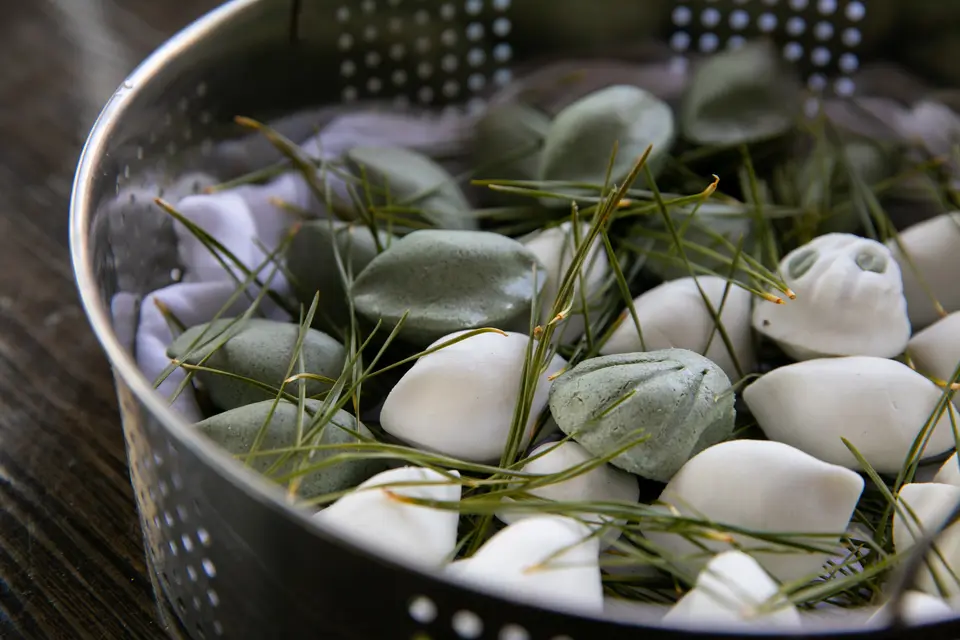
Rice cakes filled with ingredients such as sesame, beans, chestnut, jujube or honey, steamed over a layer of pine needles — *song* means pine. Families shape them into half-moons, a shape that has long stood for a bright future.
Yakgwa and fruit
The feast also brings yakgwa, fruits such as Asian pear and hallabong, and rice wines such as sindoju, made from the new rice, and dongdongju.
Sources
Cette entrée a été rédigée à partir des sources suivantes.
- ChuseokWikipedia · consulté le 16 septembre 2026
- 2027년 월력요항 (Korean almanac for 2027)Korea Astronomy and Space Science Institute · consulté le 16 septembre 2026
- 2027년 공휴일 72일·주5일제 휴일 119일…3일 이상 연휴 10번Asia Economy · consulté le 16 septembre 2026
- Gregorian-Lunar Calendar Conversion TablesHong Kong Observatory · consulté le 16 septembre 2026
- Phases of the MoonUS Naval Observatory, Astronomical Applications · consulté le 16 septembre 2026
Fêtes apparentées
Seollal
설날
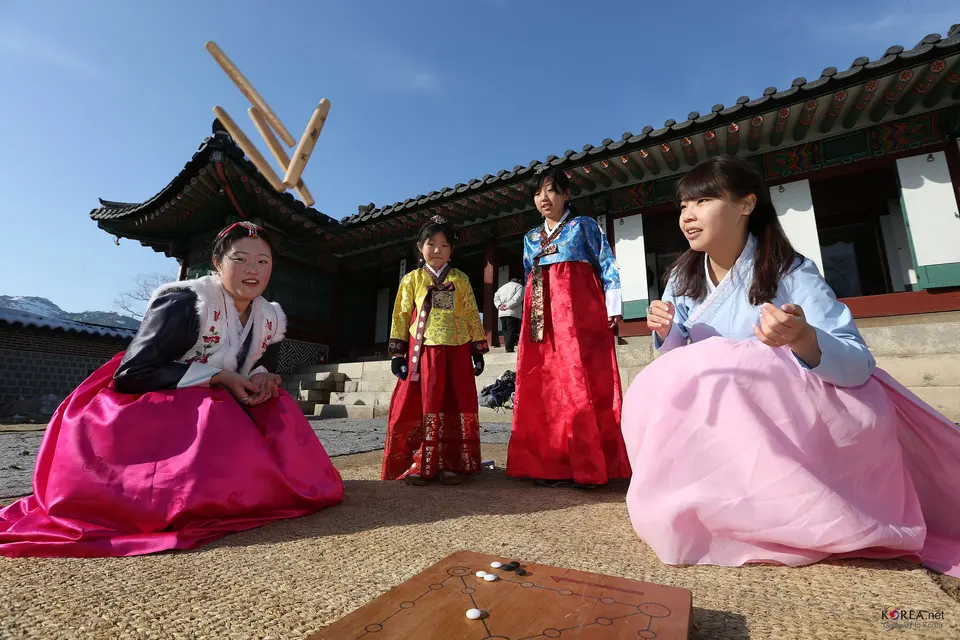
Korean Lunar New Year is a three-day family holiday — tens of millions travel home to perform the ancestral rite, bow deeply to their elders in hanbok, eat a bowl of rice-cake soup and, by old custom, grow a year older.
6–8 février 2027Calculée
Mid-Autumn Festival
中秋节
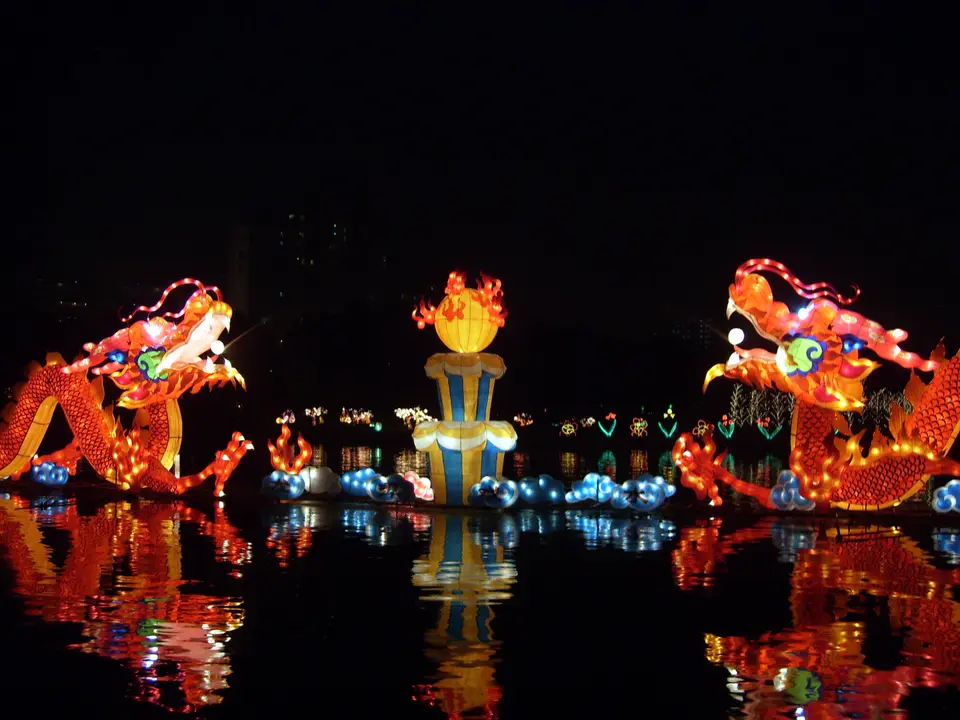
On the fifteenth night of the eighth lunar month, when the moon is held to be at its fullest and brightest, Chinese families gather to share mooncakes, carry lanterns and look at the moon — a harvest festival with the legend of Chang’e at its heart.
25 septembre 2026Calculée
Tết Trung Thu (Mid-Autumn Festival)
Tết Trung Thu
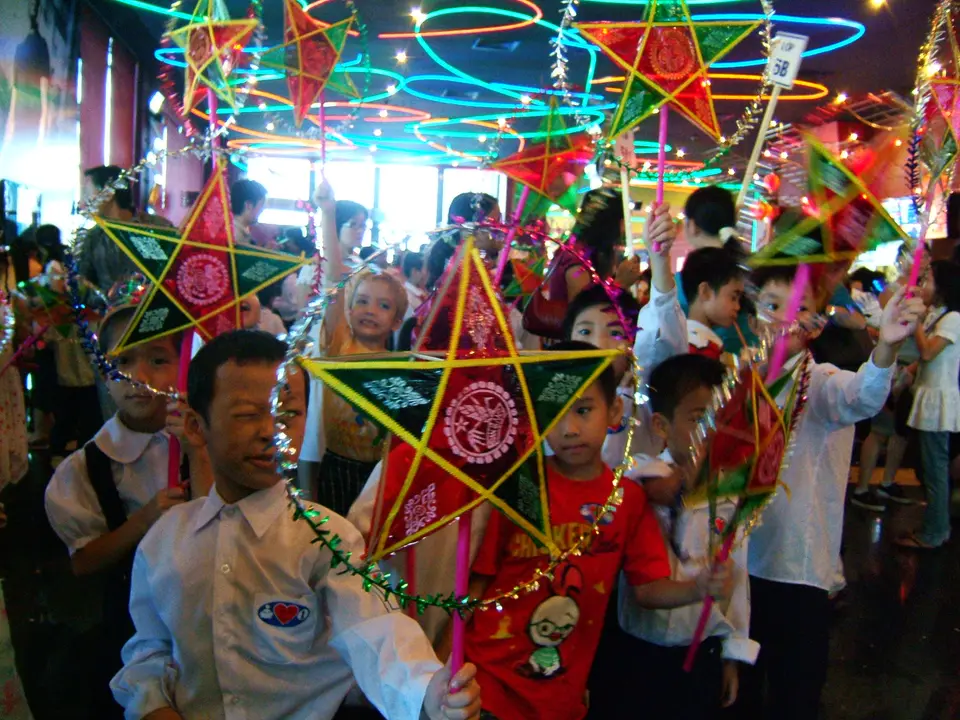
In Vietnam the Mid-Autumn full moon belongs to children — lantern processions after dark, star lanterns and masks, lion dances going from house to house, and tables of cakes, fruit and rice-dough figurines.
25 septembre 2026Calculée