Cette page n’est pas encore traduite en français ; le texte original anglais est affiché.
Festivity of Saint Blaise
Festa svetoga Vlaha
Inscrite sur la Liste du patrimoine culturel immatériel de l’humanité de l’UNESCO
Photo : (WT-en) Mariobonacic at English Wikivoyage, Public domain, via Wikimedia Commons
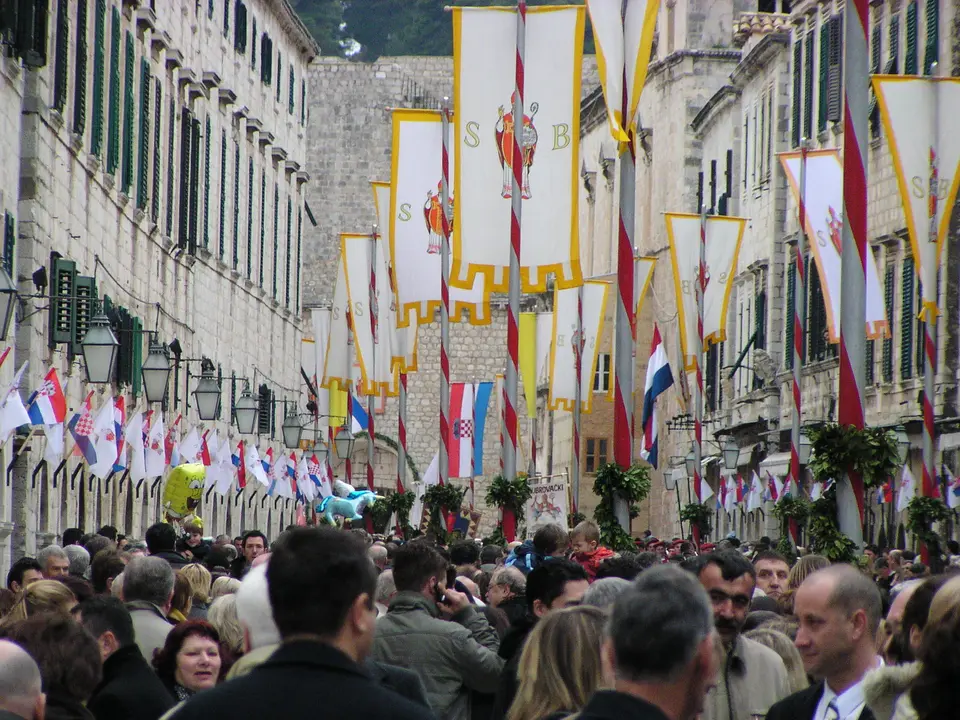
Dubrovnik has honoured its patron saint every February since, by tradition, the year 972 — releasing white doves on Candlemas, then carrying his relics along the Stradun in a procession of parish banners, folk costumes and old muskets fired in salute.
A warning from the saint
According to legend, in 972 Venetian ships anchored near Gruž and Lokrum on the pretext of taking on supplies, while planning to seize the city. St Blaise appeared to a priest named Stojko as he prayed in the Church of St Stephen and told him to warn the Senate. Dubrovnik prepared its defences, the Venetians withdrew, and the grateful citizens made Blaise their chief patron saint. The festivity has been held since that year by tradition, and it once brought the whole Republic of Dubrovnik into the city: exiles and even offenders were allowed to enter freely for days around the feast. UNESCO inscribed it on its Representative List in 2009.
Doves, banners and throats
On the evening before, the day of Candlemas, as all the church bells ring, white doves are released in front of the cathedral as symbols of peace and St Blaise’s banner is raised on Orlando’s Column. Worshippers gather for a ritual healing of the throat: priests bless the people with two crossed candles, for St Blaise is believed to protect the throat.
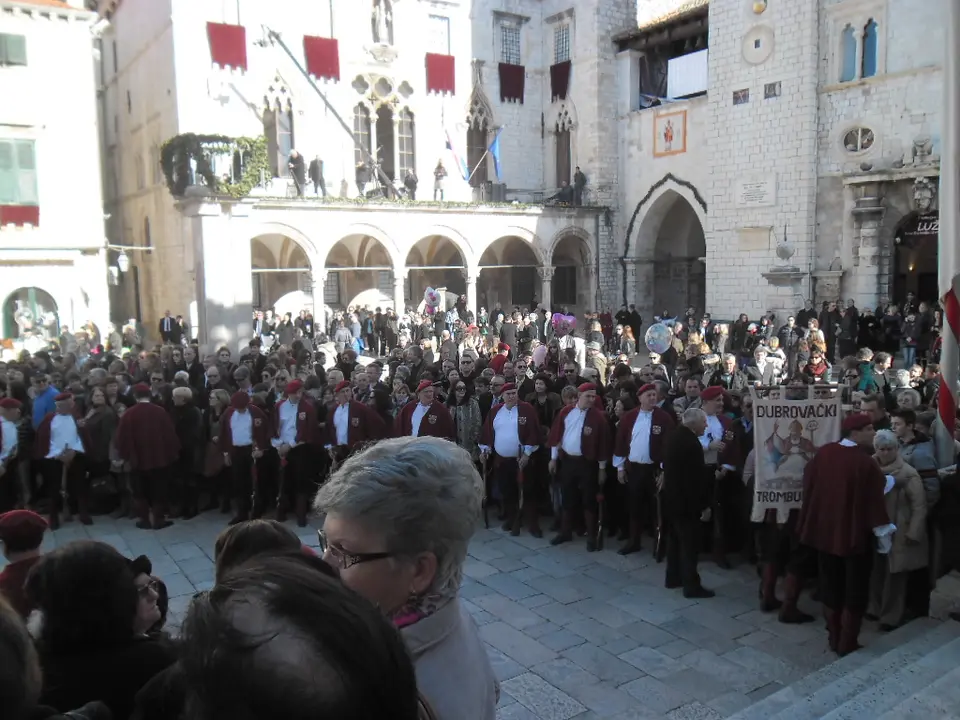
On 3 February, parish banner bearers in folk costume stream into the city, and bishops, civic leaders and the people of Dubrovnik follow the saint’s relics in procession along the Stradun and through the streets. One of the festival’s sights is the trombunjeri, men carrying short, wide-mouthed muskets once used to make noise and frighten off the city’s enemies, who fire them before entering the city. Afterwards the banners return to their villages to carry the saint’s blessing to those who could not come.
Quand a-t-elle lieu
The festivity begins on 2 February, Candlemas, and its main day is 3 February, St Blaise’s Day and the Day of the City of Dubrovnik.
- 2–3 février 2027Calculée
- 2–3 février 2028Calculée
- 2–3 février 2029Calculée
- 2–3 février 2030Calculée
Visiter avec respect
Bon à savoir
- During the procession people kiss the bishop’s hand and touch the relics. Give way to the procession and follow the lead of local worshippers.
Sécurité
- Pickpockets operate in tourist areas. Carry little cash and keep valuables close.
Sources
Cette entrée a été rédigée à partir des sources suivantes.
- Festivity of Saint Blaise, the patron of DubrovnikUNESCO Intangible Cultural Heritage · consulté le 17 septembre 2026
- Festivity of Saint BlaiseWikipedia · consulté le 17 septembre 2026
- Croatia travel advice: safety and securityUK Foreign, Commonwealth & Development Office · consulté le 17 septembre 2026
Fêtes apparentées
Sinjska alka
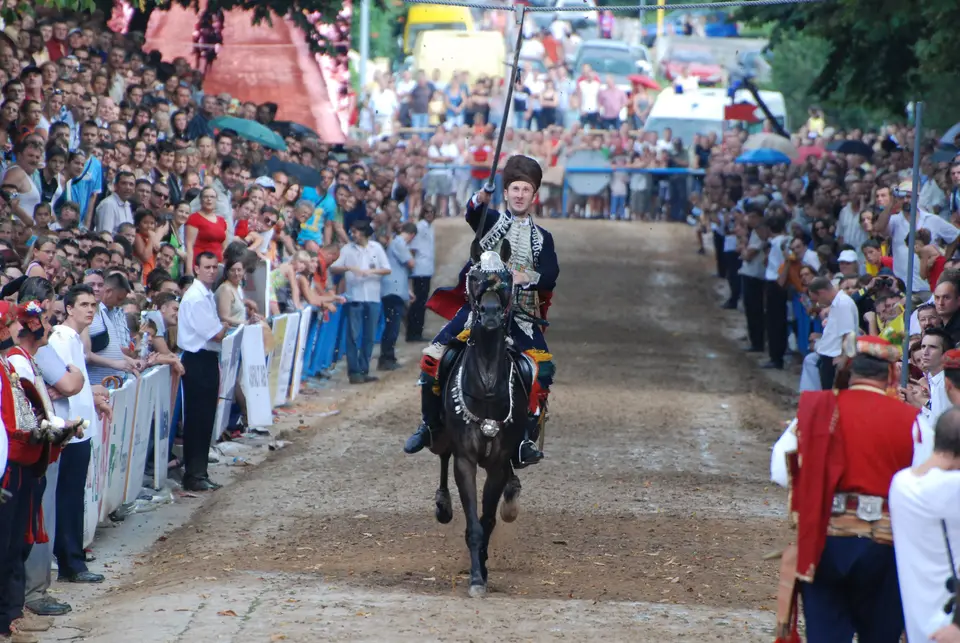
In the Croatian town of Sinj, horsemen in eighteenth-century dress gallop down a 160-metre track and try to spear a small iron ring hanging on a rope — a knights’ tournament held since the 1700s to remember a victory over an Ottoman army in 1715.
8 août 2027Calculée
Festival of the Virgen de la Candelaria
Festividad de la Virgen de la Candelaria
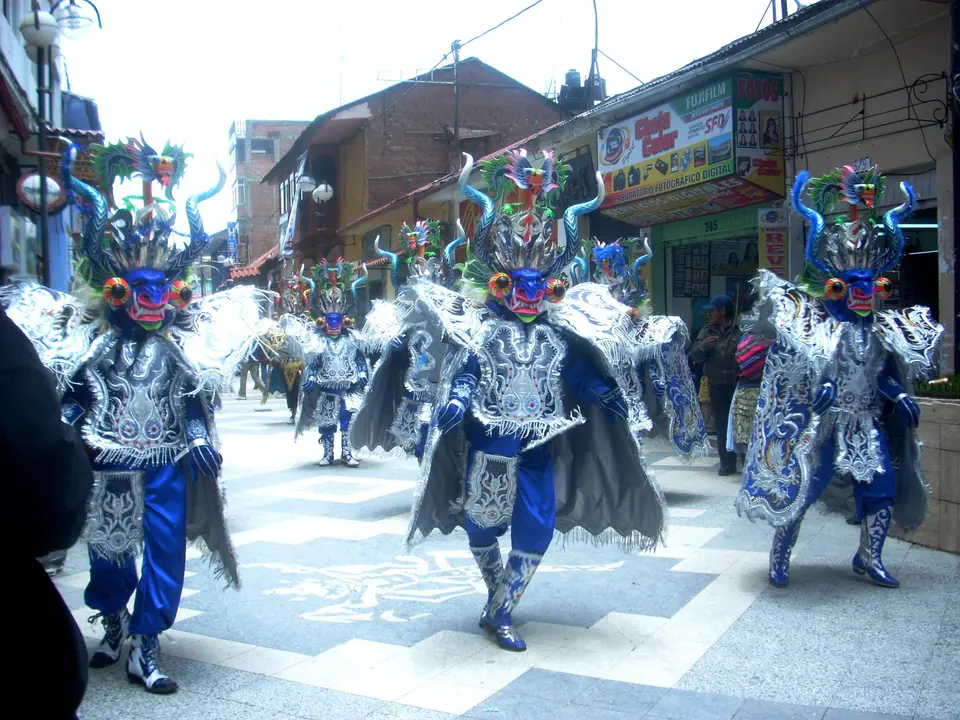
Each February, Puno on the shore of Lake Titicaca honours its patron saint with Peru’s largest festival of music and dance — about a hundred thousand dancers and ten thousand musicians, most of them Quechua and Aymara, and weeks of masses, processions and contests.
1–15 février 2027Estimée
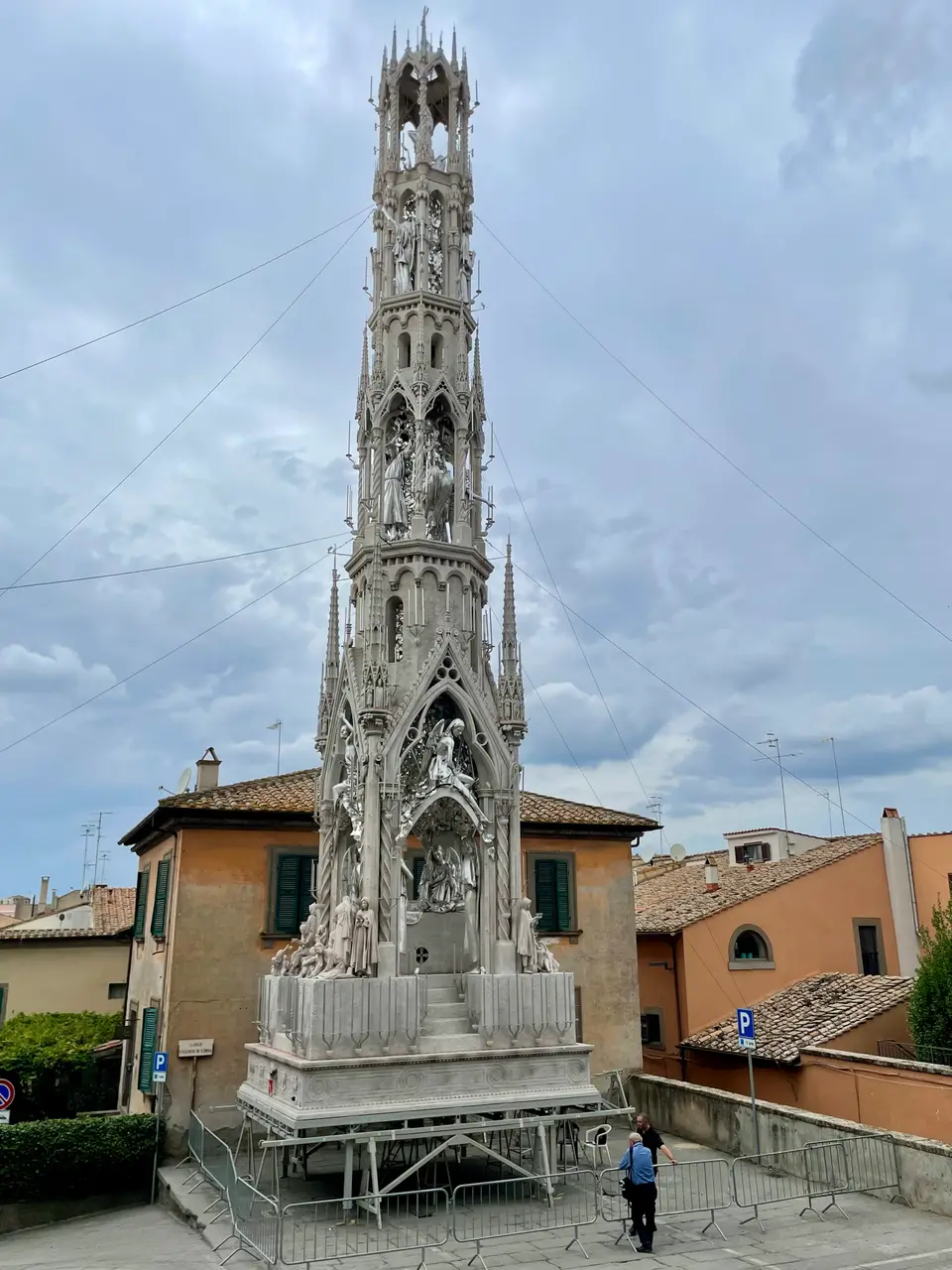
Macchina di Santa Rosa
On the evening of 3 September, a hundred porters lift a tower some thirty metres tall and five tonnes in weight onto their shoulders and carry it through the medieval streets of Viterbo in honour of the city’s patron saint.
3 septembre 2027Calculée