Cette page n’est pas encore traduite en français ; le texte original anglais est affiché.
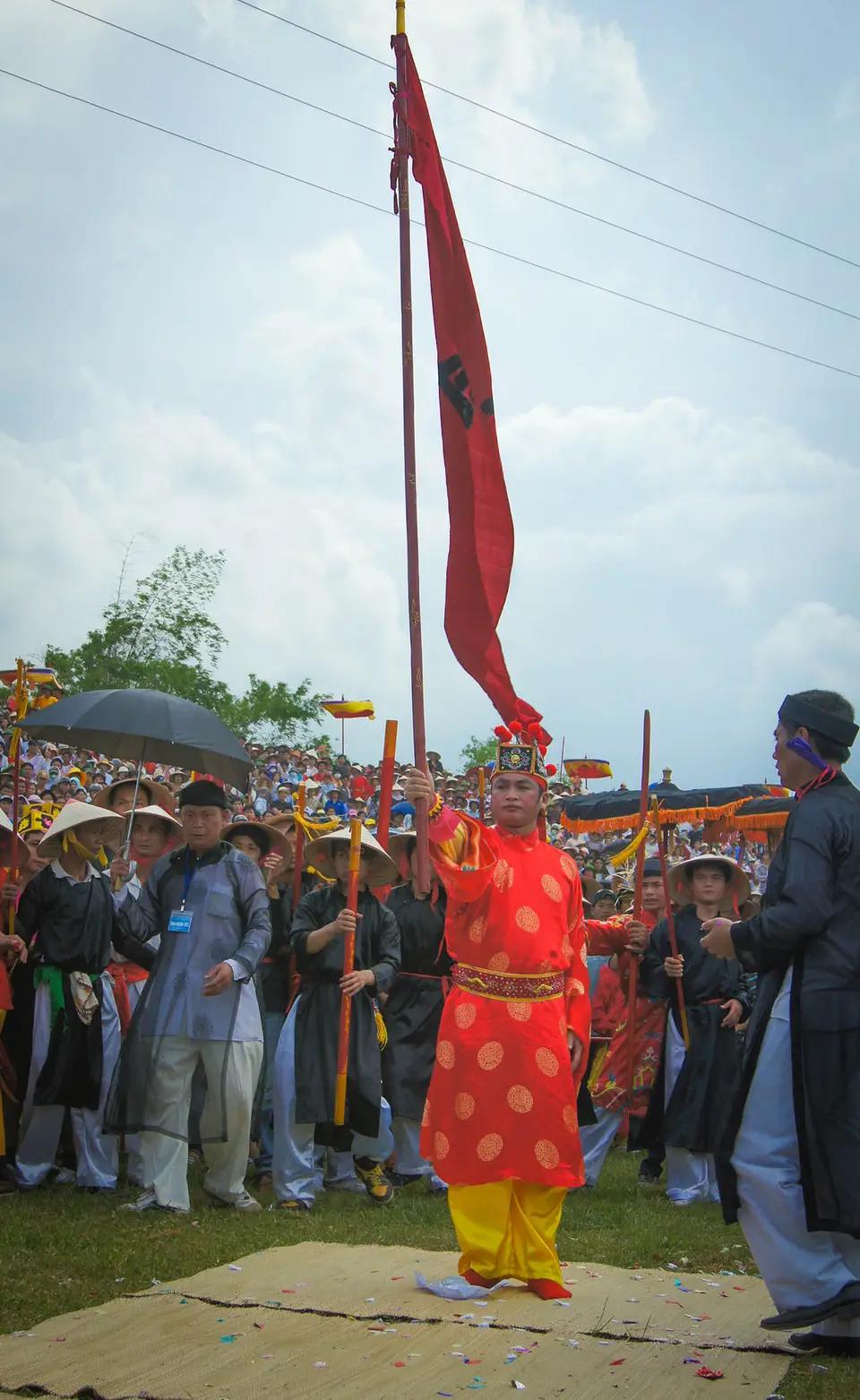
Gióng Festival
Hội Gióng
Inscrite sur la Liste du patrimoine culturel immatériel de l’humanité de l’UNESCO
Photo : Hoangvantoanajc, CC BY-SA 3.0, via Wikimedia Commons
Two villages on the edge of Hanoi re-enact the legend of Saint Gióng, the child who grew into a giant to drive out invaders — a battle fought with flag dances, drums and gongs against twenty-eight girl generals at Phù Đổng, and bamboo flowers carried up to the temple at Sóc.
The boy who became a giant
The legend tells of a boy born in a miraculous way in Phù Đổng village. At three he still could not speak or laugh, and lay all day in a basket hung from a bamboo pole — a gióng, which gave him his name. When the king called for someone to fight foreign invaders, Gióng suddenly grew, went to war and drove the enemy out. Then he rode to Sóc mountain and flew up to heaven on his horse. He is worshipped as a saint who protects the harvest, peace in the country and the prosperity of families.
The festivals at the temple of his birth in Phù Đổng, Gia Lâm, and at Sóc temple in Phù Linh, Sóc Sơn, where he ascended, are among the largest in the Red River delta. They were inscribed together on UNESCO’s Representative List in 2010.
The battle at Phù Đổng
Families chosen to provide the main roles — the Flag Master, Drum Master, Gong Master, Army Master and Children’s Master — prepare for months and keep strict rules beforehand. Twenty-eight girls aged nine to thirteen are chosen to play the enemy generals. The festival opens with offerings to the saint, a procession to fetch water from the well of the Mother Temple to wash the ritual objects, and a procession of the command flag.
On the 9th day the two battles are fought, at Đống Đàm, by a lotus pond about two kilometres from the upper temple, and at Soi Bia. The battlefield is three mats, each with an upturned bowl for a hill on a sheet of white paper for the clouds. The Flag Master steps onto each mat, leaps over the hills and dances with the flag while the crowd shouts over the drums and gongs; if the flag wraps around its pole, it is a bad omen. Paper butterflies released from the flag scatter the invaders. The festival ends with a victory procession and feast, to which the enemy generals are pardoned and invited, and rain after the festival is taken as the saint’s blessing for a good harvest.
At Sóc temple in spring, the rites include bathing the saint’s statue and a procession carrying flowers made of bamboo to the temple as offerings.
Quand a-t-elle lieu
The festival at Sóc temple runs from the 6th to the 8th day of the first lunar month, in late January or February. The festival at Phù Đổng temple runs from the 7th to the 9th day of the fourth lunar month, usually in May, with the main battles on the 9th.
- 11–13 février 2027Sóc templeCalculée
- 12–14 mai 2027Phù Đổng templeCalculée
- 31 janvier – 2 février 2028Sóc templeCalculée
- 1–3 mai 2028Phù Đổng templeCalculée
- 18–20 février 2029Sóc templeCalculée
- 19–21 mai 2029Phù Đổng templeCalculée
- 7–9 février 2030Sóc templeCalculée
- 8–10 mai 2030Phù Đổng templeCalculée
Visiter avec respect
Bon à savoir
- At the end of each flag battle at Phù Đổng the mat is thrown into the crowd and people rush to grab a piece for luck. Stand back if you do not want to be caught up in it.
Sources
Cette entrée a été rédigée à partir des sources suivantes.
- Gióng festival of Phù Đổng and Sóc templesUNESCO Intangible Cultural Heritage · consulté le 16 septembre 2026
- Hội Gióng ở đền Phù Đổng và đền SócCục Di sản văn hóa (Department of Cultural Heritage, Viet Nam) · consulté le 16 septembre 2026
- Gregorian-Lunar Calendar Conversion TablesHong Kong Observatory · consulté le 16 septembre 2026
- Phases of the MoonUS Naval Observatory, Astronomical Applications · consulté le 16 septembre 2026
Fêtes apparentées
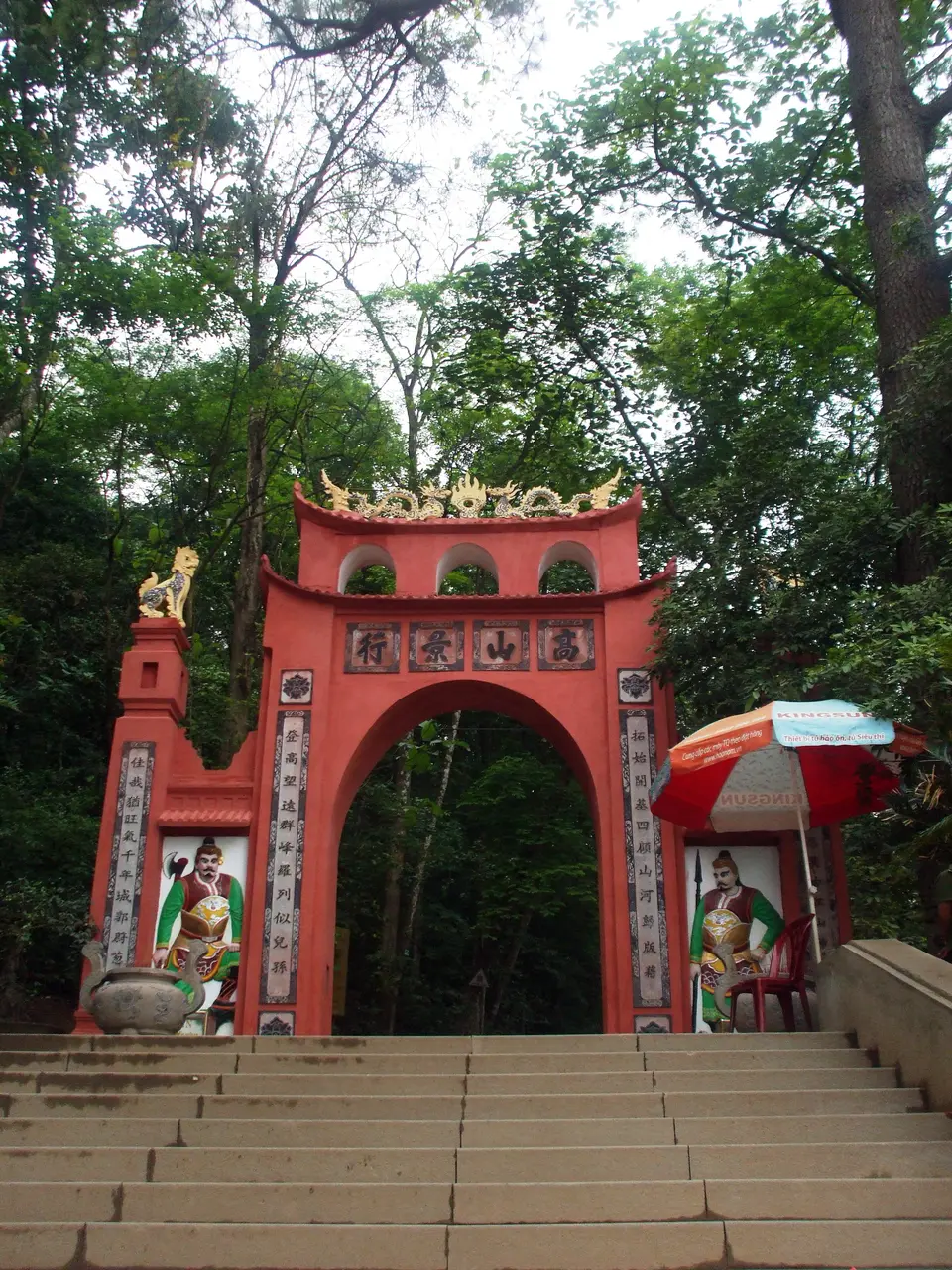
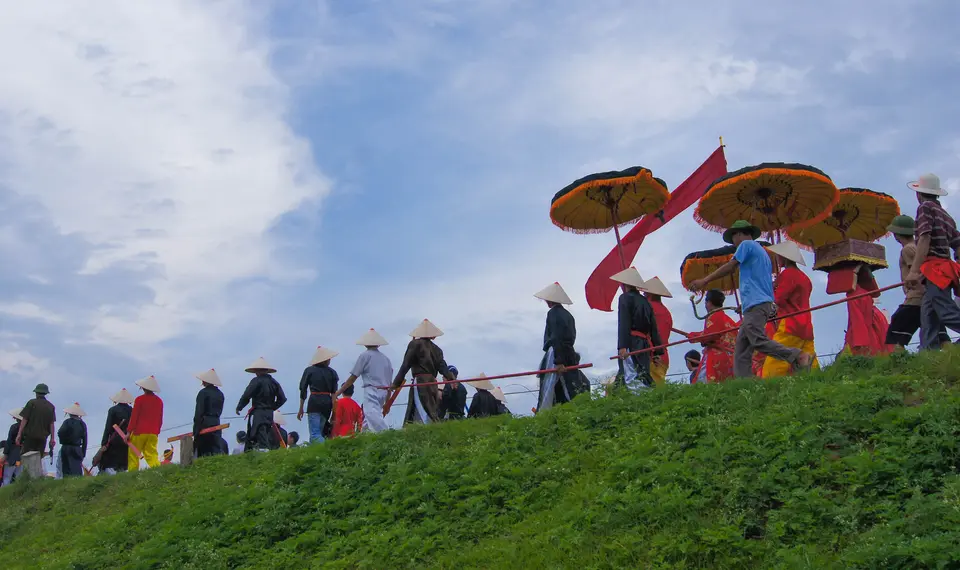
Hùng Kings’ Temple Festival
Giỗ Tổ Hùng Vương
Early in the third lunar month, millions of Vietnamese climb Nghĩa Lĩnh mountain in Phú Thọ to honour the Hùng Kings, legendary founders of the nation, with processions of palanquins, drums and gongs, offerings of rice cakes and Xoan singing.
16 avril 2027Calculée
Gion Matsuri
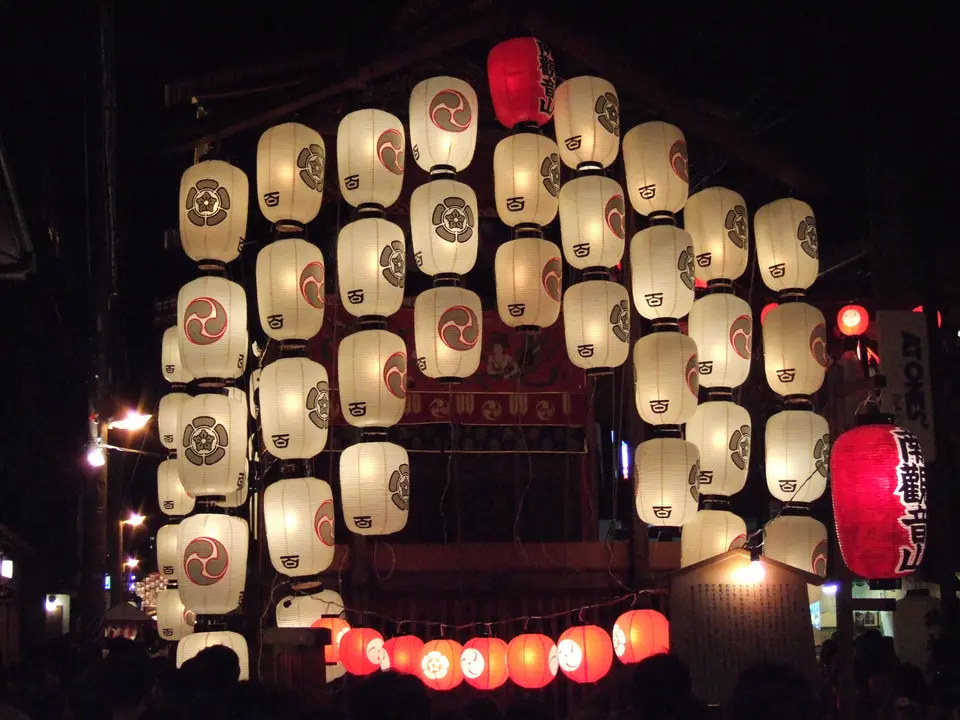
祇園祭
Kyoto’s great summer festival lasts the whole of July. Its high points are the lantern-lit yoiyama evenings and the processions of towering yamahoko floats on 17 and 24 July, built and hauled by the city’s own neighbourhoods.
1–31 juillet 2027Calculée
Torch Festival
火把节
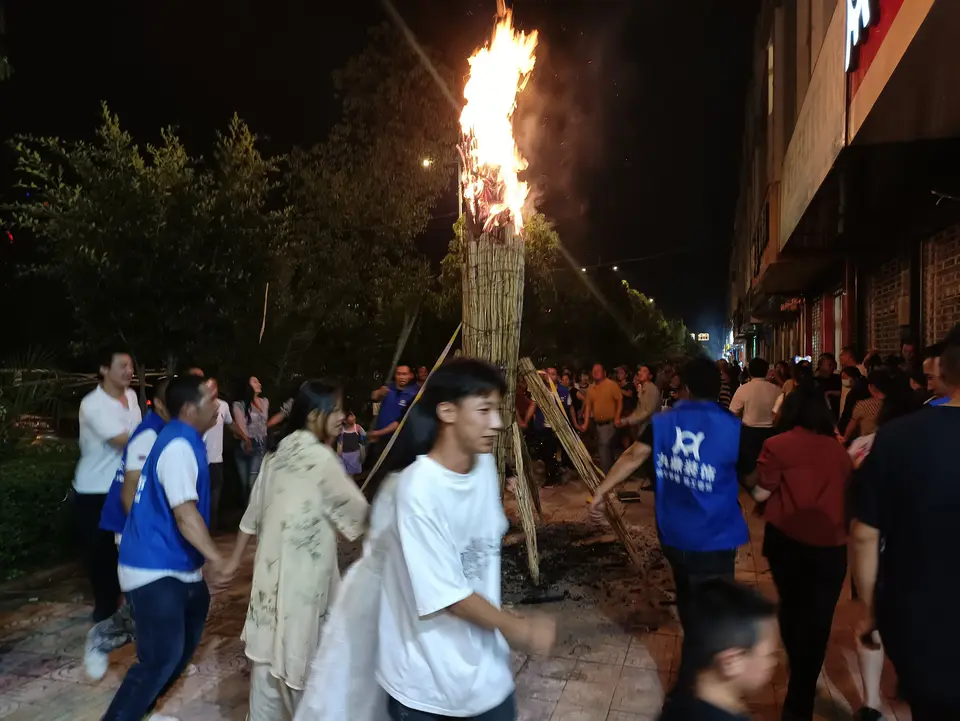
At the height of summer the Yi of Liangshan and Yunnan light torches of wormwood and pine, carry them around their homes and fields to drive away misfortune, and dance around bonfires all night — with horse races, wrestling and bullfights by day.
27 juillet 2027Calculée