Cette page n’est pas encore traduite en français ; le texte original anglais est affiché.

Osun-Osogbo Festival
Ọdún Ọ̀ṣun Òṣogbo
Photo : Abdulrosheed Fadipe, CC BY-SA 4.0, via Wikimedia Commons
After twelve days of rites — the cleansing of the town, the lighting of a sixteen-point lamp, the blessing of the crowns of past kings — Osogbo follows the Arugba, a young woman carrying a sacred calabash, into the Osun Sacred Grove to renew the town’s ancient pact with the river goddess.
The goddess and the hunter
The festival is believed to be more than 700 years old. According to tradition, a group of migrants led by the hunter Olutimehin settled on the bank of the Osun River to escape famine. There the river goddess Osun, Yeye Osun, rose from the water and asked him to lead his people to a special place, the site of present-day Osogbo, promising to protect them and bring them prosperity in return for an annual sacrifice. The town still keeps that promise.
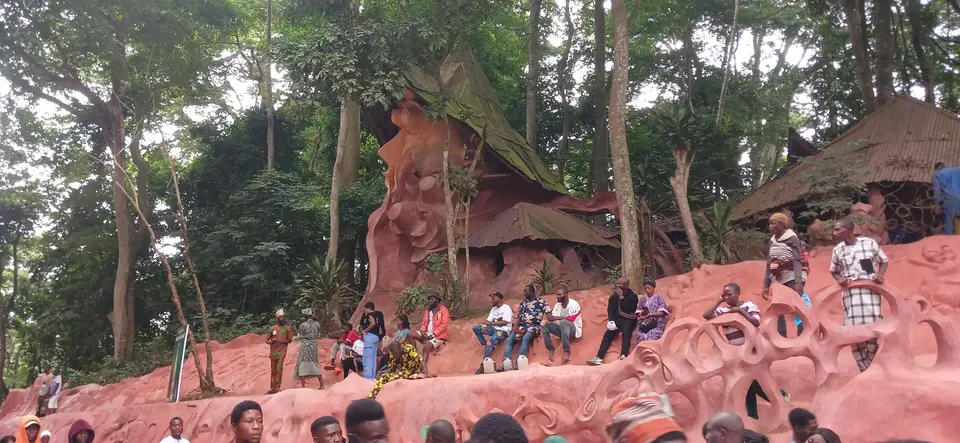
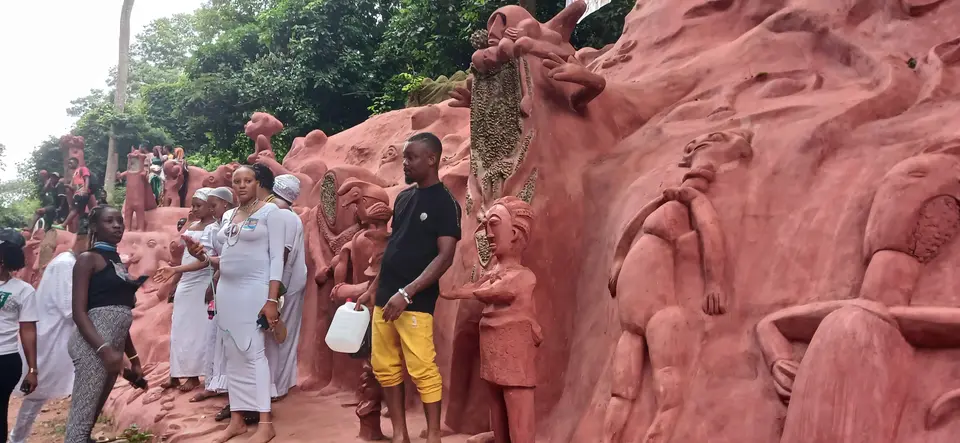
The Osun Sacred Grove lies in the heart of Osogbo. A century ago every Yoruba town had a sacred grove; this is the largest to survive, and one of the last remnants of primary high forest in southern Nigeria. The Osun River, the spiritual home of the goddess, meanders through it, past forty shrines, sculptures and artworks to Osun and other Yoruba deities, two palaces, five sacred places and nine worship points along the river banks. Many of the sculptures were made in recent decades by the Movement of New Sacred Artists, in which the Austrian artist Suzanne Wenger joined the Yoruba community to revive the grove, which has become a symbol of identity for Yoruba people across the diaspora.
From the cleansing to the calabash
The festival re-establishes the mystic bond between the goddess and the people of the town and reunites them with their ancestors, the founders of the Osogbo kingdom. It opens with Iwopopo, the traditional cleansing of the town. Three days later the Ina Olojumerindinlogun is lit, a sixteen-point lamp said to be 500 years old, and then comes Iboriade, when the crowns of the past rulers of Osogbo, the Ataojas, are assembled for blessings.
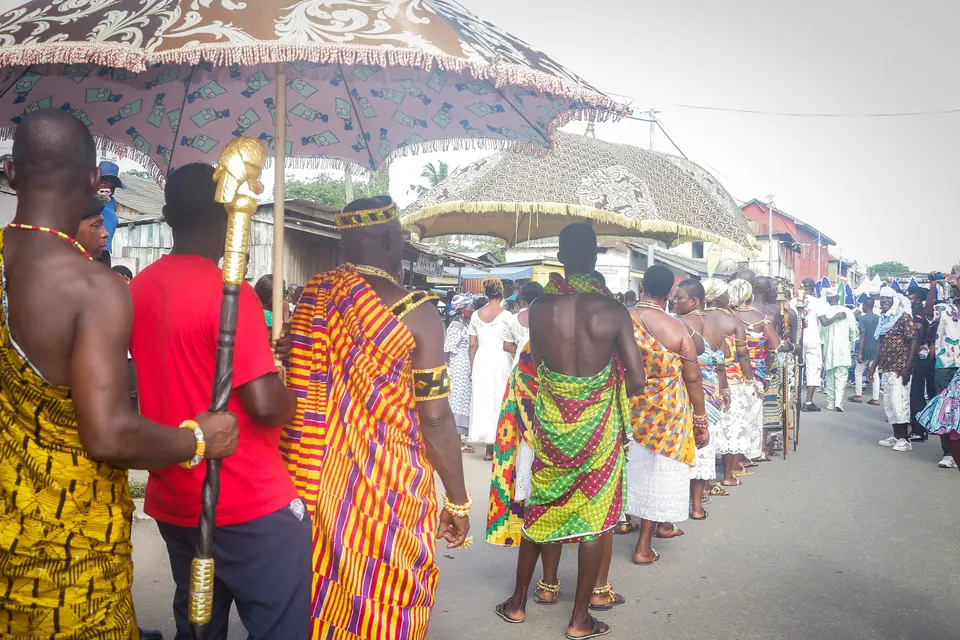
The festival culminates in a procession to the shrine in the grove, where a large crowd gathers. It is led by the reigning Ataoja with the Arugba, the calabash carrier — a young woman of royal lineage who offers the sacrifice to the goddess — and a committee of priestesses, re-enacting the first meeting between the town’s founder and Osun, amid drumming, dancing, music, elaborate costumes and the recitation of praise poetry in Yoruba.
Quand a-t-elle lieu
Held every year over twelve days in July and August, ending with the procession to the shrine in the grove.
- juillet – août 2027Période approximative
- juillet – août 2028Période approximative
- juillet – août 2029Période approximative
- juillet – août 2030Période approximative
Visiter avec respect
Bon à savoir
- The grove is an active religious site where worship takes place daily, weekly and monthly, with its own priests and priestesses. Treat the shrines and the procession as the worship they are.
Sécurité
- The UK government warns that terrorists are very likely to try to carry out attacks in Nigeria, including at places of worship and large public gatherings, and advises particular care during religious festivals. Stay aware of your surroundings.
- Kidnapping is a risk anywhere in Nigeria; travel only in daylight and avoid predictable routines.
Sources
Cette entrée a été rédigée à partir des sources suivantes.
- Osun-Osogbo Sacred GroveUNESCO World Heritage Centre · consulté le 17 septembre 2026
- Osun-OsogboWikipedia · consulté le 17 septembre 2026
- Nigeria travel advice: safety and securityUK Foreign, Commonwealth & Development Office · consulté le 17 septembre 2026
Fêtes apparentées
Vodun Days
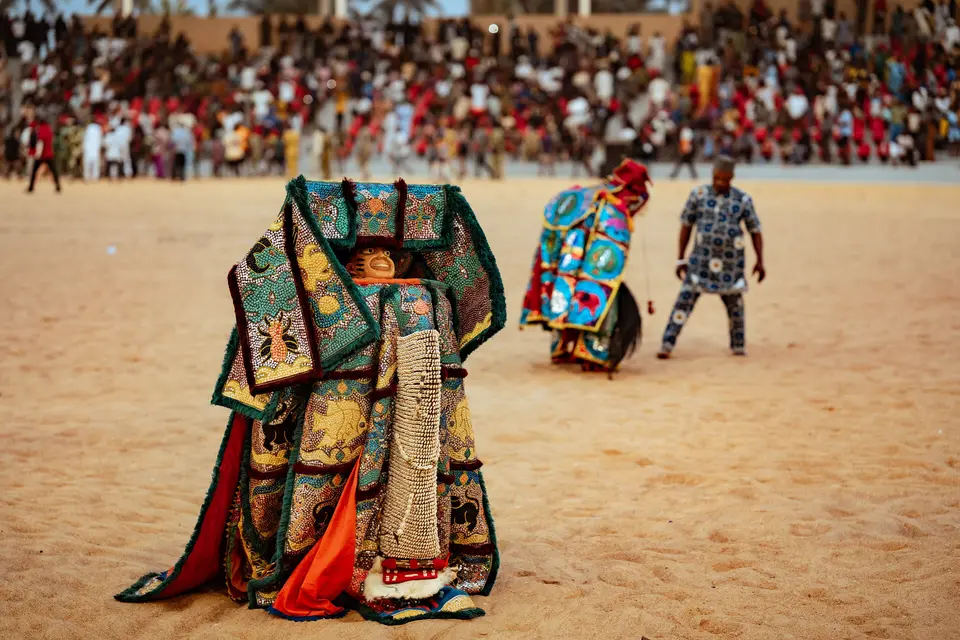
Each January the faithful of Benin’s Vodun convents come out into the streets and onto the beach of Ouidah — Zangbétɔ night guardians in straw, Egungun masquerades and Vodun dancers — for a festival that ends in a great ceremony where priests of Fá announce the sign for the year.
2–9 janvier 2027Annoncée officiellement
Homowo
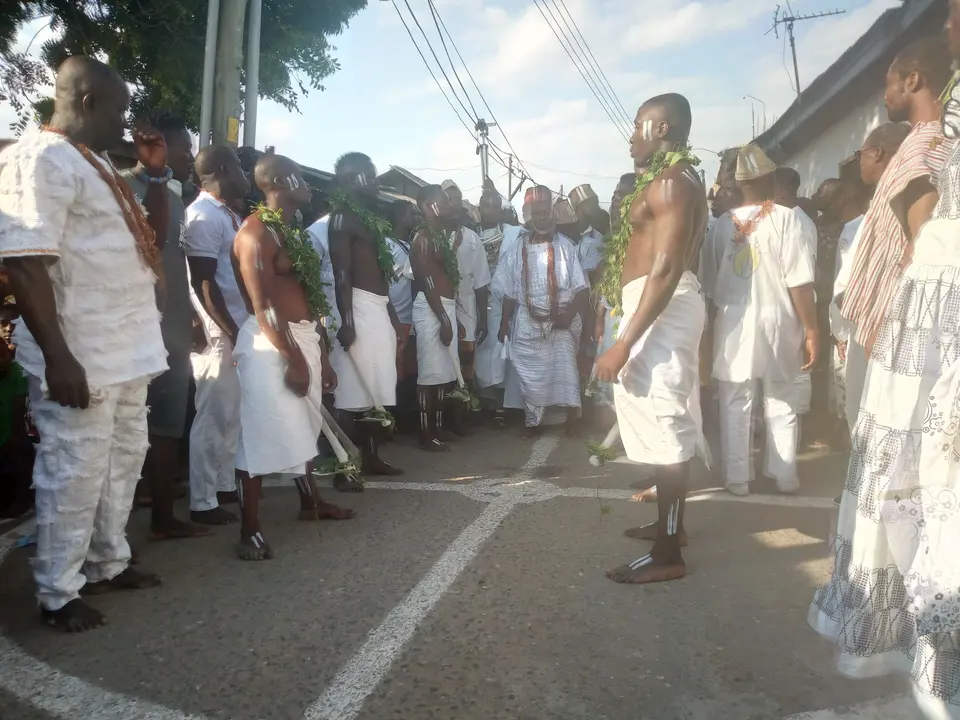
The Ga people of Accra remember a famine by laughing at it: after weeks in which drumming and noise are banned, chiefs sprinkle kpokpoi — steamed maize with palm oil — through the streets, and the drums return for “hooting at hunger”.
août – septembre 2026Période approximative
Aboakyer
On the first Saturday of May, the two Asafo warrior companies of Winneba set out at dawn armed only with sticks and clubs, and race to bring back a live bushbuck for their chief — a sacrifice to the god Otu that, according to tradition, once demanded a human life.
1 mai 2027Calculée