यह पृष्ठ अभी हिन्दी में अनूदित नहीं हुआ है; मूल अंग्रेज़ी पाठ दिखाया जा रहा है।
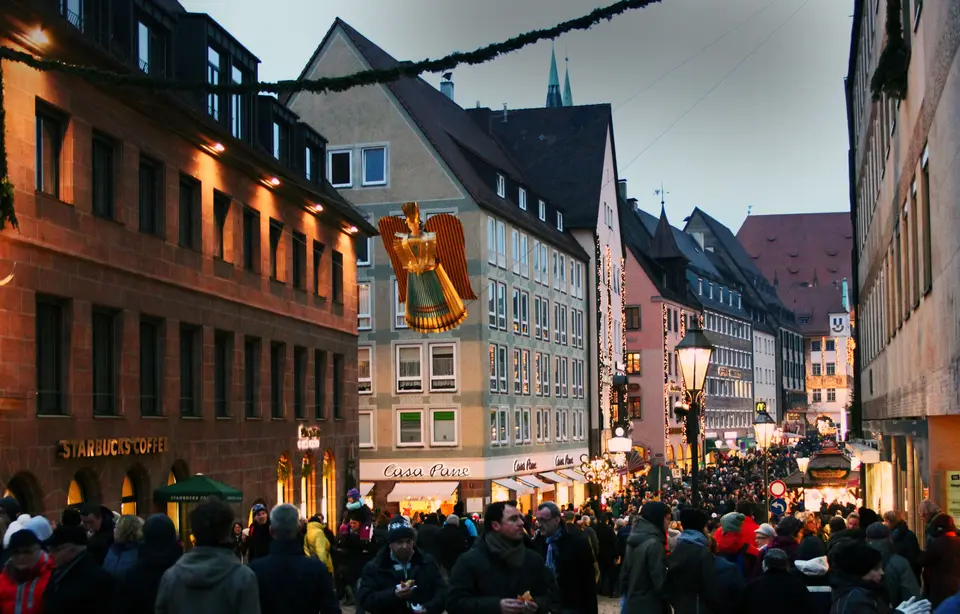
Nuremberg Christkindlesmarkt
Nürnberger Christkindlesmarkt
फ़ोटो: Max Schrader, CC BY-SA 2.5, विकिमीडिया कॉमन्स से
From the Friday before Advent until Christmas Eve, around 180 traders set up red-and-white wooden stalls on Nuremberg’s main square, selling gingerbread, gold-foil angels and nativity figures to more than two and a half million visitors.
A town of wood and cloth
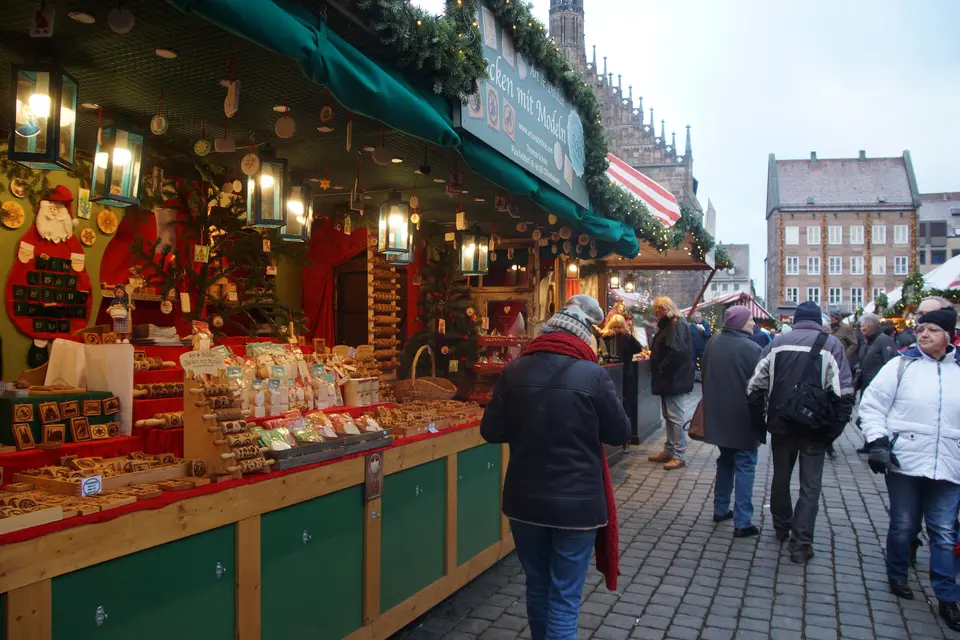
About 180 traders sell from 168 wooden stalls with red-and-white striped fabric roofs on the Hauptmarkt and the Rathausplatz, which gives the market its nickname, the “little town of wood and cloth”. The goods are kept deliberately traditional: Nuremberg Lebkuchen gingerbread, fruit bread, gold-foil angels called Rauschgoldengel, nativity scenes, tree decorations, candles and toys. There are also Zwetschgenmännla, little figures made from dried plums, and visitors warm up with Nuremberg grilled sausages and mulled wine. Market officials check the design of the stalls — plastic fir garlands are not allowed — and since 1981 the city has awarded prizes to the most attractive ones.
Around the main market there are a market of Nuremberg’s twin towns on the Rathausplatz, held since 1998, and a children’s Christmas on the Hans-Sachs-Platz, with a trail of nativity scenes linking the two.
The Christkind
The market is opened by the Nuremberg Christkind, a young woman who speaks a prologue from the balcony of the Frauenkirche over the square, secured by a rope as she does so. The text was written for the reopening in 1948 by Friedrich Bröger. Since 1969 a new Christkind has been chosen every two years with a public vote; candidates must be from Nuremberg and between 16 and 19 years old.
Since at least 1678
No one knows exactly when the market began. The oldest evidence is a small pinewood box in the Germanisches Nationalmuseum, whose base records that it was sent “to the Kindles-Marck” in 1678, and the name Christkendleinsmarck appears in a city history of 1697. The market lost importance at the end of the nineteenth century and moved several times before returning to the Hauptmarkt in 1933, when the Nazi city government revived it and used it to polish Nuremberg’s image. It was not held during the Second World War and returned in 1948. It used to open on St Barbara’s Day, 4 December, but because of the crowds the opening was moved in 1973 to the Friday before Advent.
कब होता है
The market opens on the Friday before the first Sunday of Advent and always ends on 24 December. In 2026 it runs from 27 November to 24 December, and in 2027 from 26 November to 24 December. It is open daily from 10 am to 9 pm, and on Christmas Eve from 10 am to 2 pm.
- 27 नवंबर – 24 दिसंबर 2026गणना से
- 26 नवंबर – 24 दिसंबर 2027गणना से
- 1–24 दिसंबर 2028गणना से
- 30 नवंबर – 24 दिसंबर 2029गणना से
सम्मान के साथ जाएँ
सुरक्षित रहें
- Christmas markets in Western Europe have been targeted by terrorists, and markets now have bollards, police and surveillance. Stay aware of your surroundings.
- Take care against pickpockets in the crowds, and do not leave bags unattended.
स्रोत
यह प्रविष्टि इन स्रोतों के आधार पर लिखी गई है।
- Nürnberger ChristkindlesmarktCity of Nuremberg · 17 सितंबर 2026 को देखा गया
- Nürnberger ChristkindlesmarktWikipedia (German) · 17 सितंबर 2026 को देखा गया
- Christmas marketWikipedia · 17 सितंबर 2026 को देखा गया
- Germany travel advice: safety and securityUK Foreign, Commonwealth & Development Office · 17 सितंबर 2026 को देखा गया
संबंधित त्योहार
Oktoberfest
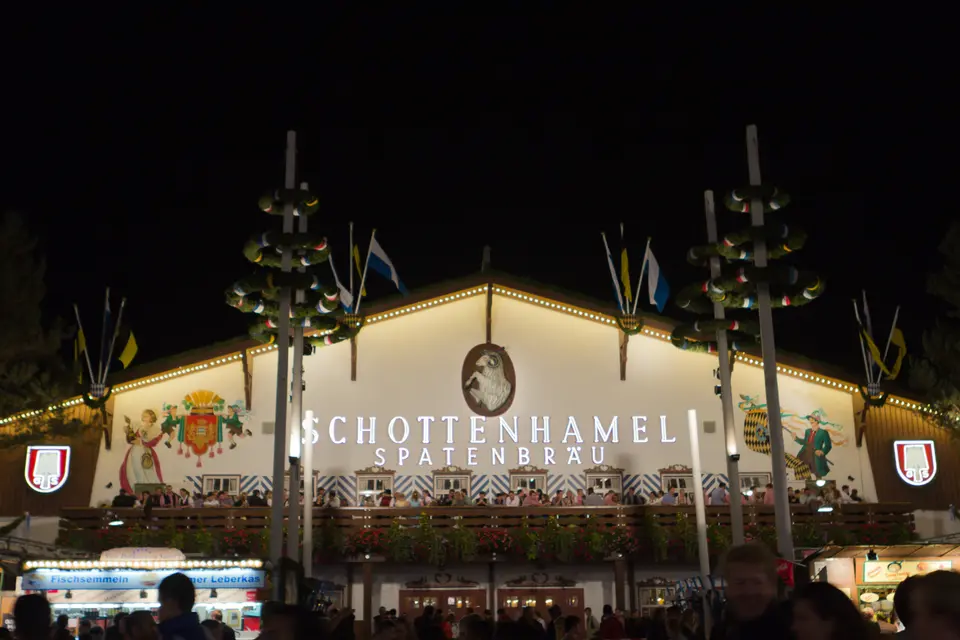
For sixteen days each autumn Munich’s Theresienwiese becomes the world’s largest folk festival — beer tents of the city’s own breweries, a funfair, costume parades and some seven million visitors — a tradition that began with a royal wedding in 1810.
19 सितंबर – 4 अक्टूबर 2026गणना से
Cologne Carnival
Kölner Karneval
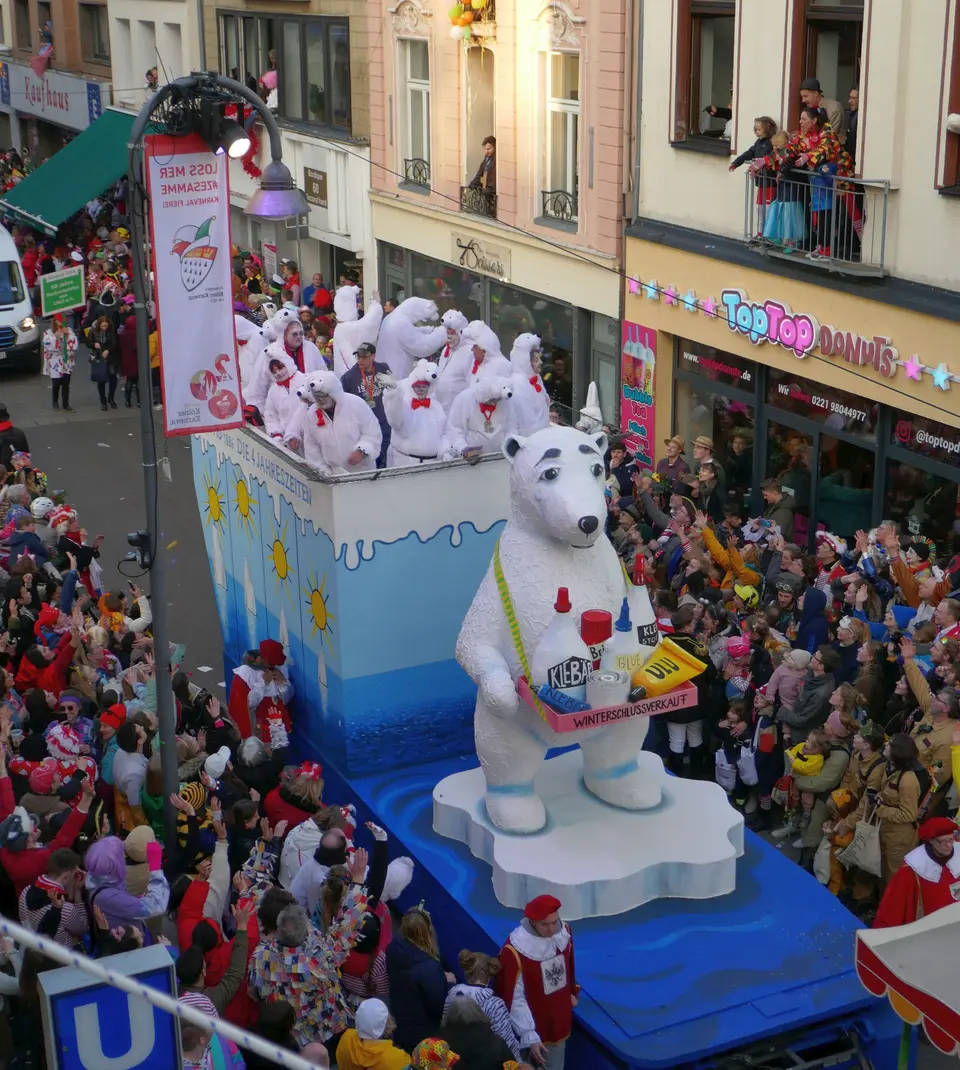
Cologne’s “fifth season” opens at 11:11 on 11 November and explodes onto the streets in the days before Lent, when costumed crowds shout “Kölle Alaaf!” and more than a million people watch the Rose Monday parade throw sweets from its floats.
11 नवंबर 2026गणना से
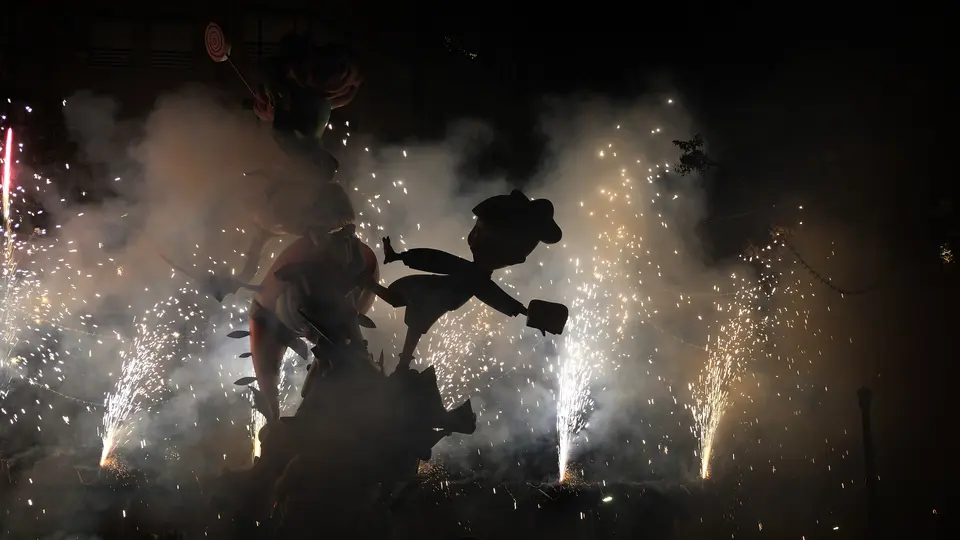
Las Fallas
Falles
In March, Valencia fills its streets with giant satirical sculptures of cardboard and papier-mâché, shakes to the midday thunder of firecrackers, and then, on the night of 19 March, sets every one of the monuments on fire to welcome the spring.
15–19 मार्च 2027गणना से