このページはまだ日本語に翻訳されていません。英語の原文を表示しています。
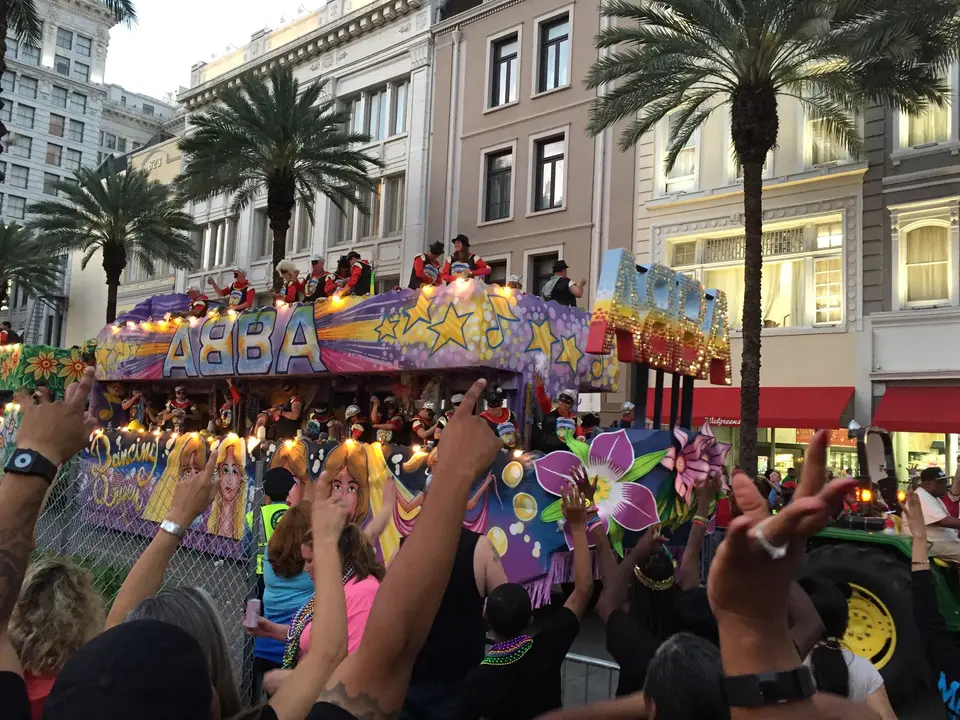
For two weeks before Lent, the krewes of New Orleans roll their floats down St. Charles Avenue and Canal Street, and riders shower the crowds with beads, doubloons and cups — a carnival season that runs from Twelfth Night to the stroke of midnight on Fat Tuesday.
Krewes and throws
The parades of New Orleans are staged by social clubs called krewes, most of which follow the same schedule and route every year. The oldest are the Mistick Krewe of Comus, Rex, the Knights of Momus and the Krewe of Proteus; today’s “super krewes” such as Endymion and Bacchus, and the Zulu Social Aid & Pleasure Club, a predominantly African American krewe, stage some of the biggest parades. The major parades start in the Uptown and Mid-City districts and follow St. Charles Avenue and Canal Street. Riders on the floats toss “throws” to the crowd: strings of plastic beads, doubloons, decorated plastic cups and small toys. Alongside the parades runs a season of balls, many of them private. On the night of Mardi Gras the courts of Rex and Comus meet, bringing the day to a close.
Rex, King of Carnival
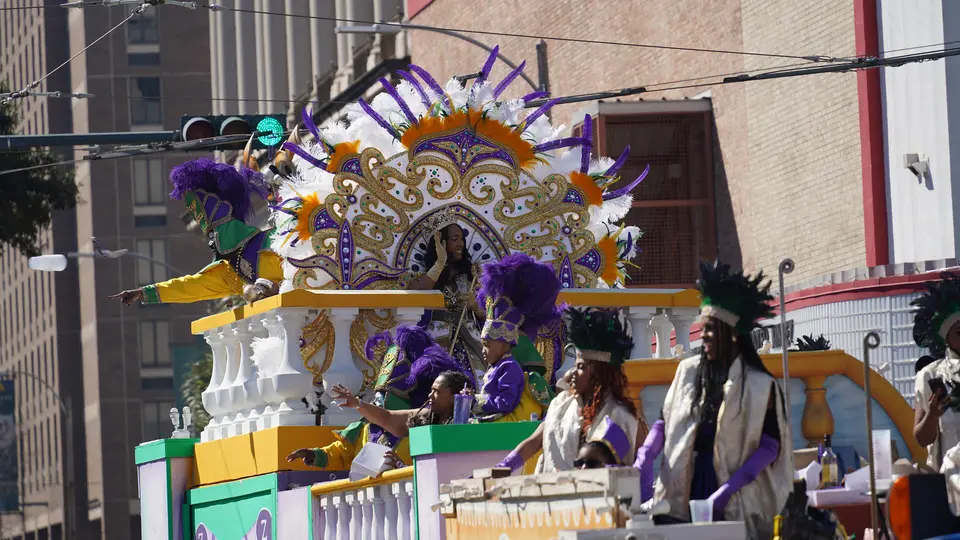
Many of Carnival’s symbols come from the Rex Organization, founded in 1872 and officially called the School of Design. Its colours of purple, green and gold have become the colours of Carnival — a parade of 1892 suggested they stood for justice, faith and power — and its anthem, “If Ever I Cease to Love”, has been played for Rex since the very first parade. Rex introduced the specially struck doubloons that are now a favourite throw. By tradition the King of Carnival arrives in the city by boat, now as part of Lundi Gras on the night before Mardi Gras, and one of the lead floats of his parade carries the boeuf gras, the fatted ox, a symbol of the last meat eaten before Lent.
From 1699 to today
The first record of Mardi Gras in Louisiana dates from 2 March 1699, when the French explorers Iberville and Bienville marked it at the mouth of the Mississippi. Masked processions in the streets of New Orleans were sometimes banned by law but always returned. In 1856, 21 businessmen founded the city’s first krewe, Comus, to celebrate Mardi Gras with a formal parade, and in 1875 Louisiana made Mardi Gras a legal state holiday. The City of New Orleans describes it as a religious holiday and a season of traditions, when the community comes together “in formal, fun, and often unexpected ways”.
開催時期
The Carnival season begins on Twelfth Night, 6 January, and ends at midnight before Ash Wednesday. Parades take place over about two weeks, and the largest are held in the last five days, ending on Mardi Gras Day — Fat Tuesday, 47 days before Easter.
- 2027年1月6日Carnival season opens on Twelfth Night算出
- 2027/02/05~2027/02/09Biggest parades, Friday to Mardi Gras Day算出
- 2028年1月6日Carnival season opens on Twelfth Night算出
- 2028/02/25~2028/02/29Biggest parades, Friday to Mardi Gras Day算出
- 2029年1月6日Carnival season opens on Twelfth Night算出
- 2029/02/09~2029/02/13Biggest parades, Friday to Mardi Gras Day算出
- 2030年1月6日Carnival season opens on Twelfth Night算出
- 2030/03/01~2030/03/05Biggest parades, Friday to Mardi Gras Day算出
敬意をもって訪れる
知っておきたいこと
- Do not throw beads or other items back at riders on the floats. “Throwbacks” are banned and carry a fine of 250 dollars.
- Watch from the sidelines. Do not walk with or touch members of marching bands, dance troupes or walking groups.
避けること
- Do not put ladders, chairs or coolers on the route more than four hours before a parade, and keep ladders no taller than six feet and at least six feet back from the curb.
- Open flames, generators, confetti guns, Mylar balloons and pets (except service animals) are banned along the parade route.
安全のために
- Stay behind the barricades, never cross the street between floats, and do not go after throws that land near passing floats.
- Plan a meeting point and take a “safety selfie” of your group at the start of the day. The city runs lost child stations along the route.
- Only drink what you prepare yourself or watch a bartender pour, and never leave your drink unattended.
出典
この項目は次の資料をもとに書かれています。
- Mardi Gras: Safety & First AidCity of New Orleans, NOLA Ready · 2026年9月17日 閲覧
- Mardi Gras: Along the RouteCity of New Orleans, NOLA Ready · 2026年9月17日 閲覧
- Rex TraditionsThe Rex Organization (School of Design) · 2026年9月17日 閲覧
- Mardi Gras in New OrleansWikipedia · 2026年9月17日 閲覧
- USA travel advice: safety and securityUK Foreign, Commonwealth & Development Office · 2026年9月17日 閲覧
関連する祭り
Rio Carnival
Carnaval do Rio de Janeiro
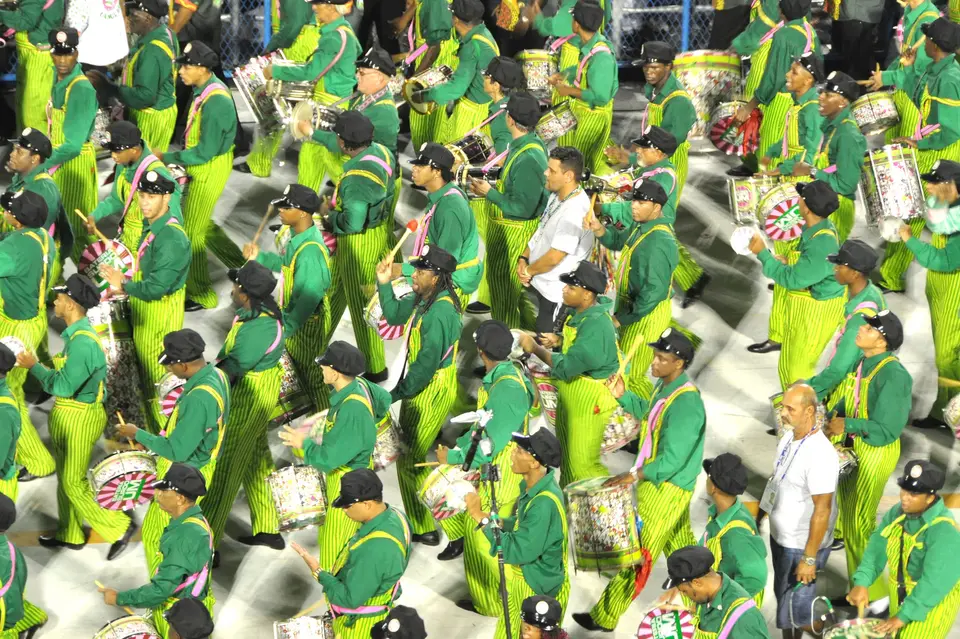
In the days before Lent, Rio de Janeiro holds what is considered the world’s largest carnival — two million people a day on the streets, and a contest of samba schools that parade through the Sambadrome with floats, drummers and thousands of dancers.
2027/02/05~2027/02/09算出
Trinidad and Tobago Carnival
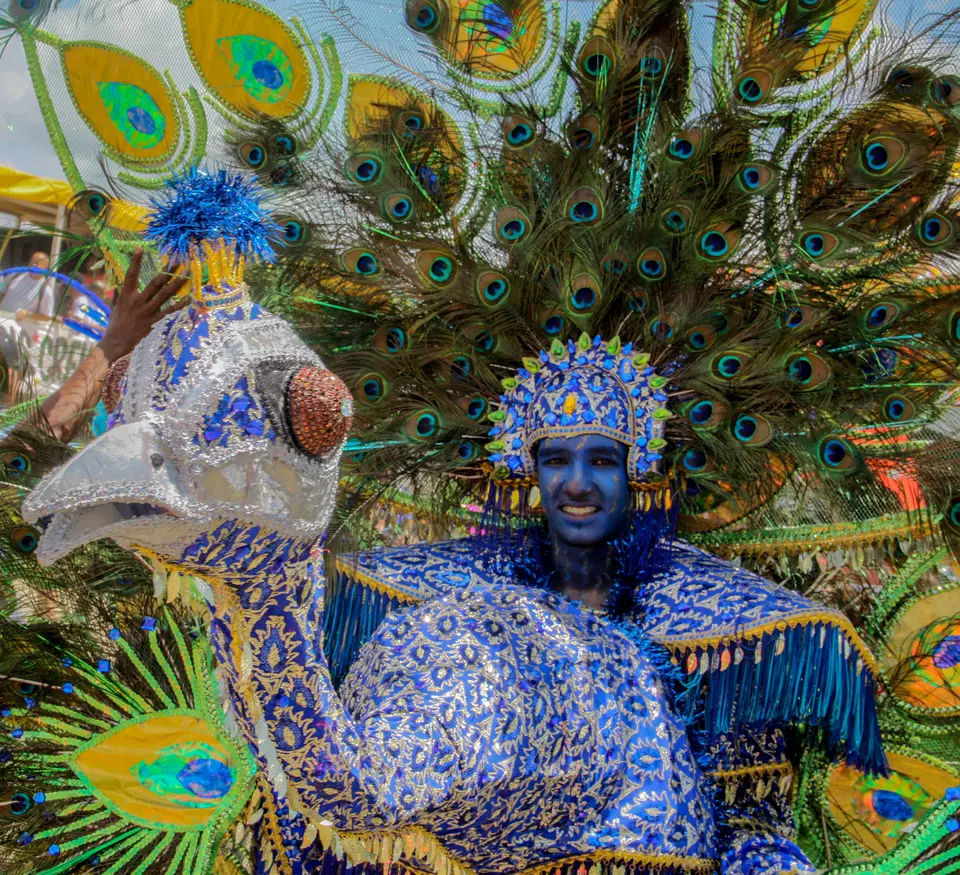
On the Monday and Tuesday before Ash Wednesday, Trinidad and Tobago takes to the streets — J’ouvert at daybreak in mud, oil and paint, then bands of masqueraders in colourful costumes, steelpan and soca — in a carnival born of French balls and the Canboulay of freed Africans.
2027/02/08~2027/02/09算出
Cologne Carnival
Kölner Karneval
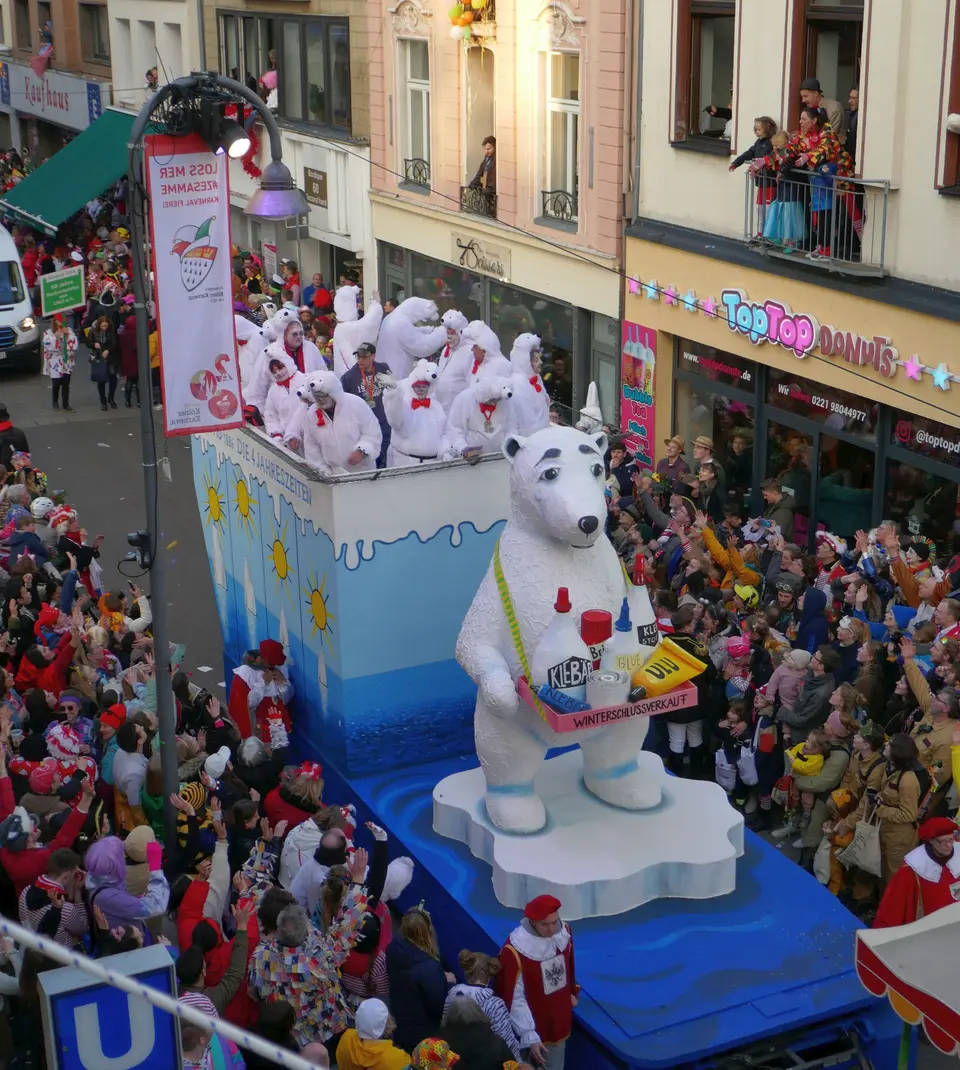
Cologne’s “fifth season” opens at 11:11 on 11 November and explodes onto the streets in the days before Lent, when costumed crowds shout “Kölle Alaaf!” and more than a million people watch the Rose Monday parade throw sweets from its floats.
2026年11月11日算出