このページはまだ日本語に翻訳されていません。英語の原文を表示しています。
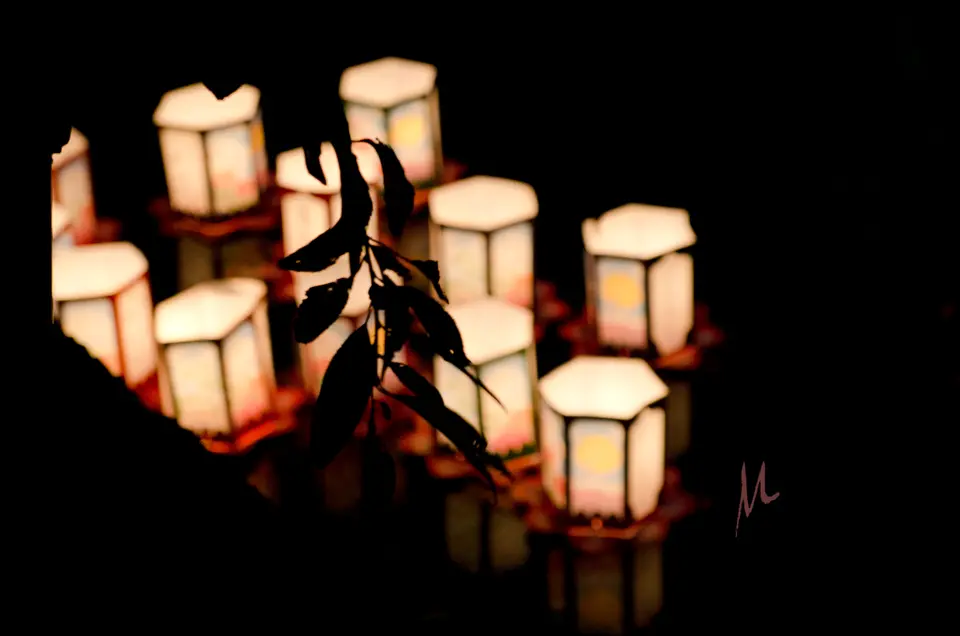
Japan’s summer days of the dead, when ancestors are said to come home for a few days. Families light lanterns to guide them, visit graves, and at the end set lanterns on the water to send them back. Mostly kept in August; in some places in July.
When the ancestors come home
Obon is an annual Buddhist observance for the dead. The spirits of ancestors are believed to return to their families for a few days. Lanterns are hung to guide them home, offerings are placed at the household altar, and families travel back to their home towns to visit the family grave. At the end, floating lanterns are set on rivers, lakes and the sea to guide the spirits back again.
Most of it happens indoors and in cemeteries. The public parts — bon dances in the evening, lanterns hung up or set afloat — are only its visible edges.
Two months, one observance
Obon is kept in two different months because of a calendar change. When Japan announced its move to the solar calendar in November 1872, some places kept Obon in the seventh month as the new calendar numbered it — July — while others moved it to the month matching the old reckoning, which is August.
Neither is a variant of the other. Most of the country keeps 13 to 15 August. Arita, in Saga, keeps 13 to 15 July, unusually for its region. And some towns follow their own windows: in Tanashi, now part of Nishi-Tokyo, Obon ran from 30 July to 1 August, a time chosen because families raising silkworms could take the days off.
For a visitor
If you are in Japan at Obon you will notice it mostly as a travel season, when trains and roads fill with people going home. It is a time to be quiet and considerate around cemeteries and family gatherings, and a good time to find bon dances in towns across the country.
開催時期
Most of Japan keeps Obon from 13 to 15 August. Some places keep it from 13 to 15 July instead, such as the town of Arita in Saga, and a few towns have windows of their own.
- 2027/07/13~2027/07/15July reckoning, e.g. Arita (Saga)算出
- 2027/08/13~2027/08/15Most of Japan算出
- 2028/07/13~2028/07/15July reckoning, e.g. Arita (Saga)算出
- 2028/08/13~2028/08/15Most of Japan算出
- 2029/07/13~2029/07/15July reckoning, e.g. Arita (Saga)算出
- 2029/08/13~2029/08/15Most of Japan算出
- 2030/07/13~2030/07/15July reckoning, e.g. Arita (Saga)算出
- 2030/08/13~2030/08/15Most of Japan算出
敬意をもって訪れる
知っておきたいこと
- Obon is a family observance at home and at graves, not an event to attend. If you are invited to take part, follow your hosts.
- For travellers it is above all one of the busiest travel seasons of the year, as people return to their home towns. Book transport and rooms early.
- Public events linked to the season, such as bon dances and lantern floating, are the parts visitors can see.
避けること
- Do not wander into cemeteries to watch or photograph families at their graves.
出典
この項目は次の資料をもとに書かれています。
- ObonJapan Tourism Agency multilingual database · 2026年8月20日 閲覧
- お盆は何月? 有田のお盆Arita Town History and Folklore Museum · 2026年8月20日 閲覧
- 西東京市のお盆についてNishitokyo City · 2026年8月20日 閲覧
関連する祭り
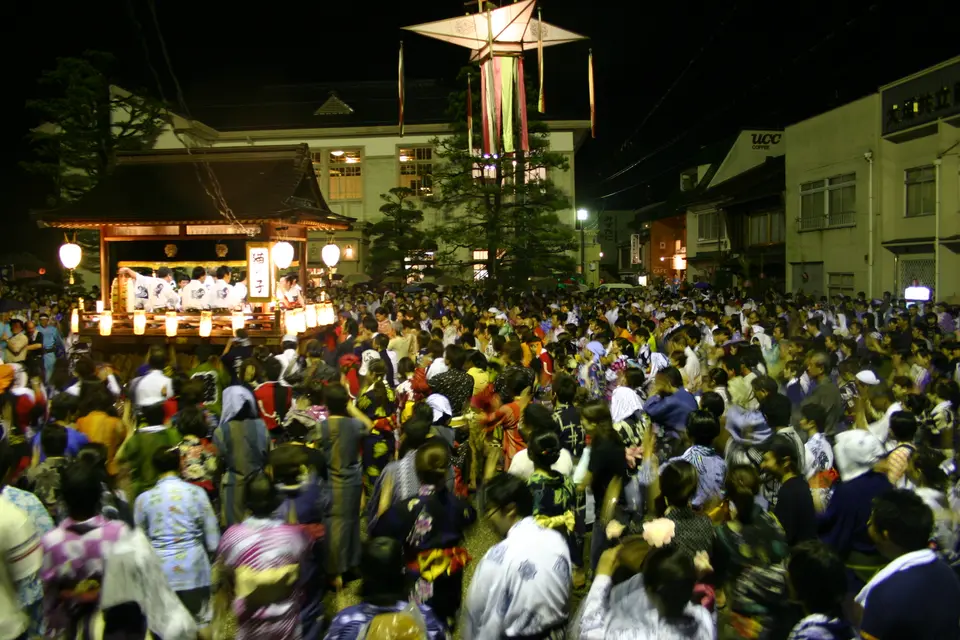
Gujo Odori
郡上おどり
For more than thirty summer nights the castle town of Gujo Hachiman dances in the streets — and it is a dance to join, not to watch. Over Obon the dancing goes on all night, until the hour before dawn.
2027/07~2027/09おおよその時期
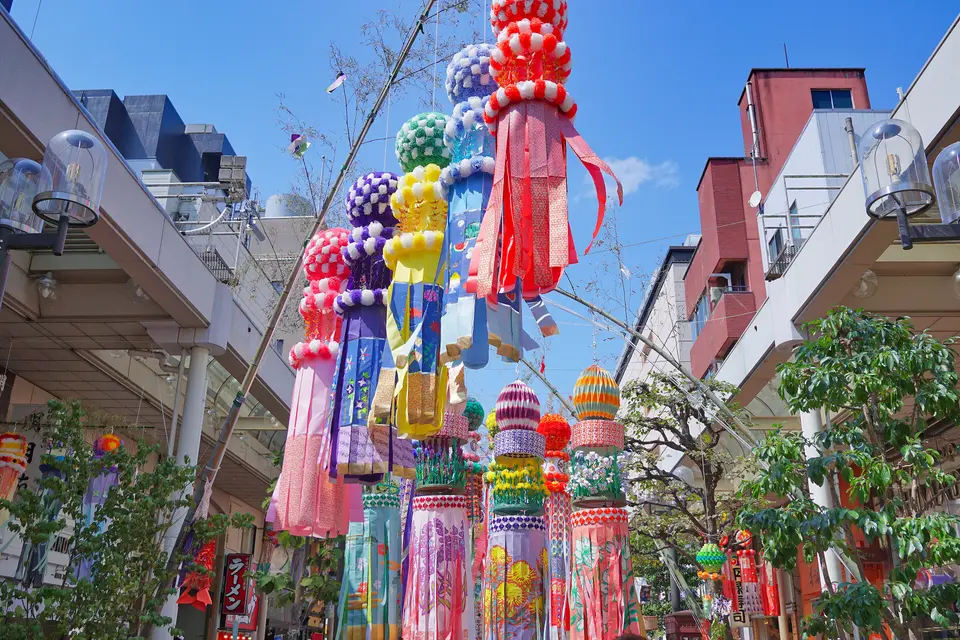
Tanabata
七夕
The star festival of the seventh night of the seventh month. Most of Japan keeps it on 7 July; Sendai, one of several places that kept the old season, hangs its great paper streamers from 6 to 8 August.
2027年7月7日算出