Esta página ainda não foi traduzida para português; mostra-se o texto original em inglês.
Ducasse de Mons (Doudou)
Na Lista do Património Cultural Imaterial da Humanidade da UNESCO
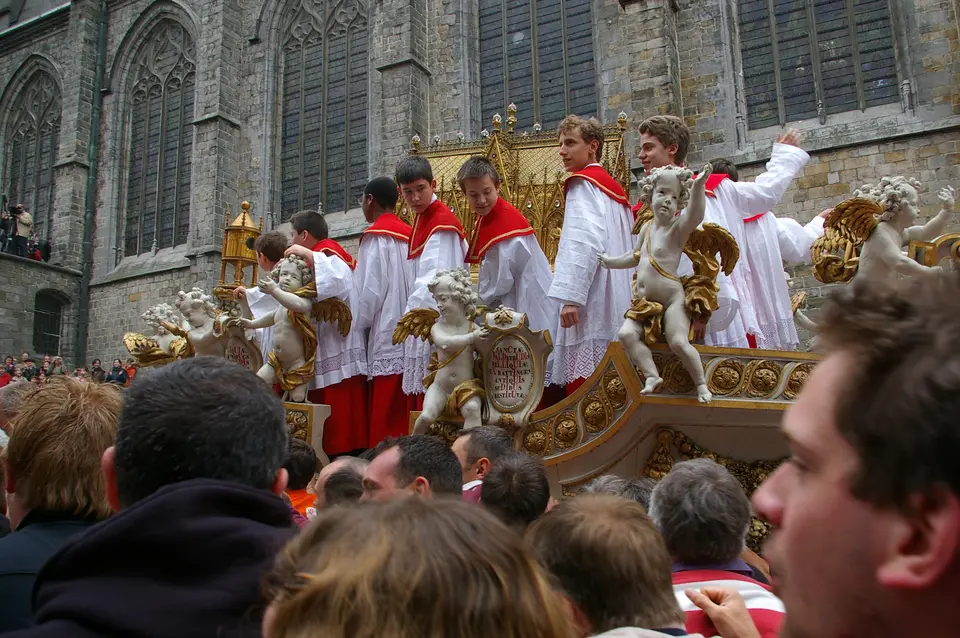
Foto: DELAHJ, CC BY 4.0, via Wikimedia Commons
On Trinity Sunday, Mons carries the shrine of its patron saint through town on a golden chariot that the crowd must push up a steep cobbled slope in one go — and then, on the Grand-Place, St George fights the dragon in the frantic half-hour combat called the Lumeçon.
The golden chariot
The Ducasse de Mons, affectionately called the Doudou, is first mentioned in 1248. A persistent but mistaken legend links it to the plague of 1349, when the shrine of St Waltrude, patroness of the town, was carried in procession. In 1352 its date was fixed on Trinity Sunday. Over the centuries the religious procession gained a civic character, and since 1440 it has included the combat of St George and the dragon. It was banned and restored several times — by Emperor Joseph II in 1786, by French revolutionaries, by King William I — and regained its vigour around 1930. It is part of UNESCO’s inscription of the processional giants and dragons of Belgium and France.
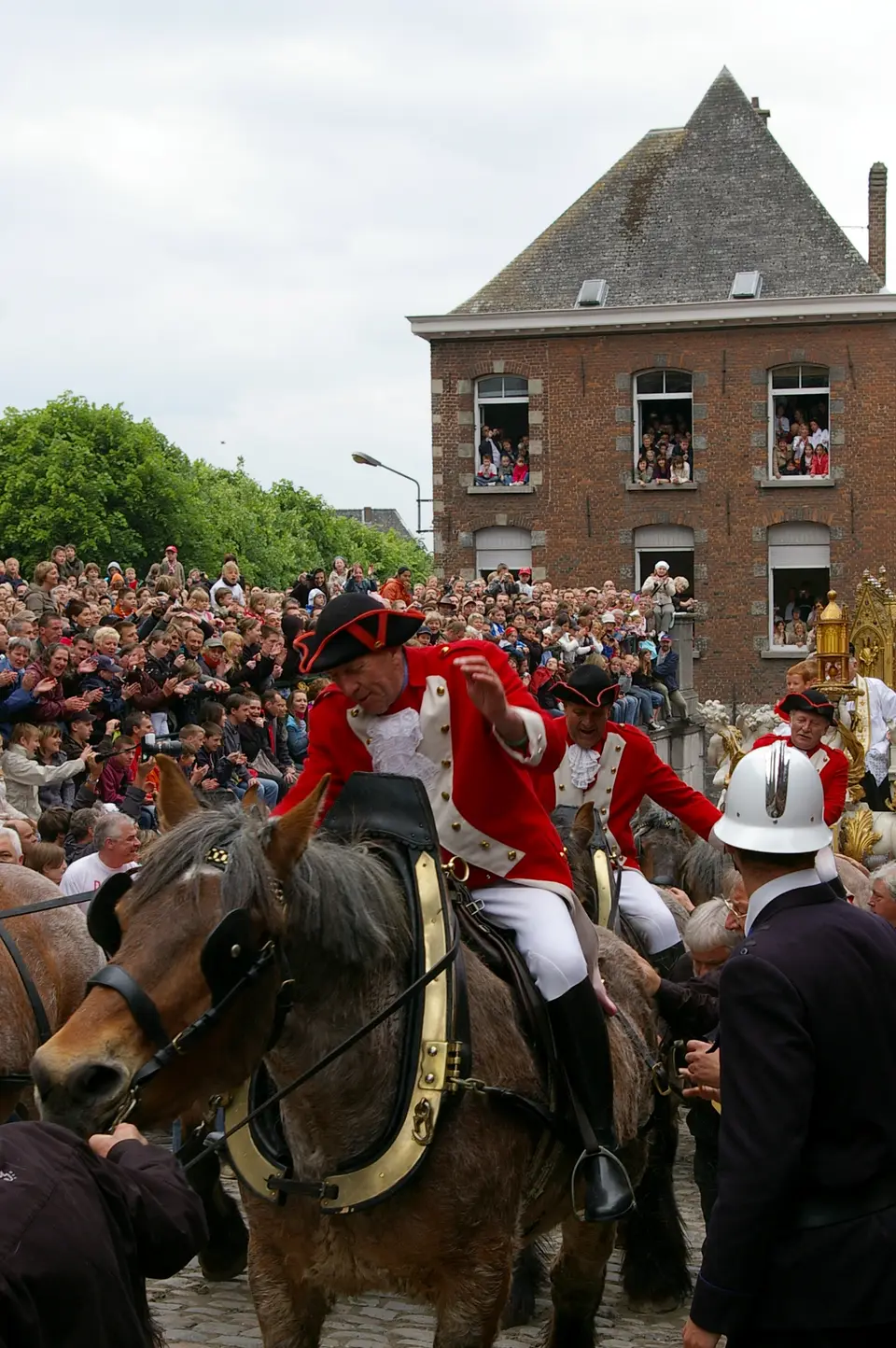
On Saturday evening, in a religious ceremony, the shrine is taken down from its altar in the Collegiate Church of St Waltrude and handed to the town authorities, followed by a torchlit procession. On Sunday morning it is placed on the Car d’Or, a gilded chariot drawn by draught horses through the streets with guilds representing the region’s history. At the end, the chariot must climb the steep, cobbled Rampe Sainte-Waudru, and hundreds of people push from behind. Local superstition holds that if it does not reach the top in one go, the town will suffer misfortune — which is said to have happened in 1803, 1914 and 1940.
The Lumeçon
Between half past twelve and one o’clock, on the Grand-Place, St George fights a dragon about ten metres long, its tail tipped with horsehair. The dragon is moved by the “white men” and helped by devils armed with inflated bladders who strike at St George’s defenders, the Chinchins, and at the crowd. A week later the shrine is returned to its church with great ceremony.
Quando acontece
The festival runs from the Saturday before Trinity Sunday — eight weeks after Easter, in May or June — to the following Sunday. The shrine comes down on Saturday evening; the procession and the Lumeçon are on Trinity Sunday.
- 22 – 23 de maio de 2027Calculada
- 10 – 11 de junho de 2028Calculada
- 26 – 27 de maio de 2029Calculada
- 15 – 16 de junho de 2030Calculada
Visitar com respeito
Segurança
- The crowd on the Grand-Place during the Lumeçon is extremely dense, and the dragon’s tail and the devils’ inflated bladders strike out into it. Keep children close.
Fontes
Esta entrada foi escrita a partir das fontes seguintes.
- Processional giants and dragons in Belgium and FranceUNESCO Intangible Cultural Heritage · consultado em 17 de setembro de 2026
- Ducasse de MonsWikipedia · consultado em 17 de setembro de 2026
- Belgium travel advice: safety and securityUK Foreign, Commonwealth & Development Office · consultado em 17 de setembro de 2026
Festas relacionadas
Carnival of Binche
Carnaval de Binche
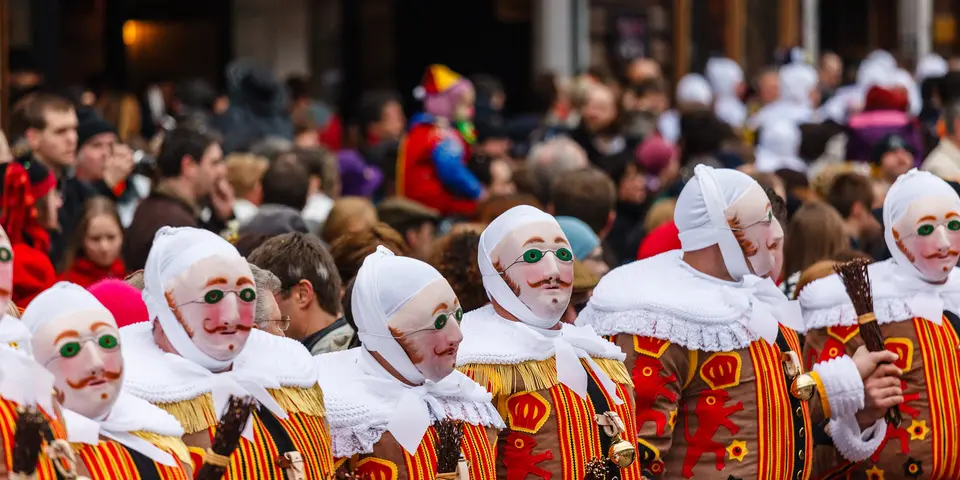
For the three days before Lent, the small Walloon town of Binche belongs to its Gilles — up to a thousand men in wax masks and wooden clogs who dance from dawn to drive away evil spirits and, crowned with ostrich plumes, throw oranges to the crowd.
7 – 9 de fevereiro de 2027Calculada
Ommegang of Brussels
Ommegang
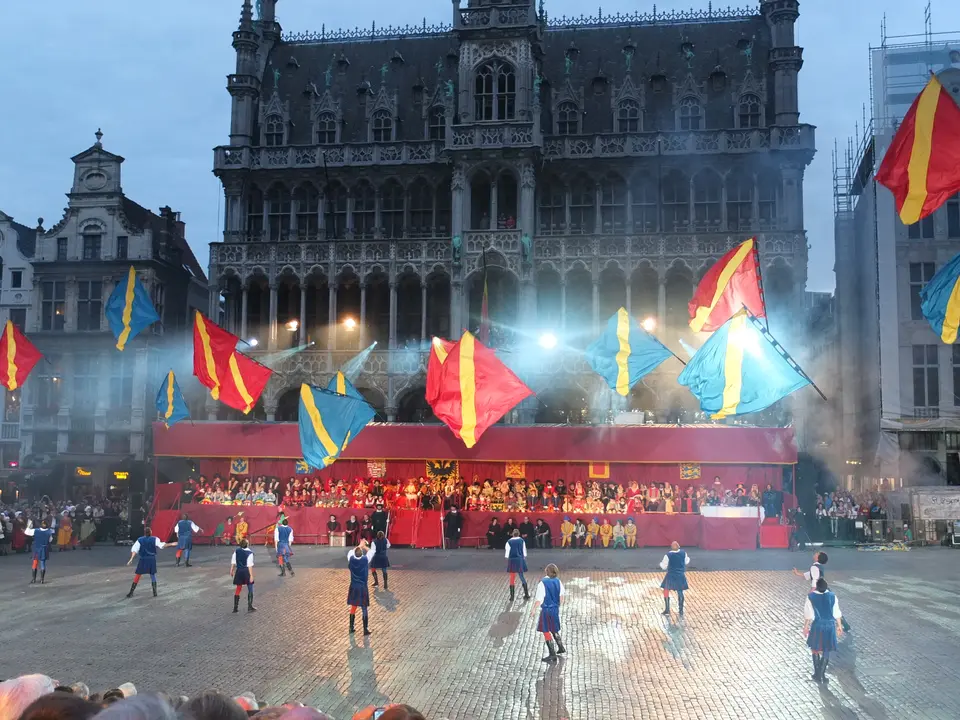
On two summer evenings, Brussels relives the day in 1549 when it dazzled Emperor Charles V — some 1,400 people in Renaissance dress, horsemen, crossbowmen, stilt walkers and giants parade from the Sablon to a grand spectacle on the Grand-Place, with real nobles playing their ancestors.
julho de 2027Período aproximado
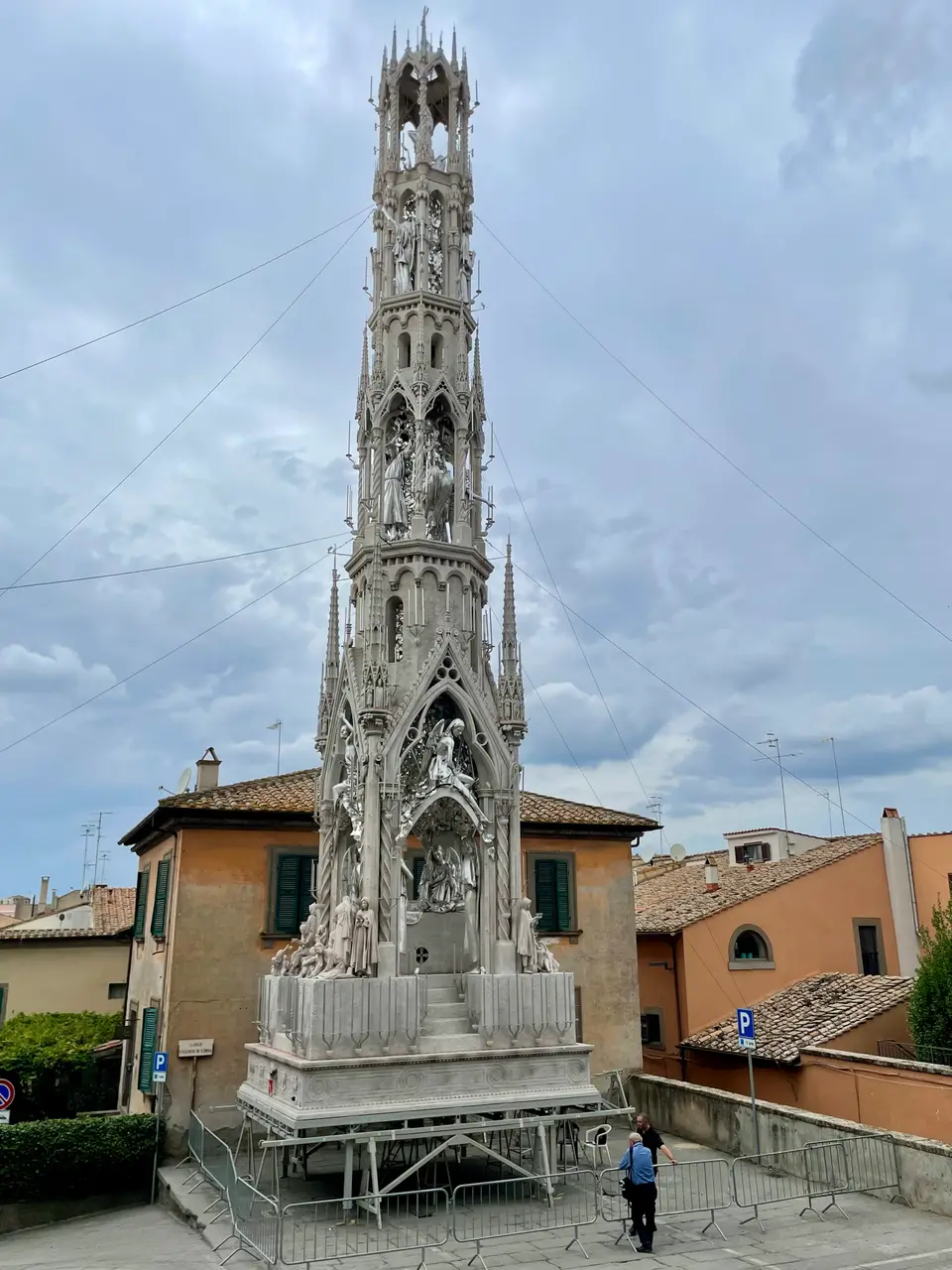
Macchina di Santa Rosa
On the evening of 3 September, a hundred porters lift a tower some thirty metres tall and five tonnes in weight onto their shoulders and carry it through the medieval streets of Viterbo in honour of the city’s patron saint.
3 de setembro de 2027Calculada