Эта страница ещё не переведена на русский; показан оригинальный текст на английском.
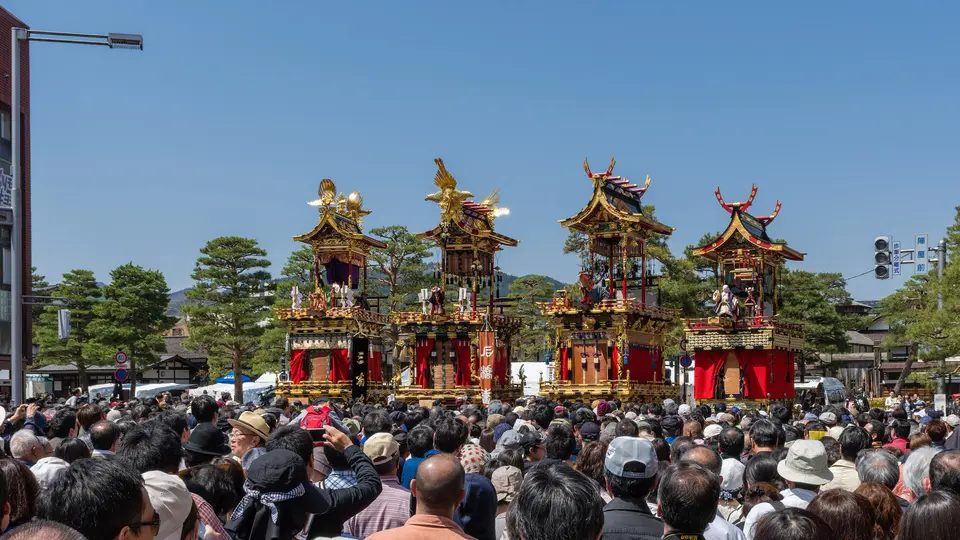
Takayama Matsuri
高山祭
В Репрезентативном списке нематериального культурного наследия человечества ЮНЕСКО
Фото: Chme82, CC BY-SA 4.0, через Викисклад
Twice a year, in April and October, the old mountain town of Takayama brings out its lacquered, gilded yatai floats — twelve in spring, eleven in autumn — and on the first evening hangs them with hundreds of lanterns.
One name, two festivals
Takayama Matsuri is really two festivals, six months apart, in the old castle town of Takayama in Gifu Prefecture. In spring, Sanno Matsuri honours the kami of Hie Shrine, south of the historic old town. In autumn, Hachiman Matsuri belongs to Sakurayama Hachiman Shrine to the northeast. Each has its own shrine and its own floats, and the neighbourhoods are divided by the Yasugawa-dori street: those to the south take part in spring, those to the north in autumn. Townspeople in traditional dress and shishi-odori lion dancers parade through the streets.
The yatai
The floats, called yatai, are what people come to see: twelve appear in the spring festival and eleven in the autumn, and they are not the same floats. Ornately decorated, they are designated an Important Tangible Folk Cultural Property of Japan, and the festival is on UNESCO’s Representative List as one of the Yama, Hoko and Yatai float festivals.
On the evening of the first day the yatai are hung with hundreds of lanterns and drawn slowly through the old town.
Kept by the neighbourhoods
The floats belong to the neighbourhoods that keep them, not to the shrines. Floats first appear in written records in connection with the autumn festival in 1718, and the society that looks after them places the festival’s beginnings in the sixteenth and seventeenth centuries. Keeping them in repair and bringing them out on the same days every April and October is work the neighbourhoods do themselves.
Когда проходит
The spring festival, Sanno Matsuri, is held on 14 and 15 April; the autumn festival, Hachiman Matsuri, on 9 and 10 October. The dates are the same every year.
- 9–10 октября 2026 г.Autumn festival (Hachiman Matsuri)Рассчитано
- 14–15 апреля 2027 г.Spring festival (Sanno Matsuri)Рассчитано
- 9–10 октября 2027 г.Autumn festival (Hachiman Matsuri)Рассчитано
- 14–15 апреля 2028 г.Spring festival (Sanno Matsuri)Рассчитано
- 9–10 октября 2028 г.Autumn festival (Hachiman Matsuri)Рассчитано
- 14–15 апреля 2029 г.Spring festival (Sanno Matsuri)Рассчитано
- 9–10 октября 2029 г.Autumn festival (Hachiman Matsuri)Рассчитано
- 14–15 апреля 2030 г.Spring festival (Sanno Matsuri)Рассчитано
Уважительный визит
Полезно знать
- Float processions are widely understood to depend on the weather. Check locally on the day before planning around a particular event.
- The old town is compact and very crowded during the festival. Travel light and avoid bringing large luggage into the streets.
- Do not photograph people without permission.
Чего избегать
- Do not touch the floats; they are designated cultural property.
Источники
Статья написана по следующим источникам.
- 高山祭についてTakayama Yatai Hozonkai (高山屋台保存会) · просмотрено 20 августа 2026 г.
- The Takayama FestivalJapan Tourism Agency multilingual database · просмотрено 20 августа 2026 г.
- 秋の高山祭(八幡祭)Hida Takayama Tourism & Convention Association · просмотрено 20 августа 2026 г.
Похожие праздники
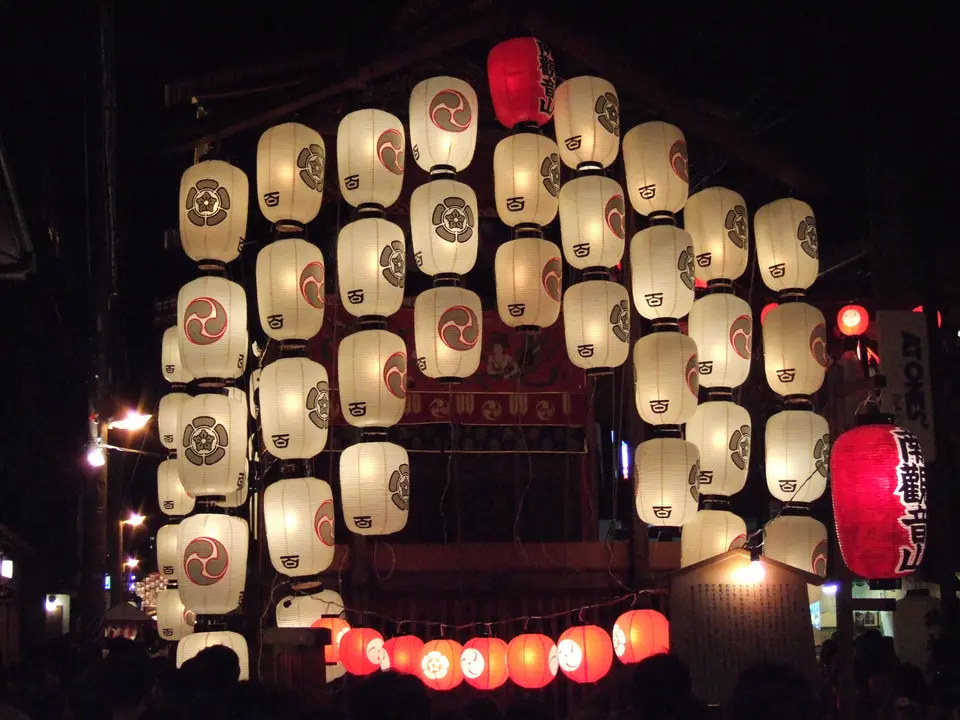
Gion Matsuri
祇園祭
Kyoto’s great summer festival lasts the whole of July. Its high points are the lantern-lit yoiyama evenings and the processions of towering yamahoko floats on 17 and 24 July, built and hauled by the city’s own neighbourhoods.
1–31 июля 2027 г.Рассчитано
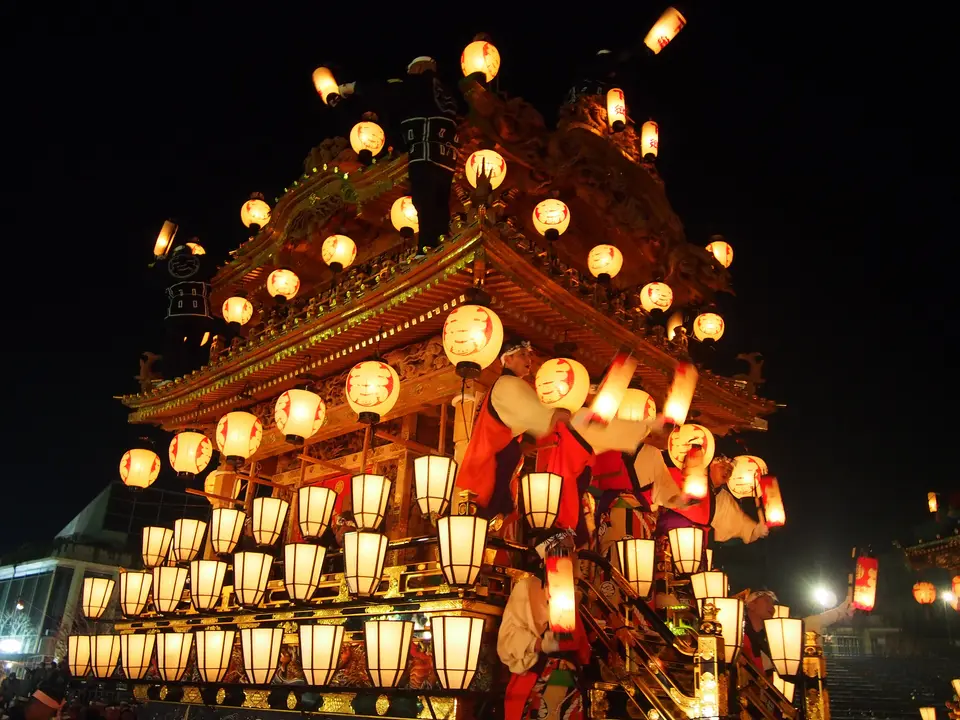
Chichibu Yomatsuri
秩父夜祭
On a cold December night in the mountains of Saitama, six great floats blazing with lanterns are hauled through Chichibu and up the steep Dango-zaka slope, while fireworks burst over the town.
2–3 декабря 2026 г.Рассчитано