لم تُترجم هذه الصفحة إلى العربية بعد، ويُعرض نصها الأصلي بالإنجليزية.
Pohela Boishakh
পহেলা বৈশাখ
مُدرج في قائمة اليونسكو للتراث الثقافي غير المادي للبشرية
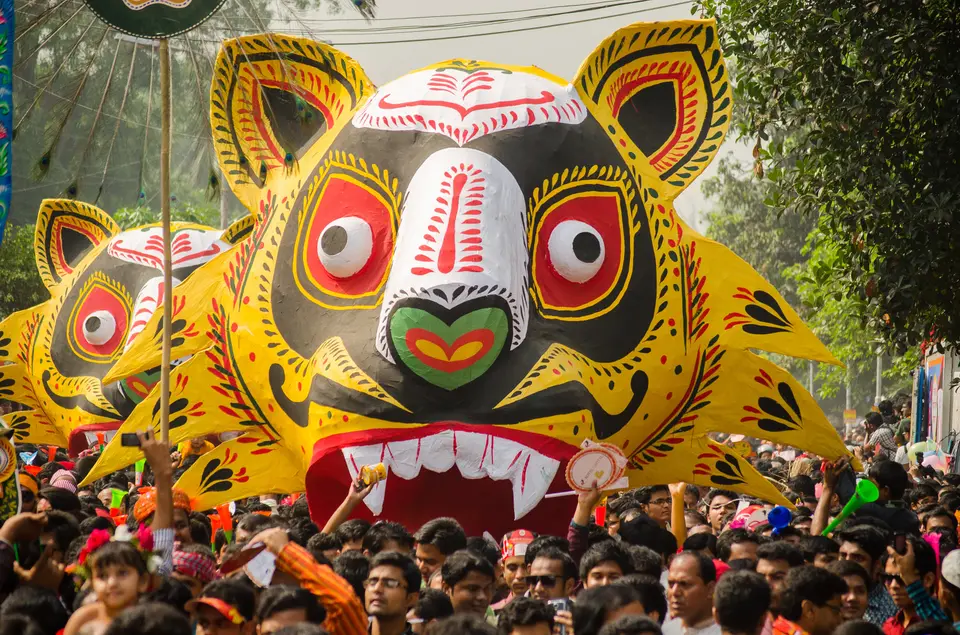
الصورة: Abidhasan00، CC BY-SA 4.0، عبر ويكيميديا كومنز
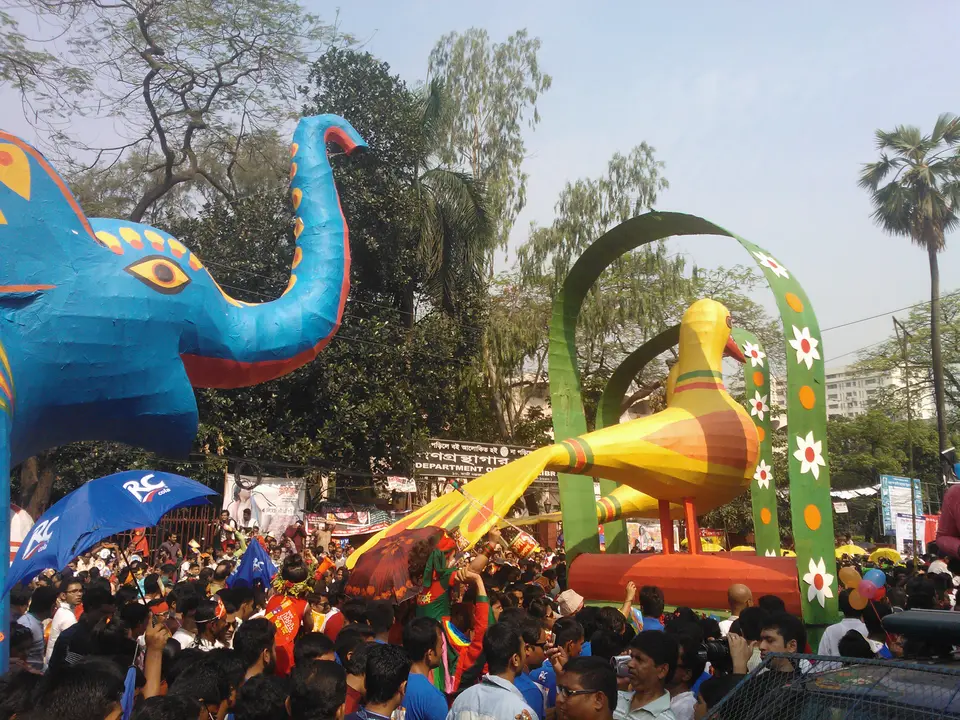
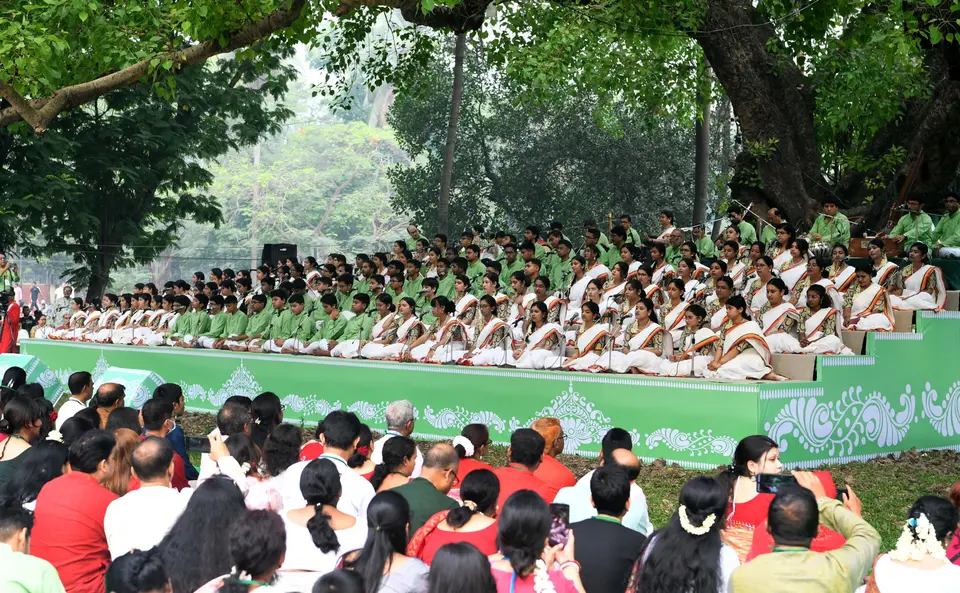
At dawn on 14 April Dhaka welcomes the Bengali New Year with Tagore’s “Esho he Boishakh” sung under the banyan tree at Ramna, then follows a procession of giant masks and floats — one for evil, one for courage, one for peace — made by the students of the Faculty of Fine Arts.
A new year for everyone
Pohela means “first” and Boishakh is the first month of the Bengali calendar. Its origins are debated: some historians link the calendar to the Mughal emperor Akbar, who wanted land taxes collected after the spring harvest rather than by the lunar Hijri calendar, while others trace it to earlier rulers of Bengal. The festive feasts are traced to the Mahifarash, a Muslim fishmonger community of Old Dhaka. In the 1950s and 1960s, under Pakistani rule, the festival became a popular way to express Bengali cultural pride. Today it is largely secular and celebrated by Muslims and Hindus alike.
Families and friends visit one another. Traders open a new ledger in the custom of Haal Khata, inviting loyal customers and offering them sweets; the red and white of the festive clothes is said to recall the old ledgers, which had red covers and white pages. Across the country there are fairs, traditionally held under large banyan trees, with toys, books and food, a wooden Ferris wheel for children, songs, jatra folk plays, and in places boat races, bull races and wrestling.
Songs at dawn and the procession of masks
In Dhaka the day begins at dawn under the banyan tree at Ramna Park, the Ramna Batamul, where the cultural organisation Chhayanaut sings Rabindranath Tagore’s song “Esho he Boishakh”.
Then comes the Mangal Shobhajatra, also called the Barshabaran Ananda Shobhajatra, a mass procession organised by the teachers and students of the Faculty of Fine Arts of the University of Dhaka and open to everyone. It began in 1989, when students frustrated with military rule wanted to give people hope for a better future, following an earlier procession started in Jessore in 1985. For a month beforehand the faculty works on masks, said to drive away evil forces, and floats; among them at least one represents evil, one courage and strength, and one peace, and paintings of folk heritage are sold to fund the event. Each year has its own theme. In 2016 UNESCO inscribed the procession on its list of the Intangible Cultural Heritage of Humanity, as an expression of pride in folk heritage and of unity regardless of caste, creed, religion, gender or age.
متى يُقام
Every year on 14 April, a public holiday in Bangladesh. The celebrations in Dhaka begin at dawn.
- 14 أبريل 2027محسوب
- 14 أبريل 2028محسوب
- 14 أبريل 2029محسوب
- 14 أبريل 2030محسوب
زيارة باحترام
من المفيد أن تعرف
- The traditional greeting is “Shubho Noboborsho” — Happy New Year.
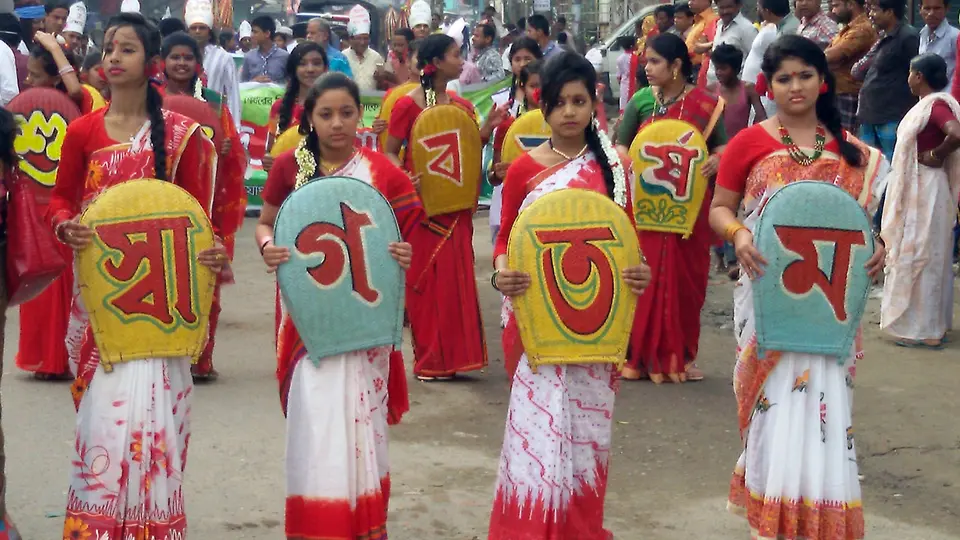
- People dress in red and white; women often wear saris and flowers in their hair, men kurtas.
السلامة
- The UK government advises that terrorists are very likely to try to carry out attacks in Bangladesh, including in crowded areas, and recommends avoiding large gatherings. Stay alert and follow the instructions of the authorities.
- Female travellers often experience verbal and physical harassment. Be vigilant in crowds.
الطعام والشراب
Panta bhat and ilish
Rice soaked in water overnight, eaten with fried hilsa fish (ilish bhaji) and bhartas, spiced pastes — though many argue the custom is a recent trend rather than an old tradition.
Fair sweets
The Baishakhi fairs sell jilipi, sandesh, batasha sugar drops, khoi (popped rice) and kadma sugar candies.
المصادر
كُتب هذا المدخل استنادًا إلى المصادر التالية.
- Pohela BoishakhWikipedia · اطُّلع عليه في 17 سبتمبر 2026
- Mangal Shobhajatra on Pahela BaishakhUNESCO Intangible Cultural Heritage · اطُّلع عليه في 17 سبتمبر 2026
- Bangladesh travel advice: safety and securityUK Foreign, Commonwealth & Development Office · اطُّلع عليه في 17 سبتمبر 2026
مهرجانات ذات صلة
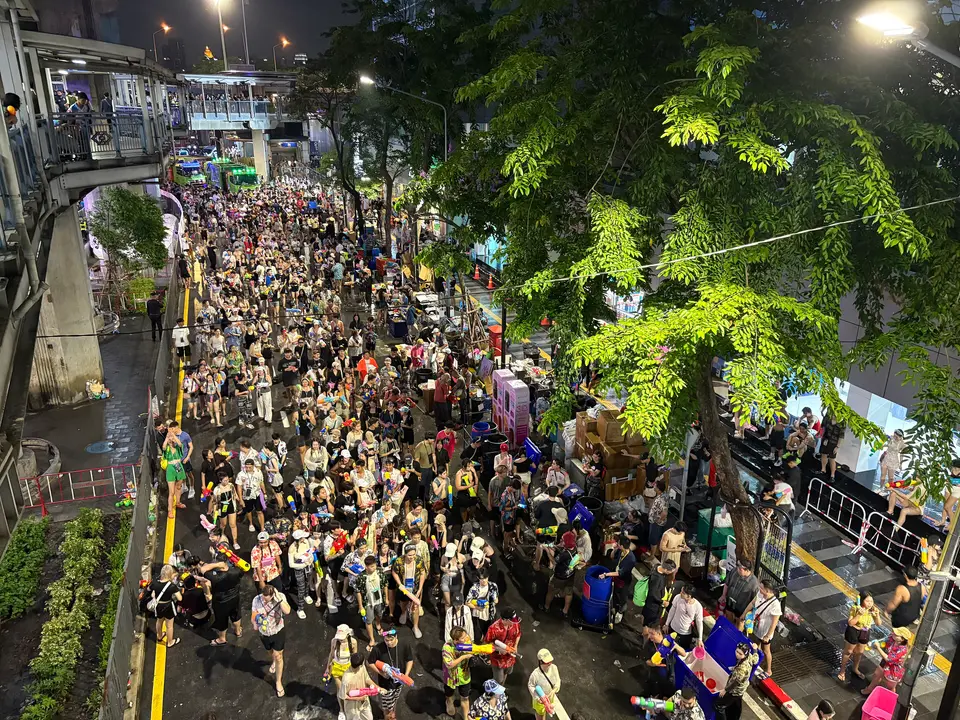
Songkran
สงกรานต์
The traditional Thai New Year falls in mid-April, in the hottest weeks of the year. Families gather, pour water over the hands of their elders and over Buddha images — and in the streets, the gentle blessing becomes a nationwide water fight.
13–15 أبريل 2027محسوب
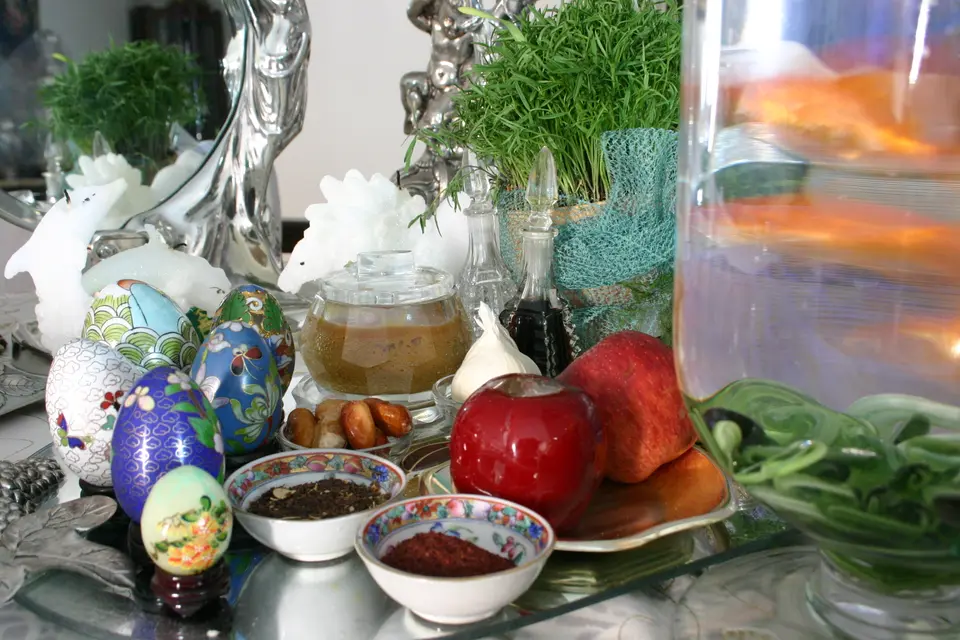
Nowruz
نوروز
Nowruz, “new day”, is the Iranian New Year. It begins at the March equinox, when families gather around the Haft-sin table to wait for the exact moment the year turns, and opens two weeks of visits, food and time outdoors.
21 مارس 2027محسوب
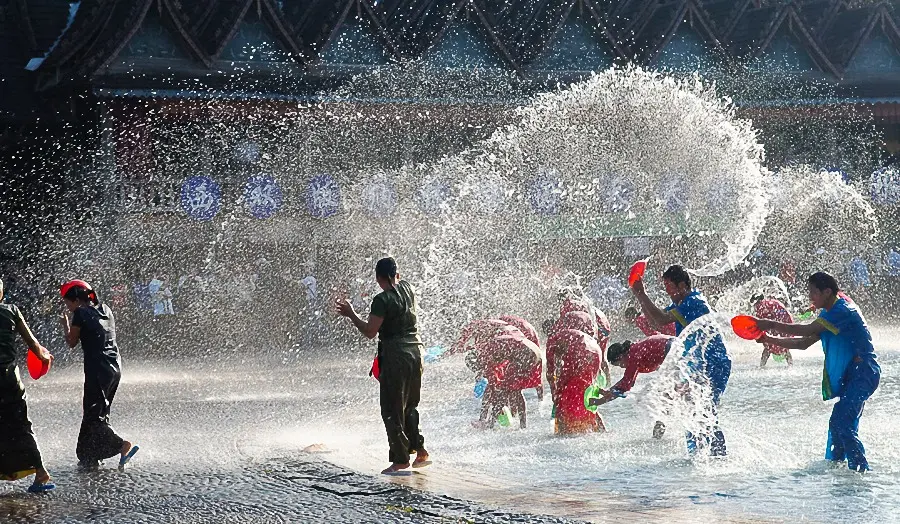
Water-Splashing Festival
泼水节
In mid-April the Dai of Xishuangbanna welcome their new year by washing statues of the Buddha and drenching each other with water for luck — three days of dragon boat races, rockets, dances and a city-wide water fight in Jinghong.
13–15 أبريل 2027تقديري