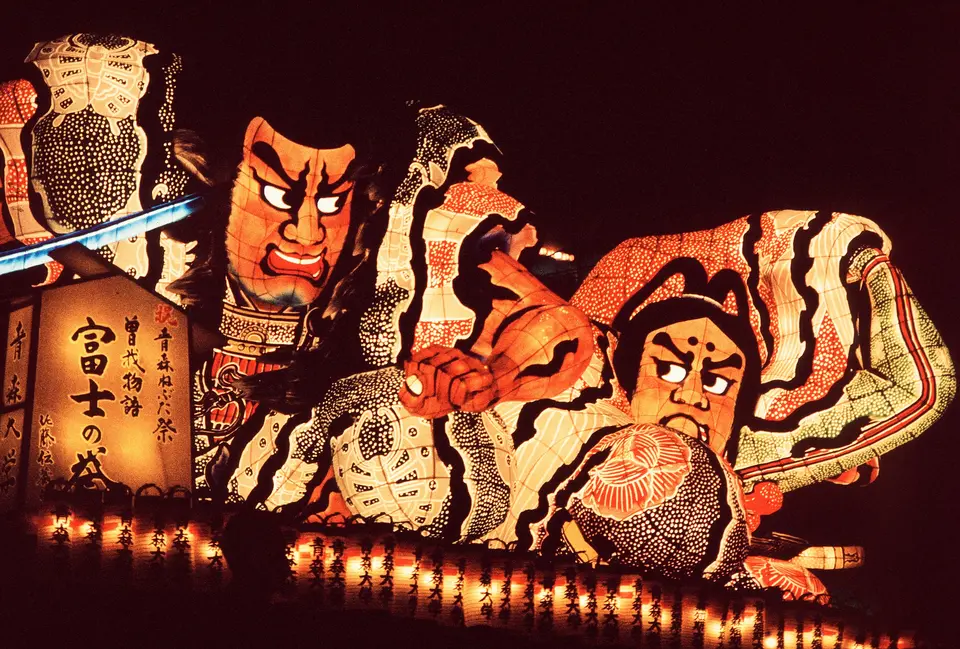
For six nights in August, giant paper figures lit from within are hauled through Aomori to flute, drum and gong, with thousands of costumed dancers leaping alongside. Anyone may join the dancers — the costume is the only ticket.
Paper warriors, lit from inside
The nebuta are huge figures of warriors, gods and legendary scenes, built from paper over a frame and lit from within. Each evening from 2 to 6 August they are pulled through the centre of Aomori, with smaller children’s nebuta on the first two nights. The floats are made by named nebuta artists, who win prizes in their own right alongside the groups that carry their work.
The music is nebuta-bayashi, played on flute, drum and hand gong, and around each float dance the haneto, the “leapers”. On 7 August the large nebuta run by day, and the festival ends that evening with fireworks and a procession of nebuta across the water of Aomori Port.
Anyone can dance
What sets Nebuta apart is how open it is. You do not need to belong to a group, register in advance or sign in on the day: the organisers say that anyone wearing the proper haneto costume may join a nebuta group that is waiting to set off. The costume, not a membership, is the condition of taking part.
Where the name comes from
Its origins are uncertain. The festival committee suggests it grew out of the lantern-floating of Tanabata, brought from China in the Nara period, merging with older customs of the Tsugaru region such as sending away spirits and insects. As paper, bamboo and candles became common, lanterns turned into the figure nebuta. The name itself is thought to come from nemuri, “sleep”, as in nemuri-nagashi, the custom of sending drowsiness away — which suggests the festival was once about driving something off, just as the sea procession still carries the lanterns away.
When it happens
Aomori Nebuta Matsuri runs every year from 2 to 7 August. The floats run in the evening from 2 to 6 August; on 7 August there is a daytime run, then fireworks and a procession of nebuta on the sea at Aomori Port.
- August 2 – 7, 2027Calculated
- August 2 – 7, 2028Calculated
- August 2 – 7, 2029Calculated
- August 2 – 7, 2030Calculated
Visiting with respect
Good to know
- To dance as a *haneto*, wear the full costume — a flowered *hanagasa* hat, a red or pink sash, a white yukata hitched to the knee over a pink or blue underskirt, and white tabi with zori. It costs about ¥10,000 to buy or ¥4,000 to rent in Aomori.
- You do not need to belong to a group or register. Put on the costume and join a nebuta group waiting to set off.
- Be at the haneto assembly point before your group departs; joining partway along the route may be refused when the dancers are crowded.
- Follow the marshals’ instructions, and disperse promptly once your group has completed the route.
Avoid
- Do not join the dancing without the full costume and hat.
- Do not turn back against the direction of the moving procession.
- Do not bring whistles or anything else that is not part of the nebuta music.
- Do not set off fireworks or firecrackers, bring large bottles of sake, or throw away cans in the procession — the committee warns they are dangerous.
Stay safe
- If a fire engine or ambulance is called out, clear the road immediately.
Sources
This entry was written from the following sources.
- 青森ねぶた祭 オフィシャルサイトAomori Nebuta Festival Executive Committee · read August 20, 2026
- スケジュール・運行コースAomori Nebuta Festival Executive Committee · read August 20, 2026
- 跳人参加方法・ルールAomori Nebuta Festival Executive Committee · read August 20, 2026
- ねぶたの由来Aomori Nebuta Festival Executive Committee · read August 20, 2026
Related festivals
Tanabata
七夕
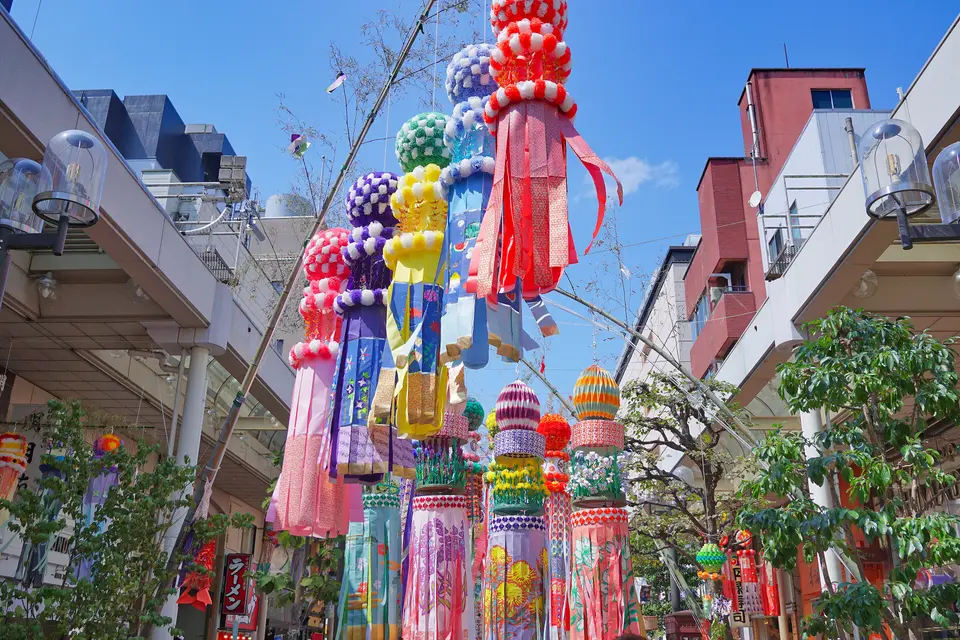
The star festival of the seventh night of the seventh month. Most of Japan keeps it on 7 July; Sendai, one of several places that kept the old season, hangs its great paper streamers from 6 to 8 August.
July 7, 2027Calculated
Chichibu Yomatsuri
秩父夜祭
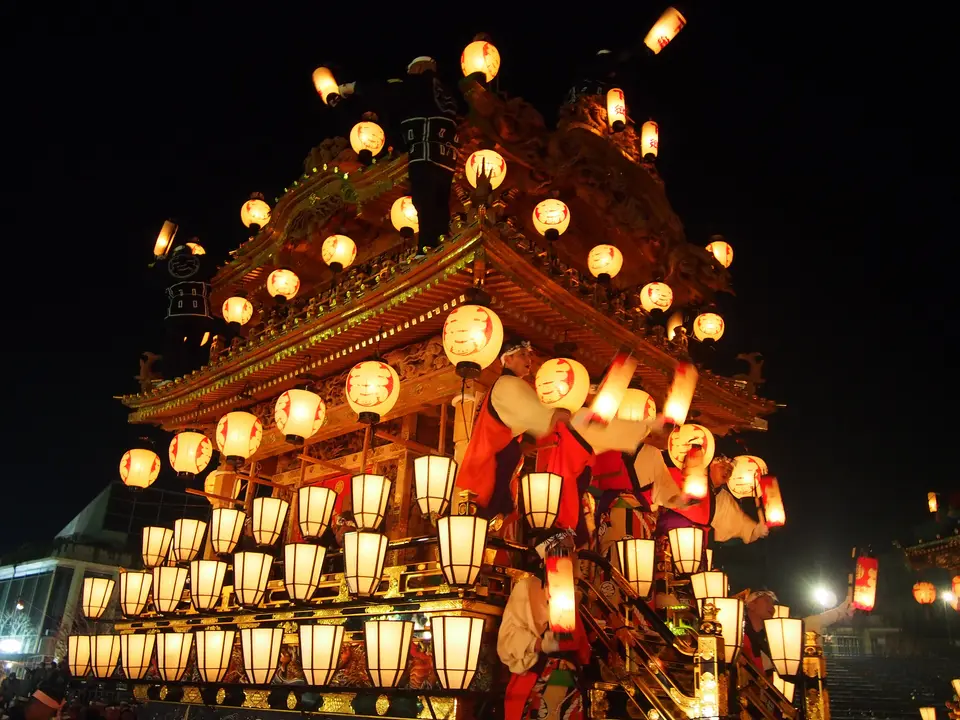
On a cold December night in the mountains of Saitama, six great floats blazing with lanterns are hauled through Chichibu and up the steep Dango-zaka slope, while fireworks burst over the town.
December 2 – 3, 2026Calculated
Gujo Odori
郡上おどり
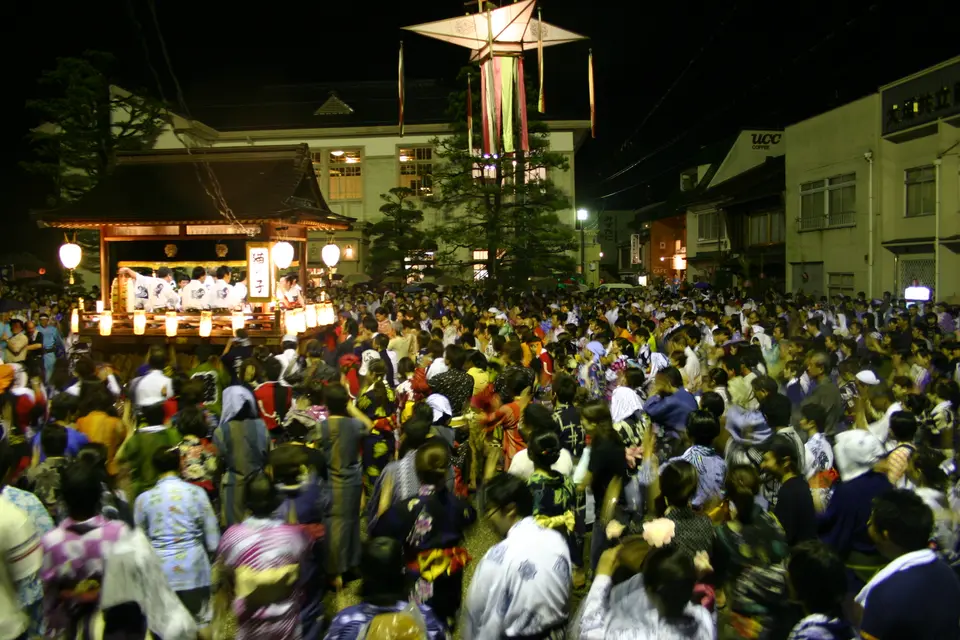
For more than thirty summer nights the castle town of Gujo Hachiman dances in the streets — and it is a dance to join, not to watch. Over Obon the dancing goes on all night, until the hour before dawn.
July – September 2027Approximate window