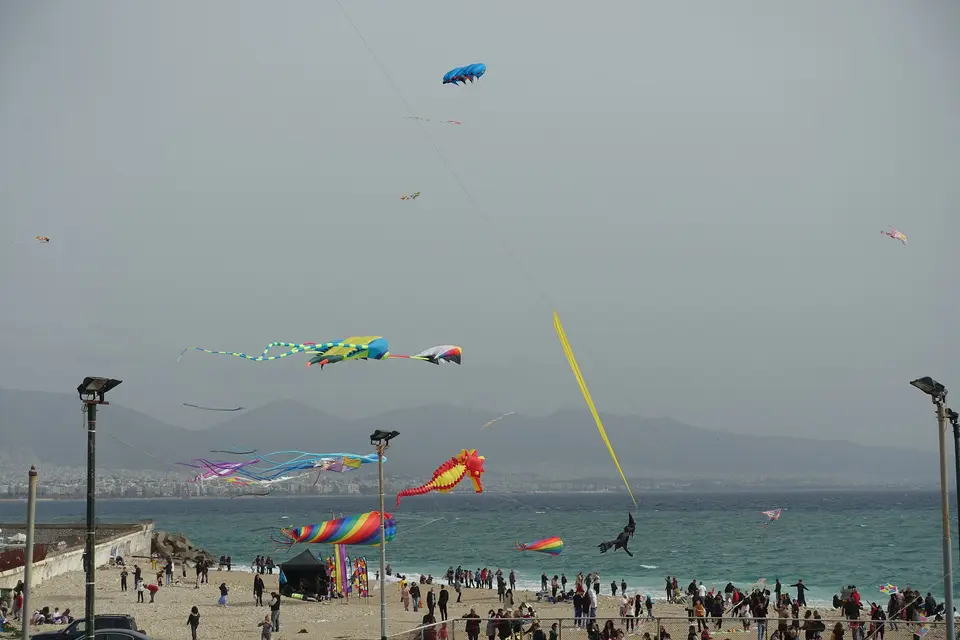
The first day of Orthodox Lent is a public holiday in Greece, spent outdoors — families head out of town to fly kites, and share shellfish, fasting dishes and lagana, a flatbread baked only on this day.
The start of Lent
Kathara Deftera, Clean Monday, is the first day of Great Lent in Eastern Christianity. The name refers to purification before the fast: it is the first day without meat, eggs and dairy, and some people fast from all food until the liturgy on Wednesday. Liturgically, Lent begins on the Sunday night before, at the Vespers of Forgiveness, where the faithful bow to one another and ask forgiveness. The whole first week of Lent is called Clean Week, a time for confession and for cleaning the house.
The day is also traditionally seen as the beginning of spring, and despite the fast its mood is joyful. In Greece and Cyprus it is a public holiday celebrated with outings into the countryside, fasting food and lagana — and with kites. The widespread custom of flying kites is said to symbolise the attempt to reach the divine, and on Clean Monday the skies fill with them.
When it happens
Clean Monday is the Monday seven weeks before Orthodox Easter, so its date moves each year, between mid-February and late March. It is a public holiday in Greece and Cyprus.
- March 15, 2027Calculated
- February 28, 2028Calculated
- February 19, 2029Calculated
- March 11, 2030Calculated
Food and drink
Lagana
A flat, unleavened bread baked only on Clean Monday.
Shellfish and fasting dishes
Meat, eggs and dairy are traditionally avoided in Lent, so the day’s meals are built on seafood such as shellfish, molluscs and fish roe.
Sources
This entry was written from the following sources.
- Clean MondayWikipedia · read September 17, 2026
- List of dates for EasterWikipedia · read September 17, 2026
Related festivals
Patras Carnival
Πατρινό Καρναβάλι
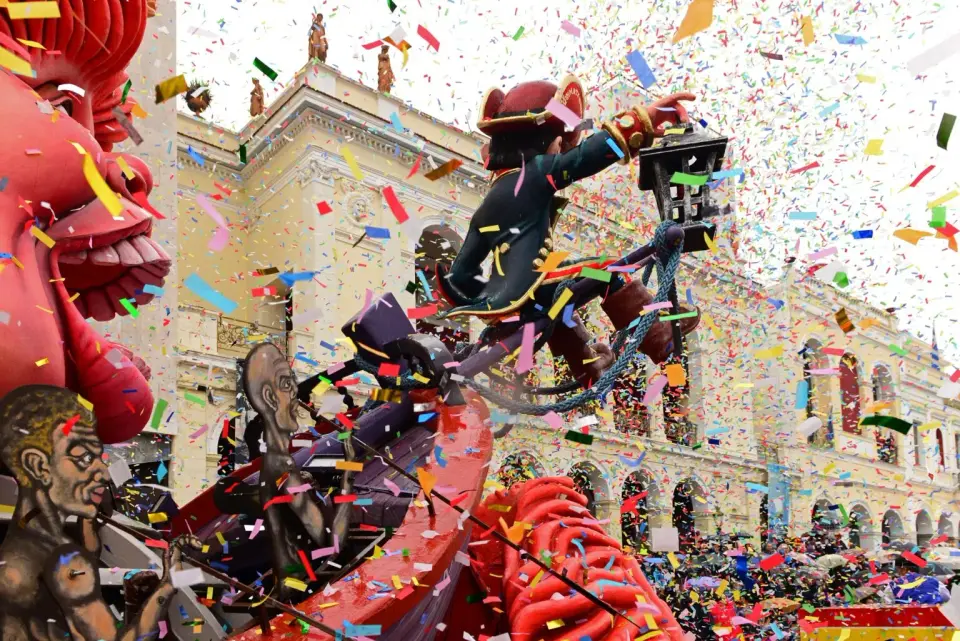
Greece’s largest carnival opens on St Anthony’s Day and builds for weeks — balls, a city-wide treasure hunt, a night parade — to a Sunday procession of satirical floats and tens of thousands of costumed revellers, ending with the burning of the Carnival King in the harbour.
January 17, 2027Calculated
Sizdah Bedar
سیزدهبدر
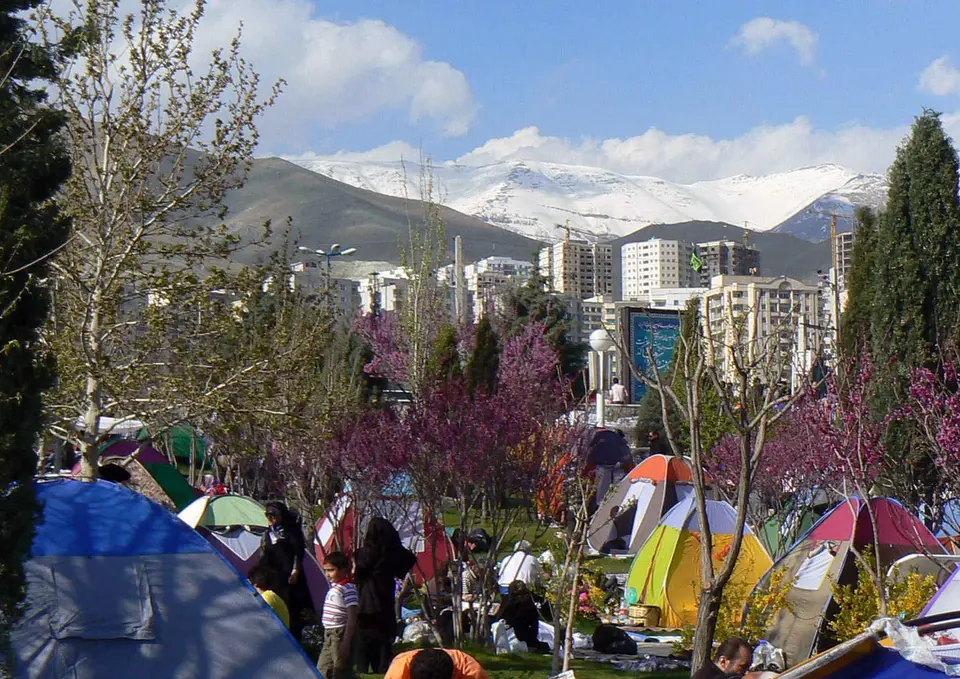
On the thirteenth day of the Iranian New Year, the whole country heads outdoors. Families picnic in parks and fields, and the sprouts grown for the Haft-sin table are thrown into running water, closing the Nowruz holidays.
April 2, 2027Calculated
Easter in Corfu
Πάσχα στην Κέρκυρα
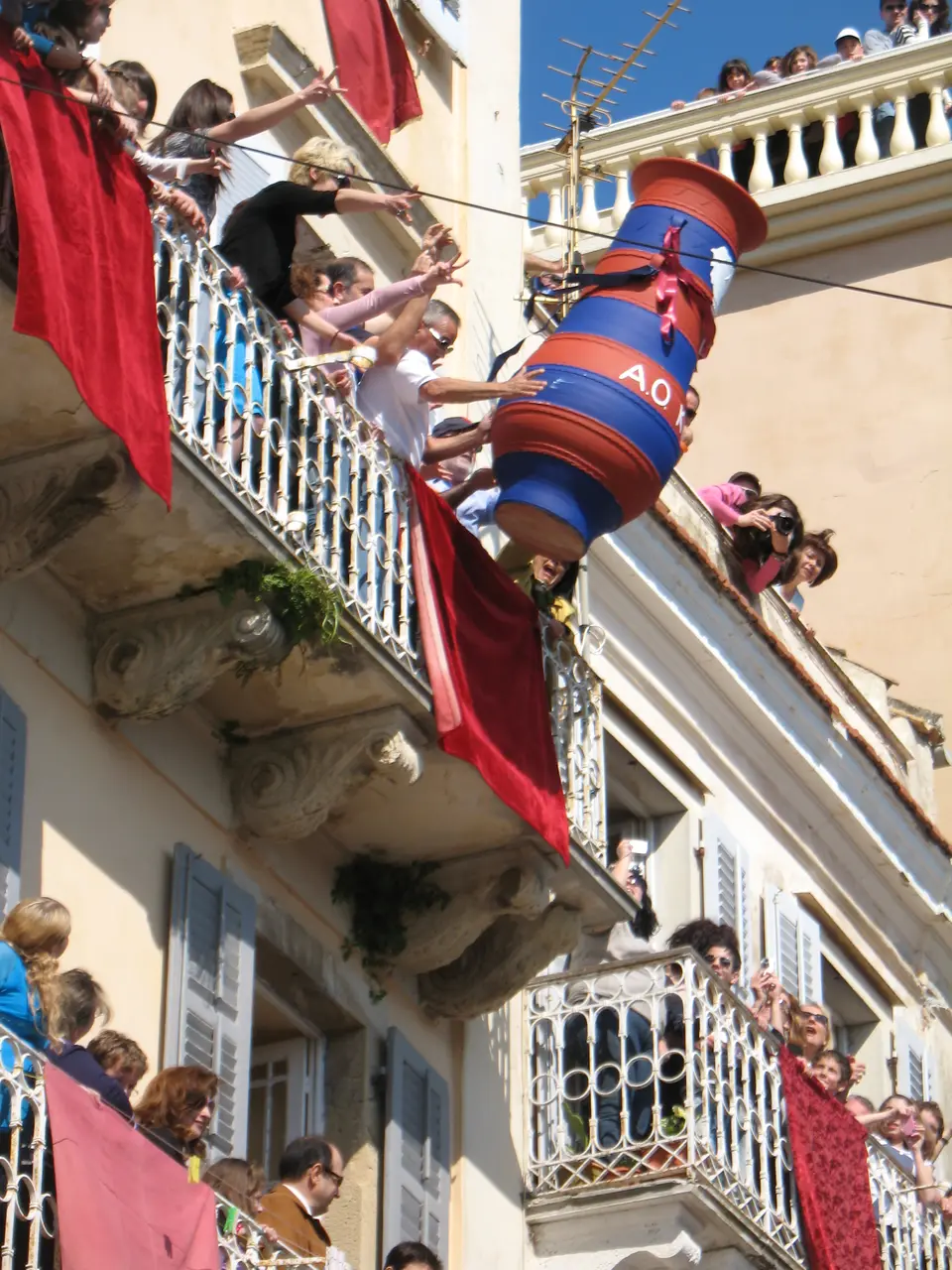
Corfu celebrates Orthodox Easter with customs found nowhere else in Greece — brass bands playing funeral marches behind 33 epitaphs on Holy Friday, and on Holy Saturday morning a storm of clay pots flung from balconies, shattering in the streets to chase away bad luck.
April 30 – May 1, 2027Calculated