Gion Matsuri
祇園祭
On UNESCO’s list of the Intangible Cultural Heritage of Humanity
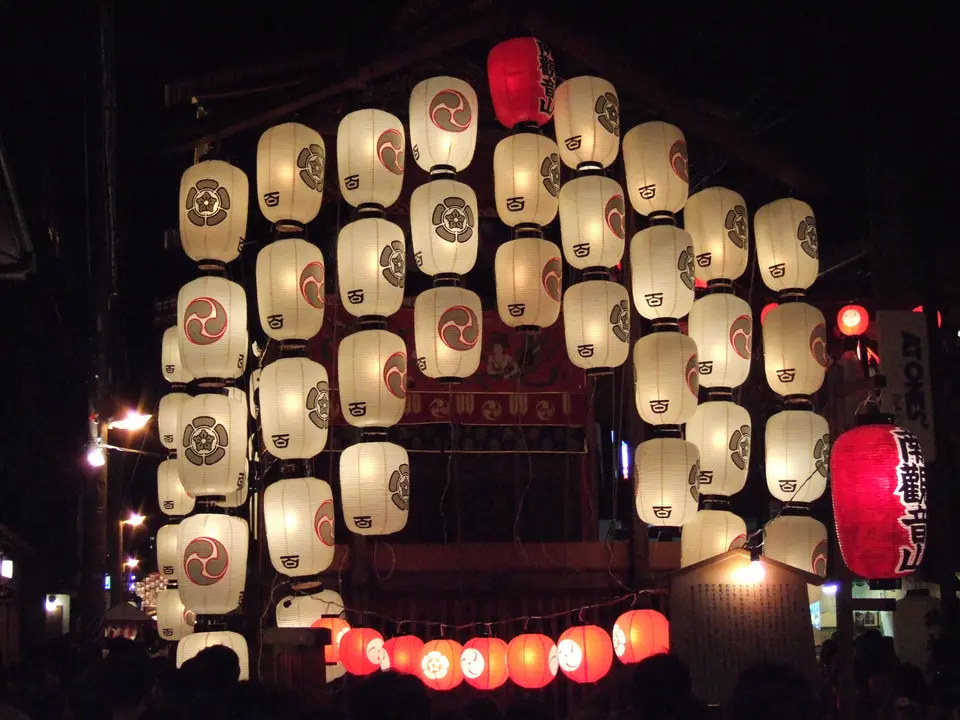
Photo: Sakurai Midori, CC BY-SA 3.0, via Wikimedia Commons
Kyoto’s great summer festival lasts the whole of July. Its high points are the lantern-lit yoiyama evenings and the processions of towering yamahoko floats on 17 and 24 July, built and hauled by the city’s own neighbourhoods.
A month, not a day
Gion Matsuri is the festival of Yasaka Shrine, and it lasts the whole of July. It opens on 1 July with the kippu-iri ceremony and closes on 31 July with a summer purification rite at the shrine’s Ekijinja, with rituals at intervals in between.
Yoiyama: the evenings before
For three evenings before each procession — 14 to 16 July and 21 to 23 July — the floats stand in the streets of the neighbourhoods that own them, hung with lanterns and accompanied by festival music. These evenings, called yoiyama, are when visitors can walk among the floats up close.
The procession of floats
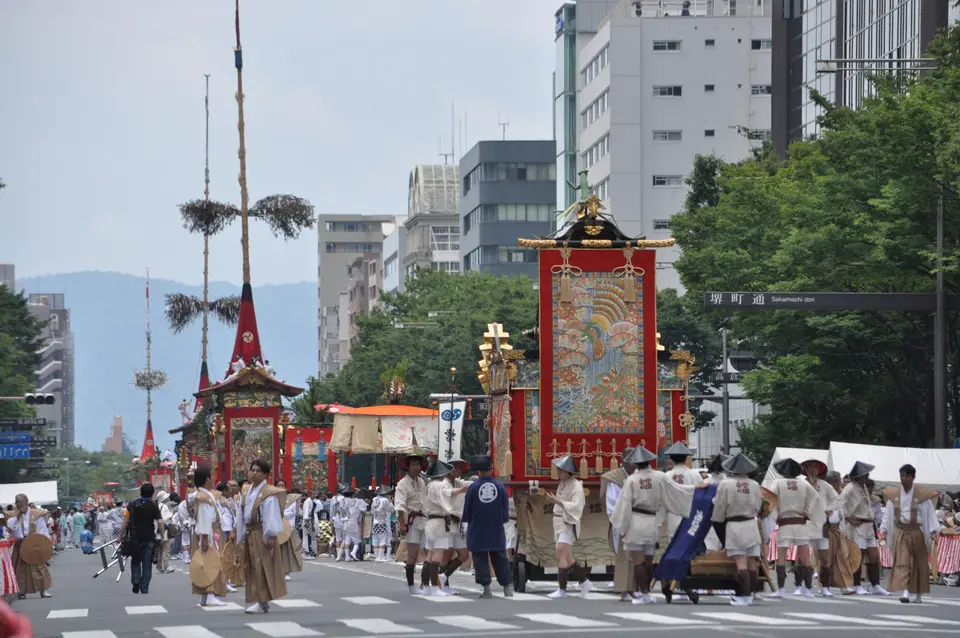
The heart of the festival is the yamahoko junko, the procession of floats: the saki matsuri on 17 July and the ato matsuri on 24 July, with thirty-four floats between them. The order in which they set off is drawn by lot.
There are two kinds of float. Yama carry platforms decorated to look like mountains. Hoko are crowned by tall wooden poles, raised originally to summon the god of plague, so that music, dance and worship could turn him into a protective spirit. The festival began as a way of turning epidemic away, not of commemorating anything.
Built by the neighbourhoods
The floats belong to the city’s self-governing neighbourhood districts. Every year their residents assemble, decorate and dismantle them, working with musicians and craftspeople. That shared work, rather than direction from the shrine or the city, is what has carried the festival from one generation to the next. The float ceremony is on UNESCO’s Representative List as part of the Yama, Hoko and Yatai float festivals of Japan.
When it happens
Gion Matsuri runs every year from 1 to 31 July. The two float processions are on 17 July (saki matsuri) and 24 July (ato matsuri), with the yoiyama evenings on 14–16 and 21–23 July.
- July 1 – 31, 2027Calculated
- July 1 – 31, 2028Calculated
- July 1 – 31, 2029Calculated
- July 1 – 31, 2030Calculated
Visiting with respect
Good to know
- For the processions, arrive early and choose your spot well before the floats set off; the route is lined with spectators.
- The yoiyama evenings are the best time to see the floats up close in their own neighbourhoods. Weekdays are calmer than weekends.
- Do not photograph people without permission, and do not bring large luggage into the crowds.
Avoid
- Do not step into the path of a moving float or cross between the people pulling it.
- Do not litter. Carry your rubbish with you if there is no bin nearby.
Sources
This entry was written from the following sources.
- 祇園祭 (Gion Matsuri)Kyoto City Tourism Association · read August 20, 2026
- Decision 4.COM 13.58 — Yamahoko, the float ceremony of the Kyoto Gion festivalUNESCO Intangible Cultural Heritage · read August 20, 2026
- Travel Etiquette for the FutureJapan Tourism Agency · read September 16, 2026
Related festivals
Aoi Matsuri
葵祭
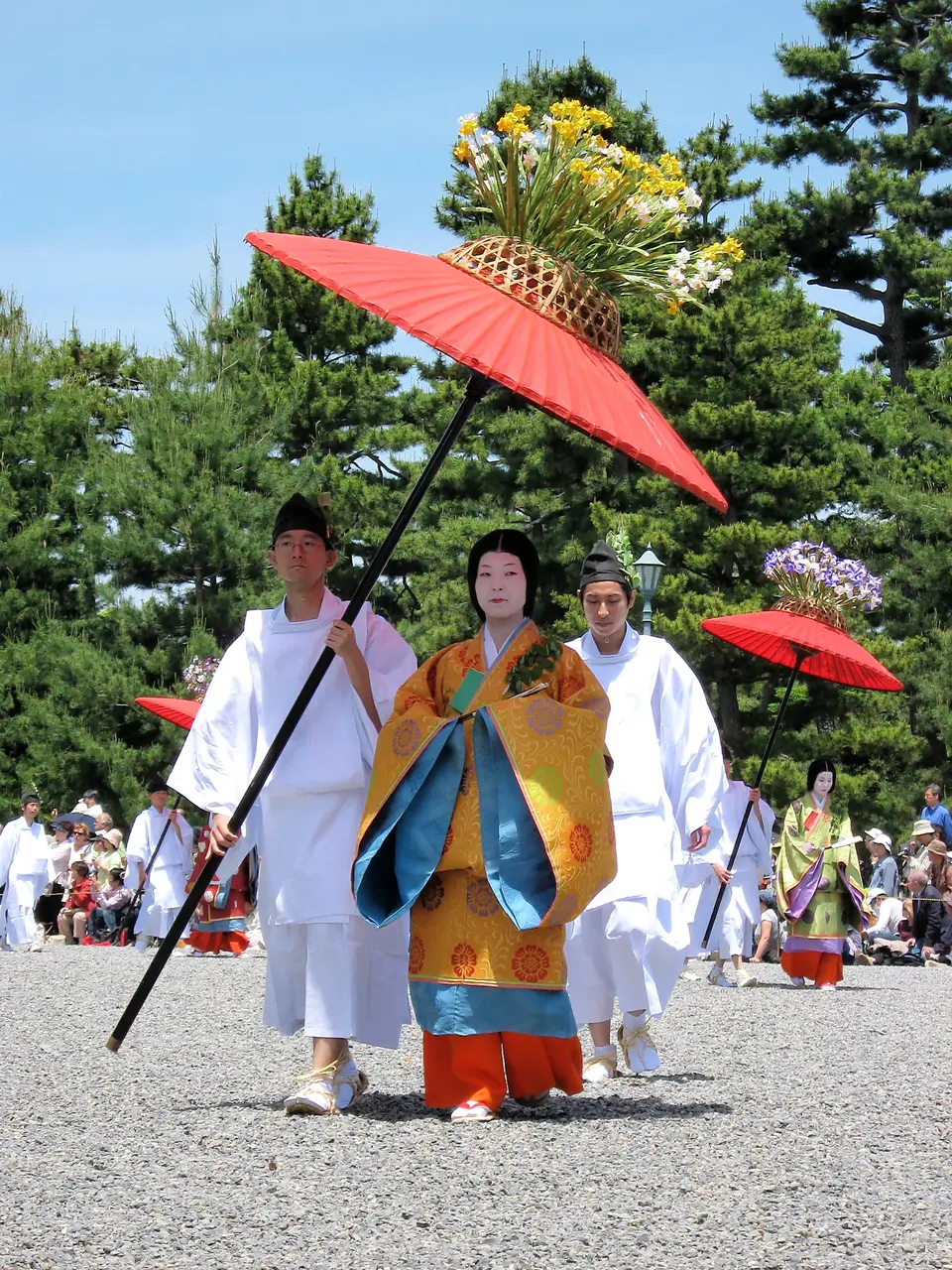
On 15 May a procession in the court dress of the Heian era leaves the Kyoto Imperial Palace for the Shimogamo and Kamigamo shrines. It is one of Kyoto’s three great festivals, and once so central to court life that “the festival” simply meant this one.
May 15, 2027Calculated
Takayama Matsuri
高山祭
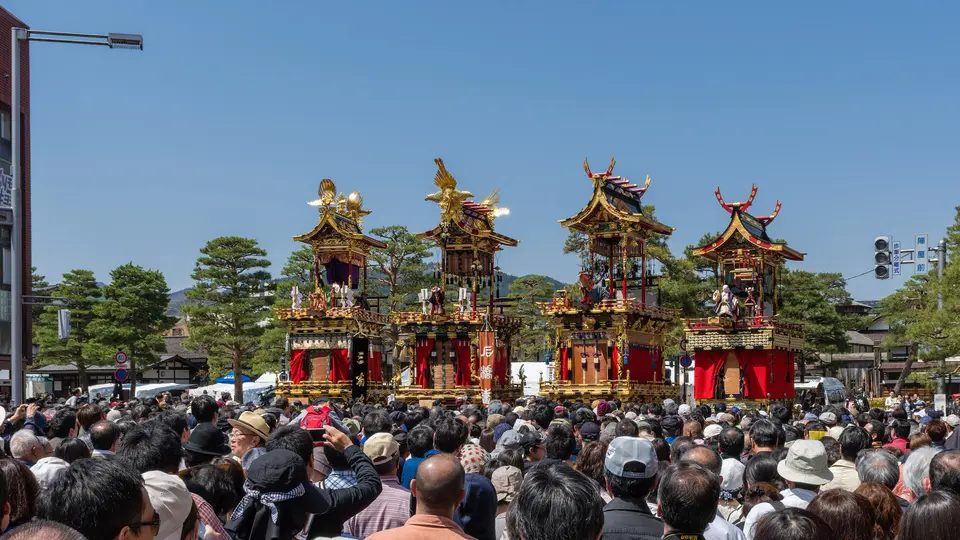
Twice a year, in April and October, the old mountain town of Takayama brings out its lacquered, gilded yatai floats — twelve in spring, eleven in autumn — and on the first evening hangs them with hundreds of lanterns.
October 9 – 10, 2026Calculated
Chichibu Yomatsuri
秩父夜祭
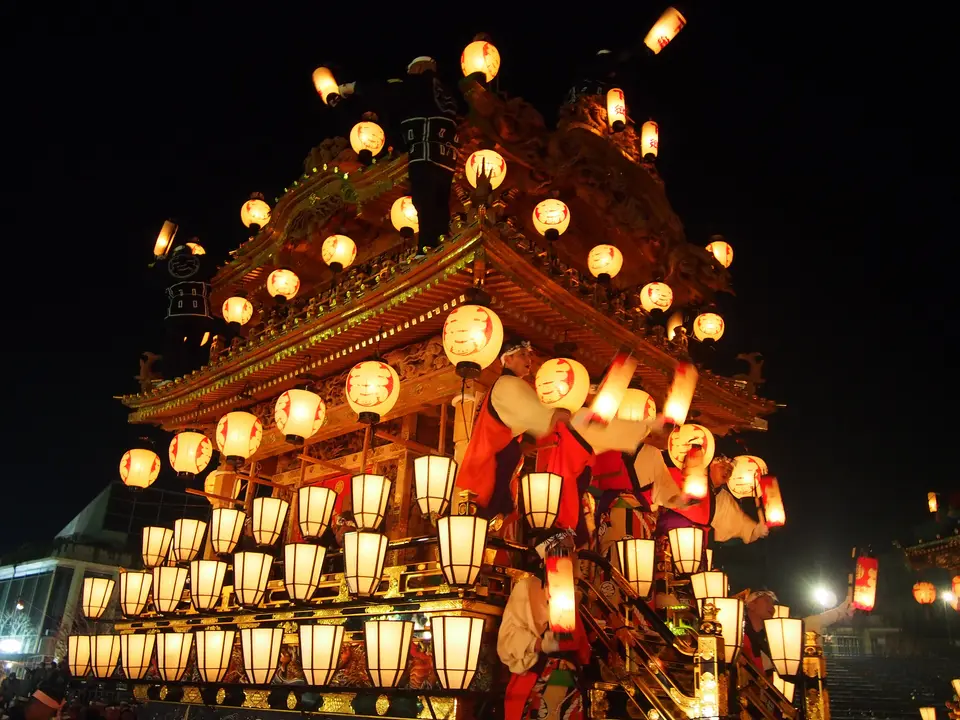
On a cold December night in the mountains of Saitama, six great floats blazing with lanterns are hauled through Chichibu and up the steep Dango-zaka slope, while fireworks burst over the town.
December 2 – 3, 2026Calculated