Goroka Show
Photo: Anselmo Lastra, CC BY 2.0, via Wikimedia Commons
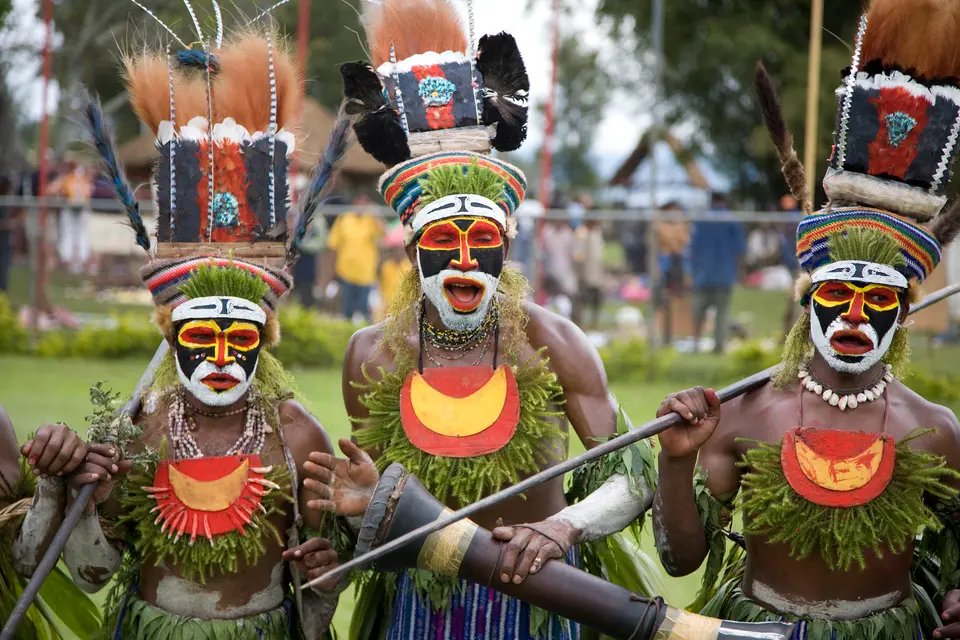
Close to Independence Day, about a hundred tribes from across Papua New Guinea gather in Goroka for the country’s biggest sing-sing, with painted faces, music and dance — and the ghostly Asaro Mudmen in their clay masks.
A gathering of tribes
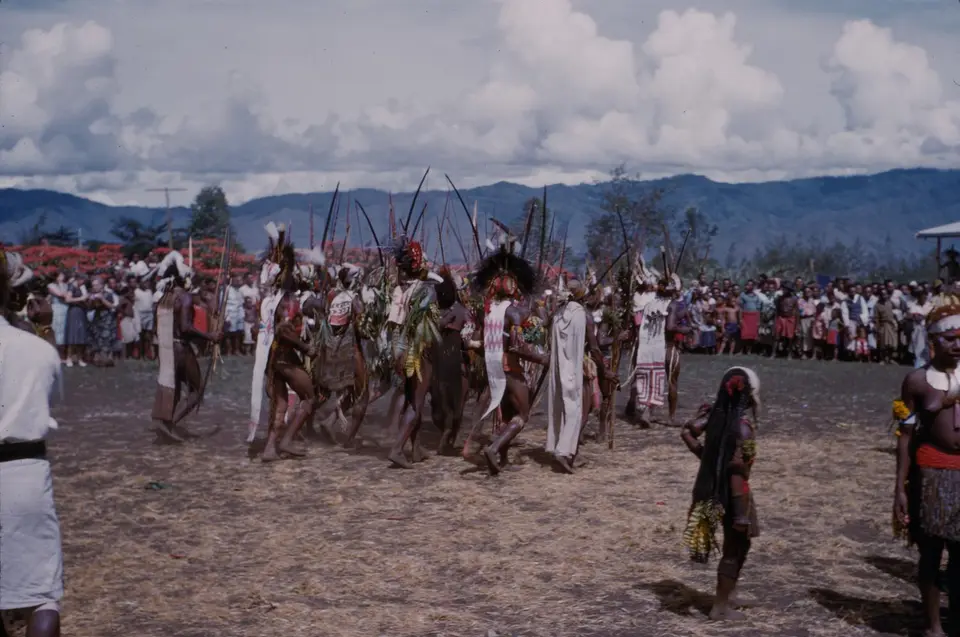
A sing-sing is a gathering of tribes or villages in Papua New Guinea, where people show their distinct culture, dance and music and share traditions, painting and decorating themselves for the occasion. The Goroka Show, officially the Eastern Highlands Agricultural Show, is the best known. It was started in 1956 on the initiative of Australian kiaps; the first show was attended by some 10,000 local people and by visitors from around Papua New Guinea and Australia. Today about a hundred tribes come to Goroka to show their music, dance and culture. Similar shows are now held in Mount Hagen and other towns, but Goroka’s remains the largest cultural event in the country; the 60th show, in 2016, brought more than 120 groups and thousands of foreign visitors.
The Mudmen
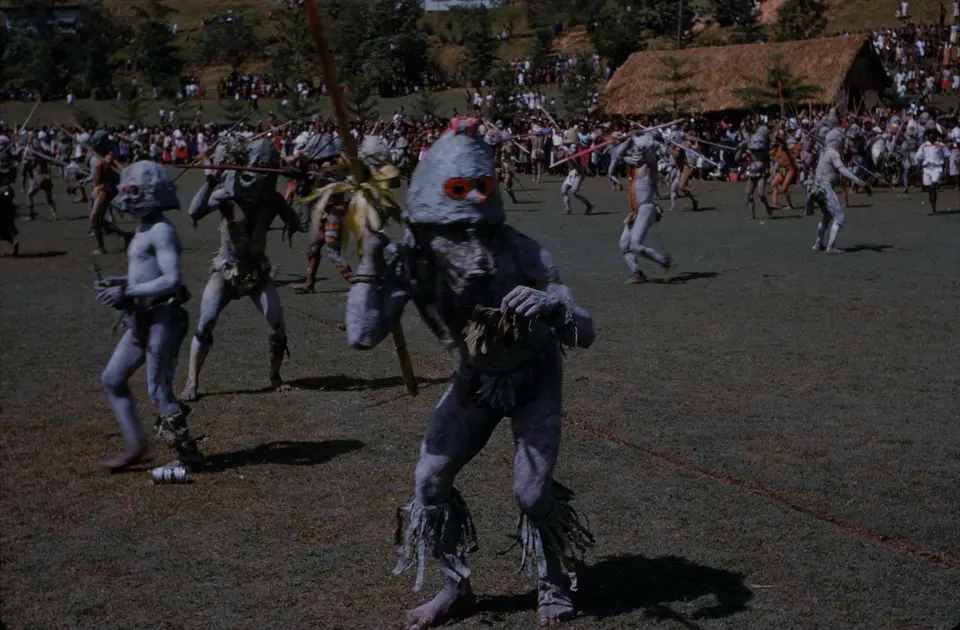
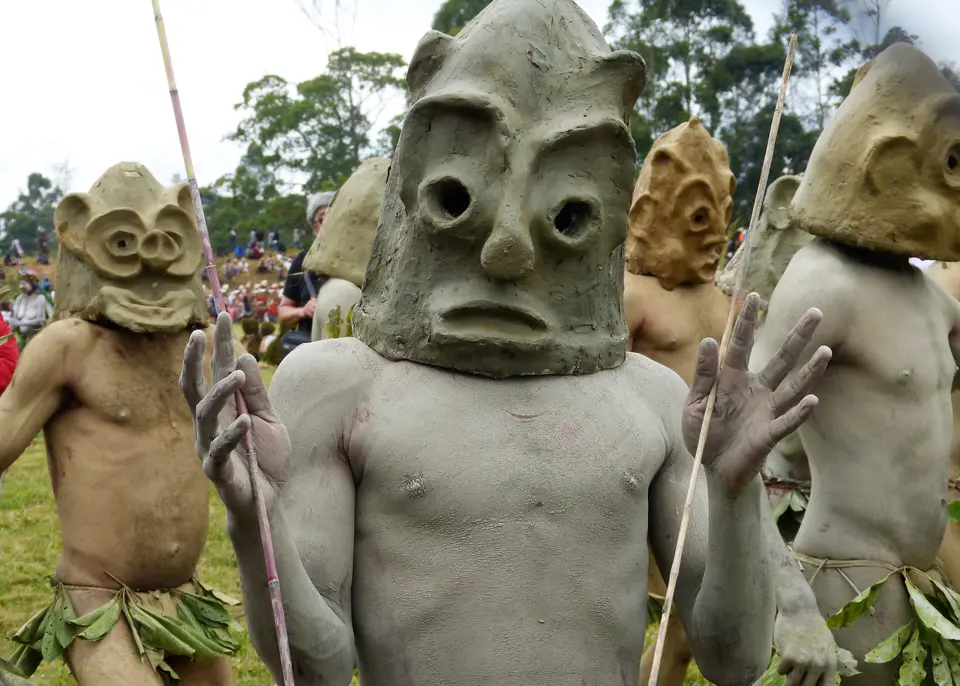
The show’s most famous performers, the Asaro Mudmen, took their present form there. They are the Holosa of the Asaro valley near Goroka, who wear masks of clay and paint their bodies white. According to research by the anthropologist Ton Otto, the practice comes from the village of Komunive, where in the late 19th century a man named Bukiro Pote covered a head frame with mud as a disguise. His grandson Ruipo Okoroho revived it for the 1957 show, when the masks became more elaborate works of art and the body was painted white to match; the 200 masked men won first prize for tribal finery. Another tribe named them holosa, “ghost”, and a dance was created in which the wearers move as if their bones were broken, swatting away flies drawn to rotting flesh. There are many legends of their origin, told, as one anthropologist put it, in as many versions as there are sources.
The masks are made from clay from the Asaro River, which is said not to crack as it dries, and are decorated with pigs’ teeth and shells; performers also wear long bamboo fingers. The Mudmen have become a symbol of Goroka and the highlands and a recognisable image of Papua New Guinea around the world.
When it happens
Held every year close to Independence Day, 16 September. In 2026, the show’s 70th anniversary, it is scheduled for 18–20 September at the National Sports Institute grounds.
- September 16, 2027Estimated
- September 16, 2028Estimated
- September 16, 2029Estimated
- September 16, 2030Estimated
Visiting with respect
Stay safe
- Tribal fighting can break out in the Highlands without warning; stay alert, follow local news and ask your hotel before travelling to a new area.
- Do not walk after dark or travel alone, carry only small amounts of cash and keep cameras and phones out of sight when you are not using them.
Sources
This entry was written from the following sources.
- Goroka ShowWikipedia · read September 17, 2026
- Asaro MudmenWikipedia · read September 17, 2026
- Sing-sing (New Guinea)Wikipedia · read September 17, 2026
- Papua New Guinea travel advice: safety and securityUK Foreign, Commonwealth & Development Office · read September 17, 2026
Related festivals
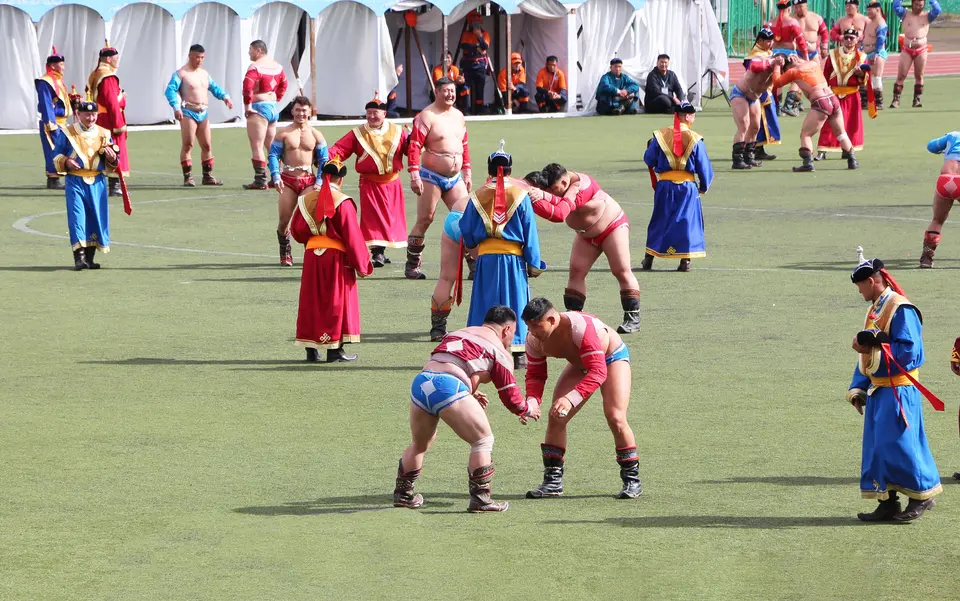
Naadam
Наадам
Every July Mongolia stops for the “three games of men” — wrestling, cross-country horse racing ridden by children, and archery — opened in Ulaanbaatar’s stadium with parades of riders, dancers and the nine horse-tail banners of Genghis Khan.
July 11 – 13, 2027Calculated
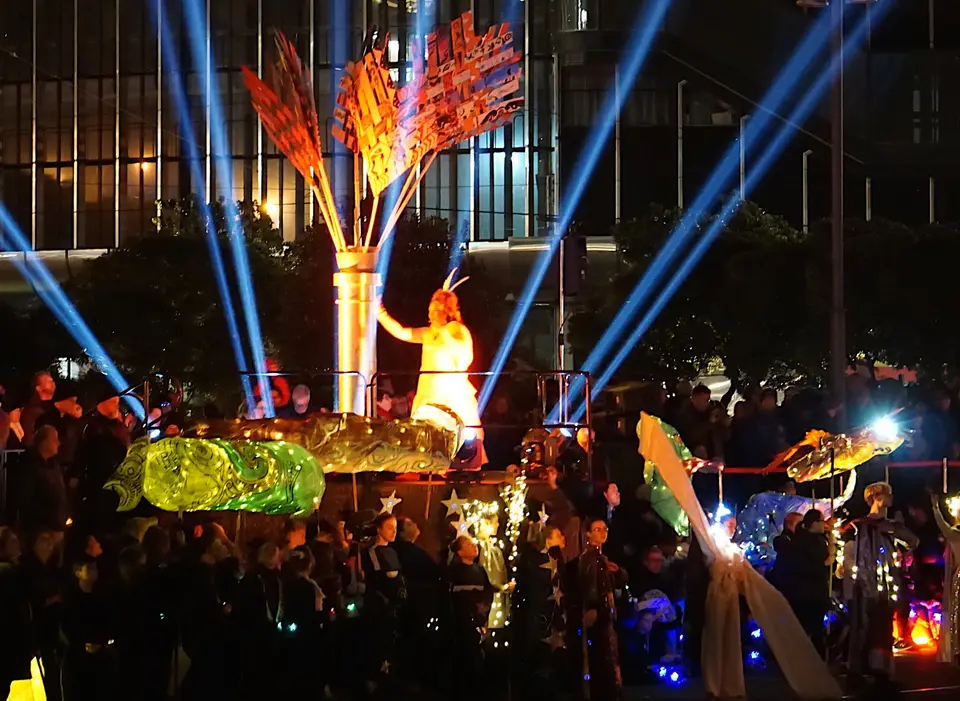
Matariki
When the star cluster Matariki — the Pleiades — reappears in the pre-dawn sky of midwinter, Māori mark the beginning of a new year by remembering the dead, feeding the stars and looking ahead. Since 2022 it has been a public holiday in New Zealand.
June 25, 2027Officially announced
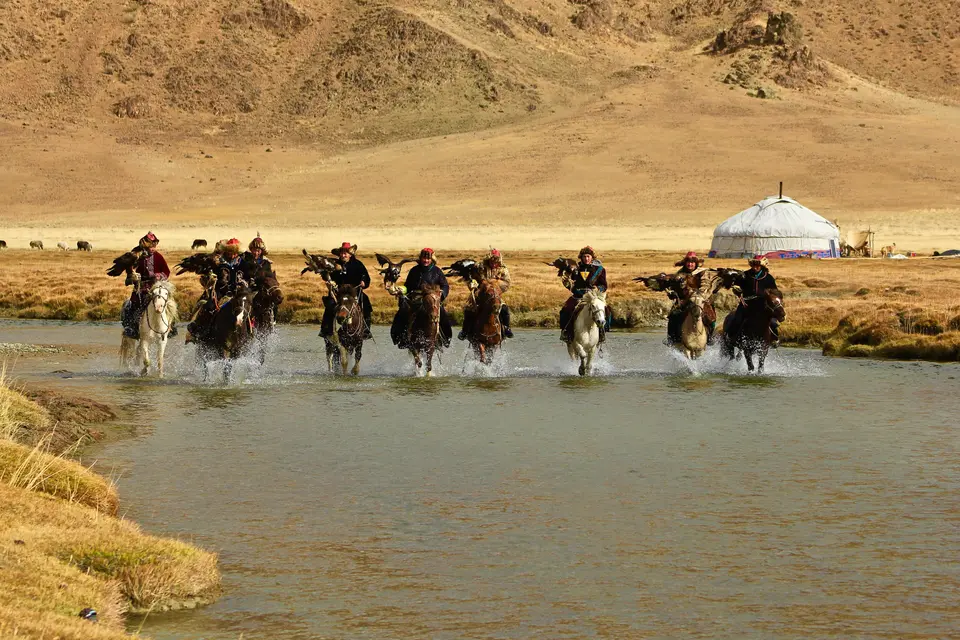
Golden Eagle Festival
Бүркіт той
In Mongolia’s far west, Kazakh eagle hunters in fur hats ride out with golden eagles on their arms to compete — calling their birds down from the hills to the glove, showing off their horsemanship and traditional dress on the steppe outside Ölgii.
October 3 – 4, 2026Estimated