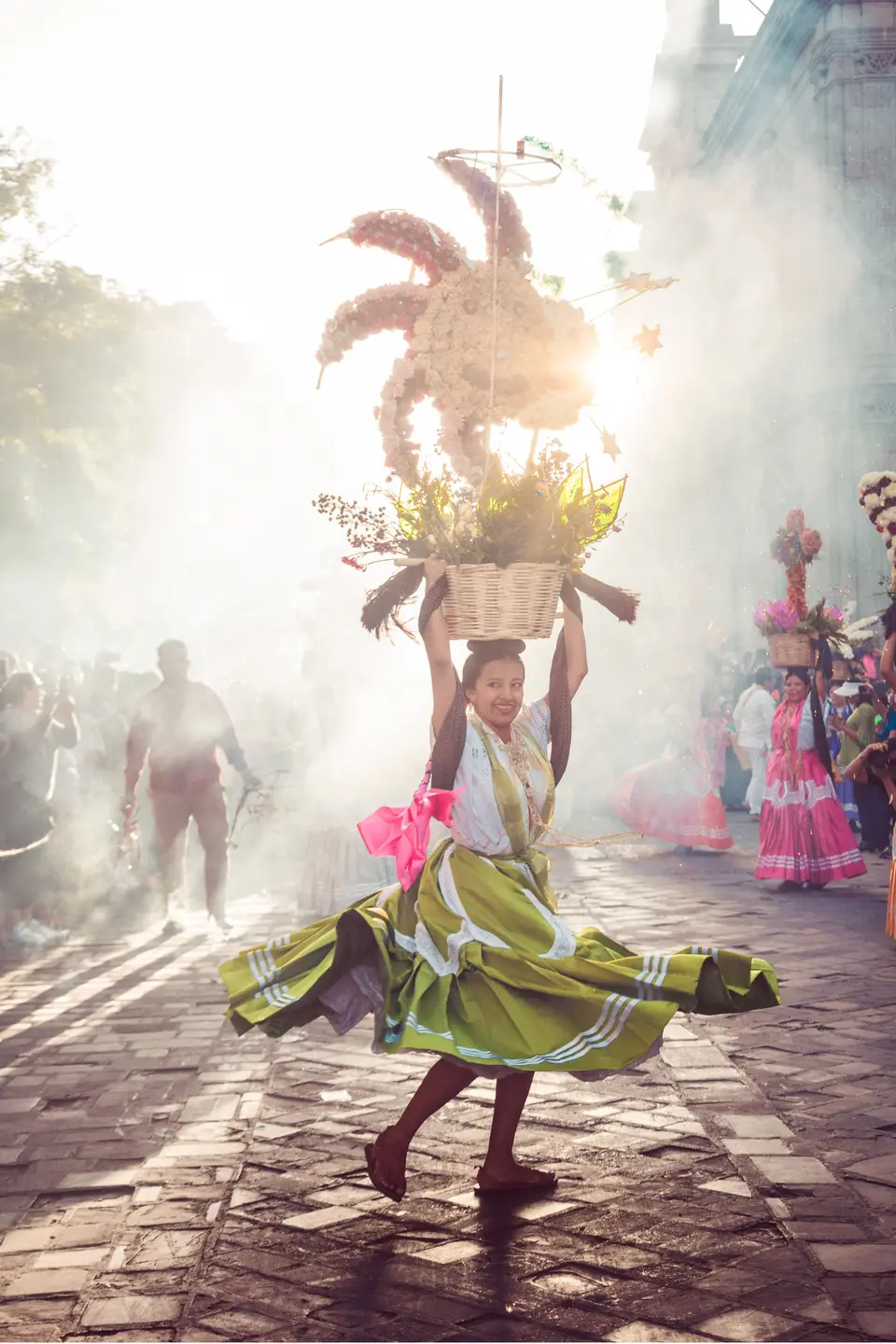
Guelaguetza
Photo: Abraham Pacheco, CC BY-SA 4.0, via Wikimedia Commons
On two Mondays each July, delegations from the eight regions of Oaxaca climb the Cerro del Fortín to present their dances, music and costumes — the best-known indigenous gathering of its kind in Mexico, with a month of food, mezcal and craft fairs around it.
Mondays on the hill
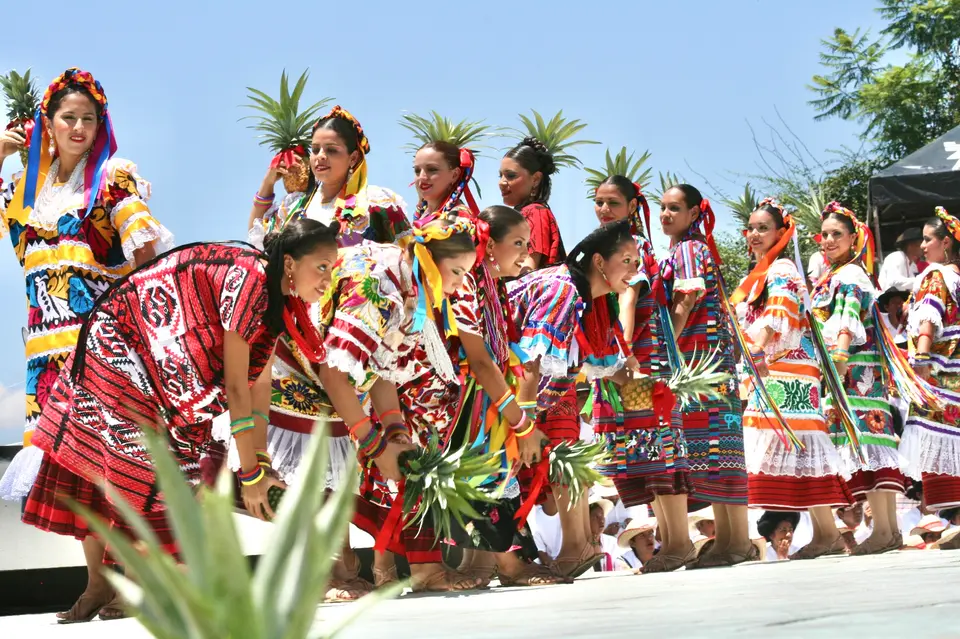
The Guelaguetza, also called Los Lunes del Cerro, “Mondays on the Hill”, takes place in the city of Oaxaca and nearby villages. Indigenous communities from across the state gather to present their cultures through dance, music, costume and food. Each costume, or traje, and each dance carries a local history and meaning. The main performances take place in an open-air amphitheatre built into the Cerro del Fortín, above the city centre, where the dances of Oaxaca’s eight regions are presented in morning and afternoon shows.
The word guelaguetza comes from the Zapotec language and is usually understood as the reciprocal exchange of gifts and services — a reminder of how much sharing and community matter in indigenous life.
Maize, the Virgin and a city rebuilt
Oaxaca has a large indigenous population, from Zapotec and Mixtec people to many other groups, each with its own language and traditions. The festival grew out of earth-based celebrations connected with maize and the maize god, and over the centuries absorbed Christian elements, becoming linked with the feast of the Virgin of Carmen.
After an earthquake destroyed much of the city in the 1920s, leaders reorganised the festival as a statewide cultural event to lift people’s spirits, and it took on its modern form as a showcase of the dances of each region. Since the 1970s it has had its own amphitheatre on the hill, rebuilt in 2010.
A whole month
The Lunes del Cerro are the heart of a month of events. In 2026 the programme included the Bani stui gulal, a staging of the festival’s history from pre-Hispanic times to today, guided walks, a Mezcal Fair, a handicrafts fair, a tournament of the traditional Mixtec ball game and a Festival of Moles. Tourism has grown fast, and some in Oaxaca have questioned how far the festival should be shaped for paying visitors — a debate worth keeping in mind as a guest.
When it happens
The Guelaguetza is held on the two Mondays immediately following 16 July, the feast of the Virgin of Carmen. When the first Monday would fall on 18 July, the anniversary of Benito Juárez’s death, both are moved one week later. In 2026 the Lunes del Cerro were on 20 and 27 July. Concerts, fairs and other events fill the rest of July.
- July 19, 2027Estimated
- July 26, 2027Estimated
- July 17, 2028Estimated
- July 24, 2028Estimated
Visiting with respect
Good to know
- Performances in the Auditorio Guelaguetza are ticketed, with a morning and an afternoon show. Buy tickets in advance.
- Each dance and costume carries the history and meaning of a particular community. Watch it as a cultural presentation, not only as a spectacle.
- Ask before photographing dancers and families outside the auditorium.
Food and drink
Mole
Oaxaca is known for its many moles; a Festival of Moles with dishes from every region is held during the Guelaguetza season.
Mezcal
The Mezcal Fair, a large tasting of the state’s mezcals, runs alongside the festival in the second half of July.
Sources
This entry was written from the following sources.
- GuelaguetzaWikipedia (English) · read September 16, 2026
- Guelaguetza 2026: conoce fechas, horarios y precios de la fiesta mayor de OaxacaMéxico Desconocido · read September 16, 2026
Related festivals
Day of the Dead
Día de Muertos
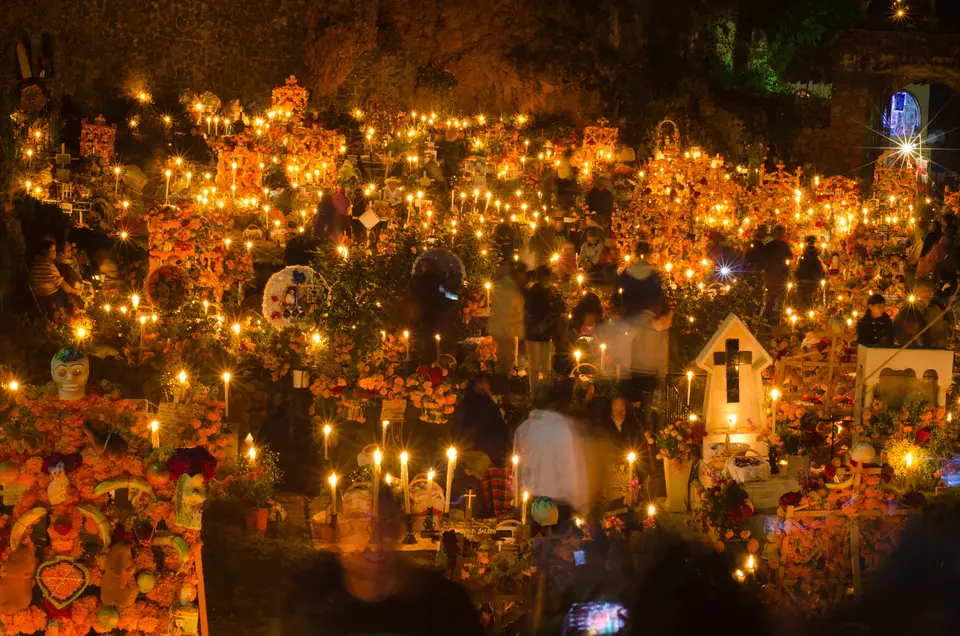
At the turn of October and November, Mexican families welcome their dead home for a brief visit. They build altars with marigolds, candles and the departed’s favourite food, decorate graves, and in some towns keep vigil in the cemetery all night.
November 1 – 2, 2026Calculated
Parachicos of Chiapa de Corzo
Fiesta Grande de Enero — Parachicos
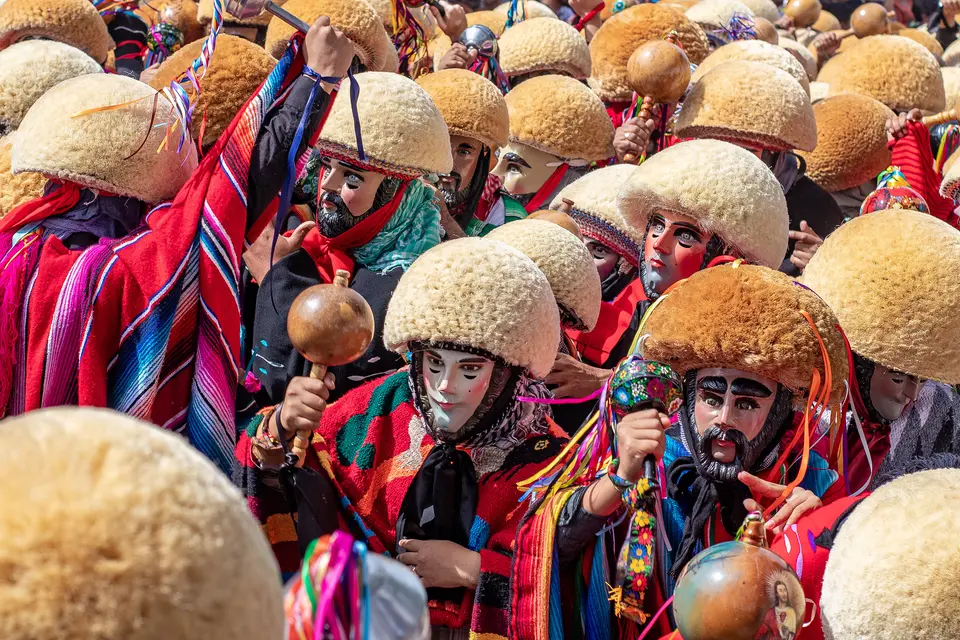
For almost three weeks every January, the dancers of Chiapa de Corzo put on carved wooden masks, shake their maracas and carry the images of their saints through the streets from morning to night, in the town’s Great Feast.
January 4 – 23, 2027Calculated